
Category: Buying Guides

  • Buying a Home in Kharghar in 2026: The Complete Locality Guide

    Buying a Home in Kharghar in 2026: The Complete Locality Guide

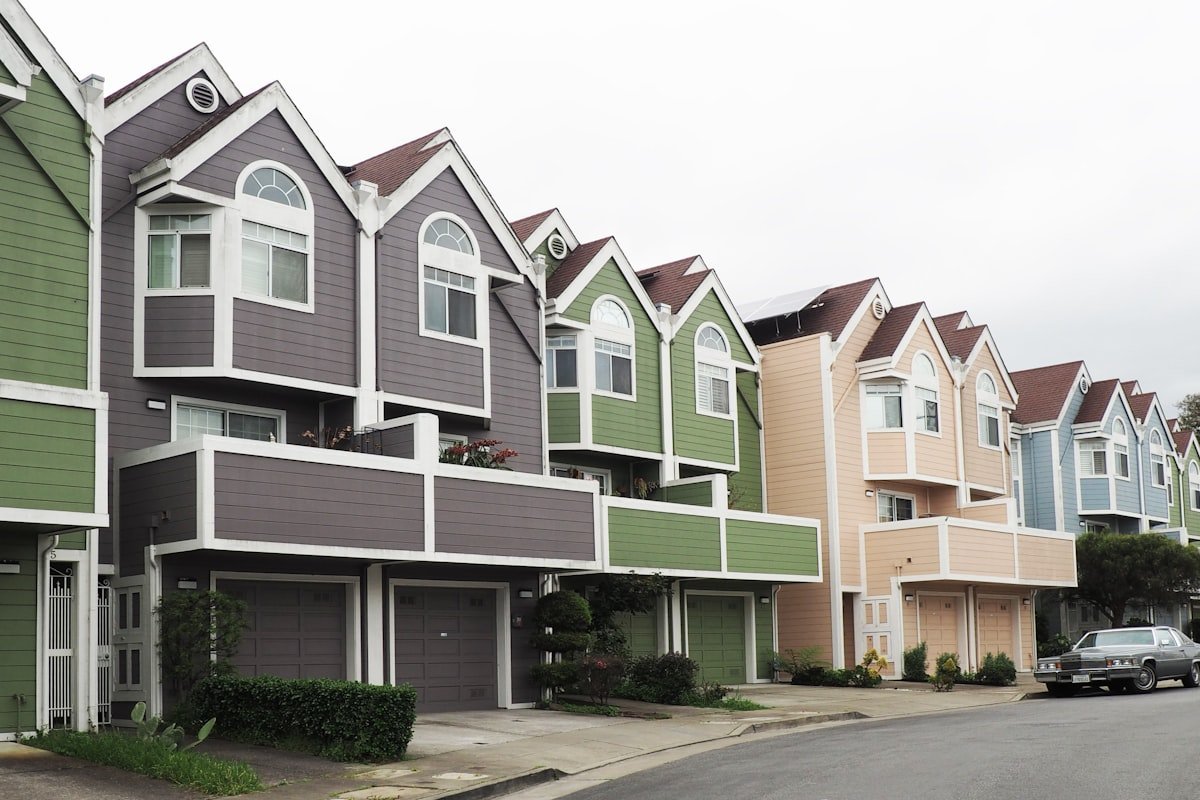
    Planned high-rise residential towers and green open space typical of a Navi Mumbai node
    Kharghar is the greenest, best-planned node in Navi Mumbai — and in 2026 it sits at the centre of a metro, airport and sea-link upgrade that is re-rating the whole belt. This is the complete buyer’s guide, with a sector price map and a home-cost calculator.

    Buying in Kharghar in 2026, in 60 seconds

    • Kharghar is the lifestyle node of Navi Mumbai. Wide CIDCO-planned roads, the 80-acre Central Park, the Kharghar Hills, a golf course and one of the largest green-cover ratios in the MMR make it the obvious end-user pick on this side of the harbour.
    • Three live infrastructure triggers are re-rating it: Navi Mumbai Metro Line 1 (already running through Kharghar), the Atal Setu sea-link to South Mumbai, and the Navi Mumbai International Airport (NMIA) at Ulwe minutes away.
    • The sectors behave very differently. Central Kharghar (Sectors 6–21) is the established, fully-formed core; Upper Kharghar (Sectors 30–35) is the new-launch frontier against the hills, where most fresh towers and the best appreciation runway sit.
    • It is still cheaper than Vashi, Nerul or Belapur for comparable build quality and far cheaper than the equivalent Mumbai suburb — you buy more carpet, more greenery and more amenity per rupee.
    • Buy near a metro station or a coming node link, in a RERA-clean project, at launch. That is where the gains concentrate. Our own pick in this belt is Sovereign Hill, Upper Kharghar.
    From our desk: we place a lot of families in Kharghar precisely because the value-to-lifestyle ratio is unmatched in Navi Mumbai right now. But the gains are sector-specific. A tower next to a working metro station or facing the hills will outperform an ordinary plot two kilometres away. This guide is about choosing that sector, not just the node.

    1. Why Kharghar is a smart 2026 buy

    Direct answer: Kharghar is a smart 2026 buy because it pairs the best planned-township lifestyle in Navi Mumbai — wide roads, huge green cover, a metro on the doorstep — with prices still well below Vashi, Nerul or Belapur, at the exact moment three major infrastructure projects (Metro Line 1, the Atal Setu sea-link and the new Navi Mumbai airport) are converging on the belt. You buy space and lifestyle today, and you sit in the path of a multi-year re-rating.

    Kharghar was laid out by CIDCO, the agency that built Navi Mumbai, as a self-contained node on a generous grid. That planning DNA is the reason the node feels different the moment you drive in: roads are broad, sectors are clearly numbered, footpaths and avenue trees are real, and the skyline is dominated by the Kharghar Hills rather than by chaos. For a buyer coming from the cramped, retrofitted suburbs of Mumbai, the contrast is the whole pitch. Where the old island-city suburbs grew by accretion — a building here, a slum pocket there, a road widened only where it could be — Kharghar was drawn on paper first and built to the drawing. That single fact explains most of what a buyer feels here: the light, the air, the sight-lines, the sense that the place was meant to be lived in rather than merely filled.

    For years, the knock on Kharghar was distance — it felt far from “real” Mumbai, and the commute to the island city was long. In 2026 that argument has collapsed. The Atal Setu (the Mumbai Trans Harbour Link) put South Mumbai within a much shorter drive. Navi Mumbai Metro Line 1 runs straight through the node. And the Navi Mumbai International Airport at Ulwe sits a short drive away, turning Kharghar from a far suburb into one of the best-connected residential addresses in the entire metropolitan region. The distance did not change; the time-distance did, and in real-estate terms it is time-distance that prices a home.

    The value equation. The core reason buyers choose Kharghar is more home, more greenery and more amenity for the money: a 2 BHK that would be small and expensive in the western suburbs is typically larger, better-built and set in a planned, tree-lined sector here, for a lower outlay. Layer the live infrastructure on top, and you are buying lifestyle now and appreciation later.

    The investor case rests on the same triggers. Real-estate value follows infrastructure, and Kharghar has three of the MMR’s biggest projects landing at once. Nodes that absorb a working metro and a new airport catchment and a sea-link to the country’s financial capital do not stay cheap. The window where you can still buy a metro-adjacent, hill-facing home here at Navi Mumbai prices — not Mumbai prices — is exactly the window this guide is written for.

    It helps to be specific about why these three triggers matter together rather than separately. A metro alone improves intra-node mobility and lifts the sectors around its stations. A sea-link alone shortens one specific commute. An airport alone seeds a job-and-commercial catchment over a decade. But when all three land on the same belt within the same cycle, they compound: the metro feeds the airport catchment, the sea-link feeds the office demand, and the office demand feeds the housing. Few residential nodes in India have had three structural drivers converge this tightly. Kharghar is one of them, and it still trades at a discount to the older Navi Mumbai cores while it does.

    There is also a quieter, behavioural reason the node re-rates. Buyers who would once have looked only at Thane, Mulund or the western suburbs are now shortlisting Kharghar because the time-distance maths finally works for them — and because the lifestyle on offer, the parks and the planning, is something the older suburbs cannot retrofit. Each cohort of those buyers that converts shifts the demand curve a little further, and demand that arrives because the fundamentals genuinely improved tends to be stickier than demand chasing a fad. That stickiness is what turns a one-time infrastructure bump into a multi-year re-rating.

    3Major infra triggers live at once
    80acCentral Park green lung
    Line 1Metro running through the node
    NMIANew airport minutes away

    2. Kharghar at a glance

    Direct answer: Kharghar is a large, CIDCO-planned node in the Raigad part of Navi Mumbai, administered today by the Panvel Municipal Corporation, organised into roughly 40 numbered sectors, and known above all for greenery, planning and education. It runs from the railway-and-expressway corridor in the west up to the hills, Owe and the Taloja border in the east.

    Feature What to know
    Node type CIDCO-planned residential node of Navi Mumbai, under the Panvel Municipal Corporation
    Layout ~40 numbered sectors on a planned grid, west (rail/expressway) rising to east (hills, Owe, Taloja border)
    Best-known for Green cover, Central Park, Kharghar Hills, golf course, education and healthcare hubs
    Rail Kharghar station on the Harbour-line corridor toward Panvel and CSMT/Thane via Nerul–Belapur
    Metro Navi Mumbai Metro Line 1 (Belapur–Pendhar) with multiple Kharghar stations, in service
    Road Sion–Panvel Expressway, Mumbai–Pune Expressway access at Kalamboli, NH-4B, Atal Setu approaches via Ulwe/Chirle
    Airport Navi Mumbai International Airport (NMIA), Ulwe — a short drive south
    Buyer profile End-user families, education/healthcare professionals, Mumbai/Pune-corridor investors

    The mental model that helps most is to split Kharghar into three belts. The western and central sectors (broadly the single digits through the low 20s) are the established core — mature, fully-serviced, close to the station and Central Park. Upper Kharghar (broadly the 30s) is the newer, higher belt rising toward the hills, where most fresh launches sit and where the open-view, lower-density living is. The fringe — Owe, the Taloja border and the pockets beyond — is cheapest and most under-construction, with the longest payoff horizon.

    A little history makes the layout legible. Kharghar developed in waves. The first wave filled the sectors closest to the railway station and the Sion–Panvel corridor, because that is where the early connectivity was. The second wave pushed inward and upward as CIDCO released land and as Central Park and the institutional clusters anchored the middle of the node. The current wave is climbing toward the hills in the upper sectors and pressing out toward Owe and the Taloja edge, because that is where developable land and fresh approvals now sit. When you read a sector number, you are really reading which wave built it — and therefore how mature, how dense and how new the stock around you will be.

    Quick rule: the closer a project is to a working metro station, to Central Park, or to a clear hill view — and the cleaner its RERA record — the better it tends to hold and grow value. Sector number alone tells you the belt; the micro-location within the sector tells you the price.

    One administrative detail worth knowing as a buyer: Kharghar today falls under the Panvel Municipal Corporation rather than directly under CIDCO for civic services, even though CIDCO remains the planning and land authority that shaped it. In practice this affects property tax, water and civic-service touchpoints, and it is one of the routine things to confirm during due diligence on any specific flat. It does not change the node’s fundamentals, but it is the kind of detail a careful buyer checks rather than assumes.

    3. The Kharghar sector price map

    Direct answer: Kharghar is not one price — it is a ladder. The established central sectors near the station and Central Park sit at the top of the node’s range; Upper Kharghar against the hills is the fast-moving middle, where new launches cluster; and the Owe/Taloja-border fringe is the entry rung. Because live pricing moves with every new launch and inventory release, treat the bands below as relative positioning, not quotes — for a verified, current per-square-foot number on a specific tower, ask us or see our Sovereign Hill page.

    Belt Typical sectors Position on the Kharghar ladder Who it suits
    Established central core Sectors 6–21 (around Central Park & the station) Top of the node’s range — mature, fully-serviced, walkable, low new supply End-users who want it ready and central; resale buyers
    Upper Kharghar Sectors 30–35 (rising toward the hills) The active middle — most new launches, hill views, the best appreciation runway Launch buyers, families wanting space + view, investors
    Hills / Owe / Taloja border Eastern fringe sectors The entry rung — cheapest, most under-construction, longest horizon Budget-first buyers, patient investors

    Two forces set the price of any individual flat inside these belts. The first is proximity — to a metro station, to Central Park, to the expressway, to a school or hospital cluster. The second is the project itself — the developer’s track record, the amenity set, the tower’s view, the floor, and crucially the RERA status. A hill-facing high floor in a well-run Upper Kharghar launch can quietly out-price a tired central resale, even though the central sector “should” be dearer on paper.

    It is worth unpacking how much of a Kharghar quote is genuinely about the flat and how much is about everything bolted around it. The base rate reflects the belt and the sector. On top of that sit a series of premiums and discounts that can swing the final number materially: a floor-rise premium that climbs with height, a view premium for hill- or park-facing units, a corner or larger-balcony premium, a premium for a marquee amenity deck, and discounts for lower floors, internal-facing units or less-formed pockets. Two flats in the same tower, same carpet, can differ noticeably once you stack those factors — which is exactly why comparing on the headline rate alone misleads.

    What moves the price within a sector Direction Why it matters
    Distance to a working metro station Closer = dearer Daily mobility without road traffic; the clearest resale and rental driver
    Hill or Central Park view View = premium A non-replicable amenity; the upper sectors’ signature advantage
    Floor height (floor-rise) Higher = dearer Light, air, view and quiet; priced in as a per-floor premium
    Developer pedigree & amenity deck Stronger = dearer Delivery confidence and lifestyle; underwrites resale liquidity
    RERA status & possession stage Cleaner/nearer = dearer Lower risk commands a price; distressed timelines discount
    Pocket formation & drainage Formed/dry = dearer Lived-in infrastructure beats a construction-surrounded plot

    This is why we always tell buyers to compare on carpet area and on micro-location, never on the headline saleable size or the sector number alone. If you are unsure how loading inflates the size you are quoted, our carpet area vs built-up guide shows exactly how to convert any quote back to honest, comparable carpet. Run two quotes through that conversion and you will frequently find that the “cheaper” flat on a per-saleable-foot basis is actually the dearer one on real, usable carpet — the comparison only becomes honest once both are stated the same way.

    4. The Kharghar home cost calculator

    Direct answer: Your true monthly cost is the loan EMI, not the sticker price. Set a realistic Kharghar budget, your tenure and a current interest rate below to see the monthly EMI, total interest and total outgo. Then remember to add stamp duty, registration and GST (on under-construction homes) on top — we link those guides right after.

    Kharghar home EMI calculator

    Move the sliders. Indicative only — your sanctioned rate and amount decide the final number.


    ₹86,782
    Total interest₹1.08 Cr
    Total amount payable₹2.08 Cr

    Two reminders before you treat the EMI as your full cost. First, lenders usually fund up to about 80% of the value, so plan for a down payment of roughly a fifth of the price from your own funds. Second, the registration-stage costs are real money: in Maharashtra you pay stamp duty and registration, and on an under-construction Kharghar flat you also pay GST. Budget those alongside the EMI so the deal does not surprise you at the sub-registrar’s office. If you want to pressure-test affordability properly, our affordability calculator guide walks through the income-to-EMI rule lenders actually use.

    Use the calculator the way a lender does, not the way a brochure does. The brochure leads with the all-in price; the lender leads with your monthly capacity and works backwards. As a rough discipline, many lenders are comfortable when your total EMIs stay within about 40–50% of your net monthly income, which means the slider position that matters most is the one your salary supports, not the one the flat costs. If the EMI for the home you like sits above that band, the honest fixes are a longer tenure, a larger down payment, a co-applicant to pool income, or a slightly smaller configuration — not stretching the ratio and hoping.

    The one-fifth rule, in practice. On a typical Kharghar purchase you should expect to bring roughly 20% of the price as down payment from your own funds, plus the stamp duty, registration and (for under-construction) GST on top of that — those statutory costs are not usually funded by the home loan. Treat the “cash you need before the keys” number as the down payment plus those charges, and you will never be ambushed at registration.

    One Kharghar-specific nuance: because so much of the active inventory here is under-construction in the upper sectors, your cash outflow is often staged against construction milestones rather than paid in one shot. That can ease the early cash burden, but it also means your loan disburses in tranches and your pre-EMI or full-EMI clock starts according to the lender’s schedule. Read the payment plan and the disbursement schedule together — the headline price is the same, but a construction-linked plan and a possession-linked plan feel very different month to month.

    5. Connectivity: metro, trains, Atal Setu & NMIA

    Direct answer: Kharghar’s connectivity is its strongest 2026 story. It has a running metro line through the node, a suburban railway station on the harbour corridor toward Panvel and Mumbai, direct access to the Sion–Panvel and Mumbai–Pune expressways, the new Atal Setu sea-link shortening the South Mumbai run, and the Navi Mumbai International Airport opening a short drive away.

    Mode What it gives Kharghar
    Navi Mumbai Metro Line 1 The Belapur–Pendhar line runs through Kharghar with several node stations, linking it to Belapur’s CBD and the wider Navi Mumbai grid without touching road traffic
    Suburban rail Kharghar station connects along the harbour corridor toward Panvel and, via Nerul/Belapur, toward Mumbai — the workhorse commute for many residents
    Sion–Panvel Expressway The fast north–south spine linking Kharghar to Vashi, Sion and the island city
    Mumbai–Pune Expressway Access near Kalamboli puts Pune within an easy intercity drive — a genuine factor for the Pune-corridor buyer
    Atal Setu (MTHL) The Sewri–Nhava Sheva sea-link, reached via the Ulwe/Chirle side, cuts the drive to South Mumbai dramatically
    NMIA (new airport) The Navi Mumbai International Airport at Ulwe sits a short drive south — a structural demand driver for the entire belt

    Take the metro first, because it is the most underrated of the three triggers. Navi Mumbai Metro Line 1 runs the Belapur–Pendhar corridor through Kharghar, and what it really does is decouple intra-node mobility from road congestion. A resident near a Kharghar station can reach the Belapur central business district and the wider Navi Mumbai grid on a fixed, traffic-proof schedule. For an end-user that is daily-life quality; for an investor it is the single clearest driver of which sectors hold tenants and resale demand. Stations are not decoration on a map — they are price anchors, and the flats that cluster around a working station behave differently from flats that do not.

    A node that absorbs a working metro, a new international airport catchment and a sea-link to South Mumbai at the same time does not stay a discount address for long.The Kharghar connectivity thesis

    The rail and expressway layer is the workhorse. Kharghar station on the harbour corridor gives residents the classic Mumbai-region commute toward Panvel one way and, via Nerul and Belapur, toward the city the other. The Sion–Panvel Expressway is the fast road spine to Vashi, Sion and the island city, and the Mumbai–Pune Expressway access near Kalamboli quietly makes Kharghar a viable base for anyone with a foot in the Pune corridor. None of this is glamorous, but it is the everyday connectivity that lets a household actually live here rather than just admire the master plan.

    The airport deserves a paragraph of its own. Airports do two things to nearby residential markets: they create a large, durable base of aviation, logistics, hospitality and corporate jobs, and they pull commercial development — offices, hotels, retail — into the catchment. Both feed housing demand. Kharghar, already the lifestyle node, is one of the established, ready-to-live catchments closest to NMIA, which is exactly why end-users and investors are positioning here ahead of the full ramp-up. The pattern is well-worn around major airports worldwide: the catchment that is already pleasant to live in captures the high-value residential demand, while the raw fringe captures the logistics. Kharghar is squarely in the first category. We cover the airport’s wider impact across Navi Mumbai in our Navi Mumbai investment guide.

    The Atal Setu completes the picture by attacking the one weakness Navi Mumbai always had: the drive to South Mumbai. The Sewri–Nhava Sheva sea-link, reached from the Ulwe and Chirle side, collapses a long, unreliable road journey into a short, predictable one. For the household with one earner working in the island-city financial district, that single bridge is what turns Kharghar from “too far” into “perfectly workable”, and it is a big part of why demand from a buyer pool that previously ignored Navi Mumbai is now flowing into the belt.

    6. Central Kharghar: the established core

    Direct answer: Central Kharghar — broadly Sectors 6 to 21, around Central Park and the station — is the mature, fully-formed heart of the node. It is the most walkable, most serviced and most central part of Kharghar, with the least new supply, which keeps it at the top of the node’s price ladder and makes it the natural pick for a ready-to-move central home.

    This belt is what most people picture when they think “Kharghar”: the avenues around Central Park, the Utsav Chowk landmark, the established retail, the schools and coaching hubs, the train station and the metro within reach. Because it filled up first, most of what trades here is resale or the occasional redevelopment rather than ground-up launches. For an end-user who values being central and ready over being new and view-led, this is the obvious belt.

    The texture of daily life here is the selling point. Shops you can walk to, a market that already exists, schools that are already running, a park that is already mature, neighbours who have been around for years — the central sectors offer the lived-in completeness that a new launch, by definition, cannot offer on day one. For a family that does not want to live amid construction or wait for a neighbourhood to form around them, that completeness is worth paying for, and it is precisely what the central premium buys.

    The trade-off is price and choice. You pay the node’s premium here, and you take the building stock as it is — older amenity sets, smaller podiums, fewer of the marquee clubhouse-and-sky-deck launches that define Upper Kharghar today. If a brand-new tower with a full modern amenity deck matters to you, you will usually find better options one belt up the hill. There is also a thinner appreciation runway here than in the upper sectors, simply because much of the central re-rating has already happened — you are buying a formed, proven address rather than an early-stage one. That is the right trade for an end-user and the wrong one for an investor chasing maximum upside.

    7. Upper Kharghar: the new-growth frontier

    Direct answer: Upper Kharghar — broadly the Sector 30s rising toward the hills — is where the node’s new launches, hill views and best appreciation runway sit in 2026. It offers newer towers, fuller amenity decks and more open, lower-density living than the central core, usually at a more accessible entry price, which is why it is the belt most launch buyers and investors are focused on.

    If Central Kharghar is the formed heart, Upper Kharghar is the growing edge. The land here came into play later, so the towers are newer, the master plans are more ambitious, and the views — toward the Kharghar Hills and the green belt — are genuinely better. For a family that wants a brand-new home with a real clubhouse, a podium garden and a high-floor view, without paying the central premium, this belt is the sweet spot of the node.

    The amenity story matters more than buyers expect. A newer Upper Kharghar tower is typically designed around a full modern lifestyle deck — a proper clubhouse, a pool, a gym, landscaped podium gardens, co-working and kids’ zones — the kind of integrated amenity set that the older central stock was never built with. For a young family or a returning NRI used to that standard, the gap between an Upper Kharghar launch and a fifteen-year-old central building is not marginal; it is the difference between the home they want and a compromise. That preference is part of why fresh demand keeps concentrating in the upper sectors.

    Why we focus here: the combination of new build quality, hill-facing views, a more accessible launch price and a long infrastructure runway is exactly what we look for. Our own recommended project in this belt is Sovereign Hill, Upper Kharghar — positioned for the buyer who wants the new-Kharghar lifestyle while the price still reflects Navi Mumbai, not Mumbai.

    The investor logic in Upper Kharghar is straightforward. You are buying at the front of the development curve, before the belt matures the way the central sectors already have. As the metro footfall builds, as the airport ramps, and as the social infrastructure thickens around these newer sectors, the gap between an Upper Kharghar launch price and a formed-central-sector price tends to compress. That compression is the appreciation. The discipline is the same as anywhere: buy a RERA-clean tower from a credible developer, near a clear connectivity or view advantage, and buy it at launch rather than after the re-rating.

    The one honest caveat is that the upper sectors are still forming in places. Some pockets sit amid active construction, and the day-one retail and convenience can be thinner than the central core until the belt fills in. For a buyer that is a feature, not a bug — the unformed-today, formed-tomorrow gap is exactly what you are being paid to bridge — but it has to be entered with eyes open and with a project chosen for delivery certainty, not just for the view.

    8. The hills, Owe & Taloja-border belt

    Direct answer: The eastern fringe of Kharghar — against the hills and out toward Owe and the Taloja border — is the node’s entry rung: the cheapest land, the most under-construction supply, and the longest payoff horizon. It suits budget-first buyers and patient investors who are comfortable buying ahead of the infrastructure curve rather than after it.

    This belt is where the Kharghar price ladder starts. You give up immediacy — some pockets are still forming, with construction around you and social infrastructure thinner than the central sectors — in exchange for the lowest entry into the node. For an investor with a genuinely long horizon, or a family whose first priority is a Kharghar address at the most accessible price, the fringe can make sense, provided you are disciplined about developer quality and possession risk.

    The Taloja side carries its own context worth knowing. It sits near the Taloja industrial belt and the extending metro alignment toward Pendhar, which is part of what underwrites the long-term case for the eastern sectors. Industrial proximity cuts both ways: it supports a working-tenant rental base and keeps entry prices low, but it also means a buyer should look carefully at the immediate surroundings of a specific project rather than assuming the whole fringe is uniform. The right pocket on this side can be a genuine value buy; the wrong one is cheap for a reason.

    The two things to watch closely out here are possession timelines and RERA status. The further you are from the formed core, the more you are relying on the project actually delivering on schedule, so the developer’s track record and the registered completion date matter even more than usual. We never recommend buying a fringe project on price alone — the discount has to come with a credible builder and a clean registration, or it is not a discount, it is a risk. As a rule, the cheaper the headline rate on the fringe, the harder you should look at who is building it and what their last three deliveries actually did.

    9. Schools, hospitals & colleges

    Direct answer: Kharghar is one of Navi Mumbai’s strongest education and healthcare hubs, with a dense cluster of schools, colleges and major hospitals across the node. That social-infrastructure depth is a big part of why end-user families — especially those in education and healthcare professions — choose Kharghar over newer, thinner nodes.

    On the education side, Kharghar carries a well-known concentration of schools and higher-education and professional institutes, which is why it has a real student and faculty population and a steady rental base around the academic calendar. On healthcare, the node hosts major hospital and cancer-care institutions that draw patients, families and medical staff from across the region, adding another durable layer of housing demand. The combination is unusual: most nodes have either schools or hospitals as a strength, while Kharghar has both at scale, and that double anchor is what gives its rental and resale demand its all-weather quality.

    For a buyer, this matters in two ways. As an end-user, you get schools and hospitals within the node rather than a long drive away — a daily-life advantage that does not show up in the per-square-foot number but absolutely shows up in quality of life. As an investor, that institutional depth underwrites rental demand: where there are big schools and hospitals, there are always tenants. The medical population in particular is a quietly excellent tenant base — staff and visiting families who need housing near the institutions year-round, regardless of the property cycle.

    Why institutions are a price floor. Schools and hospitals do not move. Once a node becomes an education-and-healthcare hub, it inherits a permanent, calendar-driven housing demand that holds up even when speculative demand cools. In Kharghar, that institutional anchor is a real reason the rental floor stays firm across cycles — and a firm rental floor is what makes a buy-and-hold strategy comfortable.

    10. Green lungs: Central Park, hills & golf

    Direct answer: Kharghar’s defining feature is its green cover — the roughly 80-acre Central Park, the Kharghar Hills with their valley and waterfall, and a CIDCO golf course — giving it one of the highest open-space ratios of any node in the metropolitan region. That greenery is the lifestyle premium buyers are actually paying for.

    Central Park is the centrepiece: a large, landscaped public park that anchors the central sectors and gives Kharghar a genuine civic lung of a kind most Mumbai suburbs simply do not have. Above the node, the Kharghar Hills, the valley and the seasonal Pandavkada waterfall give the eastern, upper sectors their dramatic backdrop — the reason a hill-facing high floor in Upper Kharghar commands the view premium it does. The golf course adds to the planned, low-density character that defines the node, and together these open spaces are not scattered afterthoughts but a deliberate part of the original master plan.

    The practical effect on price is concrete. A flat that faces Central Park or the hills carries a view premium that a similar internal-facing unit does not, and because that view cannot be built out or retrofitted, the premium tends to be durable. Green frontage is one of the few amenities in real estate that genuinely cannot be replicated by the next project — a developer can match your clubhouse, but no one can manufacture a hill. For a buyer choosing between two otherwise similar towers, the one with the protected green outlook is usually the better long-term hold.

    Why green cover is a price factor, not a nicety. Open space is the one amenity that cannot be retrofitted into a built-up suburb. A node that was planned with parks, hills and wide avenues from day one carries a structural lifestyle advantage that compounds as the surrounding city densifies. In Kharghar, the greenery is not decoration — it is the core of the value proposition.

    11. The rental market & yields

    Direct answer: Kharghar has a deep, year-round rental market underwritten by its education and healthcare institutions, its planned-lifestyle pull and its improving connectivity. That makes it one of the more dependable rent-and-hold nodes in Navi Mumbai for an investor, even though, as everywhere in the MMR, gross rental yields are modest relative to the capital value.

    The tenant base is unusually diverse for a single node: families wanting space and greenery, students and faculty around the institutes, medical staff and patients’ families around the hospitals, and a growing share of professionals who can now commute via the metro, the expressways and the sea-link. That diversity is what keeps vacancy low and the rental floor firm across cycles. When one tenant segment softens, another usually fills the gap — a resilience that single-driver nodes simply do not have.

    Be realistic about the yield, though, because honesty here protects you. Like most of the Mumbai region, Kharghar’s gross rental yield is modest in percentage terms — capital values are high relative to rents, so no MMR node throws off a large income yield. The investor who buys Kharghar purely for monthly cash flow will be underwhelmed. The investor who buys it for total return — appreciation driven by the infrastructure re-rating, with a steady rental cushion underneath while holding — is reading the node correctly.

    For the investor, then, the realistic frame is total return, not yield alone. The right play is a well-located, RERA-clean home — ideally near a metro station or a clear connectivity advantage — that rents easily today and sits in the path of the airport-and-metro demand build-up. A unit that is easy to let is also easy to sell, because the same features that attract a tenant attract the next buyer; liquidity and rentability travel together. If you are weighing Kharghar against other Navi Mumbai nodes, our Navi Mumbai guide sets the wider context.

    12. Price trends & the appreciation case

    Direct answer: Kharghar’s appreciation case rests on a simple gap — the node still prices like the distant suburb it used to be, while its connectivity now resembles a well-linked lifestyle hub. As the metro footfall, the airport ramp-up and the sea-link commute close that perception gap, the discount to the older Navi Mumbai cores is the room available for re-rating. We talk in terms of direction and drivers, not precise forecasts, because anyone quoting an exact future per-square-foot number is guessing.

    Think of the price story in three layers. The first layer is the base lifestyle value Kharghar always had — planning, greenery, schools, hospitals — which sets a floor that does not depend on any new project. The second layer is the connectivity re-rating now under way, as the metro, the airport and the sea-link convert Kharghar’s time-distance from a weakness into a strength. The third layer is project-specific: the right tower, in the right sector, near the right station, captures more of the re-rating than the node average, while a poorly-located or poorly-delivered project can lag even a rising node. Your return is the sum of all three, and the third is the one you actually control through selection.

    Appreciation driver What it does to price Time horizon
    Metro footfall maturing Lifts sectors around working stations first Already under way
    NMIA ramp-up Seeds jobs and commercial demand into the catchment Multi-year build
    Atal Setu commute Pulls in buyers who previously ignored Navi Mumbai Live now, compounding
    Upper-sector formation Closes the launch-to-formed-sector price gap Medium term
    Discount to older cores The headroom the re-rating can travel into Structural

    The disciplined way to play this is to buy the driver, not the hype. A flat that is genuinely close to a working metro station, in a sector with a clear formation path, from a developer who will actually deliver, is positioned to capture the re-rating. A flat bought purely because “Kharghar is going up” — with no particular locational or delivery edge — is exposed to the node average at best and to a delivery disappointment at worst. The macro tailwind is real, but it rewards selection, not blind exposure. That is the entire argument for buying with a buyer-side specialist rather than buying whatever inventory is pushed hardest.

    13. Kharghar vs the other Navi Mumbai nodes

    Direct answer: Against the other Navi Mumbai nodes, Kharghar’s distinct edge is lifestyle-per-rupee — the most greenery, planning and social infrastructure for the price — while the older harbour-line cores (Vashi, Nerul, Belapur) win on being closer-in and fully formed, and the airport-edge nodes (Ulwe, Panvel, Dronagiri) win on raw proximity to NMIA at a lower entry. Kharghar sits in the sweet spot: more formed than the airport fringe, greener and cheaper than the old cores, and well-connected to both.

    Node Its edge The trade-off Best for
    Kharghar Greenery, planning, schools/hospitals, lifestyle-per-rupee Not the closest-in, upper sectors still forming End-user families, infra-led investors
    Vashi / Nerul / Belapur Closest-in, fully formed, established CBD & retail Top of the price range, little new supply Buyers who want central & ready, premium budgets
    Ulwe / Panvel / Dronagiri Closest to NMIA, lowest entry, biggest raw upside Least formed, longest horizon, more delivery risk Patient, airport-thesis investors
    Taloja Lowest prices, metro extension, industrial-tenant base Industrial surroundings, thinner lifestyle Budget-first buyers, rental-yield seekers

    The way to read this table is by your own priority. If being close-in and fully formed is non-negotiable and budget is not the constraint, the old harbour-line cores earn their premium. If you are an aggressive, patient investor betting purely on the airport, the Ulwe–Panvel–Dronagiri edge offers the rawest upside and the rawest risk. Kharghar is the answer for the large middle: the buyer who wants real lifestyle and real connectivity now, a credible appreciation runway, and a price that still sits below the old cores. It is rarely the cheapest and rarely the most central — it is consistently the best-balanced.

    This balance is also why Kharghar tends to be the most forgiving node for a first Navi Mumbai purchase. The airport-edge bets can go very right or test your patience for years; the old cores ask for a big cheque with limited upside. Kharghar’s downside is cushioned by genuine end-user demand — people want to live here for the place itself, not only for a thesis — while its upside is carried by the same infrastructure everyone else is chasing. For most buyers reading this guide, that combination is the point.

    14. Who should buy in Kharghar

    Direct answer: Kharghar suits three buyers especially well — the space-and-greenery end-user trading up from a cramped Mumbai suburb, the education or healthcare professional who wants to live near the institutes, and the infrastructure-led investor positioning for the metro-and-airport re-rating. It is less suited to a buyer who needs to be inside island-city Mumbai or who wants a fully-formed, no-construction-around-me address at the lowest possible price.

    If you are… Kharghar fit Where to look
    A family trading up for space & greenery Excellent — the node’s core pitch Upper Kharghar for new build + view; central sectors for ready + walkable
    An education / healthcare professional Excellent — live near the institutes Central and mid sectors near the school/hospital clusters
    An infrastructure-led investor Strong — three triggers live at once Upper Kharghar launches near the metro / view advantage
    An NRI buyer wanting a managed hold Strong — deep rental base, new-build stock RERA-clean Upper Kharghar launches, near a station
    A budget-first first-time buyer Workable with discipline Owe / Taloja-border fringe, RERA-clean only
    A buyer who must be inside South Mumbai Weak — this is a Navi Mumbai node Reconsider the requirement, or use the sea-link commute

    The NRI buyer deserves a specific note, because Kharghar fits that profile unusually well. A returning or remote NRI typically wants new-build quality, a credible developer, a clean RERA record, and an asset that rents easily while they are away — all of which Upper Kharghar’s launch stock, sitting on a deep institutional rental base, supplies. The same features that make a flat easy to let from abroad make it easy to sell later, so the NRI hold and the eventual exit point in the same direction. For an overseas buyer who cannot personally chase inventory, this is precisely the situation where a buyer-side specialist earns their place.

    The honest counsel runs the other way too. If your job and your life genuinely sit inside the island city and you will not use the sea-link commute, Kharghar is the wrong node for you regardless of the value — buy where you live. And if your single priority is the lowest possible price with zero construction around you, the central sectors will feel expensive and the fringe will feel unformed; you may be happier in an older, cheaper node that has already finished forming. Good advice includes telling you when the node does not fit.

    15. Under-construction vs ready possession

    Direct answer: In Kharghar the choice between under-construction and ready possession is really a choice between price-and-upside versus certainty-and-immediacy. Under-construction launches — concentrated in Upper Kharghar — offer the lowest entry, staged payments, the best floor-and-view selection and the most appreciation runway, at the cost of waiting and carrying delivery risk. Ready or near-ready homes — concentrated in the central sectors — offer immediate use, a visible product and no construction risk, at a higher price and with less upside left.

    Factor Under-construction (mostly Upper Kharghar) Ready possession (mostly central)
    Entry price Lowest — launch pricing Higher — the wait is already paid for
    Payment Staged against construction milestones Largely upfront / on possession
    Selection Best floors, views and units available Whatever is left in the resale market
    Upside Most appreciation runway Much of the re-rating already captured
    Risk Delivery & timeline risk — manage via RERA + developer Minimal construction risk; you see the product
    Cost on top GST applies on under-construction No GST on a completed, ready home

    The tax point is not a footnote. An under-construction Kharghar flat attracts GST, while a completed, ready-to-move home with its completion certificate does not — a genuine difference in your all-in cost that should sit in the comparison from the start, not surface at the end. Set it against the lower entry price and the staged payments of the under-construction route, and weigh the net. For many buyers the launch route still wins on total economics; for some, the certainty and the GST saving of a ready home wins. There is no universally right answer, only the right answer for your timeline and risk appetite.

    Our general stance for Kharghar in 2026 is that the best risk-adjusted value sits in well-chosen under-construction launches in the upper sectors — provided the project clears the RERA and developer-quality bar that this guide keeps returning to. The whole point of buying at launch is to capture the gap the infrastructure is about to close, and you cannot capture a gap that has already closed in a finished building. But “well-chosen” is load-bearing: a launch from a shaky developer is not value at any discount. The discipline, not the discount, is what makes the under-construction route work.

    16. Risks & what to check before you buy

    Direct answer: The main things to verify in Kharghar are the project’s RERA registration and possession date, the developer’s delivery track record, the true carpet area versus the saleable size you are quoted, the flooding and drainage profile of the specific pocket, and exactly which infrastructure timelines you are underwriting. Get those right and Kharghar is a low-drama buy; ignore them and even a great node can disappoint.

    The Kharghar buyer’s checklist

    • RERA first. Confirm the project’s MahaRERA registration, the registered completion date and the promoter details before anything else. Our two-minute RERA verification guide shows exactly how.
    • Developer track record. The further from the formed core, the more you are relying on the builder actually delivering. Buy credibility, not just a brochure.
    • Carpet, not saleable. Always convert the quote back to RERA carpet area so you are comparing flats honestly — see our carpet area guide.
    • Micro-location. Distance to the nearest metro station, to Central Park, to schools and hospitals, and the tower’s view and floor — these decide resale and rent more than the sector number.
    • Drainage & pocket. Check the specific pocket’s monsoon and drainage history, especially in low-lying or newly-developed stretches.
    • The full cost. Budget stamp duty and registration and GST on top of the EMI before you commit.

    Take the drainage point seriously, because it is the one most buyers skip and the one most specific to a planned-but-still-growing node. Parts of Kharghar are low-lying, and a few pockets have seen monsoon water-logging over the years. The fix is not to avoid the node — it is to check the specific pocket. Ask about the immediate area’s monsoon history, look at the road levels and storm-water provision around the tower, and weight a slightly higher, better-drained plot over a marginally cheaper low one. This is a pocket-by-pocket question, never a node-wide verdict, and a few honest questions on site answer it.

    The second under-checked risk is timeline-underwriting. When you buy on the strength of the metro, the airport and the sea-link, be clear about which of those you are actually relying on for your return and over what horizon. Infrastructure that is already live (the metro through the node, the sea-link) is the safest to underwrite; infrastructure still ramping (the full airport build-out, further metro phases) carries timeline risk that you should price into your patience, not your spreadsheet. A buyer who needs everything to land on schedule to make the maths work has bought too tight; a buyer whose case holds on the live infrastructure alone, with the rest as upside, has bought sensibly.

    Finally, do the boring legal hygiene properly. Confirm the title and the chain of approvals, check that the civic and CIDCO/PMC clearances are in place, read the agreement rather than the brochure, and make sure the RERA carpet you are paying for is the carpet written into the agreement. None of this is exotic, and a competent buyer-side advisor or lawyer handles it as routine — but it is exactly the routine that turns a good node into a clean transaction. The node can be excellent and the specific deal can still be flawed; due diligence is how you tell the difference.

    17. How to buy at launch in Kharghar

    Direct answer: The best way to buy in Kharghar in 2026 is at launch, in a RERA-clean project from a credible developer, in the Upper Kharghar belt where new supply and the appreciation runway are concentrated — and to do it with a buyer-side specialist who gets you the first-allocation inventory and the launch price, not the post-re-rating price.

    Buying at launch is how you capture the gap between today’s Navi-Mumbai entry price and the value the metro, the airport and the sea-link are set to add. The catch is that the best launch inventory — the right floors, the right views, the cleanest payment plans — moves fast and often quietly. That is the entire reason we exist: we work the launch pipeline so you get in first, at the best price, on a project that has been checked for RERA and developer quality. Our full method is laid out on how it works and the case for launch timing is in why buy at launch.

    Practically, the launch buyer’s job is to be ready before the inventory opens, not to scramble after it does. That means having your budget and financing pre-thought, your must-haves (carpet, configuration, view, floor band) defined, and your due-diligence checklist already pointed at the right project — so that when the good allocation appears, you can act on it rather than think about it. The buyers who lose out at launch are almost never the ones who could not afford the flat; they are the ones who were still deciding while the better unit was taken. Preparation is the whole edge.

    Buying in Kharghar? Start with the right tower.

    We place families and investors in the best launch inventory across Upper Kharghar and the wider Navi Mumbai belt — RERA-checked, at the launch price, with the first allocation. Tell us your budget and we will shortlist the right fit.

    18. Stamp duty, registration & the true ownership cost

    Direct answer: The price a developer quotes is never the cheque you write. In Maharashtra, a Kharghar buyer adds stamp duty, registration, GST on under-construction homes, a clutch of statutory and society charges, and one-time setup costs on top of the agreement value. Budget roughly 8 to 12 percent over the base price for an under-construction flat, and plan for it in cash because most of it sits outside the home-loan-funded amount.

    Stamp duty is the single largest add-on. Maharashtra levies it as a percentage of the higher of the agreement value or the government’s ready-reckoner value for that location, and the headline rate in the Navi Mumbai municipal belt that Kharghar sits in is typically the standard urban rate plus the local body and metro surcharges that apply across the MMR. There is a long-standing concession for buyers who register the property in a woman’s name or in joint names that include a woman, which trims the effective rate — a genuine, legal saving that many Kharghar families use. Registration is charged separately as a percentage of value, capped at a ceiling amount, so on higher-value flats it behaves like a near-fixed fee rather than a rising percentage. Our Maharashtra stamp duty and registration guide walks through the current rates, the woman-buyer concession and the exact way the ready-reckoner comparison works, so you can compute your own number before you sign.

    GST applies only while a project is under construction and the developer has not yet received the occupancy certificate. For a standard, non-affordable home the rate is the lower under-construction slab with no input-tax credit; affordable-category units attract an even lower slab. The moment a flat is ready and the occupancy certificate is issued, GST falls away entirely — which is one of the quiet cost differences between buying a launch and buying a ready resale. If you want the mechanics of the one-versus-five-percent question and which projects qualify as affordable, our GST on under-construction flats guide sets it out in full.

    Cost head What it is Roughly how much When you pay it
    Stamp duty State levy on the agreement/ready-reckoner value The standard Maharashtra urban rate plus local surcharges; lower if registered in a woman’s name At registration, upfront, usually outside the loan
    Registration Fee to record the sale deed with the sub-registrar A small percentage of value, subject to a ceiling cap At registration, upfront
    GST Tax on under-construction homes only The under-construction slab; lower for affordable units; nil once the OC is issued Stage-wise with construction-linked payments
    Society formation & corpus One-time contribution to the housing society and sinking fund A fixed builder-set amount per flat At or near possession
    Legal, MOFA & documentation Agreement drafting, legal vetting, franking, incidentals A modest fixed sum Around registration
    Maintenance advance Upfront months of society maintenance Several months collected in advance At possession

    There is also a recurring cost layer that buyers routinely underestimate. Monthly society maintenance in a well-amenitised Kharghar tower is meaningfully higher than in a bare-bones building, because clubhouses, landscaped podiums, lifts, security and power back-up all cost money to run. Property tax is levied annually by the municipal corporation. And if you finance the purchase, the loan carries its own processing fee, legal and valuation charges, and in some cases a one-time insurance premium bundled in. None of these are deal-breakers, but they belong in your true-cost model from day one, because a flat that looks affordable on the base rate can quietly become a stretch once the full ownership cost is honest. The disciplined way to buy is to build a single spreadsheet that starts from the agreement value, layers every line above, and ends with two numbers: the total cash you need before the keys turn, and the all-in monthly outgo once you move in. Buyers who do this never get ambushed at registration; buyers who skip it almost always do.

    Ask for the developer’s full cost sheet in writing — base price, floor-rise, view and amenity premiums, parking, club membership, corpus, maintenance advance and statutory charges — before you pay any token. A reputable Kharghar developer will hand it over without friction. Reluctance to put the all-in number on paper is itself a useful signal.

    19. The pre-purchase legal & RERA checklist

    Direct answer: Before you part with serious money in Kharghar, verify the project on MahaRERA, read the title and the commencement and occupancy certificates, confirm the land’s CIDCO and municipal approvals, and have a property lawyer vet the agreement. A clean Kharghar project will pass every one of these checks easily; the checklist exists to catch the rare one that does not.

    Start with RERA, because it is the fastest filter and it is free. Every project of meaningful size must be registered with MahaRERA, and the public portal lists the registration number, the promoter, the approved plans, the sanctioned floors, the committed completion date and any complaints filed against the project. A genuine Kharghar launch will quote its MahaRERA number openly in its brochure and on its hoardings; if a sales team is evasive about the number, treat that as a stop sign, not a detail. Our RERA verification guide shows exactly how to pull a project up on the portal, read the registration page and spot the warning signs — an expired registration, a completion date that keeps slipping, or a promoter with a trail of complaints.

    Check What you are confirming Where to verify
    MahaRERA registration The project is legally registered, with approved plans and a committed date MahaRERA public portal, by registration number
    Title & ownership The developer holds clear, marketable title to the land Title search via your lawyer; 7/12 or property card
    CIDCO / municipal approvals The plot is approved for the use and the density being built Sanctioned layout, IOD/commencement certificate
    Commencement certificate Construction up to the current slab is legally sanctioned The CC, cross-checked against the floor being sold
    Occupancy certificate For ready flats, the building is legally fit to occupy The OC issued by the corporation
    Encumbrance & dues No undisclosed mortgage, lien or unpaid statutory dues Encumbrance check; lender NOC if land is mortgaged
    Agreement for sale The contract matches MOFA/RERA norms and your quoted terms Independent lawyer review before you sign

    Title and approvals are where a lawyer earns the fee. A title search confirms the developer actually owns or has a clear development right over the land, that there is no undisclosed mortgage or litigation attached, and that the chain of ownership is unbroken. The CIDCO and municipal approvals confirm the plot is sanctioned for the use and the density being built — a tower selling more floors than its commencement certificate permits is a future regularisation headache you do not want to inherit. For a ready or near-ready flat, the occupancy certificate is the document that matters most: without it, the building is technically not legal to occupy, your loan disbursal and registration can stall, and your resale liquidity later is impaired. Insist on seeing it, not a promise of it.

    The agreement for sale is the last gate, and it is the one buyers most often rush. It should state the carpet area precisely, list every charge, fix the possession date with the penalty clause that RERA mandates for delay, and describe the amenities you were sold. Read it against the brochure and the cost sheet line by line, and have your lawyer flag any clause that lets the developer change the layout, the area, the common amenities or the timeline unilaterally. Maharashtra’s framework genuinely protects buyers here — but only if the protections are actually written into the document you sign. Spending on an independent legal review before signing is the cheapest insurance in the entire transaction, and on a multi-crore Kharghar purchase it is non-negotiable.

    Do I really need a lawyer if the project is RERA-registered and the developer is reputable?
    Yes. RERA registration and a strong brand lower your risk; they do not eliminate the need to verify title, approvals and the specific clauses in your own agreement. A short, independent legal review is inexpensive relative to the purchase and routinely catches issues the sales process glosses over. Treat it as standard, not optional.

    20. An NRI’s guide to buying in Kharghar

    Direct answer: Non-resident Indians can buy residential property in Kharghar freely under the RBI’s general permission — no special approval is needed for a home. The transaction runs through your NRE, NRO or FCNR account, payments must come through banking channels, and the same RERA, title and registration checks apply. The only real extra layers are funding routing, repatriation rules and giving someone a power of attorney if you cannot be present.

    The eligibility piece is simpler than most NRIs expect. RBI’s general permission lets a non-resident Indian and an overseas citizen of India buy residential and commercial property in India without seeking any case-by-case approval; the only categories that need special handling are agricultural land, plantation and farmhouse property, which a residential Kharghar flat is not. Funding must flow through proper banking channels — from your NRE or NRO account in India, or by inward remittance from abroad — never in cash, and the home loan, if you take one, comes from an Indian lender against the property with repayment from your NRE/NRO inflows. Indian banks lend actively to NRIs for exactly this profile of purchase.

    Topic What an NRI buyer should know
    Eligibility Residential property is allowed under RBI general permission; no special approval needed
    Payment routing Through NRE/NRO accounts or inward remittance; banking channels only, never cash
    Home loans Available from Indian lenders to NRIs; repaid from NRE/NRO inflows or rent
    Power of attorney A registered, specific POA lets a trusted person sign and register on your behalf
    Taxation Rental income and capital gains are taxable in India; TDS applies on rent and on sale
    Repatriation Sale proceeds are repatriable within prescribed limits and conditions; keep records

    The logistics are where planning pays off. Most NRI buyers cannot fly in for every milestone — the booking, the agreement, the registration, the possession — so a registered power of attorney in favour of a trusted family member or representative in India is the standard solution. Keep it specific rather than general: a POA scoped tightly to this one transaction protects you far better than a broad one. On tax, rental income from the flat and any future capital gain on sale are taxable in India, tax is deducted at source on rent paid to an NRI and on the sale consideration, and the India-versus-home-country treatment depends on the relevant double-taxation treaty. None of this is a barrier — thousands of NRIs buy in Navi Mumbai every year — but it rewards lining up your banker, your lawyer and your tax advisor before you book rather than after.

    For an overseas buyer, Kharghar is an unusually rational pick. The end-user demand is genuine and growing, so the asset is liquid and rentable rather than speculative; the infrastructure story gives a clear, explainable appreciation thesis you can underwrite from abroad; and a professionally run launch with a registered POA arrangement means you can complete most of the process remotely with periodic, scheduled involvement. If you are buying from outside India and want the process mapped to your timeline and account structure, talk to us — we run NRI transactions on Kharghar projects regularly and can sequence the banking, legal and registration steps around your travel.

    21. Financing: home loans, eligibility & the EMI plan

    Direct answer: Most Kharghar buyers finance the bulk of the purchase with a home loan, typically funding up to the lender’s loan-to-value ceiling against the property and bringing the rest plus all statutory charges as down payment. Your borrowing capacity is set by income, existing obligations and the lender’s view that your EMI should sit within a comfortable share of monthly income. Model the EMI before you shop, not after.

    The mechanics are worth understanding because they shape which flat you can realistically buy. A lender funds a percentage of the property value — the loan-to-value ratio — and you fund the remainder as down payment, on top of which you separately pay stamp duty, registration and the other charges from chapter 18, which the loan generally does not cover. Your sanctioned amount is then capped by affordability: lenders want your total monthly debt servicing, EMIs across all loans, to stay within a prudent fraction of your income. Tenure is the lever that trades monthly comfort against total interest: a longer tenure cuts the EMI but raises the lifetime interest, a shorter one does the reverse. For a deeper treatment of how income, tenure and rate interact, and how to size a loan you can actually live with, see our home loan affordability guide for Mumbai.

    The calculator earlier in this guide lets you feel these trade-offs directly — slide the loan amount, tenure and rate and watch the EMI, total interest and total outgo move. The discipline it teaches is to anchor on the EMI you are comfortable paying every month for years, then work backwards to the loan and the flat, rather than falling in love with a flat and stretching the EMI to reach it. A Kharghar home you can service comfortably through a rough patch is a far better outcome than a marginally bigger one that turns every income wobble into a crisis.

    Get a loan pre-approval before you start shortlisting towers. A sanction letter in hand tells you your real budget, strengthens your position when you negotiate, and lets you move fast on a launch allotment instead of losing the unit while paperwork crawls. Pre-approval is free or cheap and it changes how seriously a sales team takes you.

    One financing nuance is specific to buying at launch. Under-construction Kharghar projects are usually sold on construction-linked payment plans, where you pay in tranches tied to building milestones rather than all at once. This is friendlier on cash flow — your money goes out as the tower rises — and lenders disburse the loan the same way, stage by stage, so you are not servicing a full EMI on an unbuilt flat from day one. Some buyers also negotiate subvention or possession-linked structures on select launches. The right plan depends on your cash position and how the project is priced, which is exactly the kind of thing worth modelling with us before you commit.

    22. Five worked buyer scenarios

    Direct answer: The right Kharghar buy is the one that matches your life stage, horizon and cash position — not the most expensive flat you can technically qualify for. Below are five common buyer profiles and the Kharghar strategy that tends to fit each, drawn from how real families and investors actually approach the node.

    These scenarios are deliberately qualitative rather than quote-driven, because, as chapter 3 explained, live per-square-foot pricing moves with every launch and inventory release. The point is the strategy — which belt, which possession stage, which trade-off — not a number that would be stale by the time you read it. For a current, verified figure on any specific tower, the right move is always to ask us rather than rely on a printed rate.

    Buyer profile What they want Kharghar strategy that fits
    First-home young couple A liveable 1–2 BHK they can grow into, low EMI stress An Upper Kharghar launch on a construction-linked plan — lower entry, appreciation runway, time to ramp income before possession
    Upgrading family Space, schools, a ready or near-ready 3 BHK A central core resale or near-possession tower close to a school cluster and the metro — lifestyle now, less waiting
    Infrastructure-led investor Maximum appreciation on the re-rating thesis A hill-facing Upper Kharghar launch from a strong developer — the steepest runway as metro, Atal Setu and NMIA mature
    Rental-yield investor Steady tenant demand and a clean monthly yield A compact, well-located unit near the station, colleges or the corporate belt — the deepest, most liquid tenant pool
    NRI / remote buyer A liquid, explainable asset bought largely off-site A RERA-clean launch from a marquee developer with a registered POA — underwrite the infra thesis, complete remotely

    Take the first-home couple. Their constraint is usually cash and EMI comfort rather than ambition, so a launch in Upper Kharghar on a construction-linked plan suits them well: the entry price is lower than a finished central flat, the staged payments are kind to cash flow, and the years until possession are years their income typically grows into the EMI — all while the node’s infrastructure matures around the unit they have locked in. The upgrading family is the opposite trade. They are time-poor and school-driven, so the patience of a launch is a poor fit; a near-possession or ready flat in the established core, close to a strong school and the metro, buys them the lifestyle immediately and accepts a higher entry as the price of certainty.

    The two investor profiles diverge on what they are optimising. The appreciation-led investor wants the steepest re-rating runway and the least competition at entry, which points to a hill-facing Upper Kharghar launch from a developer with a clean delivery record — the exact pocket where the metro, sea-link and airport triggers will be felt most as they mature. The yield investor wants tenants, not just capital gain, so a compact, sensibly priced unit near the station, the college belt or the corporate cluster serves better, because that is where Kharghar’s rental demand is deepest and a flat re-lets fastest. And the NRI buyer, covered in chapter 20, is really a variant of the appreciation investor with a remote-completion constraint — which is why the answer for them leans on a marquee, RERA-clean launch and a tidy power-of-attorney arrangement. If your situation does not map cleanly onto one of these, it usually sits between two of them, and that is precisely the conversation to have with us before you shortlist.

    23. Your 90-day Kharghar buying timeline

    Direct answer: A disciplined Kharghar purchase runs comfortably inside about ninety days — roughly a month to define your brief and get loan-ready, a few weeks to shortlist and verify projects, and the final stretch to negotiate, complete legal checks and register. Rushing compresses the verification you most need; dawdling risks losing a good launch allotment. Ninety days is the sweet spot.

    Phase Roughly when What you do
    Define & get loan-ready Days 1–30 Fix budget and belt, build the true-cost model, get a loan pre-approval, decide end-use vs investment
    Shortlist & verify Days 30–55 Visit projects, compare on carpet and micro-location, pull each on MahaRERA, narrow to two or three
    Diligence & negotiate Days 55–75 Lawyer vets title, approvals and agreement; negotiate price, floor, view and payment plan; get the full cost sheet
    Book, register & close Days 75–90 Pay token, sign the agreement, complete stamp duty and registration, set up loan disbursal and possession milestones

    The first month is the one buyers are tempted to skip, and the one that pays the most. Defining the brief — budget, belt, 2 versus 3 BHK, end-use versus investment, must-have proximity to a school or the metro — turns an overwhelming market into a manageable shortlist. Building the true-cost model from chapter 18 stops a flat that looks affordable on the base rate from ambushing you at registration. And getting a loan pre-approval converts a vague budget into a hard number and lets you act fast when the right launch opens. Do this groundwork and the rest of the timeline becomes execution rather than agonising.

    The middle stretch is verification, and it is where the checklists in chapters 18 and 19 earn their place. Visit your shortlist, compare strictly on carpet area and micro-location rather than headline size, and pull every candidate up on MahaRERA before you get emotionally attached to one. Narrow to two or three genuine contenders, then bring in your lawyer for the title, approvals and agreement review while you negotiate price, floor, view and the payment plan in parallel. The final stretch — token, agreement, stamp duty, registration and loan disbursal — is mechanical if the diligence was done properly, and fraught if it was not. Buyers who follow this sequence almost never get surprised; buyers who compress it almost always do. If you would like the whole ninety days run with you — shortlisting, RERA checks, negotiation and registration — that is exactly what we do, and you can start the conversation here.

    24. The jobs & commercial story behind the homes

    Direct answer: Residential value is ultimately downstream of jobs, and Kharghar’s housing thesis is strong precisely because the employment and commercial story around it is thickening — the existing Navi Mumbai office and institutional belt, the corporate catchment the Atal Setu opens toward South Mumbai and BKC, and the entirely new jobs cluster the airport will seed at Ulwe and along its corridor. Homes near jobs hold value; homes near growing jobs appreciate.

    Navi Mumbai was conceived as a counter-magnet to island-city Mumbai, and the office, institutional and education infrastructure that came with that plan is the bedrock under Kharghar’s housing demand. The node itself hosts major educational and training institutions and a steady professional population, and the wider Navi Mumbai belt — the Vashi, Belapur and corporate corridors — provides a large, established white-collar job base within a short, traffic-light commute. That alone underwrites a deep rental market and end-user demand, which is why Kharghar never depended on speculation to fill its towers.

    What changes the trajectory is what is being layered on top. The Atal Setu compresses the time-distance to South Mumbai and the BKC financial district, which quietly expands the pool of high-earning professionals for whom a larger, greener Kharghar home plus a shorter-than-before commute beats a cramped, dearer flat closer in. The Navi Mumbai International Airport is not merely a transport asset; airports anchor logistics, hospitality, aviation services, retail and office ecosystems around them over a decade, and the catchment that grows along the Ulwe corridor will spill demand back onto the well-established, liveable nodes nearby — Kharghar foremost among them, because it offers the lifestyle the new workforce will want to live in. Add the proposed and emerging commercial and institutional developments across the belt, and the jobs base that Kharghar’s homes sit next to is set to widen, not narrow.

    Jobs driver What it adds Why it supports Kharghar homes
    Established Navi Mumbai office belt A large existing white-collar base nearby Deep, steady rental demand and end-user pull today
    Atal Setu to South Mumbai & BKC Access to the city’s financial job core Expands the pool of high-earning buyers and tenants
    NMIA jobs & catchment A new logistics, aviation and services cluster Seeds a decade of fresh demand on adjacent liveable nodes
    Education & institutional base Students, faculty and professional staff A reliable, recurring tenant pool that re-lets fast

    For a buyer, the practical takeaway is that Kharghar is not a dormitory betting on a single employer or a single road. It sits at the intersection of an established job base and three widening ones, which is the configuration that makes both end-use and investment robust: you are unlikely to be left holding a flat no one wants to rent or buy, because the demand has multiple independent legs. That diversification of demand drivers is, in a quiet way, as important to the investment case as any single headline project — it is what turns the appreciation thesis from a bet into a base case.

    Homes near jobs hold their value. Homes near jobs that are multiplying are the ones that re-rate — and Kharghar sits next to an established job base and three growing ones at once.

    25. Living in Kharghar, day to day

    Direct answer: Beyond the investment maths, Kharghar simply lives well. A typical day moves between wide tree-lined roads, an 80-acre central park, hill trails and a golf course on one side and a full kit of schools, hospitals, markets, cafes and a metro on the other. It is the rare Navi Mumbai node where the lifestyle on offer would be hard to retrofit anywhere else — and lifestyle, in the end, is what most families are actually buying.

    The texture of daily life here is set by the planning. Because CIDCO laid Kharghar out as numbered sectors with generous road widths, internal greenery and reserved open spaces, the everyday experience is calmer and more navigable than the organic sprawl of older suburbs. Mornings can start with a walk or run in Central Park or on the hill trails; the school run is short because the education clusters sit inside the node rather than across a city; groceries, pharmacies, clinics and everyday retail are within each sector’s reach; and the metro and the road network handle the commute without the daily grind that defined Kharghar’s reputation a decade ago. Weekends fold in the golf course, the hills, the parks and the growing cafe and dining scene without anyone needing to leave the node.

    Part of the day What Kharghar offers
    Morning Central Park, hill trails and wide, walkable sector roads for exercise and the school run
    Workday Metro on the doorstep, road access via the expressway and Atal Setu, a nearby office belt
    Errands In-sector markets, pharmacies, clinics and everyday retail within easy reach
    Evening & weekend The golf course, the hills, parks, and a widening cafe, dining and retail scene

    This is also where Kharghar quietly out-competes flashier addresses. A buyer can find a glassier tower or a trendier postcode elsewhere in the MMR, but very few places combine an 80-acre green lung, hills, a golf course, strong schools and hospitals, a working metro and a new airport catchment in one planned, breathable node at Navi Mumbai prices. The greenery and the planning are not amenities a developer can bolt onto a project — they are the node itself, and they are the reason families who move to Kharghar tend to stay and upgrade within it rather than leave. For an end-user, that liveability is the return that shows up every single day, long before the appreciation does; for an investor, it is the reason the demand underneath the asset is real rather than speculative. Either way, it is the part of the Kharghar story that a spreadsheet can never quite capture — and the part most buyers fall for once they spend a morning here.

    Buy in Kharghar with people who do this every week

    From the first shortlist to the registered sale deed, we run Kharghar purchases end to end — verified pricing, RERA checks, negotiation and the launch allotments worth your time, including Sovereign Hill in Upper Kharghar. No guesswork, no pressure.

    Kharghar in one line: it is the greenest, best-planned, most liveable node in Navi Mumbai, it is being re-rated by three of the region’s biggest infrastructure projects at once, and it is still priced like the suburb it used to be rather than the connected lifestyle hub it has become. Buy the right sector, in the right project, at launch — and you are positioned for exactly the re-rating this guide describes.

    Kharghar questions buyers ask

    Is Kharghar a good place to buy a home in 2026?
    Yes, for the right buyer. Kharghar offers the best planned-township lifestyle in Navi Mumbai — greenery, wide roads, a metro on the doorstep, strong schools and hospitals — at prices still below Vashi, Nerul and Belapur, just as the Atal Setu sea-link, Metro Line 1 and the new Navi Mumbai airport converge on the belt. It is strongest for end-user families and infrastructure-led investors, and weakest only for buyers who must be inside island-city Mumbai.

    What is the difference between Kharghar and Upper Kharghar?
    Central Kharghar (broadly Sectors 6–21, around Central Park and the station) is the established, fully-formed core — mature, walkable and at the top of the node’s price ladder. Upper Kharghar (broadly the Sector 30s, rising toward the hills) is the newer frontier, where most fresh launches, hill views and the best appreciation runway sit, usually at a more accessible entry price. Most new-build and investor demand is concentrated in Upper Kharghar.

    How is Kharghar connected to Mumbai?
    Kharghar has a suburban railway station on the harbour corridor toward Panvel and Mumbai, the running Navi Mumbai Metro Line 1 through the node, access to the Sion–Panvel and Mumbai–Pune expressways, and the new Atal Setu sea-link (reached via the Ulwe/Chirle side) that sharply shortens the drive to South Mumbai. The Navi Mumbai International Airport at Ulwe also sits a short drive away.

    Will the Navi Mumbai airport raise Kharghar prices?
    A new airport creates durable jobs and pulls commercial development into its catchment, both of which feed housing demand — and Kharghar is one of the established, ready-to-live nodes closest to NMIA. That is a structural tailwind for the belt. As with any infrastructure thesis, the gain concentrates in well-located, RERA-clean projects bought before the full re-rating, not after it.

    Is Kharghar good for investment or only for end-users?
    Both. End-users get space, greenery and social infrastructure; investors get a deep, year-round rental base (schools, hospitals, professionals) plus capital appreciation driven by the metro-and-airport re-rating. The disciplined investor play is a well-located launch in Upper Kharghar, near a metro station or a clear view/connectivity advantage, held through the infrastructure build-up.

    Is Kharghar expensive compared to the rest of Navi Mumbai?
    Kharghar sits in the middle of the Navi Mumbai range. It is cheaper than the older harbour-line cores (Vashi, Nerul, Belapur) for comparable build quality, and dearer than the airport-edge nodes (Ulwe, Panvel, Dronagiri) and Taloja, because it offers more formed lifestyle and connectivity than they do. Within Kharghar itself, the central sectors are dearest, Upper Kharghar is the active middle, and the Owe/Taloja fringe is the entry rung.

    Should I buy an under-construction or a ready flat in Kharghar?
    It depends on your timeline and risk appetite. Under-construction launches (mostly Upper Kharghar) give the lowest entry price, staged payments, the best floor-and-view choice and the most appreciation runway, but you wait and carry delivery risk and pay GST. Ready homes (mostly central) give immediate use and no construction risk with no GST, but at a higher price and with less upside left. For most 2026 buyers the best risk-adjusted value is a well-chosen, RERA-clean under-construction launch.

    Does Kharghar have a flooding problem?
    Some low-lying pockets of Kharghar have seen monsoon water-logging over the years, but it is a pocket-by-pocket issue, not a node-wide one. The practical step is to check the specific area’s drainage and monsoon history, look at road levels and storm-water provision around the exact tower, and favour a better-drained plot. Most of the node, and especially the higher upper sectors, is not flood-prone.

    What should I check before buying a flat in Kharghar?
    Verify the project’s MahaRERA registration and possession date, the developer’s delivery record, the true RERA carpet area versus the saleable size quoted, the pocket’s drainage and monsoon profile, and which infrastructure timelines you are underwriting. Then budget stamp duty, registration and (on under-construction homes) GST on top of your EMI. Our RERA, carpet-area, stamp-duty and GST guides cover each step.

    Which Kharghar project does Being Real Estate recommend?
    In the Upper Kharghar belt our recommended launch is Sovereign Hill, Upper Kharghar — chosen for its new-build quality, hill-facing positioning and a launch price that still reflects Navi Mumbai rather than Mumbai. Tell us your budget on the contact page and we will confirm whether it fits or shortlist alternatives in the node.

    How much should I budget over the flat price for stamp duty, registration and other charges in Kharghar?
    Plan for roughly 8 to 12 percent on top of the agreement value for an under-construction flat. That covers Maharashtra stamp duty (lower if you register in a woman’s name), registration, GST on under-construction homes, society formation and corpus, legal and documentation costs, and a maintenance advance. Most of it sits outside the home loan and must be paid in cash around registration, so build it into your true-cost model from the start rather than discovering it at the sub-registrar’s office. Our stamp-duty and GST guides let you compute your exact number before you sign.

    Can an NRI buy a flat in Kharghar?
    Yes. A non-resident Indian or overseas citizen of India can buy residential property in Kharghar freely under the RBI’s general permission, with no special approval needed for a home. Funds must move through banking channels — your NRE or NRO account, or an inward remittance — never in cash, and Indian lenders offer home loans to NRIs against the property. If you cannot be present for the booking, agreement and registration, a registered, transaction-specific power of attorney lets a trusted representative complete the steps on your behalf. Rental income and any future capital gain are taxable in India, with tax deducted at source on rent and on sale.

    Do I need a lawyer to buy a flat in Kharghar?
    Yes, and it is the cheapest insurance in the whole transaction. Even for a RERA-registered project from a reputable developer, an independent lawyer should verify the title and ownership chain, confirm the CIDCO and municipal approvals and the commencement or occupancy certificate, check for any undisclosed mortgage or litigation, and read your agreement for sale clause by clause against the brochure and cost sheet. RERA lowers your risk but does not remove the need to confirm the specifics of your own deal. On a multi-crore purchase, a short legal review routinely catches issues the sales process glosses over.

    What is a construction-linked payment plan and is it better for a Kharghar launch?
    On a construction-linked plan you pay in tranches tied to building milestones — foundation, each slab, finishing — rather than the whole price upfront. It is friendly on cash flow because your money goes out as the tower rises, and lenders disburse the loan the same way, so you are not servicing a full EMI on an unbuilt flat from day one. For most under-construction Kharghar buyers it is the sensible default. Some launches also offer subvention or possession-linked structures; which one suits you depends on your cash position and how the project is priced, so it is worth modelling before you commit.

    How long does it take to buy a home in Kharghar?
    A disciplined purchase runs comfortably inside about ninety days: roughly a month to define your brief, build a true-cost model and get a loan pre-approval; a few weeks to shortlist projects, compare on carpet area and verify each on MahaRERA; and the final stretch to negotiate, complete legal diligence and register. Rushing compresses the verification you most need, while dawdling risks losing a good launch allotment. The groundwork in the first month is what makes the rest execution rather than agonising.

    Is Kharghar good for rental income?
    Yes — it has one of the deeper, steadier tenant pools in Navi Mumbai. Demand comes from students and faculty at the node’s education institutions, staff at its hospitals, and professionals working across the Navi Mumbai office belt and, increasingly, commuting to South Mumbai over the Atal Setu. A compact, well-located unit near the station, the college belt or the corporate cluster re-lets fastest and gives the cleanest yield. The rental base is what makes Kharghar an investment grounded in real, recurring demand rather than pure speculation.

    What are the risks of buying in Kharghar and how do I manage them?
    The main risks are project delivery delay, buying in a poorly drained or unformed pocket, over-paying for a saleable size that hides a smaller carpet, and underwriting an infrastructure timeline that slips. You manage each the same way: verify MahaRERA registration and the developer’s track record, check the specific pocket’s drainage and monsoon history, compare strictly on RERA carpet area, and treat infrastructure as a tailwind you would still be happy to own without. Do those four things and Kharghar’s risks shrink to the ordinary risks of any property purchase.

    Glossary: the Kharghar terms

    CIDCO
    The City and Industrial Development Corporation — the state agency that planned and built Navi Mumbai, including Kharghar’s sector grid, parks and the golf course. Its planning is the reason the node feels orderly and green.

    Node
    A self-contained planned township within Navi Mumbai (Kharghar, Vashi, Nerul, Belapur, Panvel and so on), each with its own sectors, station and centre. Kharghar is the lifestyle node of the group.

    Sector
    The numbered planning unit within a node. In Kharghar the sector number broadly signals the belt — lower numbers central and formed, the 30s the upper, newer frontier — but the micro-location within the sector sets the price.

    Upper Kharghar
    The newer, higher belt of the node (broadly the Sector 30s) rising toward the Kharghar Hills, where most current launches, hill views and the strongest appreciation runway are concentrated.

    Atal Setu (MTHL)
    The Mumbai Trans Harbour Link, the Sewri–Nhava Sheva sea bridge that, reached from the Ulwe/Chirle side, sharply cuts the drive between the Navi Mumbai belt and South Mumbai.

    NMIA
    The Navi Mumbai International Airport at Ulwe — a structural demand driver for the whole belt, sitting a short drive south of Kharghar.

    Metro Line 1
    The Navi Mumbai Metro’s Belapur–Pendhar corridor, which runs through Kharghar with several node stations — the traffic-proof intra-node mobility that anchors prices around its stations.

    MahaRERA
    Maharashtra’s Real Estate Regulatory Authority. Every legitimate project carries a MahaRERA registration with a promoter name and a registered completion date — the first thing to verify before you buy.

    Carpet area
    The usable floor space inside the flat and the legal basis for sale under RERA. Always compare Kharghar flats on carpet, not on the larger built-up or super-built-up figures.

    Floor-rise
    The per-floor premium a developer charges for higher floors. In Kharghar’s upper sectors the floor-rise often buys a genuine hill or park view, which is why it tends to hold its value on resale.

  • Best Areas to Buy a Flat in Thane West 2026: Locality Guide

    Best Areas to Buy a Flat in Thane West 2026: Locality Guide

    The Thane West skyline of residential towers
    Thane West is not one market — it is a dozen distinct localities, each with its own price and trajectory. This is the complete 2026 guide to buying a flat in Thane West, with a locality cost calculator.
    B

    The Being Real Estate advisory deskPrimary-marketing specialists · 2,400+ families placed across Mumbai, Thane & Navi Mumbai · Updated June 2026

    Written by the advisory desk at Being Real Estate, the team that has walked 2,400+ families from first shortlist to final registration across Mumbai, Thane and Navi Mumbai. Reading time: about 45 minutes. This is our complete, plain-English guide to buying a flat in Thane West in 2026: the best localities, what they cost per square foot, the metro and tunnel that are reshaping prices, and how to choose the right area for your budget. It comes with a locality cost calculator, and pairs with our stamp duty guide and home loan EMI guide.

    Thane West has quietly become one of the smartest places to buy a home in the Mumbai region. It offers something the island city and the western suburbs increasingly cannot: genuine space, green surroundings and branded townships, at prices that, while no longer cheap, remain a fraction of comparable Mumbai addresses. And it sits on the cusp of a connectivity transformation, Metro Line 4 and the Thane-Borivali tunnel, that is already pulling prices upward.

    But “Thane West” is not one market; it is a dozen distinct localities, each with its own price, character and trajectory. Ghodbunder Road is not Pokhran Road; Hiranandani Estate is not Wagle Estate; an emerging belt like Kolshet behaves very differently from an established one like Naupada. Buy in the right pocket for your budget and goals, and Thane West rewards you handsomely. Buy blind, and you can overpay for the wrong location.

    This guide is the map. It walks every major Thane West locality with its 2026 prices and character, explains the metro and tunnel that are driving appreciation, shows what your budget buys in a 1, 2 or 3 BHK, and gives you a clear framework to choose. There is a calculator to price any flat, all-in, by locality. By the end you will know exactly where in Thane West to shop for the home you want.

    Buying in Thane West in 2026, in 60 seconds

    • Thane West is a dozen markets, not one. Prices run roughly from ₹9,000–16,000/sq ft on parts of Ghodbunder Road to ₹19,000–22,000+ in premium pockets like Hiranandani Estate, Pokhran 2 and Kolshet.
    • Ghodbunder Road is the all-budget heart, the widest choice of projects and the most metro stations; Pokhran Road and Kolshet are the premium and emerging picks.
    • A branded 2 BHK in Thane West typically runs about ₹1.15–1.6 crore depending on locality and carpet area.
    • Two infrastructure projects are reshaping prices: Metro Line 4 (Wadala–Kasarvadavali, through Thane) and the Thane-Borivali Twin Tunnel (cutting that drive from 60–90 minutes to 15–20, due around 2028).
    • Appreciation has been strong: pockets like Patlipada, Pokhran 2 and Ghodbunder have seen up to ~35% over five years, with Balkum tipped for 20–30% more.
    • Stamp duty in Thane is 7% (6% for women), a point higher than Mumbai, so budget the all-in cost, not just the price.
    ₹9k–22kPer sq ft, by locality
    ₹1.15–1.6 CrA branded 2 BHK
    Metro 4 + TunnelThe connectivity upgrade
    7% / 6%Thane stamp duty: men / women

    1. Why Thane West is a smart 2026 buy

    Direct answer: Thane West is a smart 2026 buy because it combines space, greenery and branded townships with prices well below comparable Mumbai suburbs, and it sits at the centre of a major connectivity upgrade, Metro Line 4 and the Thane-Borivali tunnel, that is actively pushing values up. You get more carpet area for your money than in the western suburbs, a genuine lifestyle (lakes, malls, schools), and strong appreciation potential as the infrastructure lands.

    For a family priced out of the island city or the western suburbs, Thane West offers the rare combination of affordability today and a clear upside tomorrow. That is exactly the profile of a smart purchase.

    What Thane West gives you

    Compared with the western suburbs at similar budgets, Thane West typically buys you a larger flat in a better-amenitised, often gated, complex, with more open space and greenery around it. The city has invested in its lifestyle, lakes like Upvan and Masunda, malls like Viviana and Korum, reputable schools and hospitals, so it functions as a self-contained place to live, not just a dormitory. And with the metro and tunnel arriving, its connectivity is about to leap.

    The value equation. The core reason buyers choose Thane West is more home for the money: a 2 BHK that would be cramped and pricey in the western suburbs is often larger and better-equipped here, in a branded township, for a comparable or lower outlay. Add the coming infrastructure, and you are buying space today and appreciation tomorrow.
    From our desk: we place many families in Thane West precisely because the value-to-lifestyle ratio is hard to beat in the MMR right now. But the gains are locality-specific, the right pocket near a coming metro station or the tunnel mouth will outperform an ordinary one. This guide is about choosing that pocket, not just the city. Our own Thane West listings sit in exactly these high-potential corridors.
    Residential towers across Thane West
    Think of Thane West in belts — the Ghodbunder township corridor, the central Pokhran and Majiwada pockets, the premium Hiranandani enclave, and old Thane around Naupada.

    2. Thane West at a glance

    Direct answer: Thane West is the large, well-developed western half of Thane city, spanning a dozen distinct localities, from the township belt of Ghodbunder Road in the north-west, through the established Pokhran and Hiranandani pockets, to old Thane around Naupada and the affordable Wagle Estate. It is bounded by the Eastern Express Highway and connected by Ghodbunder Road, with lakes, malls and the upcoming Metro Line 4 threading through it. Prices and character vary sharply from one locality to the next.

    Getting oriented to Thane West’s geography is the first step to buying well, because the locality you choose matters as much as the project. Here is the lay of the land.

    The shape of the city

    Think of Thane West in broad belts. The Ghodbunder Road corridor runs north-west and holds the bulk of the new township supply across budgets. The central pockets, Pokhran Road 1 and 2, Majiwada, Kapurbawdi, Vasant Vihar, are established and well-connected. The premium townships of Hiranandani Estate and Meadows sit in their own enclave. Old Thane (Naupada, Panch Pakhadi) is the historic, walkable core, while Wagle Estate and parts of the east offer the more affordable stock. Emerging belts like Kolshet and Balkum bridge value and growth.

    The two axes that organise Thane West. Ghodbunder Road (the arterial running north-west) and the Eastern Express Highway (the spine to Mumbai) frame the city. Most localities are understood by their position relative to these, and increasingly by their proximity to a coming Metro Line 4 station. Where a locality sits on these axes largely sets its price and its future.
    From our desk: when clients say they want “Thane West”, we always narrow it to a locality and a corridor, because the experience and the economics differ enormously between, say, Hiranandani Estate and Wagle Estate. The chapters ahead profile each major pocket so you can match the area to your budget and priorities, and we confirm the live projects and prices in each before you visit.
    Comparing per-square-foot rates across localities
    The most useful thing a Thane West buyer can hold in their head is the price map — ~₹9–16k on Ghodbunder, ₹16.5–19k mid-segment, ₹19–22k+ premium.

    3. The Thane West price map by locality

    Direct answer: In 2026, Thane West prices broadly range from about ₹9,000–16,000 per sq ft on parts of Ghodbunder Road (the widest budget spread) to ₹16,500–19,000 in mid-segment pockets like Balkum, Vasant Vihar and Kolshet, and ₹19,000–22,000+ in premium localities like Hiranandani Estate, Manpada, Panch Pakhadi and Pokhran 2. A branded 2 BHK typically lands between ₹1.15 crore and ₹1.6 crore. These are indicative ranges; confirm the current rate for the specific project.

    The single most useful thing a Thane West buyer can hold in their head is this price map, because it tells you, instantly, which localities are realistic for your budget. Here it is in one table.

    Locality band Examples Indicative ₹/sq ft (2026)
    Value / wide-range Ghodbunder Road (stretches), Wagle Estate ~₹9,000–16,000
    Mid-segment Balkum, Vasant Vihar, Kolshet Road ~₹16,500–19,000
    Premium Hiranandani Estate, Manpada, Panch Pakhadi, Pokhran 2 ~₹19,000–22,000+
    Why the Ghodbunder range is so wide. Ghodbunder Road is long, and prices vary along it, lower at the outer, less-developed stretches and higher near established nodes and coming metro stations. So “Ghodbunder Road” alone does not fix a price; the specific node on it does. We always price to the exact project location, not the corridor name.
    From our desk: use this map to set a realistic shortlist before you fall for a flat. If your budget is ₹1.1–1.4 crore for a 2 BHK, the mid-segment belts and the better Ghodbunder nodes are your field; the premium enclaves will mean a smaller flat or a stretch. Knowing the band keeps your search honest, and the calculator below prices any specific flat, all-in.

    4. The Thane West flat cost calculator

    Direct answer: Pick a locality band and a carpet area below to see the flat price at indicative Thane West rates, plus the 7% stamp duty (Thane’s rate; 6% for women) and registration, and the all-in cost. It turns a per-square-foot rate into the real money you will need. The rates are indicative 2026 figures by locality band; your exact price depends on the specific project, floor and view, so confirm before you commit.

    Drag the carpet area and switch the locality to see how much flat your budget buys across Thane West, and what it costs all-in once duty is added.

    Thane West flat cost calculator

    Indicative price and all-in cost (with Thane’s 7% stamp duty) by locality and carpet area. Confirm exact figures with the project.


    All-in cost (price + duty + registration)

    ₹90,76,500
    Flat price (carpet × rate)₹84,50,000
    Stamp duty (7%, Thane)₹5,91,500
    Registration (1%, max ₹30,000)₹30,000

    How to read the result

    The all-in figure is the real cost: the flat price plus Thane’s 7% stamp duty plus registration. Notice how the same carpet area costs very differently across the three bands, the locality is the biggest single price lever after size. And notice that the duty adds a meaningful ₹6–9 lakh on a typical flat, a number that belongs in your budget from the start, not as a surprise at registration.

    From our desk: we run this for every Thane West client against their budget, then steer them to the locality band and carpet area that fit, all-in. The trick most buyers miss: a slightly smaller flat in a better-connected node often outperforms a larger one in an isolated stretch. The calculator prices the flat; our job is matching you to the right corner of Thane West. Pair it with our EMI guide for the monthly side.
    A residential tower on Ghodbunder Road
    Ghodbunder Road is the all-budget heart, the widest choice of projects and the most Metro Line 4 stations — but the node you pick on it matters more than the corridor name.

    5. Ghodbunder Road: the all-budget heart

    Direct answer: Ghodbunder Road is the busiest residential corridor in Thane West and the most flexible for buyers, because it runs long and offers projects across every budget, from value homes around ₹9,000–13,000 per sq ft on outer stretches to ₹15,000–16,000+ near established nodes. It has the widest choice of townships and the most upcoming Metro Line 4 stations of any Thane corridor, which is why it draws the largest share of buyers and the strongest appreciation interest.

    If you are starting a Thane West search, Ghodbunder Road is usually where the most options are. But because it is so long, the node you choose on it matters more than the corridor name.

    The nodes that make it up

    Ghodbunder Road strings together a series of nodes, each with its own price and feel: Kasarvadavali (the metro terminus end), Waghbil, Anand Nagar, Manpada, Brahmand, Patlipada, Ovala and Kavesar among them. Outer and less-developed stretches are cheaper; nodes near a coming metro station, a mall or an established township command more. The corridor’s defining feature is choice, you can find a compact value 1 BHK or a large premium 3 BHK along the same road.

    Why the metro matters most here. Metro Line 4 terminates at Kasarvadavali on Ghodbunder Road and runs down it through several stations, so a flat near a Ghodbunder metro node is positioned for the biggest connectivity gain in Thane. Among the corridor’s many nodes, proximity to a station is the clearest driver of future value.
    From our desk: on Ghodbunder Road, never buy on the corridor’s reputation alone, price and prospects swing sharply node to node. We map each shortlisted project to its nearest metro station, its node’s price trend and its developer’s track record, so you buy the right point on a long road, not just “Ghodbunder”. It is the corridor with the most opportunity and the most variation, which makes local knowledge worth the most here.

    “Pokhran 2 is a classic sleep-well-at-night address — established demand, good schools, lake-side greenery, steady appreciation. That is exactly why it prices at a premium.”On the established premium

    6. Pokhran Road 1 & 2: established premium

    Direct answer: Pokhran Road, split into Pokhran Road 1 and the more premium Pokhran Road 2, is one of Thane West’s most established and sought-after addresses, with Pokhran 2 commanding around ₹19,000–22,000+ per sq ft. It offers mature infrastructure, reputed schools, proximity to Upvan Lake and the Eastern Express Highway, and a settled, upmarket residential character. It suits buyers who want an established premium location rather than an emerging one.

    Pokhran Road is where much of Thane’s professional and well-settled population lives, and its prices reflect that maturity and demand. It is a buy-and-hold address rather than a speculative one.

    Pokhran 1 versus Pokhran 2

    Two distinct stretches. Pokhran Road 2 is the more premium and greener, home to large established townships, reputed schools and the Upvan Lake belt, with prices at the top of the Thane West range. Pokhran Road 1 is well-connected and slightly more accessible on price. Both are mature, with strong social infrastructure, the appeal here is a settled, proven location rather than a frontier one.
    From our desk: Pokhran 2 is a classic “sleep well at night” address, established demand, good schools, lake-side greenery, steady appreciation, which is exactly why it prices at a premium. If your priority is a proven, family-friendly location and you can fund the premium, it is among Thane West’s safest picks. We help clients weigh it against the larger carpets a Kolshet or Ghodbunder node might offer for the same money.
    A spacious flat interior in an emerging belt
    Kolshet Road is the emerging value play: larger carpets at mid-segment rates, new townships, and real appreciation potential as the area matures.

    7. Kolshet Road: the emerging value play

    Direct answer: Kolshet Road is one of Thane West’s emerging hotspots, offering larger carpet areas at competitive mid-segment rates (around ₹16,000–19,000 per sq ft) compared with the more established premium pockets. It hosts several large, amenity-rich township launches, sits near the riverfront, and is well-placed for the area’s infrastructure upgrades. It suits buyers who want more space and growth potential, and are comfortable in a still-maturing (but fast-developing) locality.

    Kolshet is the kind of belt where value buyers and early investors look, the prices are below the established premium, the townships are new and large, and the upside as the area matures is real.

    Why Kolshet draws buyers

    More carpet for the money. Kolshet’s appeal is space and value: at mid-segment rates you often get a larger, better-amenitised flat in a new township than the same budget buys in an established premium pocket. With ongoing development and the area’s improving connectivity, it offers a blend of livability now and appreciation potential, the profile early movers look for.
    From our desk: Kolshet is a strong pick for buyers who want a larger home and growth, and who do not mind that some social infrastructure is still filling in. We steer clients here when value and space matter more than a fully-settled address, and we focus on the projects closest to the coming connectivity, which will mature first. It is one of the better risk-adjusted plays in Thane West right now.

    8. Majiwada & Kapurbawdi: the connectivity core

    Direct answer: Majiwada and the adjoining Kapurbawdi form the connectivity heart of Thane West, sitting at the junction where Ghodbunder Road meets the Eastern Express Highway and Pokhran Road, with Metro Line 4 passing through. This central, exceptionally well-linked position makes the area popular with professionals and strong for rental demand. Prices are mid-to-premium, reflecting the unbeatable access rather than the largest carpets.

    If connectivity is your top priority, whether for your own commute or for rental appeal, Majiwada and Kapurbawdi are hard to beat in Thane West. You buy location and access here above all.

    The value of the junction

    Everything meets here. Majiwada is the point through which Thane’s main roads and the metro converge, putting the rest of Thane, the Eastern Express Highway to Mumbai, and Ghodbunder Road all within quick reach. That central access is why the area commands steady demand and good rental yields, tenants and owners alike value being at the hub.
    From our desk: for an investor chasing rental yield, or a buyer who commutes daily, the Majiwada-Kapurbawdi core is a natural fit, the connectivity keeps it tenanted and liquid. You may trade some carpet area for the central location versus an outer node, but the access premium tends to hold its value well. We weigh that trade-off with each client based on whether they prioritise space or position.
    The amenities of a premium planned township
    Hiranandani Estate and Meadows are Thane’s flagship premium townships — self-contained, planned enclaves with their own schools, retail and greenery.

    9. Hiranandani Estate & Meadows

    Direct answer: Hiranandani Estate and Hiranandani Meadows are Thane West’s flagship premium townships, self-contained, master-planned enclaves with their own schools, retail, greenery and a distinctive architectural character, priced at the top of the Thane West range (around ₹19,000 per sq ft and above). They suit buyers who want a complete, premium, low-maintenance township lifestyle in the mould of Powai’s Hiranandani, and are willing to pay for that consistency and brand.

    These townships are a category of their own in Thane, less a locality than a curated environment. For buyers who value that, they are the obvious premium choice.

    What you are paying for

    A complete, planned enclave. The Hiranandani townships offer a consistent, high-quality environment, planned roads, landscaping, reputed schools (Hiranandani Foundation), retail and dining within the estate, and a recognisable architectural style. The premium reflects that completeness and the brand’s track record, you are buying a managed lifestyle, not just a flat.
    From our desk: the Hiranandani estates are for buyers who want the township experience, everything within a planned, green, premium enclave, and who value brand and consistency over squeezing maximum carpet from their budget. If that is you, it is a proven, liquid premium address. If you would rather have a larger flat or a better price, we will point you to a Kolshet or Ghodbunder option instead. It is a clear lifestyle-versus-value choice.

    10. Balkum, Vasant Vihar & the riverfront belt

    Direct answer: Balkum is an emerging riverfront belt near the Eastern Express Highway, tipped for strong appreciation (some estimates of 20–30% over three to five years) as connectivity improves, with mid-segment pricing that still leaves room to grow. Vasant Vihar, near Pokhran Road, is a more established mid-to-premium pocket with good social infrastructure. Together they offer a spread from emerging value (Balkum) to settled comfort (Vasant Vihar).

    This belt gives buyers two flavours: Balkum for those who want to get in early on an appreciating riverfront node, and Vasant Vihar for those who prefer an established, well-served address.

    Two different bets

    Balkum, the growth play. An emerging belt by the river and the Eastern Express Highway, Balkum offers newer stock at mid-segment rates with notable appreciation potential as the area and its connectivity mature. It suits buyers comfortable with an evolving locality in exchange for stronger upside.
    Vasant Vihar, the settled choice. Near Pokhran Road, Vasant Vihar is a more established mid-to-premium pocket with mature social infrastructure, schools, retail and good access, suiting buyers who want a proven, comfortable address over a frontier one.
    From our desk: Balkum is one to watch for early investors and value buyers, the riverfront setting and the appreciation forecasts make it attractive, provided you buy a well-located project and are patient. Vasant Vihar, by contrast, is for buyers who want to settle in now with everything in place. We match the bet to the buyer: growth and patience, or comfort and certainty.
    A home in the established core of old Thane
    Naupada and Panch Pakhadi are the historic, walkable core — station-side, lake-side and central, with redevelopment quietly creating prime-location opportunities.

    11. Naupada, Panch Pakhadi & old Thane

    Direct answer: Naupada and Panch Pakhadi form the historic, walkable core of Thane West, close to Thane railway station and the Masunda (Talao Pali) lake, with a settled, cultural character. Panch Pakhadi is a premium pocket (around ₹19,000–22,000+ per sq ft) of well-established buildings and redevelopment, while Naupada is the older, central heart. They suit buyers who want a connected, mature, station-side location with redevelopment potential, rather than a new township.

    Old Thane is for buyers who value being in the established centre, near the station, the lake and the city’s social life, over the amenities of a far-flung township. It is also where redevelopment quietly creates opportunities.

    The appeal of the core

    Central, walkable, station-side. Naupada and Panch Pakhadi are close to Thane station and the Masunda lake, with established markets, schools and a walkable street life that newer belts lack. Panch Pakhadi’s premium reflects its mature desirability; Naupada offers a more central, traditional address. Both are well-connected without depending on the coming metro.
    From our desk: old Thane suits buyers who want the established centre and the station at hand, and who appreciate that redevelopment here can deliver a new flat in a prime, central location. The trade-off versus Ghodbunder or Kolshet is usually less open space and amenity for more centrality and walkability. We help clients judge redevelopment projects here carefully, since the developer and the approvals matter even more in the core.

    12. Wagle Estate & the affordable pockets

    Direct answer: Wagle Estate, a former industrial area transforming into a residential and commercial hub, is among Thane West’s more affordable entry points, with active redevelopment, new launches and Metro Line 4 stations improving its profile. It suits value buyers and first-time owners who want a Thane West address at a lower price, and who are comfortable in an area still in transition. Prices here sit below the premium pockets, with room to rise as the transformation continues.

    For buyers whose budget is tight for Thane West, Wagle Estate and similar pockets are the realistic way in, and the ongoing redevelopment and metro give them genuine upside.

    An area in transition

    Industrial past, residential future. Wagle Estate is shifting from an old industrial zone to a mixed residential-commercial hub, with new projects, redevelopment and Metro Line 4 connectivity raising its appeal. The lower entry price reflects its transitional state, but the same transition is what gives early buyers appreciation potential as the area matures and the metro lands.
    From our desk: Wagle Estate and the affordable eastern pockets are where we place value-focused and first-time buyers who want into Thane West without a premium budget. The key is to choose projects near the coming metro and with a credible developer, since the area’s quality varies as it transitions. Bought well, it offers a Thane address today and meaningful upside as the redevelopment wave continues.

    13. Vartak Nagar, Louis Wadi & rising areas

    Direct answer: Several Thane West pockets have seen strong recent appreciation and continue to rise: Louis Wadi and Patlipada are among the localities reported to have appreciated up to around 35% over five years, while Vartak Nagar is a central, redeveloping area gaining from improved connectivity. These rising pockets suit buyers who want growth and are willing to buy into areas mid-transformation, where prices have momentum but have not yet peaked.

    Beyond the headline localities, these rising pockets are where a lot of the recent value creation in Thane West has happened, and where attentive buyers look for the next leg of growth.

    Where the momentum is

    The strong recent performers. Localities including Patlipada (a Ghodbunder node near the coming metro), Louis Wadi, Pokhran 2 and stretches of Ghodbunder Road have shown some of the strongest five-year appreciation in Thane, in cases up to about 35%. Vartak Nagar, central and redeveloping, benefits from its position and the area’s connectivity gains. Past appreciation is not a promise, but it signals where demand and development are concentrated.
    From our desk: rising pockets reward buyers who do their homework, the appreciation is real but uneven, concentrated in well-located, well-built projects near infrastructure. We track which nodes are moving and why (a metro station, a township cluster, a road upgrade), so clients buy into momentum that has a cause, not just a recent price chart. Treat any appreciation figure as indicative, and anchor the decision to the specific project’s location and quality.
    A commuter who gains from the new metro line
    Metro Line 4 links Thane West directly to central and eastern Mumbai. Proximity to a station is now one of the clearest drivers of a flat’s future value.

    14. Metro Line 4: the game-changer

    Direct answer: Metro Line 4 runs from Wadala in central Mumbai through Ghatkopar and Mulund to Thane and on to Kasarvadavali on Ghodbunder Road, threading through Thane West with several stations. It connects Thane directly to central and eastern Mumbai by metro, cutting commute times and reducing road dependence, and it is one of the two biggest reasons Thane West values are rising. Flats near its stations, especially along Ghodbunder Road, are best positioned to benefit.

    Of all the infrastructure shaping Thane West, the metro is the one buyers should understand best, because proximity to a station is now one of the clearest drivers of a flat’s future value.

    What the metro changes

    A direct line into Mumbai. Metro Line 4 links Thane West to the central and eastern Mumbai job corridors (Wadala, Ghatkopar, Mulund) without the road traffic, transforming the daily commute for many residents. Because it runs along Ghodbunder Road to Kasarvadavali and through central Thane, it puts a large share of the city’s housing within walking or short-feeder distance of a station, which the market is increasingly pricing in.
    From our desk: we now treat metro-station proximity as a core criterion for a Thane West purchase, the access it brings, and the premium it commands, are both real and growing. When we shortlist, we map each project to its nearest Line 4 station and the walking distance, because a station within easy reach is one of the most durable value drivers you can buy in Thane today. Confirm the latest station locations and timelines, as transit projects phase in over time.
    The keys to a home positioned ahead of the tunnel
    The Thane-Borivali Twin Tunnel cuts that drive from 60–90 minutes to ~15–20 (targeted ~2028) — a classic buy-ahead-of-the-infrastructure opportunity.

    15. The Thane-Borivali Twin Tunnel

    Direct answer: The Thane-Borivali Twin Tunnel is an under-construction underground road link, roughly 11.8 km long with about 10.25 km bored beneath the Sanjay Gandhi National Park, that will connect Thane directly to Borivali in the western suburbs. It is expected to cut that journey from 60–90 minutes today to about 15–20 minutes, with completion targeted around 2028. By opening a fast route to the western suburbs, it is a major catalyst for Thane West property values.

    If the metro connects Thane to eastern Mumbai, the tunnel connects it to the west, and that second link is what many analysts see as the bigger long-term game-changer for Thane prices.

    Why the tunnel matters so much

    The western suburbs, minutes away. Today, the drive from Thane to Borivali around the national park is long and unpredictable. The twin tunnel slashes it to roughly 15–20 minutes, effectively bringing the western suburbs’ jobs and amenities within easy reach of Thane West for the first time. That kind of step-change in access is exactly what re-rates a market, which is why early buyers are positioning ahead of its completion.
    From our desk: the tunnel is a classic “buy ahead of the infrastructure” opportunity, much of its value will be priced in as completion (targeted around 2028) approaches, so buying before then can capture the re-rating. We flag projects best placed to benefit from the tunnel mouth and the improved west-side access. As with any under-construction infrastructure, treat the timeline as a target, not a guarantee, and let the location’s fundamentals, not just the tunnel, anchor your decision.

    16. Highways, Ghodbunder Road & roads

    Direct answer: Thane West’s road connectivity rests on the Eastern Express Highway (its spine to central and south Mumbai), Ghodbunder Road (linking it to the western suburbs and the Mumbai-Ahmedabad highway), and the internal arterials around Majiwada. These give Thane strong road access today, which the coming Metro Line 4 and the Thane-Borivali tunnel will complement, shifting many commutes off congested roads. Good road and transit access is central to why Thane West works as a place to live and commute.

    Beyond the headline metro and tunnel, Thane West’s everyday connectivity is carried by its roads, and understanding them helps you judge how livable a given locality really is.

    The road network

    Two arterials and a junction. The Eastern Express Highway runs Thane to central and south Mumbai; Ghodbunder Road connects westward to the suburbs and the national highway; and the Majiwada junction ties them together. Most of Thane West’s daily access flows through these, which is why localities near the junction and the highways enjoy the easiest commutes, and why the coming metro and tunnel, by taking load off the roads, will make that access better still.
    From our desk: when judging a Thane West locality, look at both its road access today and its transit access tomorrow, the best pockets score on both. A node near the Eastern Express Highway and a coming metro station has belt-and-braces connectivity that protects its value and livability. We assess each shortlisted area on this combined access, because connectivity, more than almost anything, is what makes or breaks a Thane home over the long run.
    The appreciation of Thane West property
    Pockets like Patlipada, Pokhran 2 and Ghodbunder have risen up to ~35% over five years — concentrated in well-located, infrastructure-linked projects.

    17. How much Thane West has appreciated

    Direct answer: Thane West has appreciated strongly in recent years, with several pockets, Patlipada, Pokhran 2, Louis Wadi and stretches of Ghodbunder Road, reported to have risen up to around 35% over five years, driven by the metro and tunnel announcements, a wave of branded township supply, and spillover demand from a pricier Mumbai. Areas like Balkum are tipped for a further 20–30% over the next three to five years as the infrastructure lands. Past appreciation is indicative, not guaranteed, but the drivers remain in place.

    Understanding why Thane West has risen, and where, helps you judge whether the run has further to go and which pockets are best placed to capture it.

    The drivers behind the rise

    Three forces. First, the infrastructure, Metro Line 4 and the Thane-Borivali tunnel, which re-rate access and pull demand. Second, the supply of large, branded, amenity-rich townships that make Thane an aspirational place to live, not just an affordable one. Third, spillover, as Mumbai’s core prices stretch buyers out to Thane’s better value. Together these have powered the appreciation, and they have not gone away.
    From our desk: appreciation in Thane West has been real but uneven, concentrated in well-located projects near infrastructure and in maturing nodes. We treat headline appreciation figures as indicative and focus clients on the pockets where the drivers are strongest and still playing out, near coming metro stations, the tunnel, and in emerging belts like Kolshet and Balkum. The goal is to buy where the next leg of growth has a clear cause, not just a flattering past chart.

    18. 1 BHK in Thane West: what to expect

    Direct answer: A 1 BHK in Thane West typically suits first-time buyers and investors, and is most available and affordable in value belts, outer Ghodbunder Road, Wagle Estate and the Kasarvadavali end, with carpet areas commonly around 350–450 sq ft. Prices vary widely by locality, from the more affordable pockets to premium addresses where even a 1 BHK commands a high rate. For an entry into Thane West or a rental investment, a well-located 1 BHK near a coming metro station is a sensible choice.

    The 1 BHK is the Thane West entry point, the most accessible way to own here or to start a rental portfolio, and the locality choice shapes both the price and the rental appeal.

    Where the 1 BHK works

    Value belts and transit nodes. The most sensible 1 BHK buys cluster in the value pockets, outer Ghodbunder, Wagle Estate, Kasarvadavali, where the entry price is lower, and ideally near a coming metro station for rental demand and resale. A compact, well-connected 1 BHK is a strong first home or a steady rental, even if its appreciation tracks the locality rather than leading it.
    From our desk: for a first home or a rental investment, we steer 1 BHK buyers to well-connected value nodes, especially near a metro station, where tenant demand and resale liquidity are strongest. The temptation to buy a 1 BHK in a premium pocket to “get the address” usually means a cramped flat at a high rate; a better-located 1 BHK in a value belt typically serves you better. Match the 1 BHK to its purpose, own use or rental, and pick the node accordingly.
    Comparing 2 BHK options across localities
    The 2 BHK is the sweet spot — the most demand and the most liquidity. The right one balances locality, carpet area and connectivity for your budget.

    19. 2 BHK in Thane West: the sweet spot

    Direct answer: The 2 BHK is the sweet spot of the Thane West market, the most in-demand configuration, with a branded 2 BHK typically priced between about ₹1.15 crore and ₹1.6 crore depending on locality and carpet area (commonly 600–750 sq ft). It is the natural choice for most families and the most liquid to resell. The right 2 BHK balances locality, carpet area and connectivity for your budget, which is where the price map and calculator earn their keep.

    If there is one configuration that defines Thane West, it is the 2 BHK, the heart of the market, where the most choice, the most demand and the most liquidity sit.

    Getting the 2 BHK right

    Balance the three levers. A Thane West 2 BHK is a trade-off between locality, carpet area and connectivity. The same ₹1.3 crore might buy a larger 2 BHK in Kolshet or Ghodbunder, or a smaller one in Pokhran 2 or near a metro node. The best choice depends on whether you prioritise space, address or access, there is no single right answer, only the right one for your priorities.
    From our desk: because the 2 BHK is so central, it is also where buyers most often overpay or mis-buy, stretching for a premium address and getting little carpet, or chasing carpet in an isolated node. We run each client’s budget through the locality map and the calculator, then weigh space against connectivity for their life. A well-chosen 2 BHK near a coming metro station tends to be the most resilient buy in Thane West, livable and liquid.

    “At the 3 BHK level the carpet-per-rupee gap between a premium enclave and an emerging-belt township can be substantial — sometimes a noticeably bigger home for the same budget.”On space versus brand at scale

    20. 3 BHK and larger: where the space is

    Direct answer: For 3 BHK and larger homes, Thane West’s premium and emerging townships, Hiranandani Estate, Pokhran 2, Kolshet’s large projects and select Ghodbunder townships, are where the space and amenities are, with prices typically starting around ₹2 crore and rising with carpet area and address. These suit growing or established families who want generous carpets, premium amenities and a township lifestyle. Kolshet and the better Ghodbunder nodes often offer the most carpet per rupee at this size.

    Buyers seeking real space, a 3 BHK or larger, are choosing among Thane West’s bigger, more amenitised townships, where the trade-off is between premium address and maximum carpet.

    Where to find the space

    Premium versus value at scale. For a large home, the premium enclaves (Hiranandani, Pokhran 2) offer brand, consistency and a settled environment at the top rates, while emerging township belts (Kolshet, the better Ghodbunder nodes) often deliver larger carpets and richer amenities for the same money, with more growth potential. The choice mirrors the city’s wider split: proven premium, or value-plus-space-plus-upside.
    From our desk: at the 3 BHK-plus level, the carpet-per-rupee difference between a premium enclave and a large emerging-belt township can be substantial, sometimes a noticeably bigger home for the same budget in Kolshet versus Hiranandani. We help families weigh the brand and settledness of the premium townships against the space and upside of the emerging ones, based on how long they plan to stay and what they value. Either way, the developer’s track record matters most at this ticket size.

    21. New launch vs ready vs resale

    Direct answer: In Thane West, an under-construction new launch usually offers the latest amenities, a staggered payment runway and an early-stage price, but adds GST (1% or 5%) and construction wait; a ready-to-move flat (with its occupancy certificate) carries no GST and gives immediate possession, often at a higher price; and a resale flat is negotiable, established and GST-free, but older. The right choice depends on your timeline, your appetite for construction risk, and the all-in cost once GST is counted.

    Thane West offers all three options in abundance, so it is worth knowing how they differ on cost, timing and risk before you choose.

    The three routes

    New launch, ready and resale. A new launch (under-construction) gives you the newest design and a payment runway, but adds GST and a wait, and carries the developer-delivery risk. A ready, occupancy-certificate flat means immediate possession and no GST, usually at a premium price. A resale is established and GST-free, often the most negotiable, but the building is older. Compare them on the all-in cost, including GST on under-construction, not the sticker.
    From our desk: we put all three side by side for Thane West clients on an all-in basis, because a ready flat’s freedom from GST can close much of its price gap with a new launch, and a resale can occasionally be the best value of all. For how the GST works, see our GST guide, and for the launch-buying advantage, our why-buy-at-launch guide. The right route is the one whose all-in cost and timeline fit you.
    Assessing a Thane West flat as an investment
    Thane West yields are modest (~2.5–3.5%); the investment case rests on capital appreciation from the metro, tunnel and township growth, with rent as a cushion.

    22. Rental yield and investment in Thane West

    Direct answer: Thane West rental yields are modest in absolute terms, broadly in the 2.5–3.5% range typical of the Mumbai region, with the strongest rental demand in well-connected cores like Majiwada and near metro nodes. The investment case for Thane West rests more on capital appreciation, driven by the metro, tunnel and township growth, than on rental income alone. For an investor, the play is infrastructure-led price growth, with rental yield as a steadying secondary return.

    Thane West, like most of the Mumbai region, is a capital-appreciation market more than a high-yield one, so frame your investment thesis around growth, supported by rent, not the other way round.

    Yield versus growth

    Modest yields, stronger growth. Like the wider Mumbai market, Thane West’s rental yields are modest (roughly 2.5–3.5%), so the investment return comes mainly from price appreciation. The connected cores (Majiwada, metro-adjacent nodes) see the steadiest rental demand and liquidity, while the emerging belts (Kolshet, Balkum) and infrastructure corridors offer the strongest appreciation potential. A balanced investor weighs both, demand for liquidity, location for growth.
    From our desk: for an investor, we frame Thane West as an appreciation play with a rental cushion, buy in an infrastructure corridor for growth, and prefer a well-connected node so the flat stays easily rented and resold. Treat yield as a steadier secondary return, not the headline. As with any projection, appreciation forecasts are indicative; we anchor the case to the specific project, its location near infrastructure, and the developer’s track record.

    23. Schools, hospitals, malls: the lifestyle map

    Direct answer: Thane West functions as a self-contained city for daily life: it has reputed schools (such as Hiranandani Foundation, Singhania, DAV and Billabong), major hospitals (Jupiter, Hiranandani, Bethany, Currae and others), and large malls (Viviana, Korum, R Mall and Lake City), alongside lakes and parks like Upvan and Masunda (Talao Pali). This lifestyle ecosystem, not just the prices, is a core reason families choose Thane West, you do not need to leave the city for schooling, healthcare, shopping or leisure.

    A locality is only as good as the life around it, and Thane West’s strength is that its social infrastructure is genuinely complete, which is why it retains families rather than just housing commuters.

    The everyday ecosystem

    Schools, healthcare, retail and green. Thane West offers a deep bench of reputed schools, several large multi-speciality hospitals, and some of the MMR’s best-known malls, all within the city. Add the lakes (Upvan, Masunda) and parks, and the result is a place where daily needs, education, healthcare, shopping, leisure, are met locally. The premium pockets (Hiranandani, Pokhran 2) cluster the best of this, but it is spread across the city.
    From our desk: when we shortlist a Thane West locality for a family, we map the practical ecosystem around it, the schools within reach, the nearest hospital, the everyday retail, because these shape daily life far more than the brochure amenities. A flat near good schools and a hospital, with a mall and a lake close by, is both more livable and more resilient in value. We make that lifestyle map explicit for every family we place here.

    Not sure which corner of Thane West is right for you?

    Tell us your budget and what you value most — connectivity, space, an established address or growth — and we’ll shortlist the right Thane West localities and projects, price each one all-in with the 7% stamp duty, and line up your loan. The right pocket, not just the right city. Our own number on every recommendation, and zero brokerage to you.

    24. How to choose your Thane West locality

    Direct answer: Choose your Thane West locality by working through four questions in order: what is your budget (which sets your locality band); what is your top priority (connectivity, space, an established address, or growth potential); where do you commute (favouring metro and highway access); and is this an end-use home or an investment. Match the answers to the locality profiles in this guide, and the right pocket usually becomes clear. The calculator and price map turn that into a concrete shortlist.

    With a dozen localities to weigh, a simple framework beats endless comparison. Here is the one we use with clients.

    The four-question framework

    Budget, priority, commute, purpose. One, your budget fixes the realistic band (value, mid or premium). Two, your top priority, connectivity (Majiwada, metro nodes), space and value (Kolshet, Ghodbunder), established address (Pokhran 2, Hiranandani, old Thane), or growth (Balkum, rising pockets), narrows the field. Three, your commute favours metro- and highway-adjacent nodes. Four, end-use versus investment shifts the weight between lifestyle and appreciation. Answer these and the locality follows.
    From our desk: most buyers skip straight to comparing flats; we start with these four questions, because they turn “I want Thane West” into “I want a 2 BHK near a metro node in the mid-segment band for end-use”, which is a shortlist, not a guess. We then price the candidates all-in and weigh the trade-offs. The framework is simple, but it prevents the expensive mistake of buying the wrong locality for your actual needs.

    25. The full cost of buying in Thane West

    Direct answer: The full cost of a Thane West flat is the price plus Thane’s 7% stamp duty (6% for women), registration (1%, capped at ₹30,000), and, on an under-construction flat, GST (1% affordable or 5% other), plus your down payment and loan costs. On a ₹1.2 crore Thane flat that is roughly ₹8.4 lakh stamp duty, ₹30,000 registration, and (if under-construction) ₹6 lakh GST, so the taxes alone add about ₹14–15 lakh. Budget the all-in, not the sticker price.

    Thane’s stamp duty is a point higher than Mumbai’s, so the all-in maths matters even more here. Plan for the full cost from the start.

    The taxes and costs to add

    Stamp duty, registration and GST. Thane (a municipal corporation) levies 7% stamp duty for men and 6% for women, a point above Mumbai, because it adds a local body tax on top of the base duty and metro cess. Registration is 1%, capped at ₹30,000. An under-construction flat also attracts GST (1% or 5%); a ready, occupancy-certificate flat does not. These taxes, plus your down payment and loan costs, are your true cash outlay.
    From our desk: we hand every Thane West client an all-in cost sheet, price, 7% stamp duty, registration, GST if applicable, down payment and loan costs, before they commit, so the full requirement is clear. For the detail on each tax, see our stamp duty guide and GST guide, and our EMI guide for the monthly side. The flat price is never the cost of the flat.

    “Thane West rewards careful buyers and punishes careless ones, because the variation between pockets is so wide. Pin the node, weigh carpet against address, buy where the growth has a cause.”On why the homework pays here

    26. Common mistakes buyers make

    Direct answer: The most common Thane West mistakes are: treating “Thane West” as one market instead of choosing the right node; ignoring distance to a metro station; overpaying for a premium address while getting little carpet; forgetting that Thane’s stamp duty is 7% (and GST applies on under-construction); not checking the developer’s track record; chasing past appreciation blindly into isolated stretches; and overlooking practicalities like water supply and maintenance. Each is avoidable with the locality knowledge in this guide.

    Thane West rewards careful buyers and punishes careless ones, because the variation between pockets is so wide. Here is what to avoid.

    The location and value errors. Buying on the “Thane West” label without pinning the node and its metro proximity; paying premium-pocket rates for a cramped flat when a better-located mid-segment one would serve better; and chasing a recent appreciation chart into an isolated outer stretch with no near-term infrastructure. Pin the node, weigh carpet against address, and buy where the growth has a clear cause.
    The cost and quality errors. Forgetting Thane’s 7% stamp duty and the GST on under-construction when budgeting; not checking the developer’s delivery record and the project’s approvals; and overlooking everyday practicalities, water supply, maintenance charges, society health, that shape life and resale. Budget the all-in, vet the developer, and check the practical details before you commit.
    From our desk: our Thane West pre-purchase check is short, right node and metro proximity, carpet versus address weighed, all-in cost (with 7% duty and any GST) budgeted, developer and approvals verified, and the practical basics checked. Run that and you avoid every mistake on this list. We do it as standard, because in a market this varied, the difference between a good buy and a poor one is almost always the homework done before the booking.

    27. The 2026 Thane West buyer’s playbook

    Direct answer: The playbook is: set your budget and use the price map to fix your locality band; decide your top priority (connectivity, space, address or growth) and shortlist the matching pockets; favour nodes near a Metro Line 4 station and good road access; price each candidate all-in (with Thane’s 7% stamp duty and any GST); compare new, ready and resale on that all-in basis; vet the developer and approvals; and buy where the infrastructure-led growth has a clear cause. Plan the loan and the cost together from day one.

    Pulled together, the guide becomes a clear sequence from budget to booking.

    The checklist

    Shortlist. Fix your budget band from the price map. Decide your priority, connectivity, space, address or growth, and pick the matching localities (Majiwada and metro nodes for access; Kolshet and Ghodbunder for space; Pokhran 2, Hiranandani and old Thane for established address; Balkum and rising pockets for growth). Favour metro- and highway-adjacent projects.
    Price and verify. Run each candidate through the cost calculator for the all-in figure with Thane’s 7% stamp duty and any GST. Compare new launch, ready and resale on that all-in basis. Vet the developer’s delivery record and the project’s approvals and RERA. Check water, maintenance and society basics.
    Finance and buy. Work out your EMI and eligibility, line up competing loan sanctions, and budget the full upfront cash (down payment, duty, GST, costs). Then buy in the node where the metro, the tunnel or the township growth gives the appreciation a clear cause, for end-use comfort or investment upside.
    From our desk: a buyer who follows this playbook buys the right pocket of Thane West for their needs, at an honest all-in cost, in a project that will be delivered, positioned for the area’s infrastructure-led growth. That is exactly the process we run for every family we place here, the locality, the cost and the loan planned together, from day one, at zero brokerage to you.

    28. Thane West vs Navi Mumbai vs Kalyan

    Direct answer: Thane West, Navi Mumbai and Kalyan are the three big value alternatives to a pricier Mumbai, and they suit different buyers. Thane West offers the most established lifestyle and infrastructure at mid-to-premium prices (~₹16,000–22,000/sq ft), powered by Metro Line 4 and the Borivali tunnel. Navi Mumbai is the planned-city growth play around the new airport and Atal Setu (~₹10,000–18,000). Kalyan is the most affordable entry (~₹10,000–12,000) for first-time buyers, with its own metro and growth centre. Your budget, commute and growth appetite decide.

    Many of our clients weigh these three against each other, so it helps to see clearly what each offers and who it suits best.

    Which suits whom

    Thane West, Navi Mumbai, Kalyan. Thane West is for buyers who want an established, complete lifestyle and strong coming connectivity, and can fund mid-to-premium prices. Navi Mumbai (see our Navi Mumbai guide) is for those betting on the airport-and-Atal-Setu growth story in a planned city. Kalyan (see our Kalyan West guide) is for value and first-home buyers who want the lowest entry price with its own growth drivers. All three are infrastructure-led; the difference is price, maturity and which growth story you back.
    From our desk: we do not push one over the others, we match the market to the buyer. A family wanting lifestyle now leans Thane West; an investor backing the airport leans Navi Mumbai; a first-timer on a tight budget leans Kalyan. Often the deciding factor is the commute: buy near the transit that serves your workplace. We lay all three side by side, all-in, so the choice is informed, not emotional.

    29. Water, maintenance and society due diligence

    Direct answer: Before buying any Thane West flat, check three practical things beyond the brochure: the water supply (whether the building has reliable municipal water, and what backup exists), the monthly maintenance charge (commonly around ₹3–6 per sq ft, which adds up on a large flat), and the society’s health (its sinking fund, conveyance status, and that there are no major dues or disputes). These everyday realities shape your living experience and resale far more than amenities, and they are easy to verify if you ask.

    The glamorous parts of a flat are easy to see; the practical ones that actually determine daily life are easy to overlook. Check them deliberately.

    The three practical checks

    Water and maintenance. Confirm the building’s water source and reliability (municipal supply plus any borewell or tanker backup), since water is a real issue in parts of the MMR. And ask the monthly maintenance charge per square foot, on a large flat, a high maintenance rate is a meaningful ongoing cost that buyers routinely forget when budgeting.
    Society and title health. For a resale or an older building, check the society’s sinking fund and reserves, whether the conveyance (the land transfer to the society) is done, and that there are no outstanding dues, litigation or structural issues. A healthy society with clear conveyance is both nicer to live in and easier to resell. For an under-construction flat, verify the developer’s approvals and RERA.
    From our desk: we check water, maintenance and society health for every Thane West flat we shortlist, because these quiet factors make or break the living experience and the resale, far more than a fancy lobby. A flat with reliable water, reasonable maintenance and a clean society is worth more, in money and in peace of mind, than a flashier one without them. Ask these questions before you fall in love with the view.

    30. Redevelopment in Thane West

    Direct answer: Redevelopment, where an old building is rebuilt into a new one, is active across older Thane West pockets like Naupada, Panch Pakhadi and Wagle Estate, and it can offer a new flat in a prime, central location, sometimes at attractive value. But buying a redeveloped or under-redevelopment flat carries specific risks: delivery delays, the developer’s track record, and the legal status of the redevelopment agreement. Done with due diligence, it is an opportunity; done blindly, it can mean years of waiting.

    Because old Thane sits on prime, central land, redevelopment is a real and growing source of new homes there, worth understanding if a central location appeals.

    The opportunity and the risk

    A new flat in a prime location. Redevelopment can deliver a brand-new flat in an established, central pocket of Thane West, land that no greenfield project can offer, sometimes at better value than a comparable new township. For buyers who want the core location and a new home, it is a genuine route in.
    What to check. The risks are delivery delay, the developer’s financial strength and track record, and the legal soundness of the redevelopment, the society’s agreement, the approvals, and the RERA registration. A redevelopment by a credible developer with clean paperwork is a sound buy; one without those is a gamble on timelines. Verify before committing.
    From our desk: redevelopment in old Thane can be a smart way into a prime, central location with a new flat, but the developer and the legal status matter even more than usual. We vet the redeveloper’s record, the agreement and the approvals carefully before recommending such a project, because the upside (a new home in the core) is only worth it if the project actually delivers on time. Treat the developer’s credibility as the deciding factor.

    FAQ: the Thane West questions buyers actually ask

    Is Thane West a good place to buy a flat in 2026?

    Yes, for buyers who want more space and a complete lifestyle at prices below comparable Mumbai suburbs, with strong appreciation potential from Metro Line 4 and the Thane-Borivali tunnel. The key is choosing the right locality and a well-connected, well-built project, since Thane West is a dozen distinct markets, not one.

    What is the price of a flat in Thane West?

    In 2026, Thane West prices broadly run from about ₹9,000–16,000 per sq ft on parts of Ghodbunder Road to ₹16,500–19,000 in mid-segment pockets and ₹19,000–22,000+ in premium localities like Hiranandani Estate, Pokhran 2 and Manpada. A branded 2 BHK typically costs ₹1.15–1.6 crore. Confirm the current rate for the specific project.

    Which is the best locality in Thane West?

    There is no single best, it depends on your priority. Ghodbunder Road offers the widest choice across budgets; Pokhran 2 and Hiranandani Estate are established premium; Kolshet and Balkum are emerging value-and-growth picks; Majiwada is the connectivity core. Match the locality to your budget and what you value most.

    What is the price of a 2 BHK in Thane West?

    A branded 2 BHK in Thane West typically costs between about ₹1.15 crore and ₹1.6 crore, depending on the locality and carpet area (commonly 600–750 sq ft). Mid-segment belts and the better Ghodbunder nodes sit toward the lower end; premium pockets toward the higher. Use the calculator in chapter 4 to price a specific flat all-in.

    Is Ghodbunder Road a good place to buy?

    Yes, it is the most popular Thane corridor, with the widest range of projects and the most Metro Line 4 stations, but prices and prospects vary sharply along it. Buy near a metro node and an established cluster rather than an isolated outer stretch, and check the specific node’s price trend and the developer.

    How will Metro Line 4 affect Thane West prices?

    Metro Line 4 (Wadala–Kasarvadavali, through Thane) connects Thane West directly to central and eastern Mumbai, cutting commutes and raising demand. Flats near its stations, especially along Ghodbunder Road, are best placed to benefit, and the market is already pricing in proximity to a station as a value driver.

    What is the Thane-Borivali tunnel and when will it open?

    The Thane-Borivali Twin Tunnel is an under-construction underground road link of about 11.8 km (roughly 10.25 km beneath Sanjay Gandhi National Park) connecting Thane to Borivali, expected to cut that journey from 60–90 minutes to about 15–20. Completion is targeted around 2028. By opening fast access to the western suburbs, it is a major catalyst for Thane West values.

    How much has Thane West appreciated?

    Several Thane West pockets, including Patlipada, Pokhran 2, Louis Wadi and stretches of Ghodbunder Road, are reported to have appreciated up to around 35% over five years, with areas like Balkum tipped for a further 20–30% over three to five years. Past appreciation is indicative, not guaranteed; it is concentrated in well-located, infrastructure-linked projects.

    Is Thane West better than the western suburbs?

    For value and space, often yes, Thane West typically buys a larger, better-amenitised flat than the western suburbs at a similar budget, with a complete lifestyle and strong coming connectivity. The western suburbs may win on immediate proximity to certain job hubs. With the tunnel cutting the Thane-Borivali commute, that gap narrows further.

    What is the stamp duty in Thane?

    Thane is a municipal corporation, so stamp duty is 7% for men and 6% for women, a point higher than Mumbai’s 6%/5%, because Thane adds a 1% local body tax on top of the base duty and metro cess. Registration is 1%, capped at ₹30,000. Budget this into your all-in cost.

    Is there GST on a flat in Thane West?

    GST applies only to under-construction flats, at 1% (affordable) or 5% (other), regardless of city. A ready-to-move flat with its occupancy certificate, or a resale flat, carries no GST. Stamp duty (7%) applies either way. See our GST guide for the detail.

    Which Thane West locality is best for investment?

    For appreciation, emerging and infrastructure-linked belts like Kolshet, Balkum and metro-adjacent Ghodbunder nodes are favoured; for rental demand and liquidity, connected cores like Majiwada. The Thane West investment case rests mainly on capital growth from the metro, tunnel and township development, with rental yield as a secondary, steadying return.

    What is the rental yield in Thane West?

    Rental yields in Thane West are modest, broadly in the 2.5–3.5% range typical of the Mumbai region, with the strongest demand in well-connected cores and near metro nodes. The investment return comes mainly from price appreciation rather than rent, so frame Thane West as an appreciation play with a rental cushion.

    Is Kolshet Road a good area to buy?

    Yes, for value and growth. Kolshet offers larger carpet areas at competitive mid-segment rates, hosts several large new townships, and has appreciation potential as the area matures. It suits buyers who want more space and upside and are comfortable in a still-developing (but fast-improving) locality.

    Which is better, Pokhran Road or Ghodbunder Road?

    Pokhran Road (especially Pokhran 2) is an established premium address with mature infrastructure and lake-side greenery, at higher prices; Ghodbunder Road offers wider choice across budgets and the most metro stations, with prices that vary by node. Pokhran suits a settled premium buyer; Ghodbunder suits those wanting choice or value with strong connectivity.

    Is Thane West good for families?

    Very, it has reputed schools, major hospitals, large malls, lakes and parks, and spacious branded townships, functioning as a complete city for daily life. Premium pockets like Hiranandani Estate and Pokhran 2 cluster the best of this, but family-friendly infrastructure is spread across the city.

    How much carpet area do I get for ₹1.3 crore in Thane West?

    It depends heavily on the locality. At a value/Ghodbunder rate of around ₹13,000/sq ft, ₹1.3 crore (before duty) buys roughly 1,000 sq ft carpet; at a premium rate of ₹20,500/sq ft, closer to 630 sq ft. The locality is the biggest single lever on how much home your budget buys, run your figure in the calculator.

    Are Thane West townships worth the premium?

    For buyers who value a complete, planned, low-maintenance environment, yes, the premium townships (Hiranandani, large Kolshet and Ghodbunder projects) offer consistency, amenities and brand. For buyers who would rather have more carpet or a lower price, an emerging-belt or value-node flat can serve better. It is a lifestyle-versus-value choice.

    Is it better to buy ready or under-construction in Thane West?

    A ready, occupancy-certificate flat gives immediate possession and no GST, usually at a higher price; an under-construction launch offers the newest design and a payment runway but adds GST and a wait. Compare them on the all-in cost, including GST, ready flats can be closer in price than the sticker suggests once GST is counted.

    Does Being Real Estate have projects in Thane West?

    Yes. We market new-launch and select projects in Thane West’s high-potential corridors, and we help you choose the right locality and project for your budget and goals, at zero brokerage to you. You can reach us by phone at +91 74003 51422 or see our new launches.

    Is Kasarvadavali a good area to buy?

    Kasarvadavali, at the far end of Ghodbunder Road, is the Metro Line 4 terminus, which makes it a strong long-term connectivity bet, and it offers relatively value pricing with large new projects. It suits buyers who want space and metro access and are comfortable being at the corridor’s outer end. Proximity to the metro station is the key value driver here.

    Is Manpada a good area to buy?

    Manpada, on Ghodbunder Road, is an established, well-regarded pocket with good social infrastructure, reputed schools and solid connectivity, priced in the upper-mid to premium band. It is a steady, family-friendly choice with mature amenities, suiting buyers who want an established Ghodbunder address rather than a frontier one.

    Is Patlipada a good area to buy?

    Patlipada, a Ghodbunder Road node, is among the localities reported to have appreciated strongly (up to ~35% over five years), helped by its connectivity and the coming metro. It offers a mix of established and newer projects and a good balance of access and value, making it a popular, well-located choice.

    Is Waghbil a good area to buy?

    Waghbil, on Ghodbunder Road, is a developed, well-connected node with a range of projects and good access to schools, retail and the metro corridor. It sits in the mid-to-upper band and suits buyers wanting an established Ghodbunder location with everyday convenience.

    Is Balkum a good area to buy?

    Balkum is an emerging riverfront belt near the Eastern Express Highway, tipped for strong appreciation (some estimates of 20–30% over three to five years) as connectivity improves, at mid-segment prices. It suits value-and-growth buyers comfortable with an evolving locality in exchange for upside potential.

    Is Vasant Vihar a good area to buy?

    Vasant Vihar, near Pokhran Road, is an established mid-to-premium pocket with mature social infrastructure, schools and good access. It suits buyers who want a settled, comfortable address with everything in place, rather than an emerging one. A steady, family-oriented choice.

    Is Wagle Estate a good area to buy?

    Wagle Estate, a former industrial area transforming into a residential-commercial hub, is among Thane West’s more affordable entry points, with redevelopment, new launches and Metro Line 4 access lifting its profile. It suits value and first-time buyers comfortable in a transitioning area with appreciation potential.

    Is Naupada a good area to buy?

    Naupada is the historic, central, walkable core of Thane West, close to the station and the Masunda lake, with established markets and a traditional character. It suits buyers who want centrality and walkability over township amenities, and it offers redevelopment opportunities for a new flat in a prime location.

    Is Panch Pakhadi a good area to buy?

    Panch Pakhadi is a premium pocket of old Thane (around ₹19,000–22,000+ per sq ft), with established buildings, redevelopment, lake-side greenery and strong central connectivity. It suits buyers who want a mature, upmarket, central address near the station and the lake.

    Is Kapurbawdi a good area to buy?

    Kapurbawdi, adjoining Majiwada, sits at Thane’s connectivity core where the main roads and metro converge, making it excellent for commuters and rental demand. It is mid-to-premium priced and suits buyers who prioritise central access and liquidity over the largest carpet area.

    Is Hiranandani Estate Thane worth the premium?

    For buyers who value a complete, planned, premium township, with its own reputed schools, retail, greenery and a consistent environment, yes, Hiranandani Estate is a proven, liquid premium address. If you would rather maximise carpet area or price, an emerging-belt or value-node flat may serve better. It is a lifestyle-versus-value choice.

    What is the best area in Thane West for families?

    Established, amenity-rich pockets with good schools and hospitals, Hiranandani Estate, Pokhran 2, Manpada and Vasant Vihar, are classic family choices, while large Kolshet and Ghodbunder townships offer family amenities with more space for the money. The best depends on your budget and whether you prioritise an established address or carpet area.

    What is the best area in Thane West for investment?

    For appreciation, infrastructure-linked and emerging belts, Kolshet, Balkum and metro-adjacent Ghodbunder nodes like Kasarvadavali and Patlipada, are favoured; for rental demand and liquidity, connected cores like Majiwada and Kapurbawdi. The investment case rests mainly on capital growth from the metro, tunnel and township development.

    What is the cheapest area to buy in Thane West?

    The more affordable entry points are Wagle Estate, the outer stretches of Ghodbunder Road and the transitioning eastern pockets, where prices sit below the premium localities. These value areas suit first-time and budget buyers, and several have appreciation potential from redevelopment and the metro.

    Which Thane West area is best for a Mumbai commute?

    The connectivity core, Majiwada and Kapurbawdi, near the Eastern Express Highway and the metro, offers the easiest commute, as do metro-adjacent Ghodbunder nodes. Once Metro Line 4 and the Thane-Borivali tunnel are operational, metro-station-adjacent flats will have the strongest commute advantage to both eastern and western Mumbai.

    Is Thane West safe to live in?

    Thane West is generally regarded as a safe, well-developed residential city with established infrastructure, gated townships and active civic services. As anywhere, safety varies by specific locality and building; established pockets and gated complexes with security are the most reassuring. Visit at different times and check the immediate surroundings before buying.

    Does Thane West face water problems?

    Water supply is a real consideration in parts of the MMR, so confirm the specific building’s source and reliability (municipal supply plus any borewell or tanker backup) before buying. Many established townships have reliable arrangements, but it varies by locality and project, ask directly rather than assume.

    What is the maintenance cost of a Thane West flat?

    Monthly maintenance commonly runs around ₹3–6 per square foot, varying with the project’s amenities and society, so a large, amenity-rich flat carries a higher monthly charge. Factor this ongoing cost into your budget, premium townships with extensive amenities typically have higher maintenance than simpler buildings.

    Is parking included in Thane West flats?

    Most newer Thane West projects include or offer covered parking, often bundled into the price or charged separately as a parking space. Confirm how parking is provided and priced for the specific flat, and whether the number of spaces suits your needs, it is part of the cost and the convenience.

    Is Thane West or Mulund better?

    Mulund (in Mumbai) offers a Mumbai address and 6% stamp duty, often at higher prices; Thane West offers more space, larger townships and 7% duty, with the metro and tunnel boosting connectivity. They are close neighbours on Metro Line 4. Thane West tends to win on space and value; Mulund on being within Mumbai’s municipal limits.

    Is Thane West or Navi Mumbai better?

    Thane West is the more established, lifestyle-rich choice with the metro and tunnel; Navi Mumbai is the planned-city growth play around the new airport and Atal Setu, often at lower prices. Thane West suits buyers wanting an established home now; Navi Mumbai suits those backing the airport-led growth story. See our Navi Mumbai guide to compare.

    Is Thane West or Kalyan better?

    Kalyan offers the lowest entry prices and is ideal for first-time and value buyers, with its own metro and growth centre; Thane West is more established and amenity-rich at higher prices, with stronger present-day lifestyle and connectivity. Budget is usually the deciding factor, Kalyan for value, Thane West for lifestyle. See our Kalyan West guide.

    How far is Thane West from BKC and the airport?

    Thane West is roughly 25–30 km from BKC and the Mumbai airport, with travel time depending heavily on traffic and route. Metro Line 4 improves access to the eastern suburbs and onward connections, and the wider metro network is steadily cutting these times. Confirm the practical commute for your specific workplace.

    Will Thane West property prices fall?

    No one can predict prices with certainty, but Thane West’s fundamentals, strong infrastructure (metro, tunnel), branded supply and spillover demand from a pricier Mumbai, support its values, and analysts generally expect continued appreciation in well-located pockets. Buy for the medium-to-long term in a well-connected, well-built project rather than trying to time the market.

    Is it a good time to buy in Thane West in 2026?

    For a medium-to-long-term buyer, 2026 is a reasonable time, much of the metro-and-tunnel upside is yet to be fully priced in, and buying ahead of that infrastructure can capture the re-rating. As always, the right project in the right node matters more than precise timing; focus on a well-located, well-built home you can comfortably afford.

    What is the rent for a 2 BHK in Thane West?

    Rents vary by locality and building, but a 2 BHK in Thane West broadly commands rent in line with the area’s modest 2.5–3.5% gross yields on its capital value. Well-connected cores like Majiwada and metro-adjacent nodes see the steadiest rental demand. Check current rents for the specific locality, as they move with demand and supply.

    Can NRIs buy property in Thane West?

    Yes. NRIs and OCIs can buy residential property in Thane West under FEMA, with the same stamp duty and registration as residents, and can take home loans assessed on their income, repaid through NRE/NRO accounts. A Power of Attorney is commonly used for remote registration. The process mirrors a resident’s, with a little extra documentation.

    What is the property tax in Thane?

    Property tax in Thane is levied annually by the Thane Municipal Corporation, calculated on the property’s rateable or capital value as per the corporation’s rules. It is a modest recurring cost relative to the EMI and maintenance, but factor it in. The exact amount depends on the property’s size, location and use.

    Is Thane West good for senior citizens?

    Many Thane West townships offer senior-friendly features, lifts, on-site healthcare access, walkable greenery, security and community spaces, and the city’s hospitals and amenities support older residents well. Established, well-connected pockets with good healthcare access (near hospitals like Jupiter or Hiranandani) and lower-floor or lift-served flats suit seniors best.

    What documents do I need to buy a flat in Thane West?

    You need identity and address proof (PAN, Aadhaar), the agreement for sale, the title chain and project approvals (and RERA for new projects), the stamp duty and registration payment, and, for a loan, your income documents. For a resale, add society and no-objection documents. A complete file makes registration and the loan smooth.

    Which is better for resale, Ghodbunder Road or Pokhran Road?

    Both resell well in good projects, but they appeal to different buyers: Pokhran (especially Pokhran 2) attracts buyers seeking an established premium address, while Ghodbunder’s metro-adjacent nodes attract those wanting connectivity and value. A well-located, well-built flat near a metro station tends to be the most liquid for resale in either.

    Are there 1 RK or studio flats in Thane West?

    Compact 1 RK and studio units exist in Thane West, mostly in value belts and some newer projects, and suit investors or single buyers on a tight budget. They are less common than 1 and 2 BHKs and can be less liquid for resale, so weigh the lower entry price against the narrower resale market.

    Is redevelopment property in Thane West worth buying?

    It can be, a redevelopment can give you a new flat in a prime, central pocket of old Thane at attractive value, but it carries delivery-timeline and developer risk. Buy only where the redeveloper has a strong track record and the agreement, approvals and RERA are clean. The location upside is real; the execution risk is the thing to manage.

    How much carpet area is reasonable for a 2 BHK in Thane West?

    A Thane West 2 BHK commonly offers around 600–750 sq ft of RERA carpet area, with larger configurations in premium townships and more compact ones in value projects. Always compare on carpet area (the usable space), not the headline size, since loading varies, our carpet-area guide explains how to do this.

    Does Thane West have good schools and hospitals?

    Yes. Thane West has reputed schools (such as Hiranandani Foundation, Singhania, DAV and Billabong) and major hospitals (Jupiter, Hiranandani, Bethany, Currae and others), making it a complete city for families. Premium pockets like Hiranandani Estate and Pokhran 2 cluster the best of this, but good schools and healthcare are spread across the city.

    Is Brahmand a good area to buy?

    Brahmand, a large established township cluster on Ghodbunder Road, offers a self-contained, family-friendly environment with its own retail and amenities, at mid-band pricing. It suits buyers who want a settled township feel with good Ghodbunder connectivity, a steady, livable choice within the corridor.

    Is Owala or Kavesar a good area to buy?

    Owala and Kavesar, on Ghodbunder Road toward the Kasarvadavali end, offer relatively value pricing with newer projects and improving connectivity from the metro. They suit buyers wanting more space and a value entry on the corridor, with appreciation potential as the metro and development mature.

    Is Pokhran Road 1 a good area to buy?

    Pokhran Road 1 is a well-connected, established stretch that is slightly more accessible on price than the premium Pokhran 2, with good social infrastructure. It suits buyers who want a Pokhran address and connectivity without the very top premium, a solid, settled choice.

    Is Majiwada a good area to buy?

    Majiwada is the connectivity heart of Thane West, where the main roads and metro converge, making it excellent for commuters and rental demand. It is mid-to-premium priced and ideal for buyers who prioritise central access and liquidity over the largest carpet area.

    Which floor is best to buy in a Thane West tower?

    Higher floors generally offer better views, light and ventilation (and often a small floor-rise premium), while lower floors are easier for access and may cost less. In a high-rise with reliable lifts, mid-to-higher floors balance view and convenience. Choose based on your preference for view versus accessibility and budget.

    What amenities do Thane West townships offer?

    Larger Thane West townships typically offer a clubhouse, swimming pool, gym, landscaped gardens, kids’ play areas, sports courts, jogging tracks, and security, with premium projects adding more. Confirm the actual amenity list and which are ready (versus promised) for the specific project, and remember amenities add to maintenance costs.

    What is the difference between Thane West and Thane East?

    Thane West is the larger, more developed side with most of the premium townships, malls, schools and the Ghodbunder corridor; Thane East, across the railway line, is generally more affordable and less developed, though improving. Most branded residential supply and lifestyle infrastructure is in Thane West, which is why it commands higher prices.

    Are there gated communities in Thane West?

    Yes, the majority of new and premium Thane West projects are gated, with security, controlled access and shared amenities, from large townships like Hiranandani Estate to many Ghodbunder and Kolshet developments. Gated, well-secured complexes are the norm for new supply and are part of the area’s appeal for families.

    Can I negotiate the price of a Thane West flat?

    On resale flats, there is usually room to negotiate; on new launches, developers are often firmer on the headline rate but may offer waivers (stamp duty, floor-rise, parking, or freebies) instead. A buyer with a ready loan and a clear decision has more leverage. We help clients negotiate the all-in deal, not just the rate.

    What is the GST on a 2 BHK in Thane West?

    If the 2 BHK is under-construction, GST is 1% (if it qualifies as affordable, ≤₹45 lakh and ≤60 sq m carpet) or 5% (otherwise); most Thane West 2 BHKs exceed the affordable limits, so 5% applies. A ready, occupancy-certificate flat or a resale carries no GST. Stamp duty (7%) applies either way.

    How much loan can I get for a Thane West flat?

    By RBI’s loan-to-value norms, you can borrow up to 75–80% of a Thane West flat’s value (most flats exceed ₹75 lakh, so 75%), subject to your income eligibility. On a ₹1.2 crore flat that is roughly ₹90 lakh, with the rest as down payment plus the 7% stamp duty and costs. Use our EMI guide’s calculators for your figures.

    Are there ready-to-move flats in Thane West?

    Yes, Thane West has a healthy supply of ready-to-move flats, both completed new projects and resale, alongside under-construction launches. A ready, occupancy-certificate flat gives immediate possession and no GST, often worth comparing all-in against a new launch that adds GST and a wait.

    How do I verify a Thane West project’s RERA?

    Check the project’s MahaRERA registration number on the official MahaRERA website (maharera.mahaonline.gov.in), where you can see the approvals, timelines, plans and any complaints. Never book an under-construction project without confirming its RERA registration, our verify-RERA guide explains the full check.

    Is Thane West good for rental income?

    Thane West offers steady rental demand, especially in connected cores like Majiwada and near metro nodes, though gross yields are modest (about 2.5–3.5%), typical of the Mumbai region. It is better viewed as a capital-appreciation market with a rental cushion than as a high-yield income play.

    What is the booking process for a Thane West flat?

    Typically: shortlist and finalise the flat, pay a booking token/application amount, sign the agreement for sale, pay the stamp duty and registration and register the agreement, and arrange the home loan disbursement. For an under-construction flat, payments then follow the construction schedule. We coordinate this end to end for clients.

    Is Thane West good for working professionals?

    Yes, especially professionals working in the eastern suburbs, central Mumbai, Navi Mumbai or within Thane, given the Eastern Express Highway, Metro Line 4 and the coming tunnel. Connected nodes (Majiwada, metro-adjacent Ghodbunder) suit commuters best. The lifestyle infrastructure also makes it comfortable for dual-income, time-pressed households.

    What is the appreciation forecast for Thane West?

    Analysts broadly expect continued appreciation in well-located Thane West pockets, driven by Metro Line 4, the Thane-Borivali tunnel and ongoing township development, with emerging belts like Balkum cited for 20–30% over three to five years. Forecasts are indicative, not guarantees; the strongest gains tend to cluster near infrastructure.

    Are Thane West flats Vaastu-compliant?

    Many Thane West developers design flats with Vaastu principles in mind, and listings often highlight Vaastu compliance, but it varies by project and unit. If Vaastu matters to you, check the specific flat’s orientation and layout rather than assuming, and ask the developer directly.

    How is connectivity from Thane West to Navi Mumbai?

    Thane connects to Navi Mumbai by road via the Eastern Express Highway and onward links, and rail connectivity is improving with metro and suburban expansions. For someone working in Navi Mumbai, Thane West is a feasible base, though you should check the specific commute time to your workplace, which varies by node and traffic.

    Is Thane in a metro city for the GST affordable definition?

    Yes. For the GST affordable-housing definition, the Mumbai Metropolitan Region, which includes Thane, is treated as a metropolitan area, so the tighter 60 sq m carpet limit (with the ₹45 lakh price cap) applies for the 1% rate. Most Thane West flats exceed the affordable limits and so attract 5% GST if under-construction.

    What is the best time of year to buy in Thane West?

    Developers often run offers around the festive season (and at quarter or financial year-end), which can mean waivers or freebies, so those windows can be good for a deal. But the right project at the right price matters far more than the calendar; if you find a strong, well-located flat within budget, that is your time to buy.

    Should I buy in Thane West for end-use or investment?

    Both work, but the emphasis differs. For end-use, prioritise lifestyle, schools, commute and a comfortable all-in cost in an established or well-connected pocket. For investment, prioritise infrastructure-led appreciation (metro and tunnel corridors, emerging belts) and rental liquidity. Many Thane West buys serve both; just be clear which is your primary goal.

    What is the carpet area of a 1 BHK in Thane West?

    A 1 BHK in Thane West commonly offers around 350–450 sq ft of RERA carpet area, varying with the project and locality, value projects toward the smaller end, premium ones a little larger. Always compare on carpet area, the usable space, rather than the headline size, since the loading factor differs between projects.

    How much down payment do I need for a Thane West flat?

    By the loan-to-value norms, you fund at least 20% of the price (for loans ₹30–75 lakh) or 25% (above ₹75 lakh) as down payment, plus Thane’s 7% stamp duty, registration and any GST from your own funds. On a ₹1.2 crore flat, budget roughly ₹24–30 lakh down payment plus about ₹8.7 lakh duty and registration.

    Does Thane West have metro connectivity now?

    Metro Line 4 (Wadala–Kasarvadavali, through Thane) is the line that will serve Thane West, with stations along Ghodbunder Road and central Thane. Transit projects phase in over time, so confirm the latest operational status and station locations; the market is already pricing in proximity to the coming stations as a value driver.

    Is Hiranandani Meadows different from Hiranandani Estate?

    They are two adjacent premium Hiranandani township developments in Thane West, both offering the brand’s planned, amenity-rich, green environment at the top of the price range. They differ in specific location, vintage and configuration mix, but share the same premium, self-contained township character that defines the Hiranandani name.

    Is Thane West a good long-term investment?

    For a medium-to-long-term horizon, Thane West has strong fundamentals, major infrastructure (metro, tunnel), branded supply, lifestyle depth and spillover demand from a pricier Mumbai, that support continued appreciation in well-located pockets. As with any property, the specific project, node and developer matter most; buy quality near infrastructure and hold.

    How do built-up and carpet area differ in Thane listings?

    Carpet area is the usable floor space inside the flat (the RERA basis for sale); built-up and super built-up are larger figures that add walls and a share of common areas. Thane listings should quote RERA carpet area; always compare flats on carpet, not the inflated saleable size, our carpet-area guide explains how loading works.

    What is the typical price growth I can expect in Thane West?

    No growth is guaranteed, but well-located Thane West pockets have historically appreciated strongly (some up to ~35% over five years), and analysts expect continued gains as the metro and tunnel land, with emerging belts like Balkum cited for 20–30% over three to five years. Treat these as indicative; gains concentrate in infrastructure-linked, well-built projects.

    Glossary: the Thane West terms

    Thane West

    The large, well-developed western half of Thane city, spanning a dozen distinct localities from Ghodbunder Road to old Thane, bounded by the Eastern Express Highway.

    Ghodbunder Road

    The main north-west residential corridor of Thane West, offering projects across every budget and the most Metro Line 4 stations.

    Pokhran Road 1 & 2

    Established central localities; Pokhran 2 is among the premium addresses, with mature infrastructure, schools and the Upvan lake belt.

    Kolshet Road

    An emerging mid-segment belt offering larger carpets at competitive rates, with several big new townships and growth potential.

    Majiwada / Kapurbawdi

    The connectivity core of Thane West, where Ghodbunder Road, the Eastern Express Highway and Pokhran Road meet, with strong rental demand.

    Hiranandani Estate / Meadows

    Thane West’s flagship premium townships, self-contained, planned enclaves with their own schools and retail, at the top of the price range.

    Balkum

    An emerging riverfront belt near the Eastern Express Highway, tipped for strong appreciation as connectivity improves.

    Wagle Estate

    A former industrial area transforming into a residential-commercial hub, among Thane West’s more affordable entry points, with Metro Line 4 access.

    Metro Line 4

    The metro corridor from Wadala through Ghatkopar and Mulund to Thane and Kasarvadavali, connecting Thane West to central and eastern Mumbai.

    Thane-Borivali Twin Tunnel

    An under-construction underground road link (about 11.8 km) connecting Thane to Borivali under the national park, cutting the journey to about 15–20 minutes; targeted around 2028.

    Eastern Express Highway

    The main road spine connecting Thane to central and south Mumbai, a key axis for Thane West’s road connectivity.

    Local body tax (LBT)

    The 1% surcharge a municipal corporation like Thane levies on property, which makes Thane’s stamp duty 7% (versus Mumbai’s 6%).

    Carpet area

    The usable floor area inside the flat, the RERA basis for sale and the figure to compare across projects and localities.

    Ready-to-move (OC)

    A completed flat with its occupancy certificate, which carries no GST, as opposed to an under-construction flat, which does.

    A handshake on a well-chosen Thane West home
    Choose the locality as carefully as the flat, and Thane West gives you space, lifestyle and appreciation in a combination little else in the MMR can match.

    The honest closing on Thane West

    Thane West is one of the Mumbai region’s genuinely smart buys in 2026, but only if you treat it as the dozen distinct markets it really is. The same budget can buy a cramped flat in a premium pocket or a spacious one in a well-connected emerging belt; a node beside a coming metro station or an isolated outer stretch with years to wait. The city rewards the buyer who chooses the right corner of it, and the infrastructure now landing, the metro and the tunnel, only sharpens that difference.

    So do the homework this guide lays out: fix your band from the price map, decide what you most value, favour the connected and infrastructure-linked nodes, and price every candidate all-in with Thane’s 7% stamp duty. Choose the locality as carefully as the flat, and Thane West gives you space, lifestyle and appreciation in a combination little else in the MMR can match right now.

    That is how we work for every family we place here: the locality, the cost and the loan planned together, the all-in figure on the table from day one, and the project chosen in a corridor where the growth has a clear cause. If you would like that done for a Thane West home, with the right pocket, the all-in cost and your loan all worked out, talk to us, our own number on every recommendation, and zero brokerage to you.

  • Home Loan EMI Calculator 2026: How Much Home Can You Afford?

    Home Loan EMI Calculator 2026: How Much Home Can You Afford?

    A homebuyer working out the EMI and affordability of a flat
    The flat price is paid once; the EMI is lived with for 20 years. This is the complete 2026 guide to the home loan EMI — with two calculators to turn your income into a home you can comfortably own.
    B

    The Being Real Estate advisory deskPrimary-marketing specialists · 2,400+ families placed across Mumbai, Thane & Navi Mumbai · Updated June 2026

    Written by the advisory desk at Being Real Estate, the team that has walked 2,400+ families from first shortlist to final registration across Mumbai, Thane and Navi Mumbai. Reading time: about 45 minutes. This is our complete, plain-English guide to the home loan EMI in 2026: how the EMI is calculated, how much home you can actually afford on your income, the down payment you need, the tax you save, and the 2026 interest rates and rules. It comes with two interactive calculators, and is the companion to our stamp duty guide and our GST guide.

    Almost every Mumbai home is bought with a loan, and the single number that decides whether a flat is comfortable or crushing is the EMI, the equated monthly instalment you will pay for the next fifteen, twenty or thirty years. Get it right and the home funds itself quietly in the background of your life. Get it wrong, stretch a little too far, and the same flat becomes a monthly source of stress.

    The trouble is that most buyers work the wrong way round. They fall in love with a flat, then ask the bank what the EMI will be, and then try to make their budget fit. The professional way is the reverse: start from what you earn, work out the EMI you can comfortably carry, and let that tell you the loan, the down payment and the price of home you should be shopping for. That is what this guide teaches, with the maths made simple and two calculators to run your own numbers.

    By the end you will know exactly how an EMI is calculated, how much home your income supports, how much the bank will lend (and how much you must bring as down payment), what 2026 interest rates look like, how tenure and credit score move your EMI, and how much tax a home loan saves. No jargon, just the numbers that decide your purchase.

    Home loan EMI in 2026, in 60 seconds

    • EMI is your fixed monthly loan payment. It is driven by three things: the loan amount, the interest rate, and the tenure (years).
    • Affordability rule: keep your total EMIs under about 40% of your net monthly income. Banks cap this (the FOIR) at roughly 40–50%.
    • The bank won’t lend the full price. Loan-to-value caps the loan at 90% (up to ₹30L), 80% (₹30–75L) or 75% (above ₹75L), so you fund the rest as down payment.
    • 2026 rates sit roughly between 8% and 9% for most borrowers, with the sharpest rates near 7.1–7.5% for strong profiles.
    • Longer tenure = lower EMI but much more total interest. A 30-year loan is gentler monthly but far costlier overall than a 15-year one.
    • Tax: under the old regime, claim up to ₹2 lakh of interest (Section 24b) and ₹1.5 lakh of principal (Section 80C) a year; a joint loan can double both.
    8–9%Typical 2026 home-loan rate
    ₹2L + ₹1.5LAnnual interest + principal tax break
    90/80/75%Max loan by size (LTV)
    ≤40%EMI of income, for comfort

    1. Why your EMI is the most important number

    Direct answer: Your EMI is the most important number because it is the only cost of the home you feel every single month for the entire loan, and it decides whether the purchase is comfortable or a constant strain. The flat price is paid once; the EMI is lived with for 15 to 30 years. A home is affordable not when you can buy it, but when you can comfortably carry its EMI, which is why you should plan the purchase around the EMI, not the sticker price.

    Buyers obsess over the price per square foot and the total cost, but those are one-time figures settled at registration. The EMI is the figure that shapes your monthly life for decades, the holidays you can take, the savings you can build, the cushion you have when life throws a surprise. It deserves to be the number you plan around first.

    Plan from the EMI backwards

    The disciplined approach is to fix a comfortable EMI first, then derive everything else from it. If you know the EMI you can carry, you can work out the loan it supports, add your down payment, and arrive at the home price you should be shopping for. This single reversal, from price-first to EMI-first, prevents the most common and most painful mistake in home buying: over-stretching.

    The comfort line. As a rule of thumb, your total EMIs (home loan plus any car or personal loans) should stay under about 40% of your net monthly income. At that level the home funds itself without choking the rest of your finances. Push much beyond it and every month becomes tight.
    From our desk: we ask every client one question before we show them a single flat: what monthly EMI feels comfortable, not just possible? That number, not their dream flat, sets the budget. It is the difference between a home that quietly builds your wealth and one that quietly drains it. The maths in this guide turns that comfort number into a precise price range.
    A home loan agreement and amortisation schedule
    Every EMI is part interest, part principal — mostly interest early on, mostly principal later. That is why early prepayment saves so much.

    2. What is a home loan EMI?

    Direct answer: EMI stands for Equated Monthly Instalment, the fixed amount you pay the lender every month until the loan is repaid. Each EMI is part interest and part principal. In the early years most of the EMI is interest and only a little reduces the principal; over time the balance shifts, and in the final years most of the EMI is repaying principal. The EMI stays the same each month (on a fixed rate), but its split between interest and principal changes.

    Understanding what sits inside an EMI demystifies the whole loan. It is not a flat “rent” you pay the bank; it is a carefully calculated blend of paying interest on what you still owe and chipping away at the debt itself.

    The two parts of every EMI

    Every EMI is split into an interest component and a principal component. Interest is charged on the outstanding balance, so when the balance is large (early on), the interest part is large and the principal part is small. As you repay, the balance shrinks, the interest part shrinks with it, and a growing share of each EMI goes to principal. This is called amortisation, and it is why prepaying early in the loan saves so much interest, a point we return to in chapter 19.

    Why early EMIs feel like they barely dent the loan. In the first few years, the bulk of your EMI is interest, so the outstanding principal falls slowly. This is normal and mathematical, not a trick. It also means that any extra prepayment in the early years has an outsized effect, because it cuts principal that would otherwise have accrued years of interest.
    From our desk: ask your lender for an amortisation schedule, the month-by-month table showing how each EMI splits into interest and principal and how the balance falls. It turns the abstract loan into a clear plan, and it shows exactly how much a prepayment at any point would save. A lender who is reluctant to share it is a small red flag.

    3. The EMI formula, explained

    Direct answer: The EMI is calculated with a standard formula: EMI = P × r × (1 + r)^n ÷ ((1 + r)^n − 1), where P is the loan amount (principal), r is the monthly interest rate (the annual rate divided by 12 and by 100), and n is the number of monthly instalments (the tenure in years × 12). You never have to compute this by hand, the calculator below does it, but understanding the three inputs shows you exactly what moves your EMI.

    The formula looks intimidating, but its message is simple: your EMI depends on just three things. Change any one, the loan amount, the interest rate, or the tenure, and the EMI moves. Everything else in this guide is about those three levers.

    The three inputs that decide everything

    P, r and n. P is how much you borrow, larger loan, larger EMI. r is the monthly interest rate, a higher rate raises the EMI. n is the number of months, a longer tenure lowers the monthly EMI (but raises total interest). The art of structuring a loan is balancing these three so the EMI is comfortable and the total interest is not punishing.
    A worked feel for it. On a ₹50 lakh loan at 8.5% for 20 years, the EMI works out to roughly ₹43,400 a month. Over the full 20 years you repay about ₹1.04 crore, meaning roughly ₹54 lakh of that is interest, more than the loan itself. That single fact, that interest can exceed the principal, is why the rate and tenure matter so much.
    From our desk: you do not need to memorise the formula, but do internalise its lesson: small changes in rate or tenure have large effects over decades. Half a percent on the rate, or five years on the tenure, can shift your total interest by lakhs. The calculator below lets you feel that instantly, drag the sliders and watch the numbers move.

    4. The home loan EMI calculator

    Direct answer: Enter your loan amount, interest rate and tenure below to see your monthly EMI, the total interest you will pay, and the total of all payments over the loan. This is the core home loan EMI calculator: it applies the standard formula instantly so you can test different loan sizes, rates and tenures and find an EMI that is genuinely comfortable. The figures are indicative; your lender’s exact EMI depends on your sanctioned rate and terms.

    Drag the sliders to your situation. Watch how the EMI responds, and pay attention to the total interest, the number most buyers never look at but which decides the true cost of your loan.

    Home loan EMI calculator

    See your monthly EMI and the total interest over the loan. Indicative; your sanctioned rate and terms decide the exact figure.


    Your monthly EMI

    ₹43,391
    Principal (loan amount)₹50,00,000
    Total interest payable₹54,13,840
    Total of all payments₹1,04,13,840

    How to read the result

    The big number is your monthly EMI, the figure to weigh against your income. But look hard at the total interest: on a long loan it can rival or exceed the loan itself. Notice what happens when you shorten the tenure, the EMI rises, but the total interest falls sharply. And notice how even a small change in the rate moves both numbers. These two levers, rate and tenure, are where the real money is won or lost.

    From our desk: we run this for every client against a comfortable EMI, then work backwards to the loan and the home price. The trick most buyers miss: choose the shortest tenure whose EMI you can still carry comfortably. It can save you many lakhs in interest over the life of the loan, while keeping the monthly payment within reach.
    The living space of an affordable apartment
    Affordability is not what a bank will sanction — it is the EMI that leaves your life intact. Keep total EMIs under about 40% of net income.

    5. How much home can you actually afford?

    Direct answer: A safe rule of thumb is that your home should cost no more than about four to five times your annual household income, and your total EMIs should stay under roughly 40% of your net monthly income. Banks will often lend more (up to a 50% obligation ratio), but “what the bank allows” and “what you can comfortably carry” are different numbers. Start from a comfortable EMI, add your down payment, and that gives the home price you can truly afford.

    Affordability is not what a lender is willing to sanction; it is what leaves your life intact while you repay. The two are often far apart, and the gap between them is where buyers get into trouble.

    The two simple tests

    The income-multiple test. As a conservative guide, keep the home price under four to five times your gross annual household income. On a combined ₹20 lakh a year, that points to a home of roughly ₹80 lakh to ₹1 crore, comfortably. It is a quick sanity check before you fall in love with anything pricier.
    The EMI-to-income test. Your total monthly EMIs should sit under about 40% of your net (take-home) monthly income for genuine comfort, even though banks may stretch the cap to 50%. On a ₹1.5 lakh net monthly income, that is an EMI of around ₹60,000 at the comfortable level, or up to ₹75,000 at the bank’s outer limit, your call which line you buy at.

    Affordability is more than the EMI

    Remember that the home also demands a large upfront sum, the down payment plus stamp duty, registration and other costs, which we detail in chapters 7, 8 and 23. A flat can be affordable on the EMI but unaffordable on the upfront cash, or vice versa. True affordability means both the monthly EMI and the one-time upfront cost fit your finances. The calculator below handles the EMI side; pair it with our stamp duty guide for the upfront side.

    From our desk: we always show clients two numbers, the bank’s maximum and the comfortable maximum, and we strongly steer them toward the second. Buying at the bank’s ceiling leaves no room for a job change, a medical bill or a rate rise. Buying at the comfort line leaves you with a home and a life. The discipline of the lower number is the discipline of a good purchase.

    “The home-price figure is your ceiling, not your target. Picture the EMI at 40% of income, not 50% — that lower number is the one that lets you keep saving and breathing.”On buying below the bank’s ceiling

    6. The affordability calculator

    Direct answer: Enter your net monthly income, any existing EMIs, and a rate and tenure to see the maximum EMI you can carry, the loan that supports, and an indicative home price you can afford. The calculator uses a 50% obligation ratio (the bank’s outer limit) to show your ceiling; for comfort, aim a notch below it. The home price assumes a typical 20% down payment, so a larger down payment lets you afford a higher-priced home than shown.

    This is the calculator to start your search with. It turns your salary into a realistic shopping range, so you look at flats you can actually own, not ones that will own you.

    Home affordability calculator

    Turn your income into a realistic home-price range. Uses a 50% obligation cap (the bank ceiling); aim below it for comfort. Indicative only.


    Indicative home you can afford

    ₹1,08,00,000
    Maximum comfortable EMI₹75,000
    Loan you can support₹86,76,000
    Down payment assumed (20%)₹21,60,000

    Read the ceiling, buy below it. The home-price figure uses the bank’s 50% obligation cap, so it is your maximum, not your target. For real comfort, picture the EMI at about 40% of income instead of 50%, that lower EMI is the one that lets you keep saving, travelling and breathing while you own the home.
    From our desk: bring your real income and existing EMIs to this, not optimistic ones. The calculator is only as honest as the numbers you feed it. We run it with clients at the start of every search, so the flats we shortlist are already inside their means, no heartbreak over homes they were never going to afford comfortably.
    Residential apartment towers of differing value
    The bank never funds the full price: loan-to-value caps the loan at 90%, 80% or 75% by loan size, so you fund the rest as down payment.

    7. Loan-to-value: how much the bank lends

    Direct answer: Lenders do not finance the entire property price. Under RBI’s loan-to-value (LTV) norms, banks can lend up to 90% of the value for loans up to ₹30 lakh, up to 80% for loans between ₹30 lakh and ₹75 lakh, and up to 75% for loans above ₹75 lakh. The rest, 10% to 25%, you must bring as a down payment from your own funds. So the bigger the home, the larger the share you must self-fund.

    This is one of the most important rules for planning your cash. It means the loan you can take is capped not just by your income, but by the value of the property and these LTV tiers.

    The LTV tiers

    Loan amount Maximum LTV (loan) Minimum down payment
    Up to ₹30 lakh 90% 10%
    ₹30 lakh to ₹75 lakh 80% 20%
    Above ₹75 lakh 75% 25%
    What this means in rupees. On a ₹1 crore home, the loan is capped near 75–80% of value, so you must arrange roughly ₹20–25 lakh as down payment, before stamp duty and other costs. On a ₹50 lakh home, the loan can be up to 80%, so the down payment is about ₹10 lakh. Plan your savings around the tier your purchase falls into.
    From our desk: note that LTV is applied to the property value (often the lower of the agreement value and the bank’s own valuation), and it excludes stamp duty and registration, which the loan does not cover. So your real upfront cash is the down payment plus the duty plus costs. We map this out for every client so the cash requirement is clear before they commit, never a surprise at disbursement.

    8. The down payment you really need

    Direct answer: Your real upfront cash is the down payment (10–25% of the price, set by the LTV tier) plus stamp duty and registration (about 6–8% in Maharashtra) plus smaller costs like loan processing and legal fees. On a ₹1 crore Mumbai flat that is roughly ₹20 lakh down payment plus about ₹6.3 lakh duty and registration, so around ₹26–27 lakh of your own money, over and above the loan.

    Buyers routinely save the down payment but forget the duty and costs, then fall short at registration. The honest number to save for is the all-in upfront, not just the down payment.

    The full upfront cash

    Add three things. One, the down payment (the part of the price the loan does not cover). Two, stamp duty and registration (6% in Mumbai, 7% in Thane and Navi Mumbai, plus the ₹30,000-capped registration). Three, the incidentals, loan processing fee, legal and valuation charges, and any society transfer costs on a resale. Together these are your true cash requirement.
    A worked figure. On a ₹1 crore flat in Mumbai with an 80% loan: down payment ₹20 lakh, stamp duty 6% ₹6 lakh, registration ₹30,000, processing and legal say ₹50,000–1 lakh. That is roughly ₹26.8 lakh of your own funds. The EMI is a separate, monthly matter; this is the one-time cash you need on the table.
    From our desk: we hand clients a single upfront-cash sheet, down payment, stamp duty, registration, processing, legal, before they pay a token, so the full requirement is visible from day one. The loan handles most of the price; this sheet is the money you bring. Our stamp duty guide covers that side in full detail.
    The Mumbai skyline and its housing market
    2026 rates sit mostly between 8% and 9%, with the sharpest near 7.1–7.5%. A 0.5% difference is worth lakhs over a 20-year loan — shop it.

    9. Home loan interest rates in 2026

    Direct answer: In 2026, home loan interest rates for most borrowers sit roughly between 8% and 9%, with the sharpest rates near 7.1–7.5% for strong profiles and rising to 10–12% for weaker ones. Most loans are floating-rate, linked to an external benchmark (usually the RBI repo rate), so your rate moves when the repo rate changes. The exact rate you are offered depends on your credit score, income stability, loan amount, and whether you are salaried or self-employed.

    The rate is the single biggest driver of your total interest, so even a small difference between lenders is worth chasing. Understanding how rates are set helps you negotiate and choose well.

    How your rate is set

    Since most home loans are now floating and externally benchmarked, your rate is typically the benchmark (the repo rate) plus a spread the lender adds for its margin and your risk profile. A strong credit score and stable salaried income earn a thinner spread and a lower rate; a weaker profile pays more. Because the benchmark moves with RBI policy, your EMI can rise or fall over the life of the loan, lenders usually adjust the tenure first, and the EMI later, when rates change.

    Shop the rate, not just the bank. A difference of even 0.25–0.50% in the rate translates into lakhs over a 20-year loan. It is worth comparing offers from several lenders and negotiating, especially if you have a strong credit score. Public-sector and large private banks, and housing finance companies, often differ by exactly this margin.
    From our desk: get pre-approved with two or three lenders and compare the all-in rate (and the processing fee) before you commit. A strong profile has real bargaining power, lenders compete for low-risk borrowers. We help clients line up competing sanctions so they walk in with leverage, not gratitude. Half a percent saved here outweighs almost any discount you will negotiate on the flat itself.

    10. Fixed vs floating interest rates

    Direct answer: A floating-rate home loan moves up and down with an external benchmark (usually the RBI repo rate), so your rate and EMI can change over the loan; a fixed-rate loan locks the rate for a set period, so your EMI stays constant regardless of market moves. Most Indian home loans are floating, because they start cheaper and, crucially, carry no prepayment penalty for individual borrowers. Fixed rates start higher but protect you if rates rise.

    The choice between them is a bet on where rates go, and a question of how much certainty you value. For most buyers, floating wins on cost and flexibility, but it is worth understanding the trade-off.

    The trade-off

    Floating rate. Lower starting rate, moves with the repo benchmark, and, by RBI rule, no prepayment or foreclosure penalty for individuals on floating loans. The risk is that your rate (and eventually EMI) can rise if the benchmark rises. This is the default for most home loans, and the flexibility to prepay freely is a major advantage.
    Fixed rate. The rate is locked, so your EMI is predictable for the fixed period, valuable if you expect rates to climb or you simply want certainty. But fixed rates start higher than floating, and fixed loans may carry a prepayment penalty. Some lenders offer hybrid loans (fixed for the first few years, then floating).
    From our desk: most of our clients choose floating, for the lower starting rate and the freedom to prepay without penalty, which is itself worth a lot over a long loan. If you strongly value certainty or believe rates are about to rise sharply, a fixed or hybrid loan can be worth the premium. Either way, read whether a prepayment penalty applies, it shapes how freely you can clear the loan early.
    Coins and a plant representing the cost of a loan
    On a ₹50 lakh loan, stretching from 15 to 30 years drops the EMI by ~₹10,800 but adds ~₹50 lakh of interest. Tenure is the lever buyers misuse most.

    11. How tenure changes your EMI

    Direct answer: A longer tenure lowers your monthly EMI but sharply raises the total interest you pay; a shorter tenure raises the EMI but saves a great deal of interest. On a ₹50 lakh loan at 8.5%, the EMI is about ₹49,240 over 15 years, ₹43,390 over 20 years, and ₹38,450 over 30 years, but the total interest leaps from about ₹38.6 lakh (15 years) to about ₹88.4 lakh (30 years). The 30-year option is gentler each month but costs roughly ₹50 lakh more in interest.

    Tenure is the lever buyers misuse most. Stretching it to lower the EMI feels smart in the moment, but it quietly multiplies the lifetime cost of the loan. Choose tenure deliberately, not just for the lowest monthly number.

    The same loan, three tenures

    Tenure Monthly EMI Total interest paid
    15 years ~₹49,240 ~₹38.6 lakh
    20 years ~₹43,390 ~₹54.1 lakh
    30 years ~₹38,450 ~₹88.4 lakh
    The hidden cost of “lower EMI”. Moving from 15 to 30 years drops the EMI by about ₹10,800 a month, but adds roughly ₹50 lakh of interest over the loan. The lower EMI is real, but so is the cost. The right tenure is the shortest one whose EMI you can carry comfortably, not the longest one that makes the EMI look small.
    From our desk: a common smart move is to take a slightly longer tenure for a comfortable EMI, then prepay whenever you have surplus, bonuses, increments, windfalls. On a floating loan with no prepayment penalty, this gives you the safety of a low committed EMI and the savings of a short effective tenure. Run both tenures in the EMI calculator and see the interest gap for yourself.

    “Check your credit score before you shop, not after. A few months of clean repayment can lift a borderline score into the strong band and win you a materially better rate.”On the score you bring to the lender

    12. Your credit score and the rate you get

    Direct answer: Your credit score (commonly the CIBIL score, out of 900) strongly influences whether your loan is approved and what rate you are offered. A score of about 750 and above is generally considered strong and earns the best rates; lower scores mean a higher rate or even rejection. Because the rate drives lakhs of interest over a long loan, a good credit score is one of the most valuable things you can bring to a home purchase.

    Lenders price risk, and your credit score is their main read on it. A strong score signals a reliable borrower, and they reward it with a thinner spread over the benchmark, a lower rate, and a smoother approval.

    What a good score buys you

    The 750 threshold. A score around 750 or higher typically unlocks the best rates a lender offers. Between roughly 700 and 750 you may still be approved but at a slightly higher rate; below 700, approval gets harder and the rate climbs. Even a modest rate difference, driven purely by your score, compounds into a large sum over 20 years.
    How to strengthen it before applying. Pay every existing EMI and credit-card bill on time, keep credit-card usage well below the limit, avoid a flurry of new loan applications just before applying, and check your report for errors and get them corrected. A few months of clean behaviour can lift a borderline score into the strong band.
    From our desk: check your credit score early, before you start shopping, not after you have set your heart on a flat. If it is below the strong band, a few months of disciplined repayment can move it up and save you a materially better rate. We flag this to clients at the planning stage, because the score you bring to the lender is worth more than almost any negotiation later.
    A lender assessing a borrower's repayment capacity
    Eligibility is mostly one calculation: total EMIs capped near 40–50% of net income (the FOIR), minus existing EMIs, back-solved into a loan.

    13. How banks decide your eligibility (FOIR)

    Direct answer: Banks decide how much they will lend you mainly through your repayment capacity, measured by the FOIR (Fixed Obligation to Income Ratio). They cap your total EMIs, the proposed home loan EMI plus any existing EMIs, at roughly 40–50% of your net monthly income. From that capped EMI, and the rate and tenure, they back-calculate the maximum loan. Your age, income stability and credit score also shape the final number.

    Eligibility is not a mystery; it is mostly this one calculation. Knowing it lets you predict your sanction and improve it deliberately.

    The calculation, simply

    The lender takes your net monthly income, applies the FOIR cap (say 50%), and subtracts your existing EMIs to find the EMI room available for the new loan. It then works out the loan amount that EMI can service over the chosen tenure at the offered rate. So higher income and a longer tenure raise eligibility; existing EMIs and a shorter tenure lower it. The affordability calculator in chapter 6 runs exactly this logic.

    Age and tenure interact. Lenders want the loan repaid by around retirement age (often 60 for salaried, up to 65–70 for self-employed), so a younger borrower can take a longer tenure and therefore a larger loan, while an older borrower is capped to a shorter tenure and a smaller one. This is why eligibility falls as you age, the runway for repayment shortens.
    From our desk: if the bank’s eligibility falls short of the home you want, you have clear, legitimate levers, covered next, rather than stretching your declared income. We work the FOIR maths with clients up front, so there are no nasty surprises at sanction, and so we can plan the levers that genuinely raise the number.

    Want your EMI, eligibility and all-in cost worked out?

    Tell us your income and the flat you are weighing, and we’ll work out a comfortable EMI, your loan eligibility and the full upfront cash — then line up competing sanctions from multiple lenders so you borrow at a sharp rate from a position of strength. Our own number on every recommendation, and zero brokerage to you.

    14. How to increase your loan eligibility

    Direct answer: The main legitimate ways to raise your home loan eligibility are: add a co-applicant (a spouse or parent with income), choose a longer tenure, clear or reduce existing EMIs before applying, include all your income sources (rental, bonus, variable pay where the lender allows), and improve your credit score. A co-applicant with income is usually the most powerful lever, it pools two incomes and can substantially lift the sanctioned amount.

    If your eligibility is short of your target home, these are the honest tools to close the gap, far better than over-declaring income, which is both risky and ultimately self-defeating.

    The levers that work

    Add an earning co-applicant. A joint loan with a working spouse or parent pools both incomes for the FOIR calculation, often the single biggest boost to eligibility. It also opens up the doubled tax benefits we cover in chapter 15. The co-applicant is usually a co-owner too, so plan ownership and the women’s stamp-duty concession together.
    Clear existing EMIs and lengthen tenure. Paying off a car or personal loan frees up EMI room under the FOIR cap and directly raises eligibility. Choosing a longer tenure also raises the loan an EMI can service, though at the cost of more total interest, so use it consciously. Including legitimate extra income (rent, documented bonus) where the lender accepts it helps too.
    From our desk: the cleanest, most powerful move for most couples is the joint loan with both incomes, it raises eligibility and doubles the tax benefit in one step. We help clients structure this, and align it with the ownership choice and the 1% women’s stamp-duty concession, so the same decision serves the loan, the tax and the duty. Never inflate declared income to qualify; a loan you cannot truly service is a problem you are buying, not solving.
    A self-occupied home that earns tax deductions
    Under the old regime: up to ₹2 lakh interest (24b) and ₹1.5 lakh principal (80C) a year — and a joint loan lets each co-owner claim both, doubling it.

    15. Home loan tax benefits: 24(b), 80C, 80EEA

    Direct answer: Under the old tax regime, a home loan gives two main deductions: up to ₹2 lakh a year on the interest paid for a self-occupied home (Section 24b), and up to ₹1.5 lakh a year on the principal repaid (Section 80C, shared with your other 80C items). A joint loan where both are co-owners and co-borrowers lets each claim these limits separately, effectively doubling the benefit. The additional ₹1.5 lakh interest deduction under Section 80EEA applied only to loans sanctioned between April 2019 and March 2022, so it is not available on a fresh 2026 loan.

    The tax a home loan saves is real money back in your pocket each year, but only if you are on the old regime and you structure the loan to capture it. Here is what you can and cannot claim.

    The deductions that apply

    Section 24(b), interest. Up to ₹2 lakh of home loan interest per year is deductible for a self-occupied property. For a let-out (rented) property there is no cap on the interest deduction itself, though the overall house-property loss you can set off against other income is limited to ₹2 lakh a year. This is usually the largest home loan tax benefit.
    Section 80C, principal. Up to ₹1.5 lakh of principal repayment per year is deductible, but this limit is shared with your other 80C investments (EPF, PPF, life insurance, ELSS). The stamp duty and registration you paid are also claimable under 80C, but only in the year of purchase, and within the same ₹1.5 lakh ceiling.
    80EEA and 80EE are closed for new loans. Section 80EEA gave an extra ₹1.5 lakh interest deduction, but only for loans sanctioned between 1 April 2019 and 31 March 2022 on affordable homes; Section 80EE was an earlier, similar window. Neither is available for a home loan taken in 2026, so do not budget for them on a fresh loan.
    From our desk: the biggest lever most couples miss is the joint loan, with both as co-owners and co-borrowers, each can claim the full ₹2 lakh interest and ₹1.5 lakh principal, doubling the deduction. Confirm the exact benefit with your chartered accountant for your income and regime, but structure the ownership and the loan with the tax in mind from the start, not as an afterthought.

    16. Old vs new tax regime for buyers

    Direct answer: The major home loan deductions, Section 24(b) interest, Section 80C principal, and 80EEA, are available only under the old tax regime. The new tax regime offers lower slab rates but does not allow these deductions. So a home loan borrower with substantial interest and 80C may be better off on the old regime, while someone with a small loan or few deductions may gain more from the new regime’s lower rates. The right choice depends on your numbers.

    This is a genuine decision, not a formality, because for a home buyer it can swing your tax by a meaningful amount each year. It is worth running both regimes once your loan is in place.

    How to think about it

    If your home loan interest is large (a ₹50 lakh-plus loan early in its life easily crosses ₹2 lakh of annual interest), and you also use the ₹1.5 lakh of 80C, the old regime’s deductions can outweigh the new regime’s lower rates. If your loan is small, late in its life (less interest), or you have few other deductions, the new regime’s simpler, lower-rate structure may win. There is no universal answer; it is arithmetic specific to you.

    Run both, every year. Your best regime can change year to year as your interest falls over the loan and your other deductions change. Most buyers should compute their tax under both regimes annually (or have their CA do it) and choose the lower. The home loan does not lock you into a regime; you choose each year.
    From our desk: we are not tax advisers, so we always tell clients to run the old-versus-new comparison with their CA once the loan and income are known. But we flag it loudly, because a buyer who assumes the home loan saves tax under the new regime is mistaken, and one who never compares may leave real money on the table. The deductions are an old-regime benefit; plan accordingly.
    An under-construction residential project
    On an under-construction flat the loan is released in stages; pre-EMI pays only interest until possession, while construction-period interest is claimed over five years.

    17. EMI on under-construction homes

    Direct answer: For an under-construction flat, the bank disburses the loan in stages as construction progresses, and you have two options during construction: pay a “pre-EMI” (interest only on the amount disbursed so far) or start full EMIs (interest plus principal) right away. Pre-EMI is lighter while you build, but you make no dent in the principal; full EMI costs more monthly but starts repaying the loan. The interest paid during construction is deductible later, in five equal yearly instalments after possession.

    Buying under construction changes how the loan behaves in the early years, so it pays to understand pre-EMI, staged disbursement and the special tax treatment.

    Pre-EMI vs full EMI

    Staged disbursement and pre-EMI. The lender releases money in tranches tied to construction milestones, and charges interest only on what has been disbursed. If you opt for pre-EMI, you pay just that interest until possession, which keeps outflows low while you may also be paying rent. The downside: the principal is untouched, so your full EMI clock effectively starts only at possession.
    The construction-period interest deduction. Interest paid before possession (the “pre-construction” interest) is not deductible in those years; instead, it is claimed in five equal instalments starting from the year you take possession, within the overall Section 24(b) limit. Plan for this timing so you do not expect the tax benefit before the house is yours.
    From our desk: if you can comfortably afford full EMIs during construction, they start reducing your principal and shorten the loan; if you are also paying rent, pre-EMI eases the squeeze until you move in. There is no single right answer, it depends on your cash flow and whether you are renting meanwhile. For how the payment schedule itself is structured (construction-linked versus subvention), see our payment plans guide.

    18. Processing fees and other loan costs

    Direct answer: Beyond the EMI, a home loan carries one-time costs: a processing fee (commonly around 0.25% to 1% of the loan, often with a cap, and frequently negotiable or waived in promotions), legal and technical valuation charges, mortgage-creation and documentation costs, and optional loan-protection insurance. These are modest next to the loan but real, budget a few tens of thousands of rupees, and try to negotiate the processing fee, which lenders often reduce for strong borrowers.

    These charges are easy to overlook because they are small relative to the loan, but they are part of your upfront cash and worth managing.

    What to expect

    The main charges. A processing fee (a percentage of the loan, usually capped), legal and technical/valuation fees for the bank to verify title and value, mortgage and documentation charges, and CERSAI and similar small statutory fees. Some lenders bundle these; others itemise them. Loan-protection or property insurance may be offered, useful, but it is generally optional, not mandatory to take from the lender.
    From our desk: always ask for the processing fee to be reduced or waived, lenders run frequent offers and will often oblige a strong borrower, especially when you have competing sanctions. And do not feel obliged to buy insurance bundled by the lender; you can shop a term or home-insurance policy separately if you want the cover. Get the full charges in writing before you sign, so the upfront cash is exact.
    Planning a home loan prepayment
    Floating loans for individuals carry no prepayment penalty. Prepay early, choose to shorten the tenure, and a 20-year loan becomes an effective 12–14-year one.

    19. Prepayment and foreclosure

    Direct answer: Prepaying part of your loan, or foreclosing it entirely, can save a large amount of interest, especially in the early years when most of your EMI is interest. By RBI rules, floating-rate home loans for individuals carry no prepayment or foreclosure penalty, so you can prepay freely. When you part-prepay, you can choose to reduce the EMI or reduce the tenure; reducing the tenure saves more interest overall.

    Prepayment is the most powerful tool a borrower has to cut the true cost of a loan, and on a floating loan it is penalty-free. Used well, it can shave years and lakhs off your loan.

    How to prepay smartly

    Early prepayment saves the most. Because the early EMIs are mostly interest, a prepayment in the first years cuts principal that would otherwise have accrued years of interest. The same rupee prepaid in year three saves far more than in year fifteen. So channel bonuses, increments and windfalls into early prepayments where you can.
    Reduce tenure, not EMI, for maximum saving. When you part-prepay, lenders let you either lower the EMI (more monthly comfort) or keep the EMI and shorten the tenure (more interest saved). Keeping the EMI and cutting the tenure clears the loan faster and saves the most interest. Choose based on whether you need monthly relief or maximum savings.
    From our desk: a simple, powerful strategy is to take a comfortable EMI on a floating loan, then prepay aggressively whenever you have surplus, opting each time to shorten the tenure. With no prepayment penalty, this turns a 20-year loan into an effective 12–14-year one and saves a fortune in interest, while never committing you to a high monthly EMI. It is the best of both worlds.

    20. Balance transfer: switching lenders

    Direct answer: A balance transfer means moving your outstanding home loan to a new lender offering a lower interest rate. It can save meaningful interest if the rate gap is worthwhile (even 0.5% helps), the remaining tenure is long enough for the savings to outweigh the switching costs, and your new lender’s processing fee is reasonable. It makes less sense late in the loan, when little interest remains, or when the rate gap is small.

    If your existing rate has drifted above the market, a balance transfer is a legitimate way to reset it lower. But it is worth the effort only when the maths clearly favours it.

    When it is worth it

    The conditions for a good switch. A balance transfer pays off when the new rate is meaningfully lower than your current one, a large chunk of tenure remains (so years of interest can be saved), and the costs of switching (processing fee, legal and mortgage charges on the new loan) are comfortably outweighed by the interest saved. Run the numbers before you move.
    From our desk: before transferring, first ask your existing lender to match the lower rate, many will reprice your loan for a small fee rather than lose you, which is faster and cheaper than a full transfer. If they won’t, and the maths clearly favours the switch, a balance transfer is a sound move. Just confirm the all-in costs of the new loan so the saving is genuine, not eaten up by fees.
    Assembling income documents for a loan
    Salaried borrowers prove income via salary slips and Form 16; the self-employed via two to three years of ITRs. Both get strong loans, the documents differ.

    21. Salaried vs self-employed eligibility

    Direct answer: Salaried borrowers prove income through salary slips, bank statements and Form 16, and generally find approval quicker and rates slightly keener, because their income is stable and easy to verify. Self-employed borrowers prove income through income-tax returns (usually two to three years), business financials and bank statements, and face a closer look at business stability, sometimes with a marginally higher rate. Both can get excellent home loans; the documents and the scrutiny differ.

    Lenders are not biased against the self-employed, they simply assess income differently when it is not a fixed salary. Knowing what each profile needs makes the process smooth.

    What each profile is assessed on

    Salaried. Eligibility rests on your net salary, employer stability and credit score, verified via salary slips, bank statements and Form 16. Repayment is usually expected to finish by about age 60. The process is typically faster because the income is straightforward to confirm.
    Self-employed. Eligibility rests on the profit and stability of your business or profession, assessed from two to three years of income-tax returns, audited financials where applicable, and bank statements. Lenders may allow a longer repayment age (often up to 65–70) but scrutinise income consistency. A clean, growing ITR history is your strongest asset here.
    From our desk: whichever you are, keep your documentation clean and your declared income consistent with your returns, lenders cross-check, and discrepancies cause delays or rejections. Self-employed buyers in particular benefit from filing healthy, consistent ITRs in the years before they apply. We help clients assemble the right file for their profile so the sanction is smooth and well-priced.

    22. Documents you need for a home loan

    Direct answer: A home loan typically needs three sets of documents: identity and address proof (PAN and Aadhaar), income proof (salary slips, bank statements and Form 16 for the salaried; two to three years of income-tax returns and financials for the self-employed), and the property documents (the agreement, the title chain and the project’s approvals). Add passport-size photographs and the processing-fee payment. A complete file is the difference between a quick sanction and weeks of back-and-forth.

    Assembling the documents in advance is the single best thing you can do to speed up your loan. Here is the core checklist.

    The checklist

    Identity and income. PAN and Aadhaar for KYC; for the salaried, recent salary slips, six to twelve months of bank statements and the latest Form 16; for the self-employed, two to three years of income-tax returns with computation, business financials, and bank statements. These establish who you are and what you earn.
    Property and the rest. The agreement for sale or sale deed, the chain of prior title documents, and the project’s approvals and (for an under-construction flat) the developer details, so the bank can verify clear title and value. Add passport-size photographs and the processing-fee payment. For a resale, society and no-objection documents may also be needed.
    From our desk: we give clients a document pack list tailored to salaried or self-employed, and we coordinate the property papers directly, because a missing title document is the most common cause of loan delay. A complete file submitted once, rather than in dribs and drabs, gets you a faster, cleaner sanction, and more negotiating room on the rate.
    The keys to a home, bought with the full cost planned
    The loan funds most of the price; the down payment, stamp duty and (for under-construction) GST come from your own pocket. Budget the all-in, not just the EMI.

    23. Home loan + stamp duty + GST: the all-in cost

    Direct answer: The home loan funds most of the property price, but three big costs sit outside it and come from your own pocket: the down payment (10–25% of price, by LTV), stamp duty and registration (about 6–8% in Maharashtra), and, on an under-construction flat, GST (1% affordable or 5% other). On a ₹1 crore Mumbai under-construction flat you might bring roughly ₹20 lakh down payment, ₹6.3 lakh duty and registration, and ₹5 lakh GST, around ₹31 lakh of your own funds, plus the EMI.

    The loan is only one piece of the money puzzle. To budget honestly, you must add the taxes and the down payment the loan does not cover, the all-in cost.

    The full picture

    Component Who funds it Rough figure (₹1 cr Mumbai flat)
    Property price Loan + down payment ₹1,00,00,000
    Home loan (~80%) Bank ₹80,00,000
    Down payment (~20%) You ₹20,00,000
    Stamp duty + registration You ~₹6,30,000
    GST (if under-construction, 5%) You ₹5,00,000
    What the loan does and does not cover. The loan covers most of the flat price. It does not cover stamp duty, registration or GST, those are your own funds, on top of the down payment. So your real cash requirement is the down payment plus duty plus (for under-construction) GST plus incidental costs. A ready, occupancy-certificate flat avoids the GST, which can materially lower the cash you need.
    From our desk: we always present clients a single all-in sheet, loan, down payment, stamp duty, registration, GST and costs, so the total cash and the EMI are both clear before they commit. The EMI is the monthly side; this sheet is the upfront side. Our stamp duty guide and GST guide cover those two taxes in full.

    24. Common home loan mistakes buyers make

    Direct answer: The most common home loan mistakes are: stretching the EMI too close to the bank’s ceiling instead of a comfortable level; choosing the longest tenure just to lower the EMI, ignoring the huge extra interest; not checking the credit score before applying; failing to compare lenders and negotiate the rate; forgetting the upfront costs (down payment plus stamp duty plus GST); not reading the prepayment terms; and assuming the loan saves tax under the new regime. Each is avoidable with the knowledge in this guide.

    Almost every painful home loan story traces back to one of these errors. Check yourself against the list before you sign.

    The affordability and structure errors. Borrowing to the bank’s 50% ceiling rather than a comfortable 40%; picking a 30-year tenure for the low EMI while quietly paying lakhs more in interest; and not shopping the rate, leaving a better offer on the table. Plan from a comfortable EMI, choose the shortest tenure you can carry, and compare lenders.
    The preparation and cost errors. Not checking and improving your credit score before applying; forgetting that the down payment, stamp duty and GST are extra cash the loan does not cover; ignoring whether a prepayment penalty applies; and assuming the home loan deductions work under the new tax regime (they do not). Prepare the score, budget the all-in cost, read the terms, and pick your regime consciously.
    From our desk: our pre-loan check is short, comfortable EMI not maximum, shortest workable tenure, credit score verified, rate compared across lenders, all-in upfront cash budgeted, and prepayment terms read. Run that and you avoid every mistake on this list. We do it as standard with clients, because the loan is a 20-year commitment and an hour of planning saves years of regret.

    “Take a comfortable EMI on a floating loan, then prepay every surplus to shorten the tenure. It is the safety of a low EMI with the savings of a short loan — the best of both.”On the one habit that beats the loan

    25. The 2026 home loan playbook

    Direct answer: The playbook is: fix a comfortable EMI (around 40% of net income, not the bank’s 50% ceiling); use it to derive your loan and home-price range; check and strengthen your credit score before applying; compare rates across two or three lenders and negotiate; choose the shortest tenure whose EMI you can carry, then prepay surpluses on a no-penalty floating loan; budget the full upfront cash (down payment plus stamp duty plus GST); structure a joint loan to lift eligibility and double the tax benefit; and pick your tax regime consciously each year.

    Put together, the guide becomes a simple sequence you can follow from planning to possession.

    The checklist

    Plan and qualify. Decide a comfortable EMI and derive your price range from it. Check your credit score and fix it if needed. Map your full upfront cash, down payment, stamp duty, GST, costs, so you know what you must bring. Consider a joint loan with an earning co-applicant to raise eligibility and double the tax deduction.
    Borrow well. Get pre-approved with two or three lenders and compare the all-in rate and processing fee. Choose floating (lower start, no prepayment penalty) unless you specifically want fixed certainty. Pick the shortest tenure whose EMI is comfortable. Negotiate the processing fee.
    Repay smart. Prepay whenever you have surplus, choosing to shorten the tenure for maximum interest saved. Review your regime each year and claim the deductions you are due (old regime). Consider a balance transfer or a rate-match request if your rate drifts above market.
    From our desk: a buyer who follows this playbook borrows an amount they can comfortably carry, at a sharp rate, on flexible terms, and pays it off years early. That is the difference between a loan that builds your wealth and one that strains your life. It is exactly the process we run for every family we place, the home and the loan planned together, from day one.

    26. NRI home loans, in brief

    Direct answer: NRIs and OCIs can take home loans in India to buy residential property, with eligibility assessed on their overseas (or Indian) income, and repayment made through NRE, NRO or FCNR accounts. The interest rates are broadly similar to those for residents, though the tenure offered is often a little shorter, and the documentation (overseas income proof, often a Power of Attorney for the process) is more involved. The tax benefits, where the NRI has Indian taxable income, follow the same Section 24(b) and 80C rules.

    For non-resident buyers, the home loan works much like a resident’s, with a few practical differences around income proof, accounts and remote processing.

    What differs for NRIs

    Income, accounts and tenure. Eligibility is judged on the NRI’s income (overseas or Indian), and EMIs are paid from NRE, NRO or FCNR accounts. Lenders often cap the tenure a little shorter than for residents. A Power of Attorney is commonly used so the process can be completed while the buyer is abroad, the same PoA that helps with remote registration.
    From our desk: for NRI clients we coordinate the income documentation, the account setup and the Power of Attorney alongside the loan, so the purchase completes cleanly from abroad. The loan terms hold few surprises, the care is in the paperwork. As with residents, compare two or three lenders and negotiate the rate; a strong overseas income profile has real bargaining power.

    27. PMAY and affordable-housing subsidies

    Direct answer: The Pradhan Mantri Awas Yojana (PMAY) provides an interest subsidy on home loans for eligible lower- and middle-income first-time buyers of affordable homes, lowering the effective cost of borrowing. The scheme has evolved (PMAY-Urban 2.0 was approved in 2024 with a revised interest-subsidy structure), and eligibility turns on household income, the size and value of the home, and not already owning a pucca house. Because the scheme’s slabs and status change, confirm the current eligibility and subsidy at the time you apply.

    For affordable-segment buyers, a PMAY subsidy can meaningfully reduce the real interest you pay, so it is worth checking whether you qualify before finalising your loan.

    How the subsidy works

    An interest subsidy, not a cash giveaway. PMAY’s credit-linked subsidy reduces the interest cost on an eligible loan, typically by crediting a subsidy that lowers your outstanding or effective rate. It is aimed at first-time buyers within defined income bands purchasing homes within size and value limits. It sits alongside, and is separate from, the 1% GST rate on affordable under-construction homes.
    Confirm the current rules. Government housing schemes are revised, relaunched and re-slabbed periodically, so the income bands, home-value limits and subsidy amounts that apply when you read this may differ from when you buy. Treat PMAY as a benefit to verify against the latest official rules and your lender, not to assume.
    From our desk: for buyers in the affordable segment, we check PMAY eligibility as part of planning the loan, because a subsidy you qualify for is money you should not leave behind. But we always confirm the current scheme rules rather than rely on older figures. Pair it with the 1% GST rate where the home qualifies, and the affordable-segment economics improve on two fronts at once.

    28. Overdraft, step-up and other loan types

    Direct answer: Beyond the standard home loan, lenders offer variants worth knowing: an overdraft or “home-saver” loan links your loan to an account where parked surplus reduces the interest charged (and stays withdrawable); a step-up loan starts with a lower EMI that rises over time, suited to young earners expecting income growth; and a step-down loan starts higher and falls, suited to borrowers nearing retirement. The right variant depends on your income pattern and cash flow.

    These structures can fit your situation better than a plain loan, especially if your income is rising, fluctuating, or you hold idle surplus you want to put to work against the loan.

    The main variants

    Overdraft / home-saver loans. Your loan is linked to a current or savings account; any surplus you park there is offset against the outstanding principal, so interest is charged only on the net balance, and you can withdraw the surplus whenever you need it. It suits borrowers with fluctuating surplus who want their idle cash to cut interest without locking it away.
    Step-up and step-down EMIs. A step-up loan starts with a lower EMI that increases in later years, helpful for a young borrower whose income is expected to grow, it improves early affordability and eligibility. A step-down loan does the reverse, useful for someone closer to retirement who wants to repay more while earning is high.
    From our desk: the overdraft (home-saver) structure is genuinely powerful for anyone who holds surplus cash through the year, your money cuts interest while staying available, which a fixed prepayment cannot match. Step-up loans can stretch a young buyer’s eligibility, but use them knowingly, since the EMI will rise. We help clients match the loan structure to their real income pattern, not just take the default product.

    29. Protecting your home loan: insurance

    Direct answer: A home loan is a long liability, so it is wise to protect it: loan-protection (or term) insurance clears the outstanding loan if the borrower dies, sparing the family the EMI burden, and property insurance covers the home itself against fire and damage. Neither is legally mandatory to buy from your lender, and a plain term-insurance plan is often cheaper than a lender’s bundled reducing-cover policy. Take the cover, but shop it on its own merits.

    Protection is the part of home-loan planning buyers skip most, and the one their family would most regret being skipped. It is inexpensive relative to the loan and worth getting right.

    Two kinds of cover

    Loan-protection / term insurance. This pays off the outstanding home loan if the borrower dies during the term, so the family keeps the home without the EMI. Lenders often bundle a “loan-cover” policy, but a simple term-insurance plan for the loan amount is frequently cheaper and more flexible, and it is not mandatory to buy the lender’s version.
    Property insurance. This covers the physical home against fire, natural disaster and certain damage. It protects the asset the loan is secured against and is inexpensive. Some lenders require or strongly encourage it; you can usually buy it separately rather than through the lender if you prefer.
    From our desk: do take loan-protection cover, on a 20-year loan, it is the difference between your family keeping the home and struggling with the EMI if something happens to you, but you are free to buy a plain term plan rather than the lender’s bundled policy, and it is usually cheaper. Treat insurance as protecting your family’s home, not as a box the lender ticks. Decline anything presented as compulsory that legally is not.

    FAQ: the home loan questions buyers actually ask

    How is home loan EMI calculated?

    EMI is calculated as P × r × (1 + r)^n ÷ ((1 + r)^n − 1), where P is the loan amount, r is the monthly interest rate (annual rate divided by 12 and 100), and n is the tenure in months. You never need to compute it by hand, the EMI calculator in chapter 4 does it instantly, but the EMI rises with a bigger loan or higher rate, and falls with a longer tenure.

    How much home loan can I get on my salary?

    Lenders cap your total EMIs at roughly 40–50% of your net monthly income (the FOIR), subtract any existing EMIs, and back-calculate the loan that the remaining EMI can service over your tenure. As a rough guide, a net income of ₹1.5 lakh a month can support a loan of around ₹85–90 lakh at 8.5% over 20 years. Use the affordability calculator in chapter 6 for your numbers.

    How much home can I afford?

    A conservative rule is a home priced no more than four to five times your annual household income, with total EMIs under about 40% of net monthly income. Add your planned down payment to the loan you can support to get the price. The affordability calculator turns your income directly into an indicative home-price range.

    What is the EMI for a ₹50 lakh home loan?

    At 8.5% interest, the EMI on a ₹50 lakh loan is about ₹49,240 over 15 years, ₹43,390 over 20 years, or ₹38,450 over 30 years. The longer tenure lowers the monthly EMI but raises total interest sharply, from about ₹38.6 lakh over 15 years to about ₹88.4 lakh over 30 years.

    What is the EMI for a ₹1 crore home loan?

    At 8.5% over 20 years, the EMI on a ₹1 crore loan is roughly ₹86,780 a month, with about ₹1.08 crore of interest over the loan. Shorten the tenure to cut the interest, or run your exact figures in the EMI calculator above.

    What home loan interest rate can I expect in 2026?

    For most borrowers, home loan rates in 2026 sit roughly between 8% and 9%, with the sharpest rates near 7.1–7.5% for strong profiles and higher rates for weaker ones. Most loans are floating, linked to the RBI repo rate, so your rate can move over the loan. Your exact rate depends on your credit score, income and lender.

    How much down payment do I need?

    By RBI’s loan-to-value norms, you must fund at least 10% of the price (for loans up to ₹30 lakh), 20% (₹30–75 lakh), or 25% (above ₹75 lakh). On top of that you pay stamp duty, registration and (for under-construction) GST from your own funds, so your real upfront cash is larger than the down payment alone.

    Does the home loan cover stamp duty and registration?

    No. The loan finances the property price (up to the LTV cap), not the stamp duty, registration or GST. Those are paid from your own funds, on top of the down payment. Budget about 6–8% of the price for stamp duty and registration in Maharashtra, plus GST if the flat is under-construction.

    What is a good tenure for a home loan?

    The best tenure is the shortest one whose EMI you can carry comfortably. A longer tenure lowers the EMI but greatly increases total interest. Many buyers take a slightly longer tenure for a safe EMI, then prepay surpluses to shorten it effectively, getting both monthly comfort and interest savings.

    Should I choose a fixed or floating interest rate?

    Most borrowers choose floating: it starts cheaper and, by RBI rule, carries no prepayment penalty for individuals. Fixed rates lock your EMI for certainty but start higher and may carry a prepayment penalty. Choose fixed mainly if you strongly value certainty or expect rates to rise sharply.

    What credit score do I need for a home loan?

    A credit (CIBIL) score of about 750 and above is generally considered strong and earns the best rates. Between 700 and 750 you may still be approved at a slightly higher rate; below 700, approval is harder. Check and improve your score before applying, as even a small rate difference compounds over a long loan.

    What is FOIR in a home loan?

    FOIR (Fixed Obligation to Income Ratio) is the share of your net monthly income that goes to all EMIs. Lenders cap it at roughly 40–50% and use it to decide your maximum loan: they subtract existing EMIs from the capped amount to find the EMI available for the new loan, then back-calculate the loan.

    What tax benefits does a home loan give?

    Under the old tax regime, you can deduct up to ₹2 lakh of interest a year (Section 24b, self-occupied) and up to ₹1.5 lakh of principal a year (Section 80C, shared with other 80C items). A joint loan lets each co-owner-borrower claim both limits separately. These deductions are not available under the new tax regime.

    Is Section 80EEA still available?

    No, not for new loans. Section 80EEA’s additional ₹1.5 lakh interest deduction applied only to affordable-housing loans sanctioned between 1 April 2019 and 31 March 2022. A home loan taken in 2026 does not qualify, so do not budget for 80EEA on a fresh loan.

    Can both husband and wife claim home loan tax benefits?

    Yes, on a joint loan where both are co-owners and co-borrowers, each can independently claim up to ₹2 lakh of interest (Section 24b) and ₹1.5 lakh of principal (Section 80C). This effectively doubles the deductions, one of the biggest reasons to take a joint loan, under the old tax regime.

    Are home loan tax benefits available in the new tax regime?

    No. The major home loan deductions, Section 24(b) interest, Section 80C principal and 80EEA, are available only under the old tax regime. The new regime offers lower slab rates but no such deductions. Compare your tax under both regimes to choose the better one.

    What is pre-EMI on an under-construction flat?

    Pre-EMI is paying only the interest on the amount disbursed so far during construction, rather than a full EMI. It keeps outflows low while the flat is being built (useful if you are also paying rent), but it does not reduce the principal, so your full repayment effectively begins at possession.

    Is there a penalty for prepaying a home loan?

    By RBI rules, floating-rate home loans for individual borrowers carry no prepayment or foreclosure penalty, so you can prepay freely. Fixed-rate loans may carry a penalty. Prepaying early, when most of the EMI is interest, saves the most, and reducing the tenure (rather than the EMI) saves more interest.

    Should I prepay my home loan or invest the surplus?

    It depends on the maths and your comfort. If your expected investment return after tax is below your loan rate, prepaying is the safer, guaranteed saving. If you can reliably earn more than the loan rate elsewhere, investing may win. Many buyers do both, prepay some and invest some, balancing safety and growth.

    What is a home loan balance transfer?

    A balance transfer moves your outstanding loan to a new lender offering a lower rate. It is worth it when the rate gap is meaningful, a long tenure remains, and the switching costs are outweighed by the interest saved. First ask your current lender to match the lower rate, which is often faster and cheaper than a transfer.

    How much loan can I get against a ₹1 crore property?

    By LTV norms, the loan on a ₹1 crore property is capped near 75–80% of value, so about ₹75–80 lakh, subject to your income eligibility. You fund the remaining ₹20–25 lakh as down payment, plus stamp duty, registration and any GST from your own funds.

    Can I get a home loan as a self-employed person?

    Yes. Self-employed borrowers qualify based on business income shown in two to three years of income-tax returns and financials, rather than salary slips. The rate may be marginally higher and the scrutiny closer, but a clean, consistent ITR history secures a strong loan. Lenders may also allow a slightly longer repayment age.

    What documents are needed for a home loan?

    Identity and address proof (PAN, Aadhaar); income proof (salary slips, bank statements and Form 16 for salaried; ITRs and financials for self-employed); and property documents (the agreement, title chain and approvals); plus photographs and the processing fee. A complete file gets a faster sanction.

    Can I include my spouse’s income to get a bigger loan?

    Yes. A joint loan with an earning co-applicant (commonly a spouse) pools both incomes for the eligibility calculation, often the single biggest way to raise your sanctioned amount. It also doubles the tax benefit. The co-applicant is usually a co-owner, so plan ownership and the women’s stamp-duty concession together.

    What is the processing fee on a home loan?

    The processing fee is a one-time charge, commonly around 0.25% to 1% of the loan (often capped), for processing your application. It is frequently negotiable or waived in lender promotions, especially for strong borrowers. Always ask for it to be reduced, and get the full schedule of charges in writing.

    Does a longer tenure mean I pay more?

    Yes, much more in total. A longer tenure lowers the monthly EMI but raises total interest sharply. On a ₹50 lakh loan at 8.5%, stretching from 15 to 30 years drops the EMI by about ₹10,800 a month but adds roughly ₹50 lakh of interest over the loan. Use the shortest tenure you can comfortably afford.

    Can I get a 100% home loan with no down payment?

    No. RBI’s LTV norms cap the loan at 75–90% of the property value depending on the loan size, so a down payment of at least 10–25% is mandatory from your own funds. Be wary of any scheme promising a zero-down-payment home loan; the down payment is a regulatory requirement.

    Will my EMI change during the loan?

    On a floating-rate loan, yes, it can. When the benchmark (repo) rate changes, lenders usually adjust the tenure first and the EMI later, but a large rate move can change your EMI. On a fixed-rate loan, the EMI stays constant for the fixed period. Budget with a little buffer for possible rate movement on a floating loan.

    How much salary do I need for a ₹50 lakh home loan?

    As a rough guide, servicing a ₹50 lakh loan at 8.5% over 20 years needs an EMI of about ₹43,400, so a net monthly income of roughly ₹90,000 to ₹1.1 lakh (keeping the EMI within 40–50% of income, with few other EMIs) is typically comfortable. A co-applicant’s income can help you qualify on a lower individual salary.

    Is a home loan from a bank or an HFC better?

    Both can be good; compare the all-in rate, processing fee and service. Banks (especially public-sector and large private) often offer the keenest repo-linked rates to strong borrowers; housing finance companies (HFCs) may be more flexible on eligibility for some profiles. Get offers from a couple of each and choose on the total cost, not the brand.

    Does buying in a woman’s name help with the home loan?

    It does not directly lower the loan rate much (some lenders offer a token concession for women borrowers), but registering in a woman’s name gives a 1% stamp-duty concession in Maharashtra, a separate, meaningful saving. Combined with a joint loan, a woman as owner-borrower can capture both the duty concession and the doubled tax benefit.

    Can Being Real Estate help me with the home loan?

    Yes. As a primary-marketing partner, we help you estimate your EMI and eligibility, line up competing sanctions from multiple lenders so you negotiate from strength, and coordinate the property documents for a clean, fast sanction, at zero brokerage to you. You can reach us by phone at +91 74003 51422.

    What is PMAY and can I get a subsidy?

    The Pradhan Mantri Awas Yojana gives an interest subsidy on home loans for eligible first-time buyers of affordable homes within defined income and home-value limits. The scheme has been revised over time (PMAY-Urban 2.0 in 2024), so confirm the current eligibility and subsidy with your lender. It is separate from the 1% GST rate on affordable under-construction homes.

    What is an overdraft or home-saver loan?

    An overdraft (home-saver) loan links your loan to an account where any surplus you park reduces the principal on which interest is charged, while staying withdrawable. It suits borrowers with fluctuating surplus who want idle cash to cut interest without locking it away. Interest is charged only on the net outstanding balance.

    Is home loan insurance mandatory?

    No. Loan-protection insurance (which clears the loan if the borrower dies) and property insurance are wise but not legally mandatory to buy from your lender. A plain term-insurance plan is often cheaper than a lender’s bundled reducing-cover policy. Take the protection, but you can shop it separately.

    What happens if I miss an EMI?

    A missed EMI attracts a late-payment penalty and is reported to credit bureaus, hurting your credit score. Persistent default can lead to the loan being classified as a non-performing asset and, ultimately, recovery action against the property. If you anticipate a problem, talk to your lender early about options rather than simply missing payments.

    Can I get a top-up on my home loan?

    Yes, many lenders offer a top-up loan over your existing home loan once you have a good repayment record, often at a rate close to the home loan rate. It can fund renovation or other needs. The top-up adds to your outstanding and EMI, so borrow only what you can comfortably service.

    Does part-prepayment reduce my EMI or my tenure?

    You usually choose. Part-prepayment can either lower your EMI (keeping the tenure) or keep the EMI and shorten the tenure. Shortening the tenure saves more interest overall; lowering the EMI gives more monthly comfort. On a floating loan there is no penalty for part-prepaying.

    Can I claim HRA and a home loan together?

    Yes, in certain situations, for example if you live in a rented home in one city (claiming HRA) and own a let-out or under-construction home elsewhere (claiming home loan benefits). The rules are specific and the tax office scrutinises claims where you both rent and own in the same city, so take your CA’s advice for your exact case.

    Can I get a home loan for a resale flat?

    Yes. Lenders finance resale (secondary-market) flats, subject to the property having clear title and acceptable age and condition, which the bank verifies. The LTV and eligibility rules are the same as for a new flat. A clean title chain and society documents speed up the resale loan.

    How long does a home loan take to sanction?

    With a complete document file, an in-principle sanction can come in a few days, and full disbursement follows once the property and legal checks are done, often within one to three weeks overall. Missing documents or title issues are the usual causes of delay, which is why a complete file submitted once matters.

    What is the difference between a sanction letter and disbursement?

    A sanction letter is the lender’s approval of your loan amount, rate and terms; disbursement is the actual release of funds (to the seller or developer). For a ready flat the loan is usually disbursed in one go after registration; for an under-construction flat it is released in stages tied to construction.

    What is the maximum home loan tenure?

    Lenders typically allow tenures up to 30 years, subject to the loan being repaid by around retirement age (often 60 for salaried, up to 65–70 for self-employed). A younger borrower can therefore take a longer tenure and a larger loan than an older one.

    Can I get a loan for a plot plus construction?

    Yes, through a composite loan that funds the plot purchase and the construction together, disbursed in stages as you build. It differs from a pure home loan and from a plot-only loan, and the tax treatment of the construction interest follows the under-construction rules. Confirm the structure with your lender.

    Can I get a second home loan?

    Yes, you can take a loan for a second home, subject to your income supporting both EMIs under the FOIR cap. The tax treatment differs: a second home that is let out lets you claim interest against rental income (with the overall set-off capped), while the principal still falls under the shared 80C limit.

    Do part-prepayments on a floating loan have any charge?

    No. By RBI rules, floating-rate home loans for individual borrowers carry no prepayment or foreclosure charges, so you can part-prepay or close the loan freely. This is one of the strongest reasons most buyers prefer floating-rate loans.

    What is MODT or the mortgage charge?

    MODT (Memorandum of Deposit of Title Deeds) is the creation of the mortgage in the lender’s favour, which involves a small stamp duty and registration on the mortgage itself, separate from the property’s stamp duty. It is part of the loan’s one-time costs and varies by state.

    Can I change my EMI date?

    Most lenders let you choose or change the EMI debit date (for example, to just after your salary credit) within certain windows. Ask your lender; aligning the EMI date with your income date reduces the chance of a missed or bounced payment.

    Does a co-applicant have to be a co-owner?

    Not always, but commonly. A co-applicant shares liability for the loan; a co-owner shares ownership of the property. For the doubled tax benefit, the person must be both a co-owner and a co-borrower. Lenders often require the property co-owner to be a co-applicant. Plan ownership and the loan together.

    What is an EMI bounce or default charge?

    If an EMI auto-debit fails (insufficient funds), the lender levies a bounce or late-payment charge, and repeated bounces hurt your credit score. Keep enough balance on the EMI date, and align the date with your income, to avoid these avoidable charges.

    How much can I save by prepaying early?

    A lot, because early EMIs are mostly interest. Prepaying a chunk in the first few years of a 20-year loan, and choosing to shorten the tenure, can save many lakhs of interest and close the loan years early. The same prepayment late in the loan saves far less, since little interest remains.

    Is the processing fee refundable if my loan is rejected?

    Often the processing fee is non-refundable once the application is processed, even if the loan is not sanctioned, though policies vary by lender. Ask upfront whether the fee is refundable on rejection, and try to have it waived or reduced, which strong borrowers can frequently negotiate.

    Can I take a home loan jointly with my parent?

    Yes. A joint loan with an earning parent pools both incomes to raise eligibility, much like a joint loan with a spouse. If the parent is also a co-owner, the tax benefits can be shared. Lenders consider the parent’s age in setting the tenure, which can cap it shorter.

    What is a loan against property, and how is it different?

    A loan against property (LAP) is a loan taken by mortgaging a property you already own, for any purpose, whereas a home loan funds the purchase or construction of a home. LAP usually carries a higher interest rate and a lower LTV than a home loan, and it does not get the home-loan tax benefits.

    Will a guarantor improve my loan eligibility?

    A guarantor can strengthen a weak application, but lenders today rely more on a co-applicant with income (whose earnings are added to yours) than on a guarantor (who only backs the loan). If you need to raise eligibility, an earning co-applicant is usually the more effective route.

    How much salary do I need for a ₹1 crore home loan?

    Servicing a ₹1 crore loan at 8.5% over 20 years needs an EMI of about ₹86,800, so a net monthly household income of roughly ₹1.8–2.2 lakh (keeping the EMI within 40–50% of income, with few other EMIs) is typically needed. A joint loan pooling two incomes is the common way to qualify.

    Where can I calculate my exact EMI and eligibility?

    Use the two calculators in this guide: the EMI calculator (chapter 4) for your monthly instalment and total interest, and the affordability calculator (chapter 6) to turn your income into a home-price range. For your sanctioned figures, your lender’s offer is final, and we can line up competing offers so you compare.

    Can I get a home loan with a low credit score?

    It is harder and costlier. A low score may lead to rejection or a higher rate and a lower loan amount. Some lenders and housing finance companies are more flexible, but you will pay for the risk. The better path is to spend a few months improving the score (timely payments, lower card usage) before applying.

    What is EBLR or the rate benchmark?

    EBLR (External Benchmark Lending Rate) is the benchmark most floating home loans are now linked to, usually the RBI repo rate plus the lender’s spread. When the repo rate changes, your loan’s rate is reset accordingly. It replaced older internal benchmarks to make rate changes more transparent and quicker to pass through.

    How often does my floating-rate EMI change?

    The rate is reset when the benchmark (repo) changes, but lenders usually adjust the tenure first and keep the EMI steady, changing the EMI only when needed or at reset dates. So your EMI may stay the same through small rate moves, with the tenure absorbing the change, until a larger move or a reset alters the EMI itself.

    Can I switch my loan from fixed to floating?

    Often yes, lenders usually allow a conversion from fixed to floating (or vice versa) for a small fee. If you are on a higher fixed rate and floating rates are lower, converting can save interest. Check the conversion charge and the new rate before switching, and compare it with a balance transfer.

    Is there GST on a home loan EMI or interest?

    There is no GST on the loan interest or the EMI itself. GST applies only to certain loan-related services and fees, such as the processing fee, at the applicable rate on that fee, not on your interest. So your EMI is not inflated by GST; only some one-time charges carry it.

    What is the EMI for a ₹75 lakh home loan?

    At 8.5% over 20 years, the EMI on a ₹75 lakh loan is about ₹65,090 a month, with roughly ₹81 lakh of total interest over the loan. Shorten the tenure to cut the interest, or run your exact figures in the EMI calculator in chapter 4.

    Do women get a lower home loan interest rate?

    Some lenders offer a token concession (often around 0.05%) on the rate for women borrowers, small in itself. The larger, separate benefit of buying in a woman’s name in Maharashtra is the 1% stamp-duty concession. Combined with a joint loan, a woman as owner-borrower can capture both.

    Can I foreclose my home loan anytime?

    Yes. On a floating-rate loan for an individual, you can foreclose (repay the full outstanding) at any time with no penalty, by RBI rule. Foreclosing saves all the remaining interest. Just take a closure letter and ensure the lender releases your original property documents and removes the mortgage charge.

    How does an RBI repo rate cut help my loan?

    If your floating loan is linked to the repo rate, a repo cut lowers your loan’s rate at the next reset, reducing either your tenure or, eventually, your EMI. It is automatic for repo-linked loans. If you are on an older or internal benchmark, you may need to ask your lender to switch you to the cheaper external benchmark.

    Can I get a home loan without an ITR?

    Salaried borrowers can often qualify on salary slips, bank statements and Form 16 even with limited ITR history, but the self-employed generally need two to three years of income-tax returns to prove income. Some lenders offer limited products against bank-statement income, usually at a higher rate. A clean ITR record makes any loan easier and cheaper.

    What is the difference between a co-borrower and a co-owner?

    A co-borrower shares liability for repaying the loan; a co-owner shares ownership of the property. They are often the same person but need not be. For the doubled tax deductions, the person must be both a co-owner and a co-borrower. Plan the two roles together, especially alongside the women’s stamp-duty concession.

    Should I take the maximum loan the bank offers?

    Usually not. The bank’s maximum is based on its 50% obligation ceiling, which can leave your monthly finances stretched. Borrow toward a comfortable EMI (around 40% of net income), not the bank’s ceiling, so you keep room for savings, emergencies and a possible rate rise. The disciplined number is the safer purchase.

    Can I use a home loan to buy only a plot of land?

    A standard home loan funds a home, not a bare plot. To buy land you need a separate plot or land loan, which usually has a lower LTV, a shorter tenure and no home-loan tax benefits. If you plan to build, a composite plot-plus-construction loan funds both and gets the construction-interest tax treatment once you build and occupy.

    Does a home loan affect my eligibility for other loans?

    Yes. The home loan EMI counts toward your fixed obligations, so it reduces the FOIR room available for any future car or personal loan, lowering how much else you can borrow. It also appears on your credit report. Plan major borrowings around the home loan EMI, since it is the largest and longest of them.

    Glossary: the home loan terms

    EMI (Equated Monthly Instalment)

    The fixed monthly payment on your loan, part interest and part principal, paid until the loan is repaid.

    Principal

    The loan amount you borrow, on which interest is charged and which your EMIs gradually repay.

    Tenure

    The repayment period of the loan, in years or months. A longer tenure lowers the EMI but raises total interest.

    Interest rate

    The annual rate the lender charges on the outstanding loan. Most home loans use a floating rate linked to the RBI repo benchmark.

    Floating rate

    A rate that moves with an external benchmark (usually the repo rate), so your rate and EMI can change. Carries no prepayment penalty for individuals.

    Fixed rate

    A rate locked for a set period, giving a constant EMI. Starts higher than floating and may carry a prepayment penalty.

    LTV (Loan-to-Value)

    The share of the property value a bank can lend: up to 90% (loans up to ₹30L), 80% (₹30–75L), or 75% (above ₹75L). The rest is your down payment.

    Down payment

    The part of the property price you fund yourself, set by the LTV cap, separate from stamp duty, GST and other costs.

    FOIR

    Fixed Obligation to Income Ratio, the share of net income going to all EMIs. Lenders cap it at about 40–50% to decide your maximum loan.

    Credit score (CIBIL)

    A score (out of 900) reflecting your credit history. About 750+ is strong and earns the best rates; lower scores mean higher rates or rejection.

    Amortisation

    The way each EMI splits into interest and principal over the loan, mostly interest early on, mostly principal later. It explains why early prepayment saves the most.

    Pre-EMI

    Interest-only payments on the disbursed amount during the construction of an under-construction flat, before full EMIs begin.

    Prepayment / foreclosure

    Paying part of the loan early (prepayment) or clearing it entirely (foreclosure). Penalty-free on floating loans for individuals; saves the most when done early.

    Balance transfer

    Moving your outstanding loan to a new lender at a lower rate. Worth it when the rate gap and remaining tenure outweigh the switching costs.

    Section 24(b)

    The Income Tax provision allowing up to ₹2 lakh a year of home loan interest deduction on a self-occupied property (old regime).

    Section 80C

    The provision allowing up to ₹1.5 lakh a year of home loan principal (and the year-of-purchase stamp duty) deduction, shared with other 80C items (old regime).

    A handshake on a home loan planned around a comfortable EMI
    Plan from a comfortable EMI, not a dream flat. The right home is the one you can comfortably own, not merely the one a bank will sanction.

    The honest closing on home loans

    A home loan is the longest financial commitment most people ever make, and yet it comes down to a handful of decisions you can get right with a little planning: borrow an amount whose EMI is comfortable, not just possible; pick the shortest tenure you can carry; bring a strong credit score; shop the rate; and budget the full upfront cash, not just the down payment. None of it is complicated once you see the levers, and this guide has laid them all out.

    The discipline that matters most is the first one, planning from a comfortable EMI rather than a dream flat. It is the difference between a loan that funds your home quietly in the background and one that strains every month. Run the two calculators with your real numbers, settle on an EMI that leaves your life intact, and let that decide the home you shop for. The right flat is the one you can comfortably own, not merely the one a bank will sanction.

    That is how we work for every family we place across Mumbai, Thane and Navi Mumbai: the home and the loan planned together, the EMI and the all-in cash on the table from day one, and competing sanctions lined up so you borrow at a sharp rate from a position of strength. If you would like that done for a flat you are considering, with your EMI, eligibility and all-in cost worked out, talk to us, our own number on every recommendation, and zero brokerage to you.

  • GST on Under-Construction Flats in 2026: 1% vs 5% (Complete Guide)

    GST on Under-Construction Flats in 2026: 1% vs 5% (Complete Guide)

    A homebuyer working out the GST on an under-construction flat
    One agent says 5%, another says 1%, a third says none at all — and they can all be right. This is the complete 2026 guide to GST on under-construction flats, and exactly what you will pay.
    B

    The Being Real Estate advisory deskPrimary-marketing specialists · 2,400+ families placed across Mumbai, Thane & Navi Mumbai · Updated June 2026

    Written by the advisory desk at Being Real Estate, the team that has walked 2,400+ families from first shortlist to final registration across Mumbai, Thane and Navi Mumbai. Reading time: about 40 minutes. This is our complete, plain-English guide to GST on under-construction flats in 2026: when the 1% rate applies, when it is 5%, why a ready-to-move flat carries no GST at all, and exactly how much the tax adds to your purchase. It is the companion to our guide to stamp duty and registration and our guide to payment plans.

    Of all the costs in a home purchase, GST is the one that produces the most contradictory advice. One agent says “GST is 5%”, another says “1%”, a third says “there’s no GST on this flat at all”, and they can all be right, because the rate depends entirely on what kind of flat you are buying and whether it is finished. The confusion is expensive: on a ₹1 crore under-construction flat, the difference between the 1% and 5% rate is ₹4 lakh.

    The good news is that the rules, once laid out, are simple and stable. They have not changed since April 2019: 1% for affordable homes, 5% for other under-construction homes, and zero for ready-to-move and resale flats. What trips buyers up is not the rates themselves but knowing which one applies to their specific flat, and how GST stacks on top of stamp duty to form the full tax on a new home.

    This guide settles it. By the end you will know the exact GST rate for your flat, the precise definition of “affordable” that unlocks the 1% rate, why a completion certificate switches GST off entirely, and how to budget GST alongside stamp duty so the all-in cost holds no surprises. There is an interactive calculator so you can see your own number.

    GST on flats in 2026, in 60 seconds

    • Under-construction, affordable: GST is 1% (no input tax credit). Affordable means carpet area up to 60 sq m in metros (90 in non-metros) and price up to ₹45 lakh.
    • Under-construction, other homes: GST is 5% (no input tax credit).
    • Ready-to-move or resale: 0% GST, none at all, once the project has its completion or occupancy certificate.
    • Commercial under-construction: 12% (with input tax credit).
    • GST is separate from stamp duty. Stamp duty (state) applies to every purchase; GST (central) applies only to under-construction homes. An under-construction buyer pays both.
    • No GST on the land: one-third of the value is deemed land and excluded; the 1% and 5% you see are the effective rates after that deduction.
    1% / 5%Affordable / other under-construction
    0%Ready-to-move & resale
    ₹45 LakhAffordable price limit
    12%Commercial (with ITC)

    1. Why GST is the most confusing line on a cost sheet

    Direct answer: GST confuses buyers because its rate is not fixed, it depends on whether the flat is under-construction or ready, and whether it qualifies as affordable. The same buyer can be quoted 1%, 5% or 0% by three different people, and all three can be correct for three different flats. Once you know that GST applies only to under-construction homes, at 1% for affordable and 5% for others, and not at all to ready or resale flats, the confusion disappears.

    Most cost confusion in real estate comes from a number that means different things in different contexts, and GST is the clearest example. The rate is genuinely variable, so a blanket statement like “GST on flats is 5%” is only sometimes true. The skill is matching your specific flat to the right rate.

    The three things that decide your GST

    Your GST rate is determined by three questions: Is the flat under construction or ready (has it received its completion or occupancy certificate)? Is it residential or commercial? And, if residential and under construction, does it meet the affordable-housing definition? Answer those three and your rate is fixed, there is no further ambiguity.

    Why a ready flat is simplest. If the flat has its completion or occupancy certificate, the answer is immediate: no GST, whatever its price. The entire question of 1% versus 5% only arises for under-construction homes. So the first thing to establish is simply whether the project is complete.
    From our desk: when a client is comparing flats, the first GST question we settle is “under-construction or ready?”, because it changes everything. A ready, occupancy-certificate flat carries zero GST, which can quietly offset a higher sticker price against an under-construction option that adds 5%. We put the GST line explicitly on every comparison so it is never a hidden swing factor.
    A property agreement and tax documents on a desk
    GST taxes the supply of construction services, which is why an under-construction flat attracts it and a finished, ready home does not.

    2. What is GST on property, and when does it apply?

    Direct answer: GST (Goods and Services Tax) is a central indirect tax that applies to the sale of under-construction property, because it is treated as a supply of construction services. It does not apply to the sale of completed (ready-to-move) property or to resale flats, which are treated as transfers of immovable property rather than a supply of service. So GST is a tax on buying a home that is still being built, not on buying one that is finished.

    Understanding why GST applies to some flats and not others makes the rest of the guide intuitive. The distinction is not arbitrary; it follows from what GST taxes.

    Construction is a service; a finished home is not

    GST taxes the supply of goods and services. When you buy an under-construction flat, you are, in legal terms, paying a developer to build and deliver a home, that is a supply of construction services, and GST applies. When you buy a ready, completed flat, you are buying immovable property that already exists; there is no ongoing service being supplied, so GST does not apply. The completion certificate is the moment a “service” becomes a “finished property”.

    The governing principle. GST on real estate flows from a simple rule: a sale where the entire consideration is received after the completion certificate is issued is outside GST. A sale where any part of the payment is due before completion is a supply of construction service and attracts GST. This is why under-construction attracts GST and ready-to-move does not.
    From our desk: this is also why “GST on resale flats” is a non-issue, a resale is the transfer of an existing, completed home between two owners, with no construction service, so no GST applies (you pay stamp duty, but not GST). If anyone quotes GST on a resale flat, question it; the tax simply does not apply there.
    New residential towers under construction
    The whole rate structure in one line: 1% affordable, 5% other under-construction, 0% ready and resale, 12% commercial.

    3. The 2026 GST rates at a glance: 1%, 5% and 0%

    Direct answer: In 2026, GST on residential property is 1% for affordable under-construction homes and 5% for other under-construction homes, both without input tax credit. Ready-to-move and resale flats attract 0% GST. Commercial under-construction property attracts 12% (with input tax credit). These rates have applied to new projects since 1 April 2019 and are charged on the value after a one-third deduction for land.

    Here is the entire rate structure in one place. Memorise this table and you have the core of GST on property.

    Property type GST rate (2026) Input tax credit
    Affordable, under-construction 1% No
    Other residential, under-construction 5% No
    Ready-to-move (completion certificate) 0% n/a
    Resale flat 0% n/a
    Plot / land sale 0% n/a
    Commercial, under-construction 12% Yes
    Two conditions for the 1% rate. The 1% affordable rate is not automatic on a low-priced flat. The home must meet both the carpet-area limit (60 sq m in metros, 90 in non-metros) and the price limit (up to ₹45 lakh). Miss either and it is taxed at 5%, even if the other condition is met. We unpack this precisely in chapters 4 and 5.
    From our desk: the single most valuable habit is to write the GST line into every flat comparison from the start, 1%, 5% or 0%, alongside the price and stamp duty. A 5% GST flat and a 0% GST ready flat are not comparable on sticker price alone. We make the GST explicit so buyers compare the true, all-in cost, not the headline.
    A compact, affordable apartment interior
    The 1% affordable rate is a real saving for the value-belt buyer — but it needs the flat to meet both the size limit and the ₹45 lakh price limit.

    4. The 1% rate: GST on affordable housing

    Direct answer: Under-construction homes that qualify as “affordable housing” attract GST at just 1%, without input tax credit. This is a deliberate concession to make entry-level homes cheaper. To qualify, a flat must meet both a size limit and a price limit, carpet area up to 60 sq m in metro cities (90 sq m in non-metros) and a value up to ₹45 lakh. Meeting only one of the two is not enough; both conditions must hold.

    The 1% rate is a meaningful saving, four percentage points lower than the standard 5%, so on a qualifying ₹45 lakh flat it is the difference between ₹45,000 and ₹2.25 lakh of GST. For the value-belt buyer, it is one of the most useful concessions in the system.

    Who benefits

    The 1% rate is aimed squarely at affordable and entry-level housing, the kind of compact 1 and 2 BHK homes common in the Kalyan, Dombivli, Ambernath, Badlapur and Karjat belts, and in similar peripheral markets around other cities. A first-time buyer purchasing a modest under-construction flat within both limits pays a fraction of the GST that a larger or pricier flat would attract.

    Both conditions, not either. A flat priced at ₹40 lakh but with a carpet area above 60 sq m does not qualify, nor does a compact 50 sq m flat priced at ₹60 lakh. The 1% rate requires the home to be within the size limit and the price limit simultaneously. This pairing is the most common point of confusion, so we devote the next chapter entirely to it.
    From our desk: when a project is marketed as “affordable”, we check the actual carpet area and the actual all-inclusive price against both limits before assuming the 1% rate. A flat just over ₹45 lakh, or a hair above 60 sq m, slips into the 5% bracket, and that four-point jump matters. We confirm the GST rate from the real numbers, not the brochure label.

    5. The affordable definition: ₹45 lakh and 60 sq m

    Direct answer: For GST, a home is “affordable” if its carpet area is up to 60 square metres (about 645 sq ft) in metropolitan cities, or up to 90 square metres (about 969 sq ft) in non-metros, and its total value does not exceed ₹45 lakh, in both metros and non-metros. The metro cities for this purpose include the Mumbai Metropolitan Region, Delhi-NCR, Bengaluru, Chennai, Hyderabad and Kolkata. Both the area and the ₹45 lakh price condition must be satisfied.

    This definition is precise and worth getting exactly right, because it is the gateway to the 1% rate. The two limits work differently: the area limit changes between metro and non-metro, while the ₹45 lakh price cap is the same everywhere.

    The two limits

    Condition Metro cities Non-metro cities
    Carpet area limit Up to 60 sq m (~645 sq ft) Up to 90 sq m (~969 sq ft)
    Price limit Up to ₹45 lakh Up to ₹45 lakh
    What counts as a metro here. For this GST definition, the metropolitan regions include the Mumbai Metropolitan Region (so Mumbai, Thane, Navi Mumbai and the surrounding MMR), Delhi-NCR, Bengaluru, Chennai, Hyderabad and Kolkata. In these regions the tighter 60 sq m carpet limit applies; elsewhere the 90 sq m limit applies, with the same ₹45 lakh price cap throughout.

    Why so few Mumbai flats qualify

    In central Mumbai, very little under-construction stock is priced at or below ₹45 lakh, so the 1% rate is rarely available there. It is far more relevant in the affordable belts of the MMR, Kalyan, Dombivli, Ambernath, Badlapur, Karjat, Panvel’s outer pockets, where compact homes within both limits genuinely exist. Knowing the definition tells you, instantly, whether a given project can offer you the 1% rate.

    From our desk: we always test both limits against the actual flat, the registered carpet area and the all-in price, before relying on the 1% rate, because developers occasionally describe a project as “affordable” loosely. If the carpet is 62 sq m or the price is ₹46 lakh, the rate is 5%, not 1%. Precision here is worth real money to the entry-level buyer.

    6. The 5% rate: other under-construction homes

    Direct answer: Any under-construction residential flat that does not meet the affordable-housing definition is taxed at 5% GST, without input tax credit. This is the standard rate for the bulk of new homes, anything above ₹45 lakh, or above the carpet-area limit, falls here. It is charged on the agreement value after the one-third land deduction, and the builder cannot pass on input tax credit, so the 5% is a clean addition to your cost.

    For most buyers of new flats in Mumbai and the better parts of the MMR, 5% is the rate that applies, because their flats exceed the ₹45 lakh affordable threshold. It is the GST figure to budget by default unless your flat specifically qualifies as affordable.

    What the 5% applies to

    The 5% rate covers all under-construction residential property outside the affordable bracket: mid-segment and premium flats, larger homes, and anything priced above ₹45 lakh. It is a flat rate regardless of how far above the affordable threshold the flat sits, a ₹60 lakh flat and a ₹6 crore flat are both taxed at 5% if under construction.

    No input tax credit. Under the rate that has applied since April 2019, the developer cannot claim credit for the GST paid on inputs like cement, steel and services. That cost is built into the base price, and you pay 5% on top. The trade-off, set by the government, was a lower headline rate (down from 12% in the old regime) in exchange for removing the credit.
    From our desk: treat 5% as your default GST assumption for any under-construction flat above ₹45 lakh, and only step down to 1% when you have confirmed the flat meets both affordable limits. Budgeting at 5% and being pleasantly surprised by 1% is far better than the reverse, which leaves you short at payment time.
    Keys to a ready-to-move, completed apartment
    A ready flat with its occupancy certificate, and every resale flat, carries no GST at all — a saving that can offset a higher sticker price.

    7. Ready-to-move and resale: why GST is zero

    Direct answer: Ready-to-move flats that have received their completion or occupancy certificate, and all resale flats, carry no GST at all, 0%. This is because GST taxes the supply of construction services, and a completed home or a resale involves no such service; it is simply a transfer of existing immovable property. So buying a ready or resale flat means you pay stamp duty and registration, but no GST, regardless of the flat’s price.

    This is one of the most powerful, and most overlooked, facts in home buying. A ready flat’s freedom from GST can offset a good part of its typically higher price relative to an under-construction option.

    Why “ready” means no GST

    Once a project has its completion or occupancy certificate, the developer is no longer supplying a construction service to you; the home is finished. A sale at that point is the transfer of a completed building, which is outside the scope of GST. The same logic applies even more clearly to resale: a flat changing hands between two owners has no construction element at all, so no GST arises.

    The saving in rupees. On a ₹1 crore flat, choosing a ready, completion-certificate home over an under-construction one saves the 5% GST, that is ₹5 lakh, entirely. The ready flat may carry a higher base price, but the GST saving can close much of that gap, which is why ready versus under-construction must always be compared on the all-in cost, not the sticker.
    From our desk: we make sure every client weighing a new launch against a ready flat sees both numbers with GST included. Under-construction can mean a lower price and a longer payment runway, but it adds 1% or 5% GST; a ready flat costs more upfront but carries no GST and no construction risk. Neither is automatically better, but the comparison is only honest with GST on the table.
    An occupancy certificate and approved building plans
    The occupancy certificate is the precise line that switches GST off — verify it is genuinely in place before counting a flat as ‘no GST’.

    8. The occupancy certificate: the line that switches GST off

    Direct answer: The occupancy certificate (or completion certificate) is the official document confirming that a building is complete and fit for occupation. It is the precise line that switches GST off: a flat sold after this certificate is issued carries no GST, while one sold before it, with any payment due before completion, attracts GST. So the certificate is not just a legal formality; it is the dividing line between a 5% (or 1%) tax and zero.

    Because the certificate has such a direct effect on your cost, it is worth understanding what it is and confirming its status for any “ready” flat you are told carries no GST.

    What the certificate does

    The occupancy certificate is issued by the local municipal authority once a building meets the approved plans and safety norms and is ready for people to live in. For GST, the key consequence is timing: if the entire consideration is paid after the certificate is issued, the sale is outside GST. If any part of the payment falls due before completion, it is a supply of construction services and GST applies.

    Verify the certificate for a “no GST” claim. If a seller says a flat carries no GST because it is “ready”, that should be backed by an actual occupancy or completion certificate. A flat that is physically complete but has not yet received its certificate can still fall within GST. Confirm the certificate, not just the appearance of readiness.
    From our desk: we treat the occupancy certificate as a document to see, not a claim to accept. It matters for GST, and it also confirms the building is legally fit to occupy, which protects you well beyond the tax question. For any flat sold to you as “ready, no GST”, we confirm the certificate is genuinely in place before that benefit is counted.

    “Ignore any suggestion that you can claim the GST back on a home — you cannot. The current rates are designed to be simple and final, so budget the 1% or 5% as a real cost.”On why there is nothing to reclaim

    9. Why there is no input tax credit any more

    Direct answer: Under the GST regime that took effect on 1 April 2019, the 1% and 5% residential rates come without input tax credit (ITC), the developer cannot offset the GST it pays on materials and services against the GST it collects from you. This was the trade-off for the lower headline rates (down from 8% and 12% earlier, which did allow ITC). For you as a buyer, it simply means the rate you see is the rate you pay, with no credit mechanism to track.

    ITC sounds technical, but its absence has a practical effect on how prices are formed, and understanding it prevents a common misconception that buyers can somehow claim GST back.

    What changed and why

    Before April 2019, under-construction homes were taxed at higher effective rates (around 8% for affordable and 12% for others) but developers could claim input tax credit on their construction inputs, in principle passing some of that benefit to buyers. From April 2019, the government cut the rates sharply to 1% and 5% but removed ITC. The net cost to buyers became simpler and, for most, lower, but the credit chain was closed.

    You cannot claim GST back. A home buyer does not get input tax credit; ITC was always a developer-side mechanism. Under the current regime developers do not get it either on residential projects. So there is no GST refund or credit to chase as a buyer, the GST you pay is a final cost, which is why budgeting it accurately upfront matters.
    From our desk: ignore any suggestion that you can “claim the GST back” on a home, you cannot. The current rates are designed to be simple and final precisely because there is no credit to reconcile. Budget the 1% or 5% as a real, non-recoverable cost, the same way you budget stamp duty, and there are no later surprises.

    10. Old regime vs new regime: how rates changed in 2019

    Direct answer: Before 1 April 2019, under-construction homes were taxed at higher effective GST rates, around 8% for affordable and 12% for other homes, but developers could claim input tax credit. From 1 April 2019, the government cut the rates to 1% (affordable) and 5% (other) but removed input tax credit. For new projects, only the new lower rates apply; the old rates are now only of historical relevance and for a handful of long-running transition-era projects.

    You may still encounter references to “12% GST on flats” in older articles or advice. That figure belongs to the pre-2019 regime. For any flat you buy today, the relevant numbers are 1% and 5%, so it helps to know why the change happened.

    What the 2019 reform did

    The reform simplified the buyer’s side dramatically. By cutting headline rates and removing input tax credit, the government replaced a complex system, where the real cost depended on how much credit a developer passed on, with a clean, flat rate that buyers could understand and budget. For most home buyers, the effective tax fell, and, just as importantly, it became predictable.

    Why old figures still circulate. The 8% and 12% rates applied for a meaningful period, so they linger in older content and in the memories of people who bought before 2019. If someone quotes 12% GST on an ordinary residential flat today, they are working from the old regime. The current rates for new projects are 1% and 5%, without input tax credit.
    From our desk: when you research GST online, check the date of what you are reading. Anything describing 8% or 12% residential GST predates the April 2019 reform. We always work from the current 1% and 5% rates, and we flag to clients that older “12% GST” advice no longer applies to a new flat purchase.
    Calculating the taxable value of a property
    Because land cannot be taxed, one-third of the value is deemed land and excluded — the 1% and 5% you see already include that deduction.

    11. The one-third land deduction, explained

    Direct answer: GST is a tax on goods and services, not on land, so the law deems one-third of a property’s value to be the land component and excludes it from GST. The tax is effectively levied on the remaining two-thirds (the construction component). The 1% and 5% rates you are quoted are the effective rates on the total agreement value after this one-third deduction is built in, so you do not need to do the maths yourself; the headline rate already accounts for it.

    This is a behind-the-scenes mechanism that occasionally confuses buyers who try to reconcile the numbers. The key reassurance: the 1% and 5% are already the all-in effective rates on your full agreement value.

    How it works

    Because land cannot be taxed under GST, the rules assume one-third of any property’s value represents land and tax only the other two-thirds. The notional rates on the construction portion are higher (1.5% for affordable and 7.5% for others), but once the one-third land deduction is applied, the effective rate on the total consideration comes out to the familiar 1% and 5%. In practice, you simply apply 1% or 5% to your agreement value.

    No extra calculation for you. You do not separately subtract one-third and apply a higher rate; that is already reflected in the 1% and 5% effective figures. Just multiply your agreement value by 1% (affordable) or 5% (other) to get your GST. The land deduction is the reason those convenient round numbers exist.
    From our desk: if a cost sheet shows GST computed in an unfamiliar way, with a higher rate on a reduced base, ask for it to be reconciled to the simple 1% or 5% of the total value. The end figure should match. The one-third mechanism is the developer’s accounting; your check is simply that the GST equals the effective rate on your full price.

    12. The GST calculator

    Direct answer: Your GST is simply the applicable rate (1% affordable, 5% other under-construction, 0% ready or resale, 12% commercial) applied to the agreement value. Use the calculator below: set your value and pick the property type, and it returns your GST amount and the all-in cost including GST. Remember GST is separate from, and on top of, stamp duty and registration, which we combine in the next chapters.

    Move the value and switch the property type to see, instantly, how much GST a given flat carries, and how a ready, zero-GST flat compares with an under-construction one.

    GST on flat purchase calculator — 2026

    Set the agreement value and the property type to see the GST. Indicative; the 1% rate needs the flat to meet both affordable limits (≤60 sq m carpet and ≤₹45 lakh). GST is separate from stamp duty.


    GST payable on this flat

    ₹3,75,000
    GST rate5%
    Flat value₹75,00,000
    All-in: value + GST₹78,75,000

    How to read the result

    The headline figure is the GST you pay on the flat, a real, non-recoverable cost on an under-construction home, and zero on a ready or resale one. Notice how dramatically the property type changes the number: the same ₹75 lakh value carries ₹3.75 lakh of GST at 5%, ₹75,000 at 1%, and nothing at all if the flat is ready. That swing is exactly why the under-construction-versus-ready choice deserves a proper all-in comparison.

    From our desk: we run this for every client alongside the stamp duty number, because the two together are the full tax on a new home. The GST is the line that most often tips a “cheaper” under-construction flat level with, or above, a ready one once everything is counted. Seeing it as a number, not a vague percentage, is what makes the comparison honest.
    Comparing an under-construction tower with a ready building
    Add 5% GST to an under-construction flat and a ready flat that looked ₹4 lakh dearer can cost exactly the same all-in — with no construction risk.

    13. Worked example: under-construction vs ready

    Direct answer: Consider two similar flats: an under-construction one at ₹80 lakh and a ready, occupancy-certificate one at ₹84 lakh. The under-construction flat adds 5% GST (₹4 lakh), so its all-in cost before stamp duty is ₹84 lakh, exactly level with the ready flat that carries no GST. The ready flat’s higher sticker is entirely offset by the GST you avoid, plus it carries no construction risk and no waiting.

    This is the comparison GST exists to inform, and it surprises buyers who judge on sticker price alone. Here it is line by line.

    Line item Under-construction Ready (OC received)
    Flat price ₹80,00,000 ₹84,00,000
    GST 5% = ₹4,00,000 Nil
    Subtotal with GST ₹84,00,000 ₹84,00,000
    Possession After construction Immediate
    Construction risk Yes None

    On these numbers the two flats cost the same all-in, but the ready flat gives you immediate possession, no construction risk, and an end to paying rent while you wait. The under-construction flat, in turn, may offer a longer, staggered payment runway and an earlier-stage price. Neither is universally better; the point is that GST makes them genuinely comparable, where the sticker prices suggested the ready flat was ₹4 lakh dearer.

    Add stamp duty for the true all-in. Both flats also attract stamp duty and registration (the same rate, since duty does not depend on construction stage). So the full all-in for each is the subtotal above plus duty. GST is the line that differs between them; stamp duty is common to both. Our stamp-duty guide covers that side in full.
    From our desk: whenever a client is torn between a new launch and a ready flat, we build exactly this table, price, GST, stamp duty, all-in, for both. More than once it has flipped the decision, because a ready flat that looked ₹4–5 lakh more expensive turned out to cost the same or less once GST was included. The sticker price is where the comparison starts, not where it ends.

    “A ₹1 crore under-construction flat is really ₹1.11 crore all-in; a ready one at the same price is ₹1.06 crore. Budget to the all-in, and pick the home on its merits.”On the full tax on a new home

    14. GST plus stamp duty: your full tax on a new home

    Direct answer: On an under-construction home, you pay both GST (central) and stamp duty plus registration (state). For a ₹1 crore under-construction flat in Mumbai, that is 5% GST (₹5 lakh) plus 6% stamp duty (₹6 lakh) plus ₹30,000 registration, about ₹11.3 lakh of tax and charges in total, roughly 11.3% on top of the price. A ready flat at the same price avoids the GST, leaving only the stamp duty and registration.

    GST and stamp duty are different taxes by different governments, but to you they are simply two lines on the same purchase. Seeing them together is the only way to know the true tax burden of a new home.

    The combined picture

    Tax / charge Under-construction (Mumbai, ₹1 cr) Ready flat (Mumbai, ₹1 cr)
    GST 5% = ₹5,00,000 Nil
    Stamp duty 6% = ₹6,00,000 6% = ₹6,00,000
    Registration ₹30,000 ₹30,000
    Total tax & charges ₹11,30,000 ₹6,30,000
    The ₹5 lakh swing. On this ₹1 crore flat, the entire difference in tax between under-construction and ready is the 5% GST, ₹5 lakh. Stamp duty and registration are identical for both. So when you compare a new launch with a ready flat, GST is the variable; everything else on the tax side is the same.
    From our desk: we give clients a single tax line on every option, GST plus stamp duty plus registration, so the comparison is apples to apples. A ₹1 crore under-construction flat is really ₹1.11 crore all-in; a ready one at the same price is ₹1.06 crore. Budget to the all-in, and pick the home on its merits, not on a sticker that hides ₹5 lakh of GST.
    A commercial office and retail building
    Commercial under-construction is taxed at 12%, but with input tax credit — a GST-registered business buyer can often recover much of it.

    15. GST on commercial property

    Direct answer: Under-construction commercial property, shops, offices and similar, attracts GST at 12%, and unlike residential property, input tax credit is available. A registered business buyer can therefore often claim credit for this GST against its own output tax, which softens the effective cost. Ready (completion-certificate) commercial property, like ready residential, attracts no GST. So commercial GST is higher in rate but, for a GST-registered buyer, partly recoverable.

    Commercial property follows a different GST logic from residential, so investors and business buyers should treat it separately. The headline 12% looks steep next to residential’s 5%, but the credit mechanism changes the real cost for many buyers.

    Rate and credit

    Under-construction commercial units are taxed at 12% GST, with input tax credit available. A business that is registered under GST and uses the property for its taxable activity can generally claim that GST as credit, reducing the effective burden. A buyer who cannot claim credit (for instance, a pure individual investor with no GST registration) bears the 12% as a real cost. As always, a ready commercial unit with its completion certificate carries no GST.

    Residential vs commercial, side by side. Residential under-construction is 1% or 5% without input tax credit; commercial under-construction is 12% with input tax credit. The presence of credit is the key structural difference, it means commercial GST can be partly or wholly recovered by an eligible business buyer, whereas residential GST cannot be recovered by anyone.
    From our desk: if you are buying commercial space, factor in whether you can claim the input tax credit, because it materially changes the real cost. A GST-registered business may find the effective burden far below the 12% headline; an individual investor will not. We flag the credit question early for commercial buyers, since it can swing the economics of the deal.

    Not sure if your flat is 1%, 5% or zero GST?

    Send us the flat you are weighing and we’ll confirm whether it is under-construction or ready, test the affordable limits, and put the exact GST next to the stamp duty in one all-in cost — so a new launch and a ready flat finally compare like for like. Our own number on every recommendation, and zero brokerage to you.

    16. GST on plots, land and resale

    Direct answer: The sale of land or a plot does not attract GST, because land is outside the scope of GST. Resale flats also carry no GST, as they involve no construction service. The one nuance is a plot sold with a construction or development agreement: the land portion remains GST-free, but any construction service component can attract GST. Pure land, and pure resale, are GST-free.

    Buyers of plots and resale homes often ask whether GST applies; the clean answer for the common cases is no. Knowing the exceptions keeps you accurate where deals are structured unusually.

    The clear cases and the nuance

    Pure land or plot. The sale of a plot of land, with no construction element, is outside GST entirely. You pay stamp duty on a plot purchase, but not GST. This holds for residential plots, commercial plots and agricultural land alike.
    Plot plus construction. Where a plot is sold bundled with an agreement to construct (a “plot plus build” arrangement), the land remains GST-free, but the construction service portion can attract GST. The structure of the agreement determines what, if anything, is taxed, so read it carefully or have it reviewed.
    From our desk: for a straightforward plot purchase or a resale flat, do not let anyone add a GST line, it does not belong there. The only time GST enters a land deal is when a construction or development service is genuinely bundled in. If you see GST on a pure plot or a resale flat, ask for the legal basis before you pay.
    Covered parking and amenities of a residential project
    Parking, PLC and club charges bundled with an under-construction flat follow the flat’s rate; high monthly maintenance is a separate 18% question.

    17. GST on parking, PLC, clubhouse and other charges

    Direct answer: When charges like preferential location (PLC), covered parking, club membership and infrastructure are bundled into the purchase of an under-construction flat, they are generally treated as part of the same composite supply and taxed at the same GST rate as the flat (1% or 5%). Society maintenance charges are different: they attract 18% GST only if the monthly contribution exceeds ₹7,500 per member and the society’s annual turnover exceeds ₹20 lakh.

    The various add-on charges on a cost sheet can each raise a GST question. The general principle is that what is bundled with the under-construction flat follows the flat’s rate; recurring society charges are a separate matter.

    Bundled charges follow the flat

    Preferential location charges, floor-rise, covered parking, club and infrastructure charges that form part of the consideration for an under-construction flat are usually taxed at the flat’s GST rate, because they are part of one composite supply of construction services. So on a 5% flat, these bundled extras typically also bear 5%, not a separate higher rate.

    Society maintenance is separate. Monthly maintenance collected by a housing society attracts 18% GST, but only when two conditions are both met: the contribution exceeds ₹7,500 per member per month, and the society’s annual aggregate turnover exceeds ₹20 lakh. Below either threshold, no GST applies to maintenance. This is a recurring charge, unrelated to the one-time GST on the flat purchase.
    From our desk: scan your cost sheet for how PLC, parking and club charges are taxed; bundled with an under-construction flat, they should follow the flat’s 1% or 5% rate, not a higher one. And do not confuse the one-time purchase GST with the separate 18% that can apply to high monthly maintenance later. We help clients read the sheet so every GST line is correct and nothing is double-counted.
    The Mumbai Metropolitan Region skyline
    Across the MMR, 5% is the working assumption above ₹45 lakh; genuine 1% stock lives in the Kalyan, Dombivli and Badlapur affordable belts.

    18. GST on a new flat in Mumbai and the MMR

    Direct answer: In Mumbai and most of the MMR, the great majority of under-construction flats are taxed at 5% GST, because they are priced above the ₹45 lakh affordable threshold. The 1% rate is mainly available in the affordable belts, Kalyan, Dombivli, Ambernath, Badlapur, Karjat and similar, where compact homes within both limits genuinely exist. Ready, occupancy-certificate flats anywhere in the MMR carry no GST.

    The national rules play out locally in a predictable way. Knowing the MMR pattern tells you, for most flats, what to expect before you even check the specifics.

    The MMR pattern

    Central Mumbai and the better suburbs have very little under-construction stock at or below ₹45 lakh, so the 5% rate dominates there. Move out to the affordable corridors of the MMR and genuine 1% stock appears, compact under-construction homes within the size and price limits. Across all of these, any flat that has received its completion or occupancy certificate is GST-free, which is why ready resale stock in older buildings carries no GST at all.

    Where 1% actually shows up. The 1% rate is a real, usable benefit in the value belts, parts of Kalyan, Dombivli, Ambernath, Badlapur and Karjat, where under-construction 1 and 2 BHK homes can sit within both the 60 sq m and ₹45 lakh limits. For a buyer targeting that segment, confirming the 1% rate is worth the few minutes it takes.
    From our desk: in the MMR we treat 5% as the working assumption for under-construction flats above ₹45 lakh, look for genuine 1% eligibility in the affordable belts, and remind buyers that a ready flat is simply GST-free. Matching the flat to the right rate is quick once you know the local pattern, and it keeps the budget honest from the first conversation.

    19. How GST appears on your cost sheet

    Direct answer: On an under-construction purchase, GST is charged on each payment as it falls due along the construction-linked schedule, and it appears as a separate line on every demand letter, calculated at 1% or 5% of that instalment. The developer must be registered under GST, must charge it on a proper tax invoice showing its GSTIN, and must deposit it with the government. You should see GST itemised, not buried in the base price.

    Knowing how GST shows up on paper helps you check that you are being charged correctly, and that what you pay is genuinely the tax and not an inflated figure.

    What to look for

    Because under-construction payments are usually staggered (linked to construction milestones or a schedule), GST is applied to each demand as it is raised, at your flat’s rate. Each demand letter should show the instalment, the GST on it, and the total. The developer’s tax invoice should carry its GST registration number (GSTIN). Add up the GST across all demands and it should equal 1% or 5% of your total agreement value.

    Your cross-check. The simplest verification is the total: the sum of GST across every demand should match the effective rate (1% or 5%) on your full agreement value. If the running total drifts above that, query it. A correctly run project’s GST reconciles exactly to the headline rate on your price.
    From our desk: keep every demand letter and tax invoice, both for your records and for the simple reconciliation above. We help clients check that GST is charged on the right base, at the right rate, with a valid GSTIN, and that the cumulative GST matches the expected total. It is rarely wrong with a reputable developer, but it is your money, and the check takes minutes.

    20. When you actually pay GST

    Direct answer: On an under-construction flat, you pay GST in instalments as your payments fall due, not all at once. GST is charged on each demand the developer raises along the payment schedule (whether construction-linked or a down-payment plan), at your flat’s 1% or 5% rate. So if you pay 20% on booking, you pay GST on that 20%; as further demands are raised, GST is added to each. By possession, the GST paid totals 1% or 5% of the full value.

    This staggering matters for cash-flow planning. Unlike stamp duty, which is a single payment at registration, GST is spread across your payment milestones, which can be gentler on your funds but requires tracking.

    How the timing works

    Each time the developer raises a demand, on booking, on slab milestones, or per a fixed schedule, GST is applied to that instalment at your rate. In a construction-linked plan, your GST outflow follows construction progress; in a down-payment plan, more of it is paid early. Either way, the cumulative GST equals the rate on your total agreement value by the time the flat is yours.

    GST follows the payment, not the calendar. You incur GST as and when a payment becomes due, so the schedule of your plan shapes the timing of your GST. This is why two buyers of identical flats on different payment plans can pay their GST on very different timelines, though the total is the same.
    From our desk: we map out the GST alongside the payment schedule so clients see, demand by demand, what the tax adds at each stage. It prevents the small but common shock of a demand letter that is a few percent larger than expected because GST sits on top. Plan the schedule with GST included and every instalment is predictable.

    21. GST on cancellation and refunds

    Direct answer: If you cancel an under-construction booking on which you have paid GST, you can in principle get that GST back, but the mechanism depends on timing. The developer can issue a credit note and refund the GST if it is within the period allowed for adjusting it against their tax liability. Outside that window, recovering GST can be harder, so the refund of GST should be addressed explicitly in your cancellation terms.

    Cancellations are uncommon but not rare, and GST adds a wrinkle to getting your money back, so it is worth understanding before you book, and certainly before you cancel.

    How a GST refund works on cancellation

    When a booking is cancelled, the developer can issue a credit note for the amount, including the GST, and adjust that GST against their own output tax, then refund you. This is straightforward within the period the law allows for such adjustments. If the cancellation comes much later, the developer may have limited ability to reclaim the GST, which can complicate your refund. The practical protection is to agree the treatment of GST on cancellation upfront.

    Get it in writing. Because the recoverability of GST on cancellation is time-sensitive, your booking or cancellation terms should state clearly how paid GST is handled if you withdraw. A clear clause avoids a dispute later over whether the GST component is refundable. Treat it as part of the deal, not an afterthought.
    From our desk: we advise clients to clarify, before booking, how the developer handles refunds including GST if a cancellation occurs. Reputable developers deal with this cleanly, but the time-sensitivity of GST adjustment means clarity upfront protects you. If you do need to cancel, act on the refund promptly rather than letting the window lapse.
    A buyer checking the GST on a cost sheet
    Almost every GST error is applying the wrong rule to the wrong flat — paying GST on a resale, or using the outdated 12% figure.

    22. Common GST mistakes buyers make

    Direct answer: The most common GST mistakes are: assuming every flat carries GST (ready and resale flats do not); paying GST on a resale or completion-certificate flat where none is due; using the outdated 12% figure from before 2019; assuming a low price automatically gives the 1% rate (it needs both the size and price conditions); forgetting to budget GST on top of stamp duty; and believing GST can be claimed back (it cannot, on residential). Each is avoidable with the rules in this guide.

    Almost every GST error comes from applying the wrong rule to the wrong flat. Check yourself against this list before you pay.

    The “wrong flat” errors. Paying GST on a ready, occupancy-certificate flat or a resale (where it is zero); and using the pre-2019 rate of 12% on an ordinary residential flat. Both mean paying tax that is not due. Confirm the flat is under-construction, and use the current 1% or 5% rates.
    The “wrong rate” and budgeting errors. Assuming a cheap flat qualifies for 1% without checking both the carpet-area and ₹45 lakh limits; forgetting GST sits on top of stamp duty, not instead of it; and expecting to reclaim GST as a buyer. Test both affordable limits, budget GST and stamp duty together, and treat residential GST as a final cost.
    From our desk: our pre-purchase GST check is three questions, under-construction or ready, residential or commercial, and (if residential and under-construction) does it meet both affordable limits. Answering those three correctly removes every mistake on this list. We run it for each client, so the GST line is right before any money moves.

    “The loan handles the price; you handle GST and duty. Seeing all of it together is what keeps an under-construction purchase comfortable rather than cash-tight.”On planning the real cash need

    23. GST, your home loan and your budget

    Direct answer: Like stamp duty, GST is generally not financed by your home loan, banks lend against the property’s cost, not the GST on it, so you pay GST from your own funds as the demands fall due. Budget GST as part of your upfront and milestone cash needs, alongside the down payment and stamp duty. On an under-construction flat, your true cash requirement includes the GST at 1% or 5%, spread across the payment schedule.

    GST belongs in the same mental category as stamp duty: a real cost you fund yourself, not something the loan absorbs. The difference is that GST is paid in instalments rather than as a single closing cheque.

    Folding GST into the cash plan

    Your loan finances a percentage of the property cost; the GST, like stamp duty, sits outside it. Because GST is charged per demand, it is spread across your payments rather than due in one lump, which eases the cash-flow strain compared with stamp duty. But it is still your money, so include it, at 1% or 5% of the value, in the total cash you plan to deploy over the purchase.

    The full upfront-and-ongoing cash. For an under-construction flat, your real cash needs are: the down payment, the GST (spread over the schedule), and the stamp duty plus registration at registration. A buyer who plans only the down payment and EMI, and forgets GST and duty, underestimates the cash required, sometimes substantially.
    From our desk: we build a single cash plan for clients that lays out the down payment, the GST by milestone, and the stamp duty at registration, so the full funding need is visible from day one. The loan handles the price; you handle GST and duty. Seeing all of it together is what keeps an under-construction purchase comfortable rather than cash-tight.

    24. NRIs and GST on Indian property

    Direct answer: GST on property applies to NRIs exactly as it does to resident buyers, the tax attaches to the transaction and the property, not to the buyer’s residency. An NRI buying an under-construction flat pays the same 1% or 5% GST as a resident; an NRI buying a ready or resale flat pays no GST. There is no NRI surcharge or different GST rate, just as there is none on stamp duty.

    Non-resident buyers sometimes expect different tax treatment, but on GST there is none. The rules are identical, which makes budgeting straightforward.

    Same rules, no difference

    Whether the buyer is a resident, an NRI or an OCI, the GST on a given flat is the same: 1% for affordable under-construction, 5% for other under-construction, zero for ready and resale. The buyer’s residency does not change the rate, the eligibility for the 1% affordable rate, or the absence of input tax credit on residential property. An NRI’s GST budgeting is therefore identical to a resident’s.

    GST is transaction-based. Because GST follows the nature of the property and the supply, not the person buying, an NRI and a resident buying the same under-construction flat pay the same GST. The differences for NRIs lie in funding (NRE/NRO accounts), TDS and remote registration, not in GST itself.
    From our desk: for NRI clients we present the GST exactly as we would for a resident, because it is the same. The areas that need NRI-specific care are the payment routing, the TDS, and registration via Power of Attorney, all of which we coordinate. GST is one cost that holds no special complication for a non-resident buyer.

    25. The 2026 buyer’s playbook for GST

    Direct answer: The GST playbook is: first establish whether the flat is under-construction or ready (check for the occupancy/completion certificate); if ready or resale, expect zero GST; if under-construction, determine residential or commercial; if residential, test both affordable limits (≤60 sq m carpet and ≤₹45 lakh) to see whether you get 1% or 5%; budget the GST alongside stamp duty as your own cash; verify the developer’s GSTIN and tax invoices; and remember residential GST is final, with no credit or refund.

    Reduced to a sequence, GST is simple. Follow these steps for any flat and your rate, and your budget, are settled.

    The checklist

    Establish the basics. Is the flat under-construction or ready (occupancy certificate issued)? Ready and resale flats carry no GST. Is it residential or commercial? Residential is 1% or 5%; commercial is 12% with input tax credit. These two questions fix most of the answer.
    Pin the rate and budget it. For an under-construction residential flat, test both affordable limits to confirm 1% versus 5%. Then budget the GST, spread across your payment schedule, alongside the stamp duty and registration you will pay at the end. Plan all of it as your own cash, on top of the down payment.
    Verify and keep records. Confirm the developer’s GSTIN, take a proper tax invoice for each demand, and reconcile the cumulative GST to 1% or 5% of your total value. Keep every invoice. Remember there is no GST to claim back on a residential home, the rate you pay is final.
    From our desk: a buyer who runs this playbook never overpays GST, never misses the 1% rate when eligible, and never gets surprised by the tax on top of stamp duty. It is exactly the check we run for every family we place. Get GST right and it becomes a known, planned line, not the most confusing part of the purchase.

    26. GST in redevelopment and society flats

    Direct answer: When you buy an under-construction flat in a redeveloped building from the developer, you pay the normal 1% or 5% GST like any other under-construction purchase. Existing society members receiving a rehabilitated flat in exchange for their old one fall under a separate, developer-side GST treatment on the construction service. A simple resale of a flat in an existing society, between two owners, carries no GST at all.

    Redevelopment is common in Mumbai, so it is worth knowing how GST applies, both to a new buyer and to existing members, without getting lost in the technicalities.

    Buyer, member, and resale

    A new buyer of a redeveloped flat. If you purchase an under-construction flat in a redevelopment project from the developer, your GST is the standard residential rate, 1% or 5% depending on affordable eligibility, exactly as in any new project. The fact that the building is a redevelopment does not change your rate.
    Existing members and resale. Existing society members who receive a new flat in place of their old one are subject to a specific GST treatment on the construction service, which the developer handles; this is a different question from a market purchase. And a straightforward resale of a flat in an existing society, owner to owner, has no construction service and therefore no GST.
    From our desk: for a buyer, the rule is reassuringly simple, a new flat from a developer is taxed at the normal under-construction rate, and a resale is GST-free. The more technical member-side treatment in redevelopment is the developer’s to manage. If you are buying into a redeveloped project, we confirm whether you are purchasing under-construction (GST applies) or a ready/resale unit (it does not), so your cost is clear.

    27. Under-construction or ready: letting GST guide the choice

    Direct answer: GST should be an explicit factor when you choose between an under-construction and a ready flat, not an afterthought. An under-construction flat adds 1% or 5% GST and carries construction risk and a wait, but often a lower entry price and a staggered payment runway. A ready flat carries no GST and gives immediate possession, but usually a higher sticker. Compare them on the all-in cost (price plus GST plus stamp duty), and the GST often closes much of the apparent price gap.

    The under-construction-versus-ready decision is one of the biggest a buyer makes, and GST quietly tilts it. Making the tax explicit turns a gut comparison into a clear one.

    The factors to weigh

    Set the two options side by side on more than price: the all-in cost including GST and stamp duty; the possession timeline and the rent you keep paying while you wait for an under-construction flat; the construction and delivery risk; and the payment flexibility an under-construction plan can offer. GST is the single line that most often makes a ready flat as affordable as an under-construction one once everything is counted.

    When ready usually wins. When the prices are close, the ready flat’s zero GST, immediate possession and absence of risk frequently make it the better all-in choice. When the under-construction flat is meaningfully cheaper at entry, or you value the longer payment runway and an earlier-stage price, it can still come out ahead, provided you have priced in the GST.
    From our desk: we never let a client compare a new launch and a ready flat on sticker price alone, because GST and possession timing change the real answer. We build the all-in for both and add the soft factors, rent saved, risk, timeline, so the decision reflects the true cost and not just the headline. GST belongs in that decision, openly.

    28. GST and government affordable-housing schemes

    Direct answer: The 1% GST rate on affordable housing aligns with the government’s broader push to make entry-level homes cheaper, and it can sit alongside affordable-housing schemes such as the Pradhan Mantri Awas Yojana (PMAY). The GST concession (1% instead of 5%) and any housing-scheme benefit (such as an interest subsidy, where currently available) are separate mechanisms, one reduces the tax on the flat, the other can reduce the cost of the loan. Check the current status and eligibility of any scheme, as they change.

    For the affordable-segment buyer, the 1% GST rate and government housing schemes can stack to make a home meaningfully cheaper, but they are distinct benefits with their own rules.

    Two separate benefits

    The 1% GST rate reduces the tax you pay on a qualifying affordable under-construction flat. A scheme like PMAY, when applicable, works on a different lever, typically the cost of borrowing, through an interest subsidy for eligible beneficiaries. They are not the same benefit, and qualifying for one does not automatically mean qualifying for the other; each has its own income, size and value criteria.

    Confirm current scheme status. Government housing schemes are periodically revised, relaunched or closed, and their subsidy structures change. Treat any scheme benefit as something to verify at the time of purchase against the latest rules, rather than assume. The 1% GST rate, by contrast, has been stable since 2019 for flats meeting the affordable definition.
    From our desk: for affordable-segment buyers we separate the two questions, does the flat qualify for 1% GST, and is any current housing scheme benefit available to you, because they are decided differently. Stacking a 1% GST flat with an applicable scheme benefit can make a real difference to an entry-level budget, but only if both are confirmed against the current rules.

    29. GST myths, busted

    Direct answer: The biggest GST myths are: that every flat carries GST (ready and resale flats do not); that GST is 12% (that is the pre-2019 rate, now 1% or 5% for residential); that buyers can claim GST back (you cannot, on residential); that a cheap flat automatically gets 1% (it needs both affordable limits); that GST applies to resale or land (it does not); and that GST is negotiable (it is a statutory rate). Clearing these removes most GST confusion.

    Misinformation about GST is widespread, and it costs money in both directions, paying tax that is not due, or failing to budget for tax that is. Here are the myths that matter, corrected.

    The myths and the facts

    “Every flat has GST” and “GST is 12%.” Wrong on both counts. GST applies only to under-construction homes; ready and resale flats are GST-free. And the residential rate has been 1% or 5% since April 2019, the 12% figure is the old, pre-reform rate that no longer applies to ordinary new flats.
    “You can claim GST back” and “cheap flats get 1%.” Also wrong. Residential GST is a final cost with no buyer credit or refund. And the 1% rate is not automatic for a low price, it requires both the carpet-area limit and the ₹45 lakh price limit to be met together.
    “GST applies to resale and land” and “GST is negotiable.” Neither is true. Resale flats and pure land sales carry no GST. And GST is a statutory rate set by the government, it is not something a developer can negotiate up or down, so any “GST discount” is really a price adjustment dressed up as a tax change.
    From our desk: when a GST claim sounds surprising, test it against these facts before acting. The two costly directions are paying GST where none is due (a resale, a ready flat) and forgetting GST where it is due (an under-construction flat, on top of stamp duty). The rules are stable and simple; the myths are what create the confusion.

    FAQ: the GST questions buyers actually ask

    What is the GST rate on an under-construction flat in 2026?

    It is 1% for affordable housing and 5% for other residential under-construction flats, both without input tax credit. Ready-to-move and resale flats carry no GST. Commercial under-construction property is taxed at 12% (with input tax credit). These rates have applied to new projects since April 2019.

    Is there GST on ready-to-move flats?

    No. A flat that has received its completion or occupancy certificate carries no GST, regardless of its price. GST applies only to under-construction property, because it taxes the supply of construction services; a completed home involves no such service.

    Is there GST on resale flats?

    No. A resale flat is the transfer of an existing, completed home between two owners, with no construction service, so no GST applies. You pay stamp duty and registration on a resale, but not GST.

    What qualifies as affordable housing for the 1% GST rate?

    A flat qualifies if its carpet area is up to 60 sq m in metro cities (90 sq m in non-metros) and its value is up to ₹45 lakh. Both conditions must be met. Meeting only the price limit or only the size limit is not enough for the 1% rate.

    What is the GST on a flat above ₹45 lakh?

    An under-construction flat above ₹45 lakh (or above the carpet-area limit) does not qualify as affordable and is taxed at 5% GST, without input tax credit. If it is ready or resale, it carries no GST regardless of price.

    Do I pay GST and stamp duty both?

    On an under-construction flat, yes, both: GST (central, 1% or 5%) and stamp duty plus registration (state). They are separate taxes by different governments. A ready-to-move or resale flat carries only stamp duty and registration, no GST.

    Can a home buyer claim GST input tax credit?

    No. Input tax credit is not available to home buyers, and under the current regime it is not available to developers on residential projects either. The 1% and 5% residential rates are final costs with no credit to claim. Commercial property (12%) does allow input tax credit for eligible business buyers.

    Is the GST refundable to the buyer?

    No, residential GST is not refundable to the buyer in normal circumstances, it is a final cost. The only refund situation is a cancelled booking, where the developer may issue a credit note and return the GST if it is within the period allowed for adjusting it. There is no general GST refund for a completed purchase.

    Why do some sources say GST on flats is 12%?

    The 12% (and 8% for affordable) figures are from the pre-April 2019 regime, which allowed input tax credit. Since April 2019 the rates for new projects are 1% and 5% without input tax credit. If you read “12% GST” on an ordinary residential flat, it is outdated for current purchases.

    Is GST charged on the full flat value or part of it?

    GST is charged on the value after a one-third deduction for land, but the 1% and 5% rates you are quoted are the effective rates on the total agreement value after that deduction. In practice you simply apply 1% or 5% to your full agreement value, the land deduction is already built into those numbers.

    How much GST will I pay on a ₹1 crore under-construction flat?

    At the 5% rate (the usual case above ₹45 lakh), GST on a ₹1 crore under-construction flat is ₹5 lakh. If it somehow qualified as affordable (it would not at this price), it would be ₹1 lakh. A ready ₹1 crore flat carries no GST.

    Does GST apply to the parking or PLC charges?

    When parking, preferential location (PLC), floor-rise and club charges are bundled into an under-construction flat purchase, they are generally taxed at the same rate as the flat (1% or 5%), as part of one composite supply. They should not attract a separate, higher GST rate when bundled with the flat.

    Is there GST on society maintenance charges?

    Society maintenance attracts 18% GST only if the monthly contribution exceeds ₹7,500 per member and the society’s annual turnover exceeds ₹20 lakh. Below either threshold, no GST applies to maintenance. This is separate from the one-time GST on buying the flat.

    Is there GST on buying a plot or land?

    No. The sale of land or a plot is outside the scope of GST. You pay stamp duty on a plot purchase, but not GST. The exception is a plot bundled with a construction agreement, where the construction service portion can attract GST while the land remains GST-free.

    What is the GST on commercial property?

    Under-construction commercial property is taxed at 12% GST, with input tax credit available. A GST-registered business buyer can often claim that credit, reducing the effective cost. Ready commercial property, with its completion certificate, carries no GST, like ready residential.

    When do I pay the GST on an under-construction flat?

    You pay GST in instalments, as each payment demand falls due along your schedule, not all at once. GST is added to each demand at your 1% or 5% rate. By possession, the total GST equals the rate on your full agreement value.

    Is GST included in the price the builder quotes?

    Usually the quoted base price is exclusive of GST, and GST is added on top, shown as a separate line on the cost sheet and each demand. Always confirm whether a quoted figure is inclusive or exclusive of GST, so you know the true all-in cost.

    Can the GST be added to my home loan?

    Generally no. Like stamp duty, GST is not financed by the home loan; you pay it from your own funds as the demands fall due. Budget GST as part of your cash requirement, spread across the payment schedule, on top of the down payment.

    Do NRIs pay a different GST rate?

    No. GST applies to NRIs exactly as to residents, the same 1% or 5% on under-construction flats, and zero on ready or resale. GST follows the property and the transaction, not the buyer’s residency. There is no NRI surcharge on GST.

    Is GST charged on the agreement value or the ready reckoner value?

    GST is charged on the agreement value (the transaction value), unlike stamp duty which uses the higher of agreement or ready reckoner value. So the two taxes can be computed on slightly different bases, GST on the price you pay, stamp duty on the higher of price or reckoner.

    Does a higher-priced flat pay a higher GST rate?

    No, the rate does not rise with price within the residential band. Any under-construction residential flat above the affordable limits is taxed at 5%, whether it is ₹60 lakh or ₹6 crore. The rupee amount rises with price, but the 5% rate is flat.

    If I buy an under-construction flat and it completes before I finish paying, does GST stop?

    GST applies to the payments that fall due before the completion certificate is issued. Amounts genuinely due and paid after the certificate may fall outside GST, but the treatment depends on the timing of the demands and the certificate. In practice, for a normal under-construction purchase, plan for GST on the full value.

    Is GST applicable on under-construction property bought directly from an individual?

    GST applies to the supply of construction services by a developer/builder in the course of business. A one-off sale of an under-construction flat by an individual, not in the business of construction, is a different situation; most buyers, though, purchase from developers, where the 1% or 5% applies. Take advice for unusual private under-construction sales.

    Does GST apply to the booking amount or token?

    GST applies to payments made towards an under-construction flat, so amounts paid as part of the consideration (including booking instalments) attract GST at your rate as they fall due. A fully refundable token that is not part of the consideration is a different matter; confirm how any initial amount is treated.

    Is there GST on stamp duty or registration?

    No. Stamp duty and registration are themselves taxes/fees and do not attract GST. GST is charged on the flat’s value (for under-construction), not on the stamp duty or registration you pay. They are separate lines that do not tax each other.

    What is the difference between GST and stamp duty?

    GST is a central tax on the supply of under-construction property; stamp duty is a state tax on the purchase document. GST applies only to under-construction homes; stamp duty applies to all purchases. On an under-construction flat you pay both; on a ready or resale flat you pay only stamp duty.

    Do I get any GST benefit for a first home?

    There is no separate first-home GST concession; the benefit available is the 1% affordable rate, which any qualifying affordable flat enjoys regardless of whether it is your first. If your under-construction flat meets both affordable limits, you pay 1%; otherwise 5%.

    Is GST charged on the carpet area or the value?

    GST is charged on the value (the agreement value), not on the area. Carpet area matters only for testing affordable-housing eligibility (the 60 or 90 sq m limit) to decide whether the 1% or 5% rate applies. Once the rate is fixed, it is applied to the rupee value.

    Can I avoid GST by buying a ready flat?

    Yes, in effect. A ready-to-move flat with its occupancy certificate, or a resale flat, carries no GST. Buying ready rather than under-construction avoids the GST entirely, which is a genuine saving, though ready flats often carry a higher base price and you should compare on the all-in cost.

    Does GST apply if I buy land and build a house myself?

    The land purchase itself has no GST. If you engage a contractor to build, the construction services they provide can attract GST. So self-building separates into a GST-free land purchase and a potentially GST-bearing construction contract, rather than the single 1%/5% rate on a developer’s under-construction flat.

    Is the 1% GST rate automatic for cheap flats?

    No. The 1% rate requires the flat to meet both the carpet-area limit and the ₹45 lakh price limit. A cheap flat that exceeds the size limit, or a small flat priced above ₹45 lakh, does not qualify and is taxed at 5%. Always test both conditions.

    Does Being Real Estate help me work out the GST?

    Yes. As a primary-marketing partner, we confirm whether each shortlisted flat is under-construction or ready, test affordable eligibility, and put the exact GST alongside stamp duty in a single all-in cost, at zero brokerage to you. You can reach us by phone at +91 74003 51422.

    Is GST charged on possession or handover?

    GST is charged on the payments made towards an under-construction flat as they fall due, not as a separate charge at possession. By the time you take possession, the GST on all your instalments totals 1% or 5% of the value. If the flat was already complete (with an occupancy certificate) when you bought, no GST applies at all.

    Do I pay GST if I buy at the pre-launch stage?

    Yes. A pre-launch or early-stage booking is the earliest form of under-construction purchase, so GST applies at 1% or 5% on your payments. In fact, buying early means more of your payments fall before completion, so the GST clearly applies. Only a completed, occupancy-certificate flat escapes GST.

    Is GST charged on floor-rise charges?

    Floor-rise charges bundled into an under-construction flat purchase are generally part of the same composite supply and taxed at the flat’s rate (1% or 5%), not separately at a higher rate. Check your cost sheet to confirm they are taxed at the flat’s rate.

    Can two buyers in the same project pay different GST?

    Yes, if one flat qualifies as affordable (≤60 sq m and ≤₹45 lakh) and another does not, the first is taxed at 1% and the second at 5%. Two buyers of identical under-construction flats at the same price, though, pay the same rate. A ready unit in the same project would carry no GST.

    I booked before 2019 but take possession now, what GST applies?

    For projects that were ongoing during the April 2019 transition, developers were given a one-time option between the old rates (with input tax credit) and the new rates (without). Which applies to your booking depends on the option the developer exercised for that project. For any new project, only the current 1% and 5% rates apply.

    Is GST part of the registered value of the property?

    No. Stamp duty is charged on the agreement value (or reckoner, if higher), and GST is a separate tax on the construction service. GST is not added into the registered value for stamp duty purposes; the two are computed separately on their own bases.

    Does paying GST give me any extra ownership right?

    No. GST is simply a tax on the construction service; it does not confer any additional ownership benefit beyond what your agreement and registration already give you. Your ownership comes from the registered agreement, not from the GST paid.

    Is GST charged on the brokerage I pay?

    Brokerage is a separate service and can attract GST at the rate applicable to brokerage services, distinct from the GST on the flat. With Being Real Estate, as a primary-marketing partner paid by the developer, there is zero brokerage to you, so the question does not arise on our side.

    What is anti-profiteering in GST on real estate?

    Anti-profiteering rules require businesses, including developers, to pass on the benefit of reduced GST rates or input tax credit to customers rather than pocketing it. In real estate it was most relevant during rate transitions. As a buyer, it is a protection that the benefit of a lower rate should reach you, not a charge you pay.

    Does GST apply to under-construction villas and row houses?

    Yes. Under-construction independent houses, villas and row houses bought from a developer attract GST like flats, at 1% if they meet the affordable definition or 5% otherwise. A completed, occupancy-certificate villa, or a resale, carries no GST.

    Do I pay GST on the corpus or society-formation charges?

    Treatment depends on how these charges are structured. Amounts that form part of the consideration for an under-construction flat can follow the flat’s GST rate; genuine deposits or pass-through amounts may be treated differently. Ask the developer to clarify how each such charge is taxed on the cost sheet.

    Is GST higher for luxury or premium flats?

    No. The residential rate is 5% for any under-construction flat above the affordable limits, whether mid-segment or ultra-luxury. The rupee amount of GST rises with the price, but the rate stays at 5%. There is no separate higher GST band for luxury homes.

    Can I claim GST in my income tax return?

    No. GST on a residential home is not an income-tax deduction and cannot be claimed in your return. (Stamp duty and registration can be claimed under Section 80C, but that is a different tax.) Residential GST is simply a final cost.

    What if the developer is not registered under GST?

    Developers carrying out construction as a business are required to be GST-registered and to charge GST on a proper tax invoice showing their GSTIN. If a developer claims no GST on an under-construction flat without a valid reason (such as the flat being complete), question it and verify the GSTIN and invoices.

    Is GST charged on the agreement value or on each receipt?

    GST is charged on each payment as it is received or falls due, at your rate, so it appears on each demand and receipt. The total across all receipts equals 1% or 5% of the full agreement value. Both views describe the same total tax.

    Is GST applicable on a flat being built by a co-operative housing society?

    Where a society or its appointed developer constructs and sells under-construction flats, GST can apply to that construction service like any other project. The exact treatment depends on the structure (self-redevelopment, appointed developer, member allotment versus open-market sale), so confirm the specifics for that project.

    Does GST apply to leasehold flats?

    The sale of an under-construction flat attracts GST regardless of whether the land is freehold or leasehold, because GST is on the construction service. Any separate lease premium has its own treatment. The freehold-versus-leasehold distinction does not, by itself, change the 1% or 5% on an under-construction purchase.

    Does GST apply if I buy under-construction property as an investment?

    Yes. The purpose of your purchase, end-use or investment, does not change the GST on a residential under-construction flat; it is 1% or 5% either way. For commercial property bought as an investment, the 12% rate applies, with input tax credit available to an eligible registered buyer.

    How is GST different from registration charges?

    GST is a central tax on the under-construction flat’s value; registration is a small state fee (1%, capped at ₹30,000) to record ownership. GST can be lakhs on a new flat; registration is capped at ₹30,000. They are unrelated charges that apply to different things.

    Is GST refundable if possession is delayed?

    A delay in possession does not by itself make the GST refundable; the GST was due on the payments as they were made. Compensation for delay is a separate, contractual or RERA matter. The GST itself is not returned simply because the project ran late.

    Is the 1% GST rate available in Mumbai at all?

    Rarely in central Mumbai, where almost no under-construction stock is at or below ₹45 lakh, but yes in the affordable belts of the wider MMR, parts of Kalyan, Dombivli, Ambernath, Badlapur and Karjat, where compact under-construction homes can sit within both the 60 sq m and ₹45 lakh limits.

    Does GST apply to under-construction property bought directly at a builder’s launch offer?

    Yes. A launch-offer price is still a price for an under-construction flat, so GST applies at 1% or 5% on top of it. A “GST-free” or “GST waiver” launch offer is really the developer absorbing the GST into the deal as a discount; the tax itself still exists and is paid to the government.

    Is GST the same across all states?

    Yes. Unlike stamp duty, which is a state tax that varies by state, GST is a central tax with uniform rates nationwide, 1% affordable, 5% other residential, 0% ready and resale, 12% commercial. So the GST on an under-construction flat is the same in Maharashtra as in Karnataka or Delhi; only the stamp duty differs by state.

    Can I negotiate GST with the builder?

    No. GST is a statutory rate set by the government and paid to it; a developer cannot lower it. What a developer can do is absorb the GST into the deal as a discount (a “GST waiver” offer), but that is a price adjustment, the tax itself is still charged and paid. Negotiate the price; you cannot negotiate the tax rate.

    Is GST charged on the carpet-area value or super built-up value?

    GST is charged on the agreement value (the price), not on any area figure. Area matters only to test affordable eligibility (the 60 or 90 sq m carpet limit) for the 1% rate. Once the rate is set, it applies to the rupee value you are paying, however the area is described.

    What document proves I paid GST?

    The developer’s tax invoice for each payment, showing their GST registration number (GSTIN) and the GST charged, is your proof. Keep every tax invoice alongside your demand letters and receipts. The cumulative GST across these should match 1% or 5% of your total agreement value.

    Is GST charged on car parking bought separately?

    Parking sold as part of an under-construction flat purchase is generally part of the composite supply and taxed at the flat’s rate. How a separately-priced parking space is treated depends on the structure of the sale, so check the cost sheet. Bundled with the flat, it should follow the flat’s GST rate.

    Does GST apply to the maintenance deposit collected at purchase?

    A genuine refundable maintenance or sinking-fund deposit may be treated differently from the consideration for the flat. Amounts that are really part of the purchase price tend to follow the flat’s rate, while true deposits may not attract GST. Ask the developer to clarify the treatment of each such line on the cost sheet.

    Does GST apply to a flat in a completed building that is being renovated?

    No. A completed building with its occupancy certificate is outside GST on sale, and renovation by the owner does not bring the sale back into GST. You would pay GST only on renovation services from a contractor, not on the purchase of the completed flat itself.

    Do I pay GST at the allotment-letter stage?

    GST is charged on payments as they fall due. An allotment letter usually accompanies an initial payment, and GST applies to that payment at your rate. The allotment itself is not a separate taxable event; the GST follows the money you pay towards the under-construction flat.

    Is GST included in the “all-inclusive” price developers quote?

    Not always, “all-inclusive” can mean inclusive of floor-rise, PLC and parking but still exclusive of GST and stamp duty. Always ask specifically whether the quoted figure includes GST. The safest assumption is that GST and stamp duty are extra unless the developer confirms in writing that they are included.

    Does GST apply to under-construction property in a gram panchayat area?

    Yes. GST is a central tax and does not depend on the municipal jurisdiction, so an under-construction flat in a gram panchayat area attracts the same 1% or 5% as one in a city. (Stamp duty, by contrast, is lower in gram panchayat areas, because that is a state tax.)

    Is there GST on the home-loan processing fee?

    Yes, but that is GST on the bank’s service, charged on the processing fee, and is separate from the GST on the flat. It is a small amount on the fee, not on the property. Do not confuse it with the 1% or 5% GST on an under-construction home.

    Does combining two flats change the GST rate?

    Each under-construction flat is taxed on its own value and eligibility. Combining two flats does not create a special rate; if each is above the affordable limits, each is taxed at 5%. The affordable 1% rate is tested per qualifying unit, not on a combined larger home.

    Is GST applicable on the transfer charges in a resale?

    A resale flat itself carries no GST. Society transfer charges are a separate service and may attract GST depending on the amount and the society’s GST position, similar to maintenance. The flat’s resale is GST-free; only certain associated services can attract GST.

    Does the GST rate depend on who the builder is?

    No. The rate depends on the property (under-construction or ready, residential or commercial, affordable or not), not on the identity or size of the developer. A small builder and a large one both charge the same statutory 1% or 5% on a comparable under-construction residential flat.

    Is GST charged again if I sell the flat later?

    No. When you later sell the flat, it will be a resale of a completed property, which carries no GST. Your buyer pays stamp duty, not GST. GST is a one-time event tied to the original under-construction purchase, not a recurring tax on the property.

    Where can I verify the current GST rates on property?

    The GST Council’s notifications and the Central Board of Indirect Taxes and Customs (CBIC) are the official sources for current property GST rates. For a specific purchase, have your developer’s tax invoices and, if needed, a chartered accountant confirm the rate applied. The 1% and 5% residential rates have been stable since April 2019.

    How much GST will I pay on a ₹50 lakh or ₹75 lakh flat?

    On an under-construction flat at 5%, GST is ₹2.5 lakh on a ₹50 lakh flat and ₹3.75 lakh on a ₹75 lakh flat. If the ₹50 lakh flat is above the affordable carpet limit it is still 5%; only a flat within both the ₹45 lakh and size limits gets the 1% rate. A ready or resale flat at either price carries no GST.

    Is GST applicable on an under-construction property bought at a bank auction?

    A bank auction usually involves a property on which a borrower defaulted, and its GST position depends on whether it is an under-construction supply by a developer or the transfer of a completed/possessed property. Most auctioned homes are completed and carry no GST, but the treatment turns on the specific facts, so confirm before assuming.

    Does GST apply if I upgrade to a larger unit mid-project?

    If you switch to a larger under-construction unit, GST applies to the value of the unit you ultimately buy, at the rate for that unit (1% or 5% by affordable eligibility). The higher value simply carries proportionally more GST. The rate is determined by the unit you end up purchasing.

    Does GST apply to amenities or a clubhouse charged after possession?

    Charges that are part of the under-construction flat purchase follow the flat’s GST rate. Genuinely separate services provided after possession (for example, certain club usage charges) may have their own GST treatment. The one-time purchase GST and any later service charges are distinct, so read what each charge is for.

    Is GST applicable on an under-construction flat gifted to a relative?

    A gift is a transfer without consideration, and GST is a tax on the supply of construction services for consideration, so a genuine gift is a different question from a purchase. Stamp duty (with the concessional ₹200 family-gift rate in Maharashtra) is the relevant tax on a family gift, not the 1%/5% GST that applies to a purchase from a developer.

    Does GST apply to fractional ownership or REIT investments?

    Fractional ownership and REIT (Real Estate Investment Trust) investments are financial structures, not a direct purchase of an under-construction flat, and they have their own tax treatment rather than the simple 1%/5% residential GST. If you are investing through such a structure, take specific advice; this guide covers the direct purchase of a home.

    Glossary: the GST terms

    GST (Goods and Services Tax)

    A central indirect tax that applies to the supply of under-construction property as a construction service. It does not apply to completed (ready) or resale property.

    Affordable housing (GST)

    For GST, a home with carpet area up to 60 sq m in metros (90 in non-metros) and value up to ₹45 lakh. Qualifying under-construction flats are taxed at 1%.

    Under-construction property

    A property still being built, where payment falls due before the completion certificate. Its sale is a supply of construction services and attracts GST at 1% or 5%.

    Ready-to-move property

    A completed property with an occupancy or completion certificate. Its sale carries no GST, because no construction service is being supplied.

    Occupancy / completion certificate

    The municipal document confirming a building is complete and fit to occupy. It is the line that switches GST off: sales after it carry no GST.

    Input tax credit (ITC)

    A mechanism to offset GST paid on inputs against GST collected. Not available on residential property under the current regime; available on commercial (12%).

    One-third land deduction

    The rule that deems one-third of a property’s value to be land (outside GST), so tax falls on two-thirds. The 1% and 5% effective rates already reflect it.

    Composite supply

    A bundle treated as a single supply for GST. Charges like parking and PLC bundled with an under-construction flat follow the flat’s GST rate.

    GSTIN

    The developer’s GST registration number, which must appear on the tax invoice for your under-construction payments. Confirm it is present and valid.

    Reverse of GST on resale

    A reminder that resale flats carry no GST: there is no construction service in a transfer between owners, so only stamp duty applies, not GST.

    A handshake closing a clean, well-budgeted purchase
    Know the rate in advance, budget it as your own cash, and compare flats on the all-in figure — and GST stops being the most confusing line.

    The honest closing on GST

    GST earns its reputation as the most confusing cost on a flat, but only because its rate genuinely varies. Once you know the three questions, under-construction or ready, residential or commercial, affordable or not, the rate is fixed and the confusion lifts. For most buyers it comes down to a simple choice between 5% on a new flat, 1% on a qualifying affordable one, and nothing at all on a ready or resale home.

    The discipline is the same one that governs every cost in a home purchase: know the number in advance, budget it as your own cash, and compare flats on the all-in figure rather than the sticker. GST is the line that most often makes a ready flat as cheap as, or cheaper than, an under-construction one, so it is precisely the number you do not want to discover late.

    That is how we work for every family we place across Mumbai, Thane and Navi Mumbai: GST and stamp duty on the table from the first conversation, the all-in cost made plain, and the right rate confirmed for the specific flat. If you would like that done for a home you are considering, with the exact GST, stamp duty and all-in figure worked out, talk to us, our own number on every recommendation, and zero brokerage to you.

  • Stamp Duty & Registration Charges in Maharashtra (2026 Guide)

    Stamp Duty & Registration Charges in Maharashtra (2026 Guide)

    A homebuyer reading a property cost sheet line by line
    The flat price is never the cost of the flat. This is the complete 2026 guide to stamp duty and registration charges in Maharashtra — the one cost your home loan will not cover.
    B

    The Being Real Estate advisory deskPrimary-marketing specialists · 2,400+ families placed across Mumbai, Thane & Navi Mumbai · Updated June 2026

    Written by the advisory desk at Being Real Estate, the team that has walked 2,400+ families from first shortlist to final registration across Mumbai, Thane and Navi Mumbai. Reading time: about 45 minutes. This is our complete, plain-English guide to stamp duty and registration charges in Maharashtra in 2026: the exact rates city by city, the 1% concession for women, how the ready reckoner rate decides what you pay, and how to budget for the one cost your home loan will not cover. It is the companion to our guide to payment plans and our guide to carpet area.

    There is a moment in almost every home purchase when the buyer goes quiet. It is not when they see the price, they were ready for that. It is when the agent slides across the final cost sheet and, below the flat price, there are two more lines: stamp duty and registration charges. On a ₹1 crore flat in Mumbai, those two lines add roughly ₹6.3 lakh, payable upfront, in cash, that no home loan will lend you and that no developer discount will cover.

    Stamp duty is the single largest government charge on your home, and it is also the one buyers understand least. People know the percentage vaguely, “five or six percent, something like that”, but they do not know that the rate changes by a full point depending on which side of a municipal boundary the flat sits on, that registering the property in a woman’s name saves 1% outright, or that the government can charge you duty on a value higher than the price you actually paid. Each of these gaps costs real money.

    This guide closes them. By the time you finish, you will know the exact 2026 stamp duty rate for your city, how registration charges work and where they cap, how the ready reckoner rate sets the floor for your duty, how the women’s concession works after the 2026 rule change, and precisely how much to set aside before you sign. We have included an interactive calculator so you can see your own numbers, not just ours.

    Stamp duty and registration in Maharashtra, in 60 seconds

    • Stamp duty is a state tax on your purchase document under the Maharashtra Stamp Act, 1958. In Mumbai it is 6% for men and 5% for women (each includes the 1% metro cess).
    • In Thane, Navi Mumbai, Kalyan-Dombivli, Pune and Nagpur it is 7% for men and 6% for women, because these corporations add a 1% local body tax on top of the metro cess.
    • Registration charges are separate: 1% of the value, but capped at ₹30,000 for any property above ₹30 lakh.
    • Women buyers save 1% on stamp duty when the home is in a woman’s sole name (or jointly with another woman). The old 15-year resale lock-in on this benefit has been removed.
    • Duty is charged on the higher of your agreement value or the government’s ready reckoner rate, never the lower.
    • It is paid upfront and is not part of your home loan, though you can claim up to ₹1.5 lakh of stamp duty and registration under Section 80C in the year you buy.
    6% / 5%Mumbai duty: men / women
    7% / 6%Thane & Navi Mumbai
    ₹30,000Registration cap
    1%Women’s concession

    1. Why stamp duty and registration catch buyers out

    Direct answer: Stamp duty and registration catch buyers out because they are large, upfront, and excluded from the home loan. In Maharashtra they add roughly 6% to 8% of the property value (stamp duty plus registration plus incidental costs), they must be paid in full at registration from your own funds, and lenders finance the flat but not the duty. On a ₹1 crore Mumbai flat that is about ₹6.3 lakh you need in cash, over and above your down payment.

    Most buyers build their budget around two numbers: the flat price and the home loan. They calculate the down payment, arrange the EMI, and feel prepared. Then registration day arrives and a third number, one they treated as a footnote, turns out to be one of the largest single cheques of the entire purchase. Understanding it early is the difference between a smooth closing and a scramble for funds at the worst possible moment.

    Why your loan will not cover it

    Banks lend against the value of the property, and regulations cap that loan at a percentage of the property’s cost, not including stamp duty and registration. In practice this means the duty and registration come entirely from your pocket, on top of the down payment. A buyer who has carefully saved a 20% down payment but forgotten the 6-7% in duty is, in effect, short by nearly a third of what they thought they needed at closing.

    The number to internalise. For a flat within a Mumbai-style 6% duty zone, budget about 7% of the property value for stamp duty plus registration combined. In a 7% duty city like Thane or Navi Mumbai, budget about 8%. These are upfront, non-financed, and due at registration.

    The cost nobody quotes you first

    Developers advertise the flat price. Agents discuss the loan. Almost no one leads with the duty, because it is not their cost, it is yours, and it is fixed by the government rather than negotiable. That is exactly why it surprises people. The professional way to buy is to add the duty into your budget from day one, so the all-in cost, not the sticker price, is the number you plan around.

    From our desk: when we shortlist for a client, every quote we send includes the stamp duty and registration as separate, explicit lines, calculated for that buyer’s city and ownership structure. The flat price is never the cost of the flat. The cost is the flat plus duty plus registration plus the smaller incidentals, and a buyer who sees that total from the start never gets ambushed at the sub-registrar’s office.
    A registered property agreement and title documents
    Stamp duty is what makes your agreement a legally valid, court-admissible document — the price of legal certainty over the biggest asset you will own.

    2. What is stamp duty? The legal basis in Maharashtra

    Direct answer: Stamp duty is a tax levied by the state government on legal instruments, including the agreement to sell or sale deed for a property, under the Maharashtra Stamp Act, 1958. Paying it is what makes your purchase document legally valid and admissible as evidence in court. It is collected by the Department of Registration and Stamps (IGR Maharashtra), and the rate is a percentage of the property’s value as defined by the state.

    Stamp duty is one of the oldest forms of taxation, and its logic is simple: the state charges a fee to “stamp”, and thereby legally recognise, a document that transfers value. For a home, that document is your agreement for sale, and the stamp duty you pay on it is what gives it legal force.

    What the duty actually buys you

    A property agreement on which proper stamp duty has not been paid is not a fully valid legal document, it can be impounded and is generally inadmissible as evidence if a dispute reaches court. Paying the correct duty converts your agreement into a legally robust instrument that establishes your rights as a buyer. In that sense, stamp duty is not merely a tax; it is the price of legal certainty over the biggest asset you will own.

    The governing law. In Maharashtra, stamp duty on property is governed by the Maharashtra Stamp Act, 1958, and administered by the Department of Registration and Stamps (the office of the Inspector General of Registration, or IGR Maharashtra). The rates are set by the state and revised from time to time through the state budget and notifications.

    Stamp duty is a state subject

    Because stamp duty is levied by the state, the rate differs from one state to another, Maharashtra’s rates are not the same as Karnataka’s or Gujarat’s. It also means the rate can change with each state budget. This is why a guide must be dated: the figures in this guide are the 2026 Maharashtra rates, and you should always confirm the current rate at the time you register, because a budget announcement can move it.

    From our desk: treat stamp duty as a legal necessity, not an optional fee to minimise by understating value. Maharashtra cross-checks your declared value against its own ready reckoner rate, and from January 2026 the penalty for paying insufficient duty can run up to ₹1 lakh, on top of the shortfall and interest. Paying the correct duty, on the correct value, is both the lawful and the cheaper path once penalties are factored in.

    3. What are registration charges?

    Direct answer: Registration charges are a separate fee, distinct from stamp duty, paid to register your sale document in the government’s records under the Registration Act, 1908. In Maharashtra the registration fee is 1% of the property’s value, but it is capped at a maximum of ₹30,000 for any property valued above ₹30 lakh. Registration is what places your ownership on the official public record, giving it legal standing against the world.

    If stamp duty makes your document legally valid, registration makes your ownership official and public. The two are almost always paid together at the time of registering the agreement, but they are different charges with different rules, and it helps to keep them distinct in your budget.

    Why registration matters

    Registering your sale deed enters it into the government’s land records, creating a permanent, public, legally recognised record that you are the owner. An unregistered agreement for an immovable property does not confer clear, enforceable title in the way a registered one does. Registration protects you against competing claims and is essential for everything that follows, reselling, taking a loan against the property, or mutating the records into your name.

    The cap that matters. The registration fee is 1% of the value for properties up to ₹30 lakh, but for any property above ₹30 lakh it is capped at a flat ₹30,000. So on a ₹40 lakh flat or a ₹4 crore flat, the registration charge is the same: ₹30,000. This cap is one of the few places where a higher-value buyer pays proportionally less.

    Stamp duty and registration, side by side

    Charge Governed by Maharashtra rate (2026) What it does
    Stamp duty Maharashtra Stamp Act, 1958 5–7% of value, by city Makes the instrument legally valid
    Registration fee Registration Act, 1908 1%, capped at ₹30,000 above ₹30 lakh Records ownership publicly
    From our desk: always budget the two together but understand them apart. The registration cap means that as the flat price rises, registration becomes a tiny fraction of the deal, while stamp duty stays a fixed percentage and so grows in rupee terms. For most Mumbai and MMR buyers above ₹30 lakh, registration is a predictable ₹30,000, and stamp duty is the line that really moves your budget.
    Residential towers across the Mumbai Metropolitan Region
    The single most expensive variable after the flat price is the municipal jurisdiction — it decides whether you pay 6% or 7%.

    4. Maharashtra stamp duty rates in 2026: the full picture

    Direct answer: In 2026, Maharashtra stamp duty is 6% in Mumbai (5% duty plus 1% metro cess) and 7% in other major municipal corporations like Thane, Navi Mumbai, Kalyan-Dombivli, Pune and Nagpur (5% duty plus 1% metro cess plus 1% local body tax). Women buyers pay 1% less in every category. Registration is 1% capped at ₹30,000. The exact figure depends on where the property sits and in whose name it is registered.

    The headline “stamp duty in Maharashtra is 5%” is true only as a base, and almost no urban buyer pays just the base. Cesses and local taxes stack on top, and the total you actually pay depends on your municipal jurisdiction. Here is the complete 2026 picture in one table.

    Where the property is Men (total) Women (total) What makes up the rate
    Mumbai (BMC area) 6% 5% 5%/4% duty + 1% metro cess
    Thane, Navi Mumbai, Kalyan-Dombivli, Pune, Pimpri-Chinchwad, Nagpur 7% 6% 5%/4% duty + 1% metro cess + 1% local body tax
    Municipal council / cantonment areas ~4% ~3% base duty + local cess
    Gram panchayat / rural areas ~3% ~2% base duty, no metro cess

    Registration charges sit on top of all of these and do not change by gender: 1% of value, capped at ₹30,000 above ₹30 lakh. So a man buying a ₹1 crore flat in Navi Mumbai pays 7% stamp duty (₹7 lakh) plus ₹30,000 registration; a woman buying the same flat pays 6% (₹6 lakh) plus ₹30,000.

    Why the city matters so much. The single most expensive variable after the flat price is which municipal jurisdiction you buy in. Crossing from Mumbai’s BMC area (6%) into a corporation that levies local body tax (7%) adds a full 1% of the property value, on a ₹1 crore flat, that is ₹1 lakh, decided purely by an administrative boundary.
    From our desk: before you fall in love with a flat, know its exact jurisdiction, because it sets your duty. Two projects a few kilometres apart, one in Mumbai’s BMC limits and one across a corporation boundary, can carry a 1% difference in duty. We confirm the jurisdiction and the precise rate for every shortlisted property, so the duty in your budget is the real one, not a rounded guess.
    The Mumbai city skyline of high-rise apartments
    Within the BMC area, Mumbai’s 6% (men) and 5% (women) is actually the lowest urban total in the MMR, because the city does not add local body tax.

    5. Stamp duty in Mumbai, explained

    Direct answer: In Mumbai (the area under the Brihanmumbai Municipal Corporation), stamp duty in 2026 is 6% of the property value for men and 5% for women. That total is made up of 5% base stamp duty (4% for women) plus a 1% metro cess. Registration is an additional 1%, capped at ₹30,000 for properties above ₹30 lakh. So a man buying a ₹2 crore Mumbai flat pays ₹12 lakh stamp duty plus ₹30,000 registration.

    Mumbai is the reference point most buyers know, and it is also the simplest of the corporation cases because the BMC area does not levy the additional 1% local body tax that other municipal corporations add. The metro cess is the only surcharge on top of the base duty here.

    The Mumbai numbers in practice

    Agreement value Man: 6% duty Woman: 5% duty Registration
    ₹50 lakh ₹3,00,000 ₹2,50,000 ₹30,000
    ₹1 crore ₹6,00,000 ₹5,00,000 ₹30,000
    ₹2 crore ₹12,00,000 ₹10,00,000 ₹30,000

    Notice two things. First, the woman’s rate saves a clean 1% of the entire value, ₹2 lakh on a ₹2 crore flat, which is why ownership structure is worth planning. Second, registration stays flat at ₹30,000 regardless of how high the price climbs, so on expensive flats it becomes almost a rounding error next to the duty.

    What counts as “Mumbai” here. The 6%/5% rate applies within the limits of the Brihanmumbai Municipal Corporation, broadly the island city and the suburbs up to Dahisar and Mulund. Cross into Thane district or Navi Mumbai and you are in a different corporation with a different total rate, covered next.
    From our desk: Mumbai’s 6% is the lowest urban total in the MMR because the BMC does not add local body tax. Buyers sometimes assume “Mumbai is most expensive for everything”, but on stamp duty the city proper is actually a point cheaper than Thane or Navi Mumbai. Factor that into a like-for-like comparison of two flats on either side of the boundary.
    A residential tower in the Thane and Navi Mumbai value belt
    Thane, Navi Mumbai and the Kalyan-Dombivli belt total 7% for men and 6% for women — a full point more than Mumbai, purely from local body tax.

    6. Stamp duty in Thane, Navi Mumbai, Kalyan and Pune

    Direct answer: In Thane, Navi Mumbai, Kalyan-Dombivli, Pune, Pimpri-Chinchwad and Nagpur, stamp duty in 2026 is 7% for men and 6% for women. That is 1% higher than Mumbai because these municipal corporations levy a 1% local body tax in addition to the 5% base duty and the 1% metro cess. Registration remains 1%, capped at ₹30,000. So a man buying a ₹1 crore flat in Navi Mumbai pays ₹7 lakh stamp duty, against ₹6 lakh for the same flat in Mumbai.

    For a very large share of MMR buyers, this is the rate that actually applies, because so much of the affordable and mid-market supply sits in Thane, Navi Mumbai and the Kalyan-Dombivli belt rather than within Mumbai’s BMC limits. The extra 1% is the local body tax, and it is the reason these cities total 7%.

    The 7% cities in practice

    Agreement value Man: 7% duty Woman: 6% duty Registration
    ₹50 lakh ₹3,50,000 ₹3,00,000 ₹30,000
    ₹75 lakh ₹5,25,000 ₹4,50,000 ₹30,000
    ₹1 crore ₹7,00,000 ₹6,00,000 ₹30,000
    Kalyan, Dombivli and the growth belt. The Kalyan-Dombivli Municipal Corporation (KDMC) falls in the 7%/6% bracket, as do Thane Municipal Corporation and the Navi Mumbai Municipal Corporation. Much of the value-buying in these markets sits just inside corporation limits, so budget the full 7% for men and 6% for women unless a specific property is confirmed to be in a gram panchayat pocket.

    Why these cities cost a point more

    The difference is purely the 1% local body tax that municipal corporations other than the BMC are permitted to levy on property instruments. It is not a penalty on the buyer for choosing Thane over Mumbai; it is simply how those corporations fund themselves. But the effect on your cheque is real: on a ₹75 lakh flat, the difference between a 6% city and a 7% city is ₹75,000.

    From our desk: in the value belt, Kalyan, Dombivli, Ambernath, Badlapur, Panvel, jurisdiction can change within a single locality, with some projects inside corporation limits and some in adjoining council or panchayat areas at a lower rate. Never assume; confirm the exact body for the specific survey number. We check this for each shortlisted project so the duty we quote is the one you will actually pay.

    “If your own back-of-envelope number comes out 1% short of the cost sheet, the gap is almost always the metro cess. Build it in from the start and there are no surprises.”On the 1% that catches everyone

    7. The 1% metro cess: what it is and where it applies

    Direct answer: The metro cess is a 1% surcharge on property transactions, levied on top of the base stamp duty to fund metro rail and transport infrastructure. In Maharashtra it applies in Mumbai, Pune, Thane, Nagpur, Navi Mumbai and Pimpri-Chinchwad, and has been in force since 1 April 2022. It is charged at 1% of the property’s value on sale, gift and mortgage instruments, and it is already included in the headline rates quoted in this guide.

    When buyers see “stamp duty is 6% in Mumbai” and then read that “stamp duty is 5%”, both can be correct, the difference is whether the 1% metro cess is counted in. This chapter clears that up, because the cess is real money and it is part of what you pay.

    What the cess funds and where it applies

    The metro cess, formally an additional duty for transport projects, was introduced to help finance the large metro rail networks being built across Maharashtra’s biggest cities. It applies in the six urban centres with major metro projects, Mumbai, Pune, Thane, Nagpur, Navi Mumbai and Pimpri-Chinchwad, and it is levied at a flat 1% of the consideration value.

    Already baked into the totals. In this guide, the 6% Mumbai figure and the 7% Thane/Navi Mumbai/Pune figure both already include the 1% metro cess. You do not add it again. When a source quotes Mumbai duty as “5%”, it is quoting the base before the cess; add the 1% cess and you reach the 6% you actually pay.
    From our desk: the cess is the most common reason a buyer’s own back-of-envelope number comes out 1% short of the cost sheet. If you calculated “5% of my flat price” and the registration agent’s figure is higher, the gap is almost always the metro cess. Build it in from the start and there are no surprises.

    8. Local body tax and the other surcharges

    Direct answer: The local body tax (LBT) is a 1% surcharge on property instruments that municipal corporations other than Mumbai’s BMC are permitted to levy. It is the reason Thane, Navi Mumbai, Kalyan-Dombivli, Pune, Pimpri-Chinchwad and Nagpur total 7% for men (and 6% for women) while Mumbai totals 6% (and 5%). Together, the 1% metro cess and the 1% local body tax are the two surcharges that stack on top of the 5% base duty in those cities.

    Understanding the components helps you read any cost sheet and sanity-check the duty. The base duty is the same statewide; what changes the total is which surcharges apply in your jurisdiction.

    How the rate is built up

    Component Mumbai (BMC) Thane / Navi Mumbai / Pune
    Base stamp duty (men) 5% 5%
    Metro cess 1% 1%
    Local body tax Not levied 1%
    Total (men) 6% 7%
    Total (women) 5% 6%
    The women’s concession sits on the base. The 1% women’s concession reduces the base stamp duty from 5% to 4%. The metro cess and local body tax are unchanged by gender. So a woman in Mumbai pays 4% + 1% cess = 5%; a woman in Thane pays 4% + 1% cess + 1% LBT = 6%.
    From our desk: when you read a cost sheet, you should be able to rebuild the duty from its parts: base, cess, and (outside Mumbai) local body tax. If the total does not reconcile to these components for your city and ownership, ask the question before you pay. A duty figure you can explain is a duty figure you can trust.
    A home being registered in a woman's name
    Registering residential property in a woman’s sole name saves 1% of the entire value — and from 2026 the old 15-year resale lock-in is gone.

    9. The women’s 1% concession: how to claim it

    Direct answer: Maharashtra gives a 1% concession on stamp duty when residential property is registered in a woman’s name. It applies when the buyer is a woman buying in her sole name, or jointly with another woman; if a man is a co-owner, the standard (higher) rate applies. The concession is for residential property only, and as of 2026 the earlier condition that barred resale to a man within 15 years has been removed, so a woman can now sell the property at any time without losing the benefit.

    This is the single largest legitimate saving available to most buyers, a full 1% of the property value, and it is widely under-used simply because people do not plan ownership before booking. Done correctly it is entirely lawful and significant.

    Who qualifies

    The concession applies to residential property registered in a woman’s sole name, or jointly where all owners are women. The moment a male co-owner is added, the transaction reverts to the standard male rate on the whole value, there is no partial or proportionate concession for a mixed-gender joint purchase. So the structure has to be deliberate: if the saving matters, the woman must be the sole owner, or all co-owners must be women.

    What the 2026 change means. Earlier, a woman who used the concession could not sell the property to a male buyer within 15 years without paying back the saved duty. Maharashtra has removed that 15-year resale lock-in, so the concession is now a clean benefit, the woman can resell whenever she likes, to anyone, without clawback. This makes registering in a woman’s name a far more attractive and flexible choice than it used to be.

    What it saves you

    On a ₹1 crore flat, the concession saves ₹1 lakh, the difference between 6% and 5% in Mumbai, or 7% and 6% in Thane. On a ₹2 crore flat it is ₹2 lakh. The saving is on stamp duty only; the 1% registration charge is unchanged by gender. There is no income-tax distinction here either, the benefit is purely the lower duty.

    From our desk: if there is a woman in the household who can be the owner or co-owner, discuss the structure before booking, not after, because the duty is fixed at registration and cannot be reclaimed retroactively. We routinely flag this saving to clients and walk them through the ownership choice. It is lawful, it is meaningful, and with the 15-year lock-in gone in 2026 it now comes with no resale strings attached.

    10. The ready reckoner rate: the floor under your duty

    Direct answer: The ready reckoner rate, officially the Annual Statement of Rates (ASR), is the government’s published minimum value for property in each locality, building type and sometimes floor. Stamp duty in Maharashtra cannot be calculated on a value below the ready reckoner rate, it is the floor. The rates are set and revised annually (typically from 1 April) by the Department of Registration and Stamps, and they exist to stop buyers and sellers under-declaring value to dodge duty.

    If you remember one concept beyond the rates themselves, make it this one. The ready reckoner rate is why two buyers paying the same price can sometimes owe different duty, and why a “cheap” deal does not always mean cheap duty. It is the government’s own opinion of what your property is worth.

    What the ready reckoner rate is

    For every locality in Maharashtra, the government publishes a minimum rate per square metre (or per unit) for land and for different categories of construction, flats, shops, offices, and so on. This is the ASR, popularly the “ready reckoner”. It functions like the “circle rate” or “guidance value” used in other states. Your stamp duty is charged on a value that cannot fall below what the ready reckoner says your specific property is worth.

    Revised every year. The ASR is reviewed and republished annually, usually taking effect on 1 April, to keep the government’s reference values roughly in step with the market. A revision can raise (or occasionally hold) the reckoner value for your area, which directly affects the minimum value your duty is computed on. Always work from the reckoner in force on your registration date.

    Why it exists

    Before reckoner rates, a buyer and seller could simply write a low value into the agreement and pay duty on that, depriving the state of revenue and muddying the record. The ASR removes that loophole: whatever you declare, the duty is computed on at least the reckoner value. It protects state revenue and, as a side effect, gives buyers an official benchmark of an area’s baseline value.

    From our desk: the ready reckoner is also a quiet sanity check on price. If a seller is quoting far above the reckoner for an ordinary flat in an ordinary building, ask what justifies the premium; if a deal is somehow below reckoner, remember you will still pay duty on the reckoner value, not the lower price. We pull the reckoner for any property a client is serious about, so the duty estimate is grounded in the official number.
    Comparing an agreement value against the ready reckoner
    Duty is charged on the higher of your agreement value or the government’s ready reckoner value — never the lower of the two.

    11. Agreement value vs ready reckoner value

    Direct answer: Stamp duty is charged on the higher of the two: your agreement value (the price actually written in the sale agreement) or the ready reckoner value for that property. If your agreement value is above the reckoner, as it usually is for new launches in sought-after areas, you pay duty on the agreement value. If your agreement value is below the reckoner, you still pay duty on the reckoner value. The state never charges on the lower of the two.

    This single rule resolves most confusion about “what value do I pay duty on?” The answer is always: whichever is higher. Knowing which case you are in tells you exactly what your duty will be computed on.

    The two cases

    Agreement value is higher (the common case). For most new and well-located properties, the price you negotiate is above the reckoner value. Here, duty is simply your rate applied to the agreement value. A ₹1 crore Mumbai flat with a reckoner value of ₹85 lakh attracts 6% on ₹1 crore, the higher figure.
    Reckoner value is higher (the trap). Occasionally, an older building, a distress sale, or a genuinely low-priced deal, the reckoner value exceeds the agreed price. Here the state ignores your lower price and charges duty on the reckoner value. A flat bought for ₹70 lakh in an area where the reckoner says ₹80 lakh attracts duty on ₹80 lakh, not ₹70 lakh.

    Why this matters for your budget

    If you are buying below reckoner, your duty will be higher than a naive “rate times price” calculation suggests, because it is computed on the reckoner, not your price. Always check the reckoner value before assuming your duty. For the large majority of buyers purchasing at or above market, the agreement value governs, and the calculator in the next chapter will give you an accurate figure.

    From our desk: the higher-of-two rule is also why honest declaration is the only sensible policy. Trying to under-state the agreement value below the real price does not reduce your duty below the reckoner, and from 2026 it exposes you to a penalty of up to ₹1 lakh for under-payment. Declare the true price, pay duty on it (or the reckoner if higher), and keep the transaction clean.

    12. The stamp duty & registration calculator

    Direct answer: Your total upfront government cost is stamp duty (your city’s rate applied to the value) plus registration (1% of value, capped at ₹30,000 above ₹30 lakh). Use the calculator below: set your agreement value, pick your city band, and choose whose name the property is registered in. It returns your stamp duty, your registration fee, the combined upfront cost, and the all-in figure including the flat. The numbers are indicative; confirm the exact reckoner value and rate at registration.

    This is the tool to budget with. Move the value, switch the city band between Mumbai and the 7% corporations, and toggle the owner between a man and a woman to see the concession at work.

    Stamp duty & registration calculator — Maharashtra 2026

    Set the value, city band and ownership to see your real upfront cost. Indicative; duty is charged on the higher of agreement value or ready reckoner value, and exact rates are confirmed at registration.


    Total upfront: stamp duty + registration

    ₹5,55,000
    Stamp duty (7%)₹5,25,000
    Registration (1%, max ₹30,000)₹30,000
    Effective rate on value7.4%
    All-in: flat + duty + registration₹80,55,000

    How to read the result

    The headline number is your total upfront government cost, stamp duty plus registration, the cheque you write at the sub-registrar over and above your down payment. The effective rate shows how the registration cap quietly lowers your percentage as the value rises: on a ₹50 lakh flat registration is a full 0.6%, but on a ₹3 crore flat it is a tiny 0.1%, because it is capped at ₹30,000 either way.

    From our desk: we run this calculation for every client before they commit, with their real city band and ownership, so the all-in figure is on the table from the first conversation. The flat price is what you negotiate; the all-in is what you actually pay. Budget for the all-in and the closing is calm.
    Working out the full upfront cost of a flat
    On a ₹75 lakh Thane flat, registering in a woman’s name rather than a man’s saves ₹75,000 in duty — lawfully, on the same flat.

    13. A worked example: the full cost of a Thane flat

    Direct answer: Take a ₹75 lakh flat in Thane (a 7%/6% city). Registered in a man’s name, stamp duty is 7% = ₹5,25,000, plus ₹30,000 registration, a total of ₹5,55,000 upfront. Registered in a woman’s sole name, stamp duty is 6% = ₹4,50,000, plus ₹30,000 registration, a total of ₹4,80,000. Simply choosing the woman as owner saves ₹75,000 on the same flat, lawfully.

    Numbers make the rules concrete. Here is the same flat under the two ownership structures, so you can see exactly where the money goes and what the concession is worth.

    Line item Man as owner Woman as owner
    Agreement value ₹75,00,000 ₹75,00,000
    Stamp duty rate 7% 6%
    Stamp duty amount ₹5,25,000 ₹4,50,000
    Registration (capped) ₹30,000 ₹30,000
    Total upfront ₹5,55,000 ₹4,80,000
    All-in (flat + duty + reg) ₹80,55,000 ₹79,80,000

    Two lessons stand out. First, the duty alone, ₹4.5 to ₹5.25 lakh, is a serious sum that must be saved for separately, because no loan covers it. Second, the ownership choice is worth ₹75,000 on this single flat, and on a larger flat it scales: at ₹1.5 crore the same choice saves ₹1.5 lakh.

    Don’t forget the smaller incidentals. Beyond duty and registration there are minor costs, legal and documentation charges, a nominal scanning or handling fee at the sub-registrar, and any society transfer charges on a resale. They are small next to the duty, but include a buffer of a few thousand rupees so your closing budget is complete.
    From our desk: we hand every client a one-page closing sheet, flat price, stamp duty, registration, incidentals, and the grand total, before they pay a token. It turns the most stressful part of the purchase into arithmetic you have already seen. The worst time to discover the duty is at the sub-registrar’s counter; the best is on day one.

    “The flat price is what you negotiate; the all-in is what you actually pay. Budget for the all-in — flat plus duty plus registration — and the closing is calm.”On budgeting the real number

    14. How much does stamp duty add to your budget?

    Direct answer: Stamp duty plus registration adds roughly 6% to 8% of the property value to your upfront cost, 6% to 7% in Mumbai and about 8% in the 7% corporations once registration and incidentals are counted. Crucially, this sits on top of your down payment and is not financed by the home loan. On a ₹1 crore Mumbai flat, budget about ₹6.3 lakh; on a ₹1 crore Navi Mumbai flat, about ₹7.3 lakh.

    The right way to think about stamp duty is as a permanent add-on to your down payment. If you are putting down 20% and your duty is 7%, your true cash requirement at the start is closer to 27% of the flat price, plus incidentals. Buyers who miss this are the ones who find themselves short at registration.

    Folding it into the cash you need

    Flat price 20% down payment Duty + registration (Mumbai) Cash needed at start
    ₹60 lakh ₹12,00,000 ~₹3,90,000 ~₹15,90,000
    ₹1 crore ₹20,00,000 ~₹6,30,000 ~₹26,30,000
    ₹1.5 crore ₹30,00,000 ~₹9,30,000 ~₹39,30,000
    Why “price times rate” understates it. The honest cash figure is down payment plus duty plus registration plus incidentals. The duty is the big add-on, but the registration (up to ₹30,000) and small legal and documentation costs round it up. Plan for the all-in, not the flat price, and you will never be caught short.
    From our desk: when a client tells us their budget, we work backwards from the all-in cost, not the flat price, so the duty is inside the plan from day one. A ₹1 crore budget is really an ₹93 lakh flat once you reserve room for duty and registration. Buying within the all-in keeps you comfortable; buying to the sticker price leaves you scrambling.
    An under-construction residential project with amenities
    Stamp duty applies to under-construction and ready flats alike; the difference is GST, which a ready, OC-received flat avoids entirely.

    15. Under-construction vs ready-to-move (and GST)

    Direct answer: Stamp duty and registration apply equally to under-construction and ready-to-move homes. The difference is GST: an under-construction flat also attracts GST, 1% for affordable housing and 5% for other homes, with no input tax credit, while a ready-to-move flat that has received its completion or occupancy certificate attracts no GST at all. So an under-construction buyer pays stamp duty plus GST; a ready-to-move buyer pays stamp duty but no GST.

    This is one of the most misunderstood areas of property cost, because GST and stamp duty are separate taxes levied by different governments, GST by the centre, stamp duty by the state, and both can apply to the same purchase. Keeping them distinct is essential to budgeting correctly.

    The two taxes, side by side

    Cost Under-construction Ready-to-move (OC received)
    Stamp duty Yes (city rate) Yes (city rate)
    Registration Yes (1%, capped) Yes (1%, capped)
    GST 1% affordable / 5% other, no ITC None
    Why ready-to-move avoids GST. Once a project receives its occupancy or completion certificate, a sale is treated as a transfer of completed property rather than a supply of construction services, and GST does not apply. This is a genuine saving on a ready home, but it is separate from stamp duty, which you pay either way.
    From our desk: when comparing an under-construction launch with a ready flat, put both taxes on the table. The under-construction price may look lower, but add 1% or 5% GST and it can close the gap with a ready, OC-received flat that carries no GST. Stamp duty is common to both, so it does not change the comparison, but GST very much does. We lay out both for every client weighing new versus ready.

    Want your exact stamp duty and all-in cost worked out?

    Tell us the flat you are considering and we’ll send the precise stamp duty, registration and all-in figure for your city band and ownership — with the women’s concession flagged where it applies, and the GRAS payment and sub-registrar appointment coordinated for you. Our own number on every recommendation, and zero brokerage to you.

    16. Joint ownership and legitimate ways to save

    Direct answer: The main lawful way to reduce stamp duty in Maharashtra is to register residential property in a woman’s name, sole or all-women, to claim the 1% concession. Joint ownership with a male co-owner does not reduce the rate; the standard rate applies to the whole value. Genuine savings come from ownership structure and accurate (not under-stated) valuation, never from declaring a value below the real price, which is illegal and now penalised up to ₹1 lakh.

    “How do I save on stamp duty?” is one of the most common questions we hear, and it deserves an honest answer: the legitimate levers are limited but real, and the illegitimate ones are not worth the risk.

    The lawful levers

    Woman as owner. The 1% women’s concession is the single biggest legal saving for most buyers. To claim it, the woman must be the sole owner or all co-owners must be women. With the 15-year resale lock-in removed in 2026, this is now a clean, flexible benefit.
    Accurate valuation, not under-valuation. You pay duty on the higher of agreement value or reckoner value, so declaring an honestly negotiated price, rather than an inflated one, is legitimate. What is not legitimate is writing a value below the real price; it does not beat the reckoner floor and now risks a penalty.

    What about co-ownership for the loan?

    Couples often add a co-owner to improve home-loan eligibility or to share the property. That is perfectly valid, but be clear-eyed: if a man is added as co-owner, the women’s concession is lost and the full rate applies. There is a genuine trade-off between loan eligibility (sometimes helped by a co-applicant) and the 1% duty saving (which requires sole or all-women ownership). Decide it consciously.

    From our desk: beware “stamp duty saving” schemes that rely on under-declaring value or mis-describing the property. They expose you to penalties, interest, and a clouded title, far more costly than the duty saved. The clean savings, woman as owner, honest valuation, choosing a ready flat to avoid GST, are the ones we recommend, and they are entirely above board. Also remember the separate 1% TDS the buyer must deduct on any purchase above ₹50 lakh under Section 194-IA; it is not extra cost, but it is a step not to miss.
    Paying stamp duty online and preparing for registration
    For a normal flat purchase, online e-payment via GRAS is the standard route — keep the challan, with the correct value and rate, in your file.

    17. How to pay stamp duty: GRAS, e-stamp and franking

    Direct answer: In Maharashtra, stamp duty is most commonly paid online through GRAS (the Government Receipt Accounting System) or e-SBTR, which generates an electronic challan you present at registration. Older methods include franking (a stamp impressed by an authorised bank or agent) and physical stamp paper for smaller instruments. For a normal flat purchase, online e-payment via GRAS is the standard, fastest route, and the registration fee is paid the same way.

    Paying the duty is a separate administrative step from signing the agreement, and doing it through the official online channel keeps a clean, verifiable record. Here is how the main methods compare.

    GRAS / e-payment (the standard). You (or your conveyancer) log in to the Maharashtra GRAS portal, enter the property and party details, pay the duty and registration fee online, and generate a challan. This challan is produced at the sub-registrar’s office on the day of registration. It is fast, traceable and the norm for flat purchases.
    e-SBTR and franking. e-SBTR (Electronic Secured Bank and Treasury Receipt) is a bank-issued proof of duty payment. Franking, where an authorised bank impresses a stamp on your document up to the paid amount, is an older method still used in some cases. Both achieve the same end, official proof that duty was paid, but online GRAS payment is now the most common for home buyers.
    From our desk: for a standard flat, let your conveyancer or the developer’s registration desk handle the GRAS payment, but insist on seeing the challan and confirming the value and rate on it match your agreement. The payment proof is what protects you, so it should be in your file, in your name, with the correct figures, before you leave the sub-registrar’s office.

    18. The registration process, step by step

    Direct answer: To register a property in Maharashtra, you pay the stamp duty and registration fee (usually online via GRAS), book an appointment at the relevant sub-registrar’s office, and attend with the seller and two witnesses. At the office, the parties present and sign the agreement, give biometrics and photographs, and the document is registered and returned. The agreement should be registered within four months of execution to avoid penalty.

    Registration day is the culmination of the purchase, and it is far less stressful when you know the sequence. The actual appointment is usually brief if the paperwork and payment are in order beforehand.

    The sequence

    Step by step. 1) Finalise and prepare the agreement for sale with correct details. 2) Pay stamp duty and the registration fee online (GRAS), generating the challan. 3) Book a slot at the jurisdictional sub-registrar’s office. 4) Attend with the seller and two witnesses, carrying originals and copies of all documents. 5) Present the agreement; all parties sign, give thumb impressions, biometrics and photos. 6) The sub-registrar registers the document and returns it (often as a scanned, registered copy).

    Timelines that matter

    An agreement should be registered within four months of the date it is executed (signed); registering later attracts a penalty. Stamp duty itself is due before or at registration. Keeping to the timeline is simple if you pay the duty promptly and book the sub-registrar slot soon after signing.

    From our desk: the smoothest registrations are the ones where every document, payment challan and witness is confirmed a day in advance. We coordinate this for clients so the appointment itself is a formality, sign, biometrics, done. The errors that cause re-visits are almost always a missing document or a mismatch between the challan and the agreement, both avoidable with a checklist.
    Assembling the documents required for property registration
    A registration is delayed far more often by a missing document, or a forgotten second witness, than by anything else. Assemble the full set in advance.

    19. Documents you need for registration

    Direct answer: For a property registration in Maharashtra you typically need the executed agreement for sale, the stamp duty and registration payment challan, identity and address proof (PAN and Aadhaar) of the buyer, seller and two witnesses, passport-size photographs, the property’s title documents and prior chain of ownership, and, for resale, society and no-objection documents. For purchases above ₹50 lakh, the 1% TDS challan (Form 26QB) is also needed.

    A registration is delayed far more often by a missing document than by anything else. Assembling the full set in advance is the single best thing you can do for a calm closing.

    The core checklist

    Always required. The agreement for sale; the GRAS challan proving stamp duty and registration fee paid; PAN cards and Aadhaar of buyer, seller and both witnesses; passport-size photographs; and the chain of title documents establishing the seller’s ownership. For an under-construction flat, the developer’s allotment and the project’s approvals support the file.
    Situation-specific. For a resale flat, add the society’s share certificate, a no-objection certificate from the society, and the prior registered agreements. For a purchase above ₹50 lakh, add the Form 26QB challan for the 1% TDS you deducted. For a property bought through a loan, the bank’s documentation is handled in parallel.
    From our desk: we give clients a registration document pack list tailored to whether the flat is new or resale, and we verify every item the day before. Two witnesses with their own PAN and Aadhaar are the most commonly forgotten requirement, arrange them in advance. A complete file turns registration into a fifteen-minute formality instead of a wasted trip.

    20. Section 80C: claiming stamp duty on tax

    Direct answer: Under Section 80C of the Income Tax Act, you can claim the stamp duty and registration charges you pay on a residential property as a deduction, up to the overall 80C limit of ₹1.5 lakh, in the financial year in which you pay them. The deduction is available only in the year of payment, only for a residential house, and only under the old tax regime; it cannot be carried forward, and the new tax regime does not offer it.

    Stamp duty is a large cost, so it helps to know that a meaningful part of it can reduce your taxable income, if you plan for it in the right year and under the right regime.

    The rules in brief

    What you can claim. The actual stamp duty and registration charges paid on the purchase of a residential house, within the combined 80C ceiling of ₹1.5 lakh (shared with other 80C items like EPF, PPF, life insurance and home-loan principal). If your duty is ₹4 lakh but you have already used ₹1 lakh of 80C elsewhere, you can claim only the remaining ₹50,000 of headroom.
    The conditions. The deduction is for the year of payment only, you cannot spread or carry it forward. It applies to residential property (not commercial), and generally requires that construction is complete and possession taken. It is available only under the old tax regime; if you opt for the new regime, 80C deductions, including this one, do not apply.
    From our desk: if you are on the old regime and your 80C is not already full from EPF and insurance, the stamp duty deduction is a genuine, if capped, softening of the cost in your purchase year. It does not change what you pay at the sub-registrar, but it can reduce your tax for that year. Confirm the specifics with your chartered accountant, as your regime choice and other 80C usage determine how much you can actually claim.
    A family property transfer being completed
    A gift of residential property to a close blood relative carries a concessional flat stamp duty of just ₹200 in Maharashtra — far below a sale.

    21. Stamp duty on gifts, resale and other instruments

    Direct answer: Stamp duty is not only for purchases. In Maharashtra, a gift of residential or agricultural property to a close blood relative (spouse, children, parents, siblings, and certain others) attracts a concessional flat stamp duty of ₹200, while a gift to a non-relative attracts full duty on the market value. Resale purchases attract the same city stamp duty rates as new flats. Leases, mortgages and other instruments each have their own duty rules.

    Because the duty attaches to the instrument, not just the act of buying, it is worth knowing the main variations so you are not surprised by a transfer within the family or a resale.

    Gifts within the family

    The ₹200 family gift. Maharashtra charges a concessional stamp duty of ₹200 on the gift of a residential or agricultural property to specified close relatives, spouse, children, grandchildren, and certain others, rather than the full percentage. This makes intra-family transfers far cheaper than a sale. A gift to someone outside this defined group is taxed at the normal market-value rates.

    Resale, lease and mortgage

    A resale (secondary-market) purchase attracts the same stamp duty as a new flat in that city, 6% in Mumbai, 7% in Thane and so on, computed on the higher of agreement or reckoner value. Leases and leave-and-licence agreements attract duty based on the rent and the term. A mortgage instrument also attracts duty. The common thread is that any instrument transferring or creating an interest in property carries some duty, so always check before signing.

    From our desk: families often assume transferring a flat to a child is free; it is not, but at ₹200 the family-gift duty is close to nominal, far below a sale. Conversely, some assume resale flats carry lower duty than new ones; they do not, the rate is the same. Knowing the instrument tells you the duty, so identify what you are signing, sale, gift, lease or mortgage, before you budget.

    “The few who try to game the duty almost always end up paying more once penalties and interest are added. Clean and timely is also the cheapest path.”On why honest duty is cheaper

    22. Penalties, late fees and the 2026 update

    Direct answer: Underpaying stamp duty or registering late attracts penalties in Maharashtra. If duty is found short, you pay the deficit plus a penalty and interest; registering an agreement after the four-month window attracts a late penalty. As of January 2026, Maharashtra has strengthened enforcement, with a penalty of up to ₹1 lakh for insufficient stamp duty payment, making accurate, timely payment more important than ever.

    The state takes duty seriously because it is a major revenue source, and the cost of getting it wrong, in penalties, interest and a clouded title, far exceeds any short-term saving from underpaying. Here is what to avoid.

    The main penalties

    Insufficient duty. If the duty paid is less than what was due, whether through error or under-declaration, the shortfall becomes payable along with a penalty and interest. The 2026 update raises the stakes with a penalty of up to ₹1 lakh for insufficient payment, on top of the deficit itself.
    Late registration. An agreement should be registered within four months of execution. Registering after that window attracts a late fee, and prolonged delay can complicate the legal standing of the document. Pay the duty and register promptly to avoid this entirely.
    From our desk: the lesson is simple, declare the true value, pay the correct duty on the higher of agreement or reckoner, and register within the window. The few who try to game the duty almost always end up paying more once penalties and interest are added, and they carry the risk of a disputed document. Clean and timely is also the cheapest path.

    23. Common stamp duty mistakes buyers make

    Direct answer: The most common stamp duty mistakes are: leaving duty out of the budget (it is not in the loan); assuming Mumbai’s 6% applies everywhere when most of MMR is 7%; missing the 1% women’s concession by not planning ownership; adding a male co-owner and losing that concession; forgetting that duty is charged on the higher of agreement or reckoner value; under-declaring value and incurring penalties; and registering late. Each is avoidable with a little planning.

    We see the same handful of errors repeatedly, and every one of them costs money or time. Here is the list to check yourself against.

    The budget and rate errors. Forgetting duty entirely and discovering it at closing; using the Mumbai 6% figure for a Thane or Navi Mumbai flat that is actually 7%; and ignoring the metro cess so your estimate comes out 1% short. All three are arithmetic mistakes that a correct rate table fixes.
    The structure and compliance errors. Missing the women’s concession by defaulting to joint ownership with a male co-owner; under-declaring value in the hope of lower duty (which fails against the reckoner and now risks a ₹1 lakh penalty); and registering beyond the four-month window. All three are avoidable by planning ownership early and registering promptly.
    From our desk: run a simple pre-flight check before you book, what city band, whose name, what is the reckoner, and what is the all-in cost. Five minutes of this prevents every mistake on this list. We do it as standard for clients, and it has saved buyers lakhs in avoided penalties and missed concessions.

    24. Refunds and adjudication

    Direct answer: If a property deal falls through after you have paid stamp duty, Maharashtra allows you to apply for a refund of the duty, subject to conditions and a time limit, with a small portion deducted. Separately, “adjudication” is the process of asking the Collector of Stamps to determine the correct duty on an instrument in advance, useful for complex or unusual transactions where the right duty is not obvious. Both are official safeguards worth knowing.

    Most buyers never need these, but knowing they exist protects you if a deal collapses or a transaction is unusual enough that the duty is genuinely uncertain.

    Refunds when a deal falls through

    Getting duty back. If you paid stamp duty and the transaction did not complete, for example, the deal was cancelled, you can apply to the Department of Registration and Stamps for a refund within the prescribed period, supported by the cancellation documents. A small deduction is typically applied, and the balance is refunded. The key is to apply within the time limit and keep your payment proof.

    Adjudication for certainty

    Determining the right duty in advance. Adjudication is where you submit an instrument to the Collector of Stamps to have the correct duty officially determined before execution. It is mainly relevant for complex instruments, unusual property types, or where the valuation basis is disputed. For a standard flat purchase it is rarely needed, but it is the official route to certainty when a transaction is genuinely out of the ordinary.
    From our desk: if a booking is cancelled, do not write off the duty, check the refund route promptly, because the window is limited. And for anything unusual, an inherited property with a tangled title, an unusual transfer, adjudication gives you an official answer rather than a guess. For the everyday flat purchase, neither is needed, but it is good to know the safety nets exist.

    25. The 2026 buyer’s playbook for stamp duty and registration

    Direct answer: The 2026 playbook is: confirm your property’s exact city band and rate; check the ready reckoner value; decide ownership early to capture the 1% women’s concession where possible; budget the all-in cost (flat plus duty plus registration plus incidentals) from day one; pay duty through GRAS and keep the challan; register within four months; declare the true value to avoid the ₹1 lakh penalty; and, if eligible, claim the 80C deduction in your purchase year.

    Pull the whole guide together into a sequence you can actually follow, and stamp duty stops being a shock and becomes a managed line item.

    The checklist

    Before you book. Confirm the municipal jurisdiction and the exact rate (6% Mumbai, 7% most of MMR, less the 1% women’s concession). Pull the ready reckoner value for the specific property. Decide whose name the flat will be in. Compute the all-in cost and make sure your cash covers it.
    At purchase and registration. Pay duty and the registration fee via GRAS and keep the challan. Assemble the document pack and two witnesses. Register within four months of signing. Deduct and deposit the 1% TDS if the price is above ₹50 lakh. File the registered document safely.
    After. If on the old tax regime, claim stamp duty and registration under 80C (within the ₹1.5 lakh ceiling) in the purchase year. Keep all challans and the registered agreement for resale, loans and mutation later.
    From our desk: a buyer who follows this playbook pays the right duty, captures every lawful saving, and never gets surprised at the counter. It is exactly the process we run for every family we place, because the difference between a planned closing and a chaotic one is almost always whether the duty was understood on day one. Get this right and the largest government cost of your home becomes the least stressful part of it.

    26. Stamp duty for NRIs and non-resident buyers

    Direct answer: NRIs and OCIs buying residential or commercial property in Maharashtra pay exactly the same stamp duty and registration charges as resident Indians, there is no NRI surcharge and no higher rate. The women’s 1% concession applies to NRI women too. Funds are routed through NRE, NRO or FCNR accounts, and an NRI who cannot attend registration in person can complete it through a properly executed Power of Attorney.

    Non-resident buyers often assume the rules, or the costs, are different for them. On stamp duty, they are not. The duty attaches to the property and the instrument, not to the buyer’s residency, so an NRI and a resident buying the same Thane flat pay the same 7% (or 6% for a woman).

    What is the same, and what needs care

    Same duty, same concession. An NRI or OCI pays the identical city stamp duty and 1% registration, and an NRI woman buying in her sole name gets the same 1% concession. Under FEMA, NRIs and OCIs may buy residential and commercial property (but not agricultural land, plantations or farmhouses), and the stamp duty treatment mirrors a resident’s exactly.
    Power of Attorney for remote registration. An NRI who cannot be physically present can authorise someone in India to register on their behalf through a Power of Attorney. The PoA must itself be properly executed and stamped; one executed abroad typically must be adjudicated and stamped in India within the prescribed period. Getting the PoA right is the main extra step for a non-resident.
    From our desk: for NRI clients we coordinate the PoA, the NRE/NRO payment trail and the registration appointment so the purchase completes cleanly even when the buyer is abroad. The stamp duty itself holds no surprises, it is the same as for any resident, but the documentation around remote registration is where care pays off. Plan the PoA early, well before the registration date.

    27. How Maharashtra compares across India

    Direct answer: Because stamp duty is a state subject, it ranges roughly 4% to 8% across India, and the structure differs by state. Maharashtra sits mid-to-high at 5% to 7% all-in, and is notable for its 1% women’s concession. Delhi offers women a larger gap (4% versus 6% for men); Tamil Nadu’s duty plus a high 4% registration make Chennai costly; Gujarat is lower at around 4.9%. Always confirm the current rate for the specific state and city.

    If you are comparing a Mumbai purchase with one in another state, the duty can shift your maths. Here is an indicative comparison, the figures move with state budgets, so treat them as a guide and verify the current rate locally.

    State / city (indicative) Stamp duty (rough) Notable feature
    Maharashtra (Mumbai) 6% men / 5% women 1% metro cess included; women’s concession
    Maharashtra (Thane, Navi Mumbai) 7% men / 6% women extra 1% local body tax
    Delhi 6% men / 4% women larger women’s concession
    Karnataka (Bengaluru) ~5–6% plus cess and surcharge
    Tamil Nadu (Chennai) ~7% high 4% registration, not capped
    Gujarat ~4.9% among the lower rates
    Read it as a guide, not gospel. These figures are indicative and change with each state’s budget and local cesses; registration rules and caps also differ (Tamil Nadu’s uncapped 4% registration is unusually high). For an actual purchase, confirm the live rate and registration rule for that specific state and city.
    From our desk: the takeaway is not that one state is always cheaper, it is that the duty is a real, state-specific line you must price in wherever you buy. Within the MMR, the swing is the familiar 6% versus 7%; across states it can be wider. Wherever the flat is, anchor your budget to the all-in cost for that jurisdiction.

    28. After registration: mutation and updating records

    Direct answer: Registration transfers legal title to you; mutation is the separate step of updating the property’s entry in municipal and revenue records, and the society’s records, to show you as the owner for property-tax and utility purposes. Mutation does not by itself confer ownership, registration does, but you should complete it after registering so that property-tax bills, utilities and the public record all reflect your name.

    Many buyers think the job is done the moment the document is registered. Legally, your title is secure, but a few administrative updates remain, and skipping them causes friction later when tax bills or a future sale come up.

    Mutation versus registration

    Two different things. Registration (at the sub-registrar) is the legal transfer of title and is the step that makes you the owner. Mutation (at the municipal corporation or local revenue office) updates the property-tax and revenue records to bill the new owner. You need registration for ownership; you need mutation so the tax records, and your name on them, are correct.
    What to update after registering. Apply for mutation with the registered deed; update the society’s share certificate and records into your name; and transfer the utility connections (electricity, water, gas) and the property-tax account. None of these is difficult, but each needs the registered document, so do them soon after registration while the paperwork is fresh.
    From our desk: we hand clients a short post-registration checklist, mutation, society transfer, utilities, property-tax account, because the smoothest ownership is one where every record matches the registered deed from the start. It also makes a future resale far easier: a clean, fully-mutated record reassures the next buyer and speeds their due diligence.

    FAQ: the stamp duty questions buyers actually ask

    What is the stamp duty in Mumbai in 2026?

    In Mumbai (the BMC area), stamp duty in 2026 is 6% of the property value for men and 5% for women. Each figure includes the 1% metro cess on top of the 5% (or 4% for women) base duty. Registration is an additional 1%, capped at ₹30,000 for properties above ₹30 lakh.

    What is the stamp duty in Thane and Navi Mumbai?

    In Thane and Navi Mumbai, stamp duty is 7% for men and 6% for women. These corporations levy a 1% local body tax in addition to the 5% base duty and 1% metro cess, which is why they are a full point higher than Mumbai’s BMC area.

    What is the stamp duty in Kalyan and Dombivli?

    Kalyan and Dombivli fall under the Kalyan-Dombivli Municipal Corporation, which is in the 7% (men) and 6% (women) bracket, the same as Thane and Navi Mumbai, because the 1% local body tax applies. Always confirm whether a specific project is inside corporation limits or in an adjoining lower-rate area.

    Why is the stamp duty different in Mumbai and Thane?

    The base stamp duty (5%) and metro cess (1%) are the same. The difference is the 1% local body tax that municipal corporations other than Mumbai’s BMC are allowed to levy. That single extra percent makes Thane, Navi Mumbai, Pune and similar cities 7% versus Mumbai’s 6%.

    How much is the registration charge in Maharashtra?

    Registration is 1% of the property value, but it is capped at a maximum of ₹30,000 for any property valued above ₹30 lakh. For properties below ₹30 lakh, it is simply 1% of the value. The cap means high-value buyers pay a proportionally tiny registration fee.

    Is registration charge separate from stamp duty?

    Yes. Stamp duty (under the Maharashtra Stamp Act, 1958) makes your document legally valid; the registration fee (under the Registration Act, 1908) records your ownership publicly. They are different charges with different rules, usually paid together at registration but budgeted separately.

    Do women really pay less stamp duty in Maharashtra?

    Yes. Women buying residential property in their sole name, or jointly with other women, get a 1% concession on stamp duty, so 5% instead of 6% in Mumbai, or 6% instead of 7% in Thane. If a man is a co-owner, the standard (higher) rate applies to the whole value.

    Has the 15-year resale rule for women’s concession been removed?

    Yes. Earlier, a woman using the concession could not sell the property to a male buyer within 15 years without repaying the saved duty. As of 2026 that 15-year lock-in has been removed, so a woman can now resell the property anytime, to anyone, without losing the benefit.

    Can a husband and wife both get the women’s concession?

    No. The concession requires the owner(s) to be a woman or all women. If the husband is a co-owner, the standard male rate applies to the entire value, there is no proportionate split. To capture the saving, the wife must be the sole owner, or all co-owners must be women.

    What is the metro cess?

    The metro cess is a 1% surcharge on property transactions, levied to fund metro and transport infrastructure. It applies in Mumbai, Pune, Thane, Nagpur, Navi Mumbai and Pimpri-Chinchwad, and has been in force since 1 April 2022. It is already included in the headline rates (6% Mumbai, 7% Thane).

    What is the ready reckoner rate?

    The ready reckoner rate (the Annual Statement of Rates) is the government’s published minimum value for property in each locality and building type. Stamp duty cannot be calculated below it. It is revised annually, usually from 1 April, and acts as a floor to prevent under-declaration of value.

    Is stamp duty charged on the agreement value or the market value?

    On whichever is higher, your agreement value or the ready reckoner value. If your negotiated price is above the reckoner (the usual case), duty is on your price. If your price is somehow below the reckoner, duty is still charged on the reckoner value.

    Can stamp duty be added to my home loan?

    Generally no. Banks finance the property, not the stamp duty and registration, so these are paid from your own funds at registration, on top of your down payment. Always budget the duty as upfront cash. A few lenders offer top-up products, but you should plan to pay it yourself.

    How much should I budget for stamp duty and registration?

    Budget about 6–7% of the value in Mumbai and about 8% in the 7% corporations, once registration and small incidentals are included. On a ₹1 crore Mumbai flat that is roughly ₹6.3 lakh; in Navi Mumbai, roughly ₹7.3 lakh, all payable upfront and over and above your down payment.

    Do I pay GST and stamp duty both?

    On an under-construction flat, yes, both apply: stamp duty (state) plus GST (central, 1% affordable or 5% other, without input tax credit). On a ready-to-move flat that has its occupancy certificate, there is no GST, only stamp duty and registration. They are separate taxes by different governments.

    Is there stamp duty on ready-to-move flats?

    Yes. Stamp duty and registration apply to ready-to-move flats exactly as they do to under-construction ones. The difference is that ready, OC-received flats attract no GST, whereas under-construction flats do. Stamp duty is common to both.

    Can I claim stamp duty as a tax deduction?

    Yes, under Section 80C, you can claim the stamp duty and registration paid on a residential property, within the overall ₹1.5 lakh 80C ceiling, in the financial year you pay it. It is available only in that year, only for residential property, and only under the old tax regime.

    What documents do I need for registration?

    The executed agreement, the stamp duty and registration payment challan, PAN and Aadhaar of the buyer, seller and two witnesses, photographs, the title and chain documents, and, for resale, society and no-objection documents. For purchases above ₹50 lakh, the Form 26QB TDS challan is also needed.

    How do I pay stamp duty online in Maharashtra?

    The standard route is GRAS (the Government Receipt Accounting System) or e-SBTR: you enter the property and party details, pay the duty and registration fee online, and generate a challan to present at the sub-registrar’s office on registration day. Older methods include franking and e-stamping.

    How long do I have to register after signing?

    An agreement should be registered within four months of the date it is executed (signed). Registering after this window attracts a late penalty, and long delays can weaken the document’s legal standing. Pay the duty promptly and book your sub-registrar slot soon after signing.

    What happens if I pay less stamp duty than required?

    You become liable for the shortfall plus a penalty and interest. As of January 2026, Maharashtra has introduced a penalty of up to ₹1 lakh for insufficient stamp duty payment, on top of the deficit. Declaring the true value and paying the correct duty is both lawful and, after penalties, cheaper.

    Is stamp duty refundable if my deal is cancelled?

    Yes, subject to conditions. If the transaction does not complete, you can apply to the Department of Registration and Stamps for a refund of the duty within the prescribed time limit, with the cancellation documents. A small deduction is usually applied and the balance refunded, so apply promptly and keep your payment proof.

    What is the stamp duty on a gift deed to a family member?

    In Maharashtra, a gift of residential or agricultural property to a close blood relative (spouse, children, certain others) attracts a concessional flat stamp duty of ₹200, far below a sale. A gift to a non-relative attracts full duty on the market value.

    Is stamp duty the same on resale flats?

    Yes. A resale (secondary-market) purchase attracts the same city stamp duty rate as a new flat, 6% in Mumbai, 7% in Thane and so on, computed on the higher of the agreement value or the reckoner value. Resale flats do not carry a lower duty.

    Does stamp duty apply to under-construction property?

    Yes. Under-construction flats attract stamp duty and registration just like ready ones, and additionally attract GST (1% affordable or 5% other). The stamp duty is charged on the agreement value (or reckoner, if higher) regardless of construction stage.

    What is the difference between stamp duty and GST?

    Stamp duty is a state tax on the purchase document; GST is a central tax on the supply of under-construction property. Stamp duty applies to all property purchases; GST applies only to under-construction homes (not ready, OC-received ones). Under-construction buyers pay both; ready-flat buyers pay only stamp duty.

    Who pays the stamp duty, buyer or seller?

    In a sale, the buyer customarily pays the stamp duty and registration charges. The agreement can in principle specify otherwise, but the standard and near-universal practice is that the purchaser bears these costs. Budget accordingly as the buyer.

    Is there stamp duty on a property in a gram panchayat area?

    Yes, but typically lower. Gram panchayat and rural areas generally carry a lower base duty (around 3% for men, less the women’s concession) and no metro cess, versus the 6–7% in municipal corporation areas. Confirm the exact body, as fringe localities can straddle jurisdictions.

    Does the women’s concession apply to commercial property?

    No. The 1% women’s concession applies to residential property only. Commercial property does not qualify for the rebate, so a woman buying a shop or office pays the standard rate for that city.

    Can I get the women’s concession if I buy with my mother or sister?

    Yes. The concession applies when the owner is a woman or when all co-owners are women. Buying jointly with your mother, sister or another woman still qualifies. It is only the presence of a male co-owner that forfeits the benefit.

    How is stamp duty calculated on an under-construction flat’s value?

    Stamp duty is charged on the agreement value (the price in the sale agreement), or the ready reckoner value if that is higher. GST is calculated separately on the construction component. The two are computed independently, so confirm both lines on your cost sheet.

    What is e-SBTR?

    e-SBTR (Electronic Secured Bank and Treasury Receipt) is a bank-issued electronic proof of stamp duty payment, an alternative to physical stamp paper or franking. It, along with GRAS online payment, is one of the standard ways to pay and evidence stamp duty in Maharashtra today.

    Do I need two witnesses for registration?

    Yes. Property registration at the sub-registrar requires two witnesses, each with their own identity proof (PAN and Aadhaar), present at the appointment. Forgetting to arrange witnesses is one of the most common causes of a wasted registration trip, so confirm them in advance.

    Is TDS the same as stamp duty?

    No. TDS (Tax Deducted at Source) under Section 194-IA is a 1% income-tax deduction the buyer makes on property purchases above ₹50 lakh, deposited against the seller’s tax. It is separate from stamp duty, which is a state charge on the document. Both can apply to the same purchase.

    Does stamp duty change every year?

    The stamp duty rate itself changes only when the state revises it (often via the budget). The ready reckoner value on which duty is computed is revised annually, usually from 1 April. So even if the rate is unchanged, your duty can shift if the reckoner value for your area is revised.

    Can stamp duty be paid in instalments?

    No. Stamp duty is paid in full before or at the time of registration; it is not an instalment cost. This is precisely why it must be saved for upfront and cannot be spread across your EMI like the flat price effectively is through the loan.

    What is adjudication of stamp duty?

    Adjudication is the process of having the Collector of Stamps officially determine the correct duty on an instrument, usually before execution. It is mainly used for complex or unusual transactions where the right duty is uncertain. For a standard flat purchase it is rarely necessary.

    Is stamp duty applicable on a resale below the reckoner value?

    Yes, and the duty is charged on the reckoner value, not your lower price. If you buy a resale flat for less than the ready reckoner value of that property, the state computes duty on the reckoner figure, so your duty will be higher than your price implies.

    Do senior citizens get a stamp duty concession in Maharashtra?

    There is no general senior-citizen stamp duty concession in Maharashtra comparable to the women’s 1% rebate. The main concession available to most buyers is the women’s concession on residential property. Always check current notifications, as state benefits can change.

    What is the stamp duty on a leave and licence agreement?

    A leave and licence (rental) agreement attracts stamp duty calculated on the rent and the term of the licence, not the property’s full value. It is much smaller than purchase duty, but it is still payable and the agreement should be registered. The exact figure depends on the rent, deposit and duration.

    Can I register property without paying stamp duty?

    No. The sub-registrar will not register a document on which the correct stamp duty has not been paid. Payment of duty (via GRAS or equivalent) and the registration fee is a precondition for registration. Attempting to register with insufficient duty leads to the document being impounded.

    Does buying in joint names increase stamp duty?

    Joint ownership does not increase the rate, but adding a male co-owner forfeits the women’s 1% concession, effectively raising your duty by 1% versus a sole-woman purchase. Among women, joint ownership keeps the concession. So the cost impact is about who the co-owner is, not the number of owners.

    Is the metro cess charged everywhere in Maharashtra?

    No. The 1% metro cess applies in the six major cities with metro projects, Mumbai, Pune, Thane, Nagpur, Navi Mumbai and Pimpri-Chinchwad. Outside these, the cess does not apply, which is one reason rural and smaller-town duty totals are lower.

    How much stamp duty will I pay on a ₹50 lakh flat?

    In Mumbai, a man pays 6% = ₹3,00,000 (a woman 5% = ₹2,50,000), plus ₹30,000 registration. In a 7% city like Thane, a man pays ₹3,50,000 (a woman ₹3,00,000) plus ₹30,000. Use the calculator above to set your exact city and ownership.

    How much stamp duty will I pay on a ₹1 crore flat?

    In Mumbai, a man pays 6% = ₹6,00,000 (a woman ₹5,00,000) plus ₹30,000 registration. In Navi Mumbai or Thane, a man pays 7% = ₹7,00,000 (a woman ₹6,00,000) plus ₹30,000. The registration stays capped at ₹30,000 regardless of value.

    Is stamp duty payable on inherited property?

    Property passing by inheritance through a will or succession is treated differently from a sale or gift, and the duty position depends on the instrument used to record the transfer. A family transfer recorded as a gift to a close relative attracts the concessional ₹200 duty; pure testamentary inheritance has its own treatment. Take specific advice for inheritance cases.

    What is the all-in cost of buying a flat after stamp duty?

    The all-in cost is the flat price plus stamp duty plus registration plus small incidentals (legal, documentation, society charges on resale). For a ₹1 crore Mumbai flat, that is roughly ₹1,06,30,000 all-in for a male buyer. Always plan around the all-in figure, not the sticker price.

    Does Being Real Estate help with stamp duty and registration?

    Yes. As a primary-marketing partner, we calculate the exact stamp duty and registration for each shortlisted property and ownership structure, flag the women’s concession where it applies, and coordinate the GRAS payment and sub-registrar appointment so your closing is smooth, at zero brokerage to you. You can reach us by phone at +91 74003 51422.

    Where can I verify the official stamp duty and reckoner rates?

    The Department of Registration and Stamps, Maharashtra (IGR Maharashtra) is the official source for stamp duty rates and the Annual Statement of Rates (ready reckoner). Always confirm the current figures there, or have your conveyancer confirm them, on your registration date, as rates and reckoner values are periodically revised.

    Do NRIs pay higher stamp duty in Maharashtra?

    No. NRIs and OCIs pay exactly the same stamp duty and registration as resident Indians, there is no NRI surcharge. An NRI woman buying in her sole name also gets the same 1% concession. The difference for non-residents is administrative (payment through NRE/NRO accounts and possibly a Power of Attorney), not the duty itself.

    Can I register property through a Power of Attorney?

    Yes. A buyer who cannot attend can authorise someone to register on their behalf through a properly executed Power of Attorney. The PoA must itself be correctly executed and stamped; one made abroad usually has to be adjudicated and stamped in India within the prescribed period. This is common for NRI purchases.

    Is mutation the same as registration?

    No. Registration transfers legal title at the sub-registrar; mutation separately updates the municipal and revenue records (for property tax) to show you as owner. Registration makes you the owner; mutation keeps the tax and utility records correct. Complete both, registration first, then mutation.

    Does commercial property get the women’s concession?

    No. The 1% women’s concession applies to residential property only. A woman buying a shop, office or other commercial unit pays the standard rate for that city, with no rebate.

    Is stamp duty charged on parking and amenities separately?

    Generally, the agreement value on which duty is charged includes the consideration for the flat and its appurtenances as set out in the agreement. How parking and amenity charges are treated depends on how they are structured in the cost sheet and agreement, so confirm what is included in the value your duty is computed on.

    Can the builder pay stamp duty on my behalf?

    Customarily the buyer bears the stamp duty and registration. Some promotional offers advertise that the developer will absorb or reimburse the duty, but the legal liability still sits with the purchaser, so ensure any such arrangement is clearly documented. Treat “stamp duty waived” offers as a discount mechanism, not a change in who is legally liable.

    How is stamp duty rounded off?

    Stamp duty in Maharashtra is generally rounded to the nearest ₹100. The amount is small relative to the duty itself, but it explains why a calculated figure and the final challan can differ by a few rupees. Your registration challan shows the exact, rounded figure payable.

    What is the stamp duty on a 2 BHK in Kalyan?

    Kalyan falls in the 7% (men) / 6% (women) band. On a ₹60 lakh 2 BHK, a man pays 7% = ₹4,20,000 plus ₹30,000 registration; a woman pays 6% = ₹3,60,000 plus ₹30,000. Confirm the exact value (or reckoner, if higher) and whether the specific project is inside corporation limits.

    Is the ready reckoner rate the same as market value?

    No. The ready reckoner rate is the government’s published minimum value, used as a floor for stamp duty; the market value is what the property actually trades at. The two can differ, market value is often above the reckoner in good areas, and your duty is charged on whichever is higher.

    Does an older building attract lower stamp duty?

    No, not by virtue of age. Duty is charged on the agreement value or reckoner value, whichever is higher, regardless of the building’s age. An older building may have a lower reckoner or market value, which lowers the rupee duty, but the rate is the same, and if you buy below reckoner you still pay duty on the reckoner figure.

    Is stamp duty charged on the property value or the loan amount?

    On the property value (the higher of agreement value or ready reckoner value), not the loan amount. Your home loan is irrelevant to the duty calculation, a buyer paying fully in cash and a buyer with a 90% loan pay the same stamp duty on the same flat. The loan finances the price; it does not change the duty.

    Does a first-time homebuyer get a stamp duty concession?

    Maharashtra does not have a general first-time-buyer stamp duty concession separate from the women’s 1% rebate. The main concession most buyers can use is registering residential property in a woman’s name. Always check current notifications, as state benefits and any time-bound rebates can change.

    What is the difference between an agreement for sale and a sale deed?

    An agreement for sale records the terms and the intent to transfer (common for under-construction flats, where possession follows later); a sale deed (or conveyance) is the instrument that actually transfers ownership. Both are registrable instruments that attract stamp duty. For most flat purchases in Maharashtra, the agreement for sale is the key registered document.

    Is stamp duty payable on a property gifted by a non-relative?

    Yes, at the full rate. The concessional ₹200 gift duty applies only to gifts of residential or agricultural property to specified close blood relatives. A gift to someone outside that defined group is charged stamp duty on the market value, much like a sale, so a “gift” between unrelated parties carries normal duty.

    How soon do I get the registered document back?

    With today’s online systems, the registered document (or a digitally registered, scanned copy) is typically available soon after the registration appointment, often the same day or within a few days. Keep both the registered document and the payment challans safely; you will need them for mutation, any future loan, and an eventual resale.

    Glossary: the stamp duty terms

    Stamp duty

    A state tax on legal instruments, including property agreements, levied under the Maharashtra Stamp Act, 1958. Paying it makes your document legally valid and admissible as evidence.

    Registration charge

    A separate fee under the Registration Act, 1908, for recording your ownership in the public record. In Maharashtra it is 1% of value, capped at ₹30,000 above ₹30 lakh.

    Metro cess

    A 1% surcharge on property transactions to fund metro and transport infrastructure, levied since April 2022 in Mumbai, Pune, Thane, Nagpur, Navi Mumbai and Pimpri-Chinchwad.

    Local body tax (LBT)

    A 1% surcharge that municipal corporations other than Mumbai’s BMC levy on property instruments. It is why Thane, Navi Mumbai and Pune total 7% versus Mumbai’s 6%.

    Ready reckoner rate (ASR)

    The Annual Statement of Rates, the government’s published minimum property values by locality and type. Stamp duty cannot be charged below it; it is revised annually, usually from 1 April.

    Agreement value

    The price written in your sale agreement. Stamp duty is charged on this or the ready reckoner value, whichever is higher.

    Women’s concession

    A 1% reduction in stamp duty when residential property is registered in a woman’s name (sole, or all women). The earlier 15-year resale lock-in was removed in 2026.

    GRAS

    The Government Receipt Accounting System, Maharashtra’s online portal for paying stamp duty and the registration fee and generating the challan presented at registration.

    e-SBTR

    Electronic Secured Bank and Treasury Receipt, a bank-issued electronic proof of stamp duty payment, an alternative to physical stamp paper or franking.

    Franking

    An older method of paying stamp duty in which an authorised bank or agent impresses a stamp on the document up to the amount paid.

    Sub-registrar

    The government office where property documents are registered. The buyer, seller and two witnesses attend to sign, give biometrics, and have the document registered.

    Adjudication

    The process of having the Collector of Stamps officially determine the correct duty on an instrument, used mainly for complex or unusual transactions.

    Section 80C

    The Income Tax Act provision allowing a deduction (within a ₹1.5 lakh ceiling) for stamp duty and registration on a residential property, in the year of payment, under the old tax regime.

    TDS (Section 194-IA)

    A 1% income-tax deduction the buyer makes on property purchases above ₹50 lakh, deposited against the seller’s tax. It is separate from stamp duty.

    Gift deed (family)

    A transfer of property without consideration. To a close blood relative in Maharashtra, residential or agricultural property carries a concessional flat stamp duty of ₹200.

    Handing over the keys after a smooth, well-budgeted closing
    Plan the duty on day one and it becomes the least dramatic line in the whole purchase — a number you saw coming, not a shock at the counter.

    The honest closing on stamp duty

    Stamp duty is the largest government cost in your home purchase and the one buyers understand least, which is exactly why it causes stress at the finish line. But every part of it is knowable in advance: the rate is set by your city, the reckoner sets the floor, the women’s concession is there for the planning, and the all-in cost is simple arithmetic once you have the pieces. There is no genuine mystery here, only homework that most buyers do too late.

    Do it early instead. Confirm your city band, pull the reckoner, decide the ownership, and budget the all-in cost from the first conversation. Pay the duty cleanly through GRAS, register within the window, and claim what you are entitled to on tax. Done this way, the duty becomes the least dramatic line in the whole purchase, a number you saw coming and planned for, not a shock at the sub-registrar’s counter.

    That is the standard we hold for every family we place across Mumbai, Thane and Navi Mumbai: the all-in cost on the table from day one, every lawful saving captured, and the paperwork handled so the closing is calm. If you would like that done for a specific flat, with the exact duty, registration and all-in figure worked out for your city and ownership, talk to us, our own number on every recommendation, and zero brokerage to you.

  • Carpet Area vs Built-Up vs Super Built-Up: The 2026 RERA Guide

    Carpet Area vs Built-Up vs Super Built-Up: The 2026 RERA Guide

    The bright, usable living space inside an apartment
    The square footage on the brochure is not the home you get. This is the complete guide to carpet area — the usable space you actually live in.
    B

    The Being Real Estate advisory deskPrimary-marketing specialists · 2,400+ families placed across Mumbai, Thane & Navi Mumbai · Updated June 2026

    Written by the advisory desk at Being Real Estate, the team that has walked 2,400+ families from first shortlist to final registration across Mumbai, Thane and Navi Mumbai. Reading time: about 45 minutes. This is our complete, plain-English guide to carpet area, built-up area and super built-up area in 2026: what each means under RERA, how loading inflates the number you are quoted, and how to work out what you are really paying per usable square foot. It is the companion to our guide to verifying any project’s RERA.

    Here is a number that has quietly cost Indian homebuyers lakhs for decades: the square footage on the brochure. For years, developers sold “1,000 sq ft” flats in which you could actually use barely 600. The gap, the lobbies, the lift shafts, the staircases, a slice of the swimming pool, was bundled into the price and called “super built-up area.” You paid for space you would never set foot in alone.

    RERA changed the rules in 2016, and the single most important protection it gave buyers is this: a flat must now be sold on its carpet area, the real, usable floor space inside your walls. But the old habits, and the old confusing vocabulary, have not vanished. Buyers are still quoted built-up and super built-up figures, still shown deceptively low per-square-foot rates, and still sign without knowing how much usable space they are actually buying.

    This guide ends that confusion for good. By the time you finish, you will know exactly what carpet, built-up and super built-up mean, how the “loading factor” works, how to calculate the real price per usable foot, and how to never overpay for space you cannot use again.

    Carpet vs built-up vs super built-up in 60 seconds

    • Carpet area is the net usable floor space inside your apartment’s walls, the only number RERA allows a builder to sell on. It is what you actually live in.
    • Built-up area is carpet area plus the walls and usually the balcony, roughly 10–15% more than carpet. Carpet is typically about 70% of built-up.
    • Super built-up area is built-up plus a proportionate share of common spaces, lobbies, stairs, lifts, amenities, the inflated “saleable” figure builders historically quoted.
    • Loading factor is the gap: (super built-up − carpet) ÷ carpet. Nationally it runs 20–40%; in dense, amenity-heavy Mumbai it often hits 40–50%.
    • RERA rule (since 2016): builders can legally sell and quote only on RERA carpet area. Insist on it, and verify it in the agreement.
    • The trap: a low per-square-foot rate quoted on super built-up can hide a much higher real rate per usable foot. Always divide the all-in cost by the carpet area.
    Section 2(k)RERA carpet definition
    40–50%Typical Mumbai loading
    ~70%Carpet of built-up
    Carpet onlyRERA sale basis

    1. Why carpet area is the only number that matters in 2026

    Direct answer: Carpet area is the only meaningful number because it is the real, usable floor space you live in, and since 2016 it is the only basis on which a developer can legally sell a flat under RERA. Built-up and super built-up figures are larger, looser numbers that include walls and shared spaces; quoting on them is how buyers were historically made to pay for area they could never use. Judge every flat, and every price, on carpet.

    Imagine two flats advertised at the same “1,000 sq ft.” In the first, the carpet area, the space inside your walls where furniture actually goes, is 720 sq ft. In the second, it is 580 sq ft. Same headline number, same price perhaps, but the first gives you nearly a quarter more living space. The brochure number told you nothing useful; only the carpet area did. This is why carpet area is not a technicality, it is the single most important figure in the entire transaction.

    The shift RERA forced

    Before RERA, the “super built-up area” was the industry’s favourite number because it was the biggest. By loading common areas onto your flat, a developer could advertise a larger size and a lower-looking per-square-foot rate while charging you the same total. RERA’s 2016 reform cut through this by mandating that sale and pricing happen on carpet area, the honest, usable number, defined precisely in law. We will quote that definition exactly in the next chapter.

    What this means for you as a buyer

    The practical takeaway is simple but powerful: anchor everything to carpet. When a developer quotes a price, ask for the RERA carpet area and divide the total cost by it to get the true rate per usable foot. When you compare two projects, compare carpet, not headline sizes. When you sign the agreement, confirm the carpet area is stated. Do this, and the oldest trick in Indian real estate stops working on you.

    From our desk: we quote every client on RERA carpet area, full stop, because it is the only number that lets you compare flats honestly and know what you are paying for. If a salesperson leads with a “super built-up” or “saleable” size and is vague about carpet, treat it as a warning sign. The number they emphasise tells you whose interest they are serving.
    Usable interior floor space of an apartment kitchen
    Carpet area is the floor you could lay a carpet on — the usable space inside your walls, defined precisely in law.

    2. What is carpet area? The RERA definition

    Direct answer: Under Section 2(k) of the Real Estate (Regulation and Development) Act, 2016, carpet area means the net usable floor area of an apartment, excluding the area covered by the external walls, the area under services shafts, the exclusive balcony or verandah area and the exclusive open terrace area, but including the area covered by the internal partition walls of the apartment. In plain terms, it is the floor you could lay a carpet on, inside your flat.

    This is the legal anchor for everything else, so it is worth understanding precisely rather than vaguely. Let us unpack the statutory definition piece by piece, because each inclusion and exclusion matters.

    What carpet area includes. The usable floor inside your apartment, and crucially, the area under the internal partition walls (the walls that divide your own rooms). So the wall between your bedroom and living room counts toward carpet area.
    What it excludes. The external walls of the building, the area under services shafts (the vertical ducts for plumbing and wiring), and your exclusive balcony, verandah or open terrace area. These are not part of the carpet figure.
    The plain-English version. Carpet area is essentially the floor space you can actually walk on and furnish inside your flat, plus your internal walls, but not the thick outer walls, the shafts, or the balcony. It is the most honest measure of how much home you are buying.

    Why the precise definition matters

    The exactness is the point. Before RERA, “carpet area” meant whatever a developer wanted it to mean, and different builders measured it differently. By writing a single statutory definition into law, RERA made the number comparable across projects and enforceable in an agreement. When you see “RERA carpet area” in a cost sheet or agreement, it now refers to this specific, legally defined measure, not a marketing approximation.

    A note on balconies: because the exclusive balcony area is excluded from RERA carpet, developers often state balcony area separately. That is legitimate, a balcony is real, usable space, but it is not carpet, and it should not be silently folded into the carpet figure to inflate it. We cover exactly what counts where in chapter 14.

    3. What is built-up area?

    Direct answer: Built-up area is the carpet area plus the area occupied by the walls (internal and external) and usually the balcony. It is larger than carpet area, typically by about 10–15%, which is why carpet area is commonly around 70% of the built-up area. Built-up is a real measure of the space your flat physically occupies, but it is not the usable space, and it is not the RERA sale basis.

    If carpet area is the floor you live on, built-up area is the footprint your apartment occupies including its own walls. It sits between carpet and super built-up, and understanding it helps you see how the numbers grow.

    What built-up area adds to carpet

    Built-up area takes the carpet area and adds the thickness of the walls, both the internal partition walls and the external walls, and generally the balcony or terrace area that carpet excludes. Because walls and balconies are real and occupy space, built-up is a genuine physical measure. But you cannot place furniture inside a wall, so built-up overstates the space you can actually use.

    The rough relationship. Built-up area is usually about 10–15% larger than carpet area. Put the other way, carpet area is commonly around 70% of built-up (some sources cite this as a rule of thumb). So a 700 sq ft carpet flat might have a built-up area of roughly 800–820 sq ft.

    Built-up area was the common quoting basis before super built-up took over, and it still appears in older documents and some valuations. It is more honest than super built-up because it does not load shared common areas onto your flat, but it is still not the number RERA requires for sale, and it is still not your usable space.

    Lobby, clubhouse and shared amenities of a residential tower
    Super built-up area loads a share of these shared spaces onto your flat — valuable, but not your private, usable home.

    4. What is super built-up area?

    Direct answer: Super built-up area is the built-up area of your flat plus a proportionate share of the building’s common areas, lobbies, staircases, lift shafts, corridors and often a slice of amenities like the clubhouse or pool. It is the largest of the three figures and the one developers historically used to quote sizes and prices, because it makes the flat look bigger and the per-square-foot rate look lower. RERA no longer permits selling on it.

    Super built-up area, sometimes called “saleable area,” is where the inflation happens. It is not a measure of your flat at all; it is your flat plus a share of everything shared. Understanding it is how you avoid paying premium prices for space you share with hundreds of neighbours.

    What gets loaded onto your flat

    To arrive at super built-up area, a developer takes your built-up area and adds your “proportionate share” of the common areas: the entrance lobby, the staircases, the lift wells and lobbies, the corridors, the security cabin, and frequently a portion of the amenities, the clubhouse, gym, swimming pool and landscaped areas. The more lavish the amenities, the more there is to load, which is exactly why amenity-heavy luxury projects in Mumbai carry the highest super built-up figures.

    Why developers liked it. Quoting on super built-up does two things for a seller: it makes the flat sound larger (“1,000 sq ft” instead of “650 sq ft carpet”), and it makes the headline rate sound cheaper (a lower number per square foot on a bigger area for the same total price). Both are persuasive, and both obscure what you are really buying.

    Super built-up is typically 25–35% larger than RERA carpet area as a national norm, but in dense, amenity-rich cities, and Mumbai is the prime example, it commonly runs 40–50% larger. That gap is the loading factor, and it is the single most important concept in this entire guide. We turn to it next.

    From our desk: super built-up area is not illegal to mention, and common areas are genuinely valuable, you do use the lobby and the lift. The problem is using super built-up to quote price and size in a way that hides the carpet. Post-RERA, you are entitled to the carpet number, and you should always bring the conversation back to it. A flat is its usable space first; the shared extras are a bonus, not the basis of the price.
    Calculating the loading factor on an apartment
    Loading factor = (super built-up − carpet) ÷ carpet. Master this one number and any inflated quote unmasks itself.

    5. The loading factor, explained with maths

    Direct answer: The loading factor is the percentage gap between super built-up area and carpet area, calculated as (super built-up area − carpet area) ÷ carpet area. If a flat has 1,000 sq ft carpet and 1,300 sq ft super built-up, the loading is (1,300 − 1,000) ÷ 1,000 = 30%. Nationally loading runs 20–40%; in Mumbai it commonly reaches 40–50%. The higher the loading, the less of what you pay for is usable.

    The loading factor is the single number that tells you how honest a flat’s headline size is. Master it, and you can instantly translate any “super built-up” or “saleable” figure back into real, usable space.

    The formula, and what it means

    Loading factor = (super built-up area − carpet area) ÷ carpet area, expressed as a percentage. A 30% loading means that for every 100 sq ft of usable carpet, you are being charged for 130 sq ft of “saleable” area, the extra 30 being your share of walls and common spaces. At 50% loading, common in premium Mumbai towers, you pay for 150 sq ft to use 100. Your carpet is only two-thirds of what you are billed for.

    Worked example. Carpet area 1,000 sq ft, super built-up area 1,400 sq ft. Loading = (1,400 − 1,000) ÷ 1,000 = 0.40, or 40%. So 400 of the 1,400 “saleable” square feet are loading, you cannot furnish them, but in a non-RERA quote you would pay for them.
    Reversing it. If you know the super built-up area and the loading factor, your carpet area is super built-up ÷ (1 + loading). At 40% loading, a 1,400 sq ft super built-up flat has 1,400 ÷ 1.40 = 1,000 sq ft carpet. This single calculation unmasks any inflated quote.

    Why a lower loading factor is better

    A lower loading factor means you get more usable space for the same “saleable” size, and a more efficient building. As a rough guide, loading below 30% is efficient, 30–40% is typical, and above 40% (common in amenity-heavy Mumbai projects) means a large share of your payment buys shared space. Neither extreme is automatically right, more amenities can justify higher loading, but you should always know the number and decide consciously, not be surprised by it.

    From our desk: ask every developer two questions, the RERA carpet area and the super built-up (or saleable) area, then compute the loading yourself. A developer confident in the value offers both numbers readily. Reluctance to state carpet, or to let you calculate the loading, is itself the answer.

    “RERA gave you the right number. Anchoring every price and comparison to carpet is the protection — the reform only works for the buyer who insists on it.”On the right RERA gave you

    6. How RERA 2016 changed everything

    Direct answer: The Real Estate (Regulation and Development) Act, 2016, made it mandatory for developers to sell and quote apartments on the basis of RERA carpet area, the precisely defined usable floor space, rather than the inflated super built-up area used before. This single reform ended the era of buyers unknowingly paying for shared spaces at full flat rates, and gave the carpet figure the force of law in every sale agreement.

    To appreciate how big this shift was, you have to remember how things worked before. RERA did not just tweak a rule; it removed the industry’s main pricing sleight of hand.

    The world before RERA

    Pre-2016, there was no uniform, legally binding definition of how to measure a flat, and developers overwhelmingly sold on super built-up area. Two builders could quote the same flat as different sizes, buyers could not compare projects honestly, and the “loading” of common areas was opaque, you rarely knew how much of your payment bought usable space. Disputes over delivered area versus promised area were common and hard to win.

    What RERA mandated

    RERA introduced a single statutory definition of carpet area (Section 2(k), quoted in chapter 2) and required that sale and advertising be based on it. Now the carpet area must be disclosed, it is comparable across projects because everyone measures it the same way, and it is stated in the registered agreement, making it enforceable. If the delivered carpet area falls short of what was promised, you have a defined legal basis to seek a remedy.

    The buyer-protection core. RERA’s carpet-area rule is fundamentally a transparency reform. It does not stop developers from building amenities or having common areas; it simply forces the honest, usable number to the front of the transaction, so you know what you are buying and can compare like with like.

    The reform is real and powerful, but it is not self-enforcing. Old habits persist, and buyers who do not insist on carpet, who let a salesperson keep the conversation on “saleable” figures, can still be confused into overpaying. RERA gave you the right number; using it is up to you, which is what the rest of this guide equips you to do.

    Residential apartment towers of differing efficiency
    Two flats of the same headline size can have very different carpet areas. Carpet is the great equaliser.

    7. Carpet vs built-up vs super built-up, side by side

    Direct answer: Carpet area is the usable floor inside your flat (the RERA sale basis); built-up area adds the walls and balcony (about 10–15% more than carpet); super built-up area adds a proportionate share of common areas and amenities (typically 25–50% more than carpet, highest in Mumbai). Carpet is the smallest and the only one that is fully usable and legally required for pricing. Always compare flats on carpet.

    Seeing the three side by side makes the hierarchy clear. Here is the comparison, with a worked illustration on a single flat.

    Measure What it includes Rough size vs carpet Usable?
    Carpet area Usable floor inside the flat + internal walls Baseline (100%) Yes, fully
    Built-up area Carpet + walls + balcony ~110–120% Partly (walls are not usable)
    Super built-up area Built-up + share of common areas & amenities ~125–150% Shared, not exclusive

    One flat, three numbers

    Take a single Mumbai flat with 650 sq ft of RERA carpet area. Its built-up area might be roughly 750 sq ft (adding walls and balcony). Its super built-up area, at a 40% loading, would be about 910 sq ft (650 × 1.40). The same home is honestly “650 sq ft carpet,” reasonably “750 sq ft built-up,” and was historically advertised as “910 sq ft,” with the price-per-square-foot quoted on the largest, most flattering number.

    The comparison rule. When two flats show different headline sizes, you cannot compare them until you reduce both to carpet. A “1,000 sq ft” flat at 45% loading (690 sq ft carpet) is smaller than an “850 sq ft” flat at 20% loading (708 sq ft carpet), despite the larger headline. Carpet is the great equaliser.
    From our desk: keep a simple mental hierarchy, carpet is what you live in, built-up is what your flat occupies, super built-up is what you share. Price and compare on the first; treat the other two as context. Any quote that leads with super built-up and buries carpet is optimising for the seller, not you.

    8. The real-rate calculator: what you actually pay

    Direct answer: Because a per-square-foot rate quoted on super built-up area is spread over inflated space, it understates what you truly pay per usable foot. The real rate per carpet square foot equals the quoted super-built-up rate multiplied by (1 + loading factor). At 30% loading, a “₹12,000 per sq ft” quote is really ₹15,600 per usable square foot. Use the calculator below to translate any quote into the honest number.

    This is the calculation that protects your wallet. Drag the sliders to a flat you are considering and see what you are genuinely paying for usable space.

    Carpet area & real-rate calculator

    See the true price per usable (carpet) square foot behind any super-built-up quote. Indicative; confirm exact figures in the cost sheet and agreement.


    Real rate per usable (carpet) sq ft

    ₹15,600
    RERA carpet area615 sq ft
    Loading (space you can’t furnish)185 sq ft
    Total flat cost₹96,00,000

    How to read the result

    The headline output, the real rate per usable square foot, is the number that matters. A flat quoted at ₹12,000 per sq ft on super built-up, at 30% loading, actually costs ₹15,600 for every square foot you can live in. Two flats with the same quoted rate but different loading factors have very different real rates; the one with higher loading is the more expensive home per usable foot, even though the sticker looks identical.

    From our desk: when you compare projects, run each through this real-rate lens. We do it for every client, reducing every quote to a price per carpet square foot so the comparison is honest. Post-RERA, most reputable developers quote on carpet directly, in which case the rate already is the real rate, but the moment anyone quotes on super built-up or “saleable” area, this calculation is your defence.
    Comparing the cost sheets of two flats side by side
    On a crore-plus purchase, the gap between efficient and heavy loading is lakhs of value tied up in shared space.

    9. How much does loading really cost you?

    Direct answer: Loading costs you in two ways: in money, because a higher loading factor raises the real price per usable square foot, and in space, because more of your home’s “saleable” size is unusable. On a ₹1.2 crore flat, the difference between 25% and 45% loading can be ₹15–25 lakh of value tied up in shared space rather than your own home, for the same headline size. Knowing the loading is worth lakhs.

    Loading is not an abstract percentage; it is real rupees and real living space. Let us quantify it with a side-by-side comparison of two flats that look identical on a brochure.

    Item Flat A (efficient) Flat B (heavy loading)
    Super built-up (saleable) size 1,000 sq ft 1,000 sq ft
    Loading factor 25% 45%
    RERA carpet area 800 sq ft 690 sq ft
    Usable space you get 800 sq ft 690 sq ft
    If both cost ₹1.2 crore ₹15,000 / carpet sq ft ₹17,391 / carpet sq ft

    Both flats are advertised as “1,000 sq ft” and both cost ₹1.2 crore, yet Flat A gives you 110 sq ft more usable space, a whole extra small room, and a real rate nearly ₹2,400 per square foot cheaper. The only difference is the loading factor, a number that never appears on the brochure unless you ask for it.

    The two costs, separated

    The money cost. Higher loading means you pay more per usable foot for the same headline size. Over a crore-plus purchase, the gap between an efficient and a heavily loaded building runs into many lakhs of value, money that buys shared lobbies and amenities rather than your private space.
    The space cost. Even setting price aside, higher loading simply means less home. A 690 sq ft carpet flat lives meaningfully smaller than an 800 sq ft one, fewer furnishable rooms, tighter layouts, despite an identical advertised size.

    None of this means high-loading buildings are bad, lavish amenities and grand lobbies are genuine benefits some buyers happily pay for. The point is to choose consciously: know the loading, know the real rate per carpet foot, and decide whether the shared space is worth what it costs you. That is a decision; being surprised by it is a loss.

    Want every flat shown to you in honest carpet terms?

    Tell us your budget and the area you want, and we’ll send a shortlist with the RERA carpet area, the loading factor and the real rate per usable square foot laid bare for each option — so you compare homes, not marketing. Our own number on every recommendation, and zero brokerage to you.

    10. How area games still happen, and how we stop them

    Direct answer: Even after RERA, buyers are confused by sellers who quote sizes and rates on super built-up or “saleable” area, state carpet only in small print, bundle balcony into carpet, or compare projects on inconsistent measures. The defence is consistent: insist on the RERA carpet area in writing, compute the loading and real rate yourself, and compare every flat on carpet. We do this for our clients on every project, so the games never reach you.

    RERA gave buyers the right number, but it did not change human nature or sales incentives. The old tactics survive in softer forms, and recognising them is half the protection.

    The tactics that persist

    Leading with saleable size. The brochure and the salesperson emphasise the big “saleable” or super built-up number, mentioning carpet only when pressed. The fix: always ask for, and anchor to, RERA carpet.
    The low headline rate. A per-square-foot rate quoted on super built-up looks cheaper than a competitor’s carpet rate, an apples-to-oranges trap. The fix: convert every quote to a real rate per carpet foot (chapter 8) before comparing.
    Blurring balcony and carpet. Some quotes quietly fold exclusive balcony area into the carpet figure to inflate it, even though RERA excludes it. The fix: ask for carpet and balcony stated separately, as the agreement should.
    Inconsistent comparisons. When you shortlist several projects, one may give carpet, another super built-up, making them look closer or further apart than they are. The fix: reduce all of them to carpet before deciding.

    This is exactly the legwork we take off a buyer’s plate. For every project we shortlist, we pull the RERA carpet area, compute the loading and the real rate per carpet foot, and present every option on the same honest basis, so you compare homes, not marketing. It costs you nothing, because we are paid by developers, never by you, and our number is always carpet.

    Reading a developer's cost sheet line by line
    Find the area basis first: is the rate on RERA carpet, or on inflated saleable area? The structure of the sheet reveals the seller.

    11. Reading a cost sheet: spotting the area tricks

    Direct answer: On a cost sheet, find the area basis first: look for “RERA carpet area” and confirm the price is calculated on it, not on super built-up or “saleable” area. Check that balcony, parking and amenity charges are listed separately rather than hidden inside the rate, and that the per-square-foot figure, when multiplied by the carpet area, ties to the total. If the sheet leads with a saleable size and a low rate, recompute everything on carpet.

    The cost sheet is where area theory meets your actual money. Reading it correctly takes two minutes and can save lakhs. Here is the order in which we scan one.

    The cost-sheet checklist

    • Identify the area basis. Is the rate applied to “RERA carpet area” or to “super built-up / saleable area”? This is the first and most important thing to establish. Post-RERA it should be carpet.
    • Confirm the carpet figure. Note the stated RERA carpet area in square feet and check it matches the floor plan and the agreement.
    • Recompute the total. Multiply the carpet area by the rate; it should reconcile to the base cost. If the total only makes sense using a larger (super built-up) area, the quote is not truly on carpet.
    • Separate the extras. Floor rise, parking, clubhouse, infrastructure and development charges should be itemised, not buried in an inflated rate. Tally them into your real all-in cost.
    • Derive the real rate. Divide the all-in cost (including the extras) by the carpet area to get your true price per usable foot. This is the number to compare across projects.
    • Watch the balcony. Confirm balcony or terrace area is stated separately and not silently added to carpet.
    From our desk: a clean cost sheet quotes on RERA carpet, states the carpet area plainly, and itemises every charge. A murky one leads with saleable size, shows a flattering low rate, and lumps charges together. The structure of the sheet tells you how transparent the developer is before you read a single number, so read the structure first.

    “A size on a brochure is a hope; a carpet area in a registered agreement is a right. The difference between the two is the whole game.”On what the agreement protects

    12. Carpet area in your sale agreement

    Direct answer: Your registered agreement for sale must state the RERA carpet area of the apartment, and this is your legal protection: it is the number the developer is contractually bound to deliver. Confirm the carpet area is written into the agreement (not just the brochure), that it matches what you were quoted, and that balcony and other areas are stated separately. If the delivered carpet falls short, the agreement and RERA give you a basis for remedy.

    Everything in this guide comes to a point in the agreement, because the brochure is marketing but the agreement is law. The carpet area written there is the promise you can enforce.

    What to confirm in the agreement

    Before you sign, verify that the agreement explicitly states the RERA carpet area in square feet (or square metres), and that this figure matches the cost sheet and the floor plan you were shown. The balcony, terrace and any other areas should be listed separately with their own figures, not merged into the carpet number. The price and the carpet area together let anyone confirm the real rate, so both must be unambiguous and consistent.

    Why it is your strongest protection. A size on a brochure is not enforceable; a carpet area in a registered agreement is. If the flat handed over has less usable carpet than the agreement promised, you have a defined shortfall against a contractual number, which is precisely the situation RERA’s remedies were designed for.
    From our desk: never let the carpet area live only on the brochure or in a salesperson’s assurance. It must be in the registered agreement, in writing, matching every other document. We check this on every client’s agreement, because the difference between a promised number and a written one is the difference between a hope and a right.
    A premium tower marketed on saleable area
    ‘Saleable area’ sounds official, but it is just super built-up by another name — with no fixed legal definition.

    13. RERA carpet vs “saleable” area

    Direct answer: “Saleable area” is an informal marketing term, usually a synonym for super built-up area, that has no precise legal definition under RERA. It typically equals carpet area plus walls plus a loaded share of common areas and amenities. RERA recognises and requires carpet area; “saleable” or “super built-up” figures are not the legal sale basis. Whenever you see “saleable area,” ask for the RERA carpet figure behind it.

    “Saleable area” sounds official, which is exactly why it persists, but it is a sales construct, not a legal measure. Understanding that it is just super built-up area by another name strips it of its power to confuse.

    Why the term survives

    “Saleable area” endures because it serves the seller: it is the largest number, it makes the per-square-foot rate look lowest, and its very name implies it is the proper basis for a sale, which post-RERA it is not. Different developers may even define “saleable” slightly differently, since no statute fixes it, making cross-project comparison on saleable area meaningless.

    The translation. Treat “saleable area” as “super built-up area,” and treat the rate quoted on it as a number to be converted to a real carpet rate. The only figure that is defined, comparable and legally required is RERA carpet area. Anchor there, always.
    From our desk: if a brochure or portal listing shows only “saleable area” or “built-up area” with no carpet figure, that is not a dealbreaker, but it is a prompt to ask directly: “What is the RERA carpet area?” The clarity and speed of the answer tells you a great deal about the seller.

    14. Balconies, terraces and what counts

    Direct answer: Under RERA, exclusive balcony, verandah and open terrace areas are excluded from carpet area, they are real, usable space, but they are stated separately, not inside the carpet figure. Internal partition walls are included in carpet; external walls and services shafts are excluded. Knowing exactly what counts where stops developers from inflating the carpet number by quietly folding in balcony space.

    The boundaries of carpet area are precise in law, and the most common point of confusion, and quiet manipulation, is the balcony. Let us settle exactly what is in and what is out.

    Included in carpet area. The usable floor inside the apartment and the area under the internal partition walls (the walls dividing your own rooms). These are part of the RERA carpet figure.
    Excluded from carpet area. External walls, the area under services shafts, and exclusive balcony, verandah or open terrace area. These are not counted as carpet, though balcony and terrace are real spaces and are usually stated separately.

    Why the balcony point matters

    Because balcony area is excluded from RERA carpet, a transparent quote lists carpet and balcony separately, for example, “600 sq ft carpet + 60 sq ft balcony.” A less transparent one might state “660 sq ft carpet,” folding the balcony in to make the usable space look larger. The figures should always be itemised so you know exactly how much true carpet you are buying versus how much balcony.

    From our desk: a balcony is genuinely valuable, light, air, a place to sit, so we are not dismissing it. But it is not carpet, and it should not be priced or counted as if it were. When you see a single combined number, ask for the split. Clean projects give it without hesitation.
    Verifying a project's filed carpet area before booking
    Cross-check the carpet figure across the MahaRERA listing, the cost sheet, the floor plan and the agreement. Agreement is truth.

    15. How to verify a flat’s carpet area before booking

    Direct answer: Verify carpet area by cross-checking three sources: the RERA-registered project details on maharera.maharashtra.gov.in (which list the carpet area of unit types), the developer’s cost sheet, and the floor plan with dimensions. Confirm all three agree, that the rate is applied to carpet, and that the figure will be written into your agreement. If they disagree, resolve the discrepancy before paying anything.

    Carpet area is verifiable, not something you have to take on trust, and verifying it is a core part of the diligence we walk through in our two-minute RERA verification guide. Here is the area-specific check.

    The carpet-area verification steps

    • Check the MahaRERA listing. On maharera.maharashtra.gov.in, find the registered project and review the disclosed unit types and their carpet areas. This is the official, filed figure.
    • Match the cost sheet. Confirm the carpet area on the developer’s cost sheet matches the RERA listing and that the price is applied to carpet.
    • Read the floor plan. Check the dimensioned floor plan; the room sizes should be consistent with the stated carpet area. Wildly generous room labels against a small carpet figure are a flag.
    • Confirm it enters the agreement. Ensure the same carpet area will be written into the registered agreement for sale.
    • Separate the balcony. Verify balcony or terrace area is shown apart from carpet across all documents.
    From our desk: the single most powerful habit is cross-checking. One number on one document can be a typo or a tactic; the same number agreeing across the RERA listing, the cost sheet, the floor plan and the agreement is the truth. We run this cross-check on every flat before a client pays a rupee, and we recommend you never skip it.

    16. Carpet area and your home loan

    Direct answer: Banks value a property on its own assessment, which is grounded in the usable area and the prevailing market rate, not on a developer’s inflated super built-up figure. A flat quoted with heavy loading can therefore see a lender’s valuation come in below the asking price, affecting how much it will fund. Knowing the carpet area and the real rate per carpet foot helps you anticipate the valuation and your true funding gap.

    Carpet area does not only shape what you pay; it shapes what a bank will lend, because the lender’s technical valuation looks past the brochure to the real asset.

    How the valuation connects to area

    When you apply for a home loan, the bank’s valuer assesses the property’s worth based on its usable area, location and market rates, not on the seller’s super built-up size. If a flat is priced aggressively on an inflated saleable area, the bank’s carpet-based valuation may be lower than the agreement value, and since the bank funds a percentage of its own valuation (not necessarily the asking price), your required down payment can be larger than expected. We cover the full loan process in our location guides; the area-specific point is that carpet honesty protects your financing too.

    The practical check. Before you finalise, estimate the real rate per carpet foot (chapter 8) and compare it to genuine carpet-based market rates for the area. If your real rate is far above the local norm, expect the bank’s valuation, and your down payment, to reflect that gap.
    A buyer working out the full cost of a flat
    Carpet area is the honest spine of the transaction — price, stamp duty, GST and your loan valuation all rest on it.

    17. Carpet area, stamp duty and GST

    Direct answer: Stamp duty is charged on the agreement value (or the government-assessed value if higher), which is tied to the carpet-based price you actually pay, so an honest carpet figure keeps your duty calculation clean. GST on under-construction homes is similarly applied to the agreement value, and affordable-housing GST rates depend partly on carpet-area limits. In short, the carpet area underpins your tax and duty just as it underpins your price.

    Area is not only a pricing concept; it flows into your taxes and duties, which is one more reason the carpet figure must be accurate and properly documented.

    Stamp duty and registration. These are levied on the agreement value (or the ready-reckoner value if higher). Because your agreement value reflects the carpet-based price, a correctly stated carpet area keeps the whole calculation consistent and verifiable.
    GST and affordable housing. GST applies to under-construction homes on the agreement value. The concessional 1% affordable-housing GST rate depends on prescribed price and carpet-area limits, so the carpet figure can directly affect which GST rate applies. Verify current-year thresholds, as they change.

    The unifying theme is that carpet area is the honest spine of the entire transaction, price, duty, GST and loan all rest on it. Get the carpet number right and documented, and every downstream calculation stays clean; let it be fuzzy, and ambiguity creeps into everything.

    18. Carpet area and resale value

    Direct answer: At resale, increasingly informed buyers and their banks evaluate a flat on its carpet area and real usable space, so the honest number drives your exit value, not the inflated saleable size. A flat with efficient layout and a fair loading factor tends to resell better per usable foot than a heavily loaded one of the same headline size. Buying right on carpet today protects your resale tomorrow.

    Carpet area matters not just when you buy but when you sell, because the next buyer, now RERA-educated, will judge usable space exactly as you should have when buying.

    Why carpet drives resale

    As RERA awareness spreads, resale buyers increasingly ask for carpet area and compute their own real rate, just as this guide teaches. A flat that offers genuine usable space at a fair loading is more attractive, and more defensible on price, than one whose headline size hides heavy loading. Banks valuing the resale will likewise look at usable area and market rates. So the efficiency you check when buying becomes the selling point you rely on at exit.

    From our desk: when we help a client buy, we are already thinking about their eventual resale, and a fair carpet-to-saleable ratio is part of that. A home that is honest on usable space is easier to sell, holds value better, and faces fewer valuation disputes. Buying on carpet is not just protection today; it is liquidity tomorrow.
    A dense Mumbai skyline of high-rise towers
    Mumbai’s high-rise density and amenities push loading to 40–50% — the same headline size buys less carpet here.

    19. Loading factor by city: why Mumbai is highest

    Direct answer: Loading factors vary by city and project density. Across Indian metros the typical range is 20–40%, with under 30% considered efficient. Dense, high-rise, amenity-heavy cities, Mumbai above all, commonly run 40–50% loading, because tall towers need more lift cores, lobbies, staircases and fire-safety space, and premium projects load extensive amenities. So the same headline size buys less carpet in Mumbai than in many other cities.

    Loading is not uniform across India; it reflects how a city builds. Understanding why Mumbai sits at the top helps you set realistic expectations and judge a specific project fairly.

    Why density drives loading

    Tall buildings are loading-intensive by nature. A high-rise needs multiple lifts and lift lobbies on every floor, wider staircases and fire-escape routes, larger services cores, and more circulation space than a low-rise. All of that common area is shared among the flats and loaded onto their saleable size. Add the lavish amenities, clubhouses, pools, gyms, landscaped decks, that premium Mumbai projects compete on, and the loaded share climbs further. The result is the 40–50% loading common in the city, versus 20–30% in lower-density markets.

    The practical implication. When comparing a Mumbai flat to one in a less dense market, never compare on headline (saleable) size, the Mumbai flat likely carries higher loading and therefore less carpet per saleable foot. Compare on carpet, and factor the city’s loading norm into your expectations.
    From our desk: high loading is not automatically a negative in Mumbai, it often pays for real amenities and the engineering that high-rise living requires. The discipline is the same everywhere: know the loading, price on carpet, and decide whether the shared space is worth its cost to you. A 45% loading on a genuinely amenity-rich tower can be fair; the same loading on a bare building is not.

    20. What a good carpet-to-super-built-up ratio looks like

    Direct answer: A good, efficient ratio is one where carpet area is a high share of the saleable area, broadly, a loading factor below 30% (carpet above ~77% of super built-up) is efficient, 30–40% is typical, and above 40% means a large share is shared space. In Mumbai, where loading often runs 40–50%, “good” is relative, look for projects at the lower end of the local range for the amenity level, and judge whether the shared space justifies the loading.

    Buyers often ask for a single “good number.” There is a useful rule of thumb, but it must be read against the city and the project, not applied blindly.

    Loading factor Carpet as % of saleable Read
    Under 30% Above ~77% Efficient, more home per saleable foot
    30–40% ~71–77% Typical, reasonable for amenity projects
    40–50% ~67–71% Heavy, common in premium Mumbai high-rises
    Above 50% Below ~67% Very heavy, scrutinise what justifies it

    How to judge a specific project

    Rather than chase an abstract ideal, compare a project’s loading to the norm for its city and segment. In Mumbai, a 38% loading on a well-amenitied tower may be efficient for the market, while 50% on a basic building is not. Ask what the loading buys, genuine, well-built amenities and the necessary high-rise infrastructure are worth paying a share for; thin amenities behind heavy loading are not. The number alone is a starting point; what it funds is the judgment.

    The buyer’s question. Do not ask only “is the loading low?” Ask “is the loading fair for what this building actually offers, and how does the real rate per carpet foot compare to alternatives?” That reframing turns a raw percentage into a value decision.
    Handing over the keys to a flat bought on honest carpet terms
    Almost every area myth dissolves the moment you ask for the RERA carpet area in writing and divide the all-in cost by it.

    “Almost every area myth dissolves the moment you ask for the RERA carpet area in writing and divide the all-in cost by it. That turns marketing back into maths.”On the one discipline that ends area confusion

    21. Myths about carpet area, busted

    Direct answer: Common myths include: that RERA carpet and “carpet area” always mean the same thing (definitions varied pre-RERA), that a bigger headline size means a bigger home (loading decides), that low per-square-foot rates are always cheaper (they may be quoted on inflated area), and that balcony is part of carpet (RERA excludes it). The truth in every case is the same, anchor to RERA carpet and compute the real rate.

    Area is surrounded by half-truths that cost buyers money. Let us bust the most damaging ones directly.

    Myth: a larger advertised size means more living space. Reality: two flats of the same saleable size can have very different carpet areas depending on loading. Headline size is meaningless without the loading factor.
    Myth: the lowest per-square-foot rate is the cheapest flat. Reality: a low rate quoted on super built-up can hide a high real rate per carpet foot. Always convert to carpet before comparing.
    Myth: balcony area is part of carpet. Reality: RERA explicitly excludes exclusive balcony, verandah and open terrace from carpet; they are stated separately.
    Myth: “saleable area” is a legal, fixed measure. Reality: “saleable area” has no statutory definition; it is essentially super built-up by another name and can vary between developers.
    Myth: carpet area does not matter once you have seen the flat. Reality: carpet drives price comparison, the agreement, your loan valuation, taxes and resale. Seeing the flat is not the same as knowing, and documenting, its carpet.
    From our desk: almost every area myth dissolves the moment you do one thing, ask for the RERA carpet area in writing and divide the all-in cost by it. That single discipline turns marketing back into maths, which is the only language a property purchase should be conducted in.

    22. The 2026 buyer’s playbook for area

    Direct answer: To handle area like a professional in 2026: always ask for the RERA carpet area in writing; get the super built-up or saleable figure too and compute the loading factor; convert every quoted rate to a real rate per carpet foot; compare all shortlisted flats on carpet; confirm the carpet area is cross-checked across the RERA listing, cost sheet, floor plan and agreement; and ensure balcony is stated separately. Then decide on usable value, not headline size.

    Everything in this guide reduces to a short, repeatable sequence. Run it on every flat and the area game simply cannot work on you.

    The area buying sequence

    • Step 1, demand carpet. Ask for the RERA carpet area in writing for every flat, before discussing price.
    • Step 2, get the loading. Ask for the super built-up / saleable area too, and compute the loading factor: (saleable − carpet) ÷ carpet.
    • Step 3, find the real rate. Divide the all-in cost (base + floor rise + parking + charges) by the carpet area to get your true price per usable foot.
    • Step 4, compare on carpet. Reduce every shortlisted project to carpet and real rate, and compare those, never headline sizes.
    • Step 5, cross-check. Confirm the carpet figure agrees across the MahaRERA listing, cost sheet, floor plan and the agreement.
    • Step 6, separate the balcony. Ensure balcony, terrace and other areas are stated apart from carpet.
    • Step 7, decide on value. Choose on usable space and real rate, weighing whether the loading buys amenities you actually want.

    This is precisely the sequence we run for clients on every shortlist, so they receive every option pre-translated into carpet and real rate. Whether you use us or do it yourself, follow these seven steps and you will never again confuse a big brochure number for a big home.

    23. Common mistakes buyers make on area

    Direct answer: The costliest area mistakes are comparing flats on headline (saleable) size instead of carpet, trusting a low per-square-foot rate without checking the area basis, ignoring the loading factor, letting the carpet area live only on the brochure rather than the agreement, confusing balcony with carpet, and assuming “saleable area” is a fixed legal measure. Each is avoidable with the carpet-first discipline in this guide.

    After thousands of transactions, we see the same area errors repeat. Naming them is the cheapest protection a buyer can get.

    The mistakes we see most, and the fix for each

    • Comparing on headline size. Buyers shortlist by advertised square footage. Fix: reduce every flat to RERA carpet before comparing.
    • Falling for the low rate. A cheap-looking per-square-foot number may be on super built-up. Fix: convert to a real rate per carpet foot first.
    • Ignoring loading. Buyers never ask the loading factor. Fix: compute it for every flat; it is the honesty test of the size.
    • Leaving carpet on the brochure. The carpet number is assumed, not documented. Fix: confirm it is written into the registered agreement.
    • Confusing balcony and carpet. A combined figure inflates usable space. Fix: insist carpet and balcony are stated separately.
    • Trusting “saleable area.” Buyers treat it as official. Fix: read it as super built-up, and ask for the carpet behind it.
    • Skipping the cross-check. One document’s number is taken on trust. Fix: verify carpet agrees across RERA, cost sheet, plan and agreement.

    The thread through all of them is the same: marketing leads with the biggest, vaguest number, and the disciplined buyer quietly converts everything back to carpet and real rate. Do that consistently, and the entire category of area mistakes closes to you.

    24. If your carpet area is wrong: your RERA rights

    Direct answer: If the carpet area delivered is less than what your registered agreement promised, RERA gives you defined protection: the agreement’s carpet figure is enforceable, and shortfalls can entitle you to a remedy. You can raise the issue with the developer in writing and, if unresolved, file a complaint with MahaRERA. Because the carpet area is documented and legally defined, a shortfall is a measurable breach, not a matter of opinion.

    RERA did not just standardise the carpet number; it made it enforceable, which is what turns the definition into real protection. Knowing your recourse is the final piece of buying confidently.

    What your protection rests on

    Your strongest position comes from the carpet area being written into the registered agreement (chapter 12). Because that figure is contractual and RERA-defined, a delivered shortfall is a clear, quantifiable discrepancy. This is exactly why we insist the carpet area appear in the agreement, not merely the brochure, a promise you can measure is a promise you can enforce.

    If you suspect a carpet shortfall

    • Document the promise. Gather the registered agreement, cost sheet and RERA listing showing the committed carpet area.
    • Measure or get it measured. Establish the actual delivered carpet area, professionally if needed.
    • Raise it in writing. Notify the developer of the discrepancy formally, with your documents.
    • Escalate to MahaRERA. If unresolved, file a complaint with the authority at maharera.maharashtra.gov.in, citing the agreement figure and the shortfall.
    • Take advice. For significant shortfalls, consult a property lawyer on the remedies available under RERA and your agreement.
    From our desk: the best time to protect yourself from a carpet dispute is before you sign, by confirming the carpet area is documented, cross-checked and unambiguous. Diligence at the agreement stage prevents the vast majority of area disputes; the complaint process is the backstop, not the plan. We help clients get the documentation right up front so the backstop is rarely needed.

    25. Carpet area for villas, row houses and plots

    Direct answer: Carpet area concepts apply mainly to apartments. For independent villas and row houses, the relevant measures are usually built-up area (the constructed floor area across floors) and plot area (the land), with much lower or no “loading,” since there are few shared common areas. For plots, you buy land area directly. When buying any of these, confirm exactly which area, carpet, built-up, plot, each quoted number refers to.

    Not every property is an apartment, and the area vocabulary shifts for villas, row houses and plots. Knowing the difference prevents you from misreading a quote.

    Villas and row houses. These are typically sold on built-up or constructed area across their floors, plus the plot. Loading is minimal because there is little shared common area, no large lobbies or lift cores, so the gap between usable and quoted area is much smaller than in apartments. Confirm the constructed area and the plot area separately.
    Plots. When buying land, you purchase the plot area directly, measured in square feet or square metres (or guntha/acre for larger parcels). There is no carpet or loading concept; the key checks are the title, the approvals and the exact surveyed boundary.

    The unifying principle still holds: always confirm precisely which area a price refers to. The trap of paying for one measure while assuming another exists for villas and plots too, just in different form. Ask, “is this built-up, plot, or carpet?”, and get the answer in writing.

    26. How to measure your flat’s carpet area yourself

    Direct answer: You can approximate carpet area by measuring the length and breadth of each usable room inside your flat (in feet), multiplying to get each room’s area, and summing them, including internal passages but excluding the balcony, which you measure separately. This gives a working check against the stated figure; for any legal or dispute purpose, rely on the RERA carpet area in your registered documents or a professional measurement.

    While the official figure should come from your documents, a rough self-measurement is a useful sanity check, especially if a delivered flat feels smaller than promised.

    A simple carpet-area self-check

    • Measure each room. Length × breadth in feet for the living room, each bedroom, kitchen, bathrooms and internal passages, the usable floor inside your walls.
    • Sum the rooms. Add the room areas together; this approximates the carpet area, since carpet includes the usable floor and internal partition walls.
    • Measure the balcony separately. Do not add the balcony to the carpet total; note it as its own figure, since RERA excludes it.
    • Compare to the stated carpet. Check your sum against the carpet area in the agreement. Small differences are normal; a large shortfall warrants a professional measurement and a query to the developer.
    • Get it done professionally if disputing. For any formal dispute, commission a qualified surveyor; a DIY figure is a prompt, not legal proof.
    From our desk: a tape measure is the most underused tool in home-buying. If a possessed flat feels tighter than the brochure promised, measure it, the numbers either reassure you or give you the documented basis to raise a carpet shortfall. Either way, you replace a feeling with a fact.

    27. Does carpet area differ across RERA states?

    Direct answer: The core definition of carpet area comes from the central RERA Act, 2016, so the fundamental meaning is consistent nationwide. However, each state runs its own RERA authority (MahaRERA in Maharashtra) and may issue clarifications on measurement details, and loading norms vary by city and market. So while “carpet area” means the same thing in law everywhere, the practical loading you encounter, and the state portal you verify on, differ by location.

    Buyers comparing across cities sometimes wonder whether carpet area itself changes by state. The definition does not; the context around it does.

    What is uniform and what varies

    Uniform: the definition. The Section 2(k) carpet-area definition is set by the central Act and applies across India, so the legal meaning of carpet area is the same in Maharashtra, Karnataka, Delhi-NCR or anywhere else with RERA.
    Varies: the authority and clarifications. Each state has its own RERA authority and website (Maharashtra’s is MahaRERA, at maharera.maharashtra.gov.in), and some have issued circulars clarifying measurement specifics. Always verify a project on the relevant state’s RERA portal.
    Varies: loading norms. Loading factors are market-driven and differ by city, highest in dense metros like Mumbai (40–50%), lower in less dense markets. The carpet definition is fixed; how much loading sits on top of it is local.

    So when you move your search across cities, keep the carpet definition as your constant and adjust your loading expectations to the local norm, verifying each project on its state’s RERA portal. The honest number is the same everywhere; only the surrounding market changes.

    28. A worked comparison: two real flats, decided on carpet

    Direct answer: When you reduce two flats to carpet area and real rate per usable foot, the better buy often flips versus the brochure impression. A larger-sounding, lower-rate flat with heavy loading can deliver less usable space at a higher real price than a smaller-sounding, efficient one. The carpet-and-real-rate method turns a confusing comparison into a clear decision. Here is exactly how it plays out.

    Theory becomes obvious in a worked example. Consider two flats a buyer is choosing between, presented the way developers present them, then translated the way you should read them.

    Item Flat A (the “bigger” one) Flat B (the “smaller” one)
    Advertised (saleable) size 1,100 sq ft 950 sq ft
    Quoted rate (on saleable) ₹11,000 / sq ft ₹12,500 / sq ft
    Loading factor 48% 28%
    RERA carpet area 743 sq ft 742 sq ft
    Total cost ₹1.21 crore ₹1.19 crore
    Real rate / carpet sq ft ₹16,285 ₹16,025

    What the translation reveals

    On the brochure, Flat A looks bigger (1,100 vs 950 sq ft) and cheaper per square foot (₹11,000 vs ₹12,500). A buyer comparing headlines would pick Flat A in a heartbeat. But once you compute carpet, the two flats deliver almost identical usable space (743 vs 742 sq ft), because Flat A’s 48% loading eats its size advantage. And on real rate per usable foot, Flat B is actually slightly cheaper (₹16,025 vs ₹16,285) and costs less in total. The “bigger, cheaper” flat is neither.

    The decision now turns on the right factors, layout quality, location, the developer, and whether Flat A’s heavier loading buys amenities you actually want, rather than on a misleading headline. That is the entire purpose of the carpet-and-real-rate method: it removes the marketing distortion so the genuine differences decide.

    From our desk: we run this exact translation on every shortlist, and the result surprises clients more often than not, the flat that looked like the obvious value frequently is not, once loading is exposed. Five minutes of carpet maths routinely reframes a crore-plus decision. It is the highest-return arithmetic in the entire home-buying process.

    Frequently asked questions about carpet area

    What is carpet area in simple terms?

    Carpet area is the actual usable floor space inside your flat, the area you could lay a carpet on, including your internal partition walls but excluding external walls, services shafts and the balcony. Under RERA it is the legally defined, mandatory basis for selling a flat, and it is the most honest measure of how much home you are buying.

    What is the difference between carpet area and built-up area?

    Carpet area is the usable floor inside your flat; built-up area is the carpet area plus the walls and usually the balcony, making it roughly 10–15% larger. Carpet is typically about 70% of built-up. Built-up reflects the space your flat physically occupies, but it is not all usable, and it is not the RERA sale basis.

    What is super built-up area?

    Super built-up area is the built-up area plus a proportionate share of the building’s common spaces, lobbies, staircases, lifts and amenities. It is the largest of the three figures and was historically used to quote sizes and prices. It is typically 25–50% larger than carpet, highest in dense, amenity-rich cities like Mumbai, and RERA no longer allows selling on it.

    What is the RERA definition of carpet area?

    Under Section 2(k) of the RERA Act 2016, carpet area is the net usable floor area of an apartment, excluding the area covered by external walls, services shafts, and exclusive balcony, verandah or open terrace, but including the area covered by the internal partition walls of the apartment. It is the only figure on which a flat can legally be sold.

    What is the loading factor?

    The loading factor is the percentage gap between super built-up area and carpet area, calculated as (super built-up area − carpet area) ÷ carpet area. A 30% loading means you are charged for 130 sq ft of saleable area for every 100 sq ft of usable carpet. Mumbai loading commonly runs 40–50%.

    How do I calculate carpet area from super built-up area?

    Divide the super built-up area by (1 + loading factor). For example, at 40% loading a 1,400 sq ft super built-up flat has a carpet area of 1,400 ÷ 1.40 = 1,000 sq ft. If you do not know the loading, ask the developer for both the carpet and super built-up figures and compute it yourself.

    Is carpet area 70% of built-up area?

    As a rough rule of thumb, yes, carpet area is commonly around 70% of built-up area, since built-up adds walls and balcony. But this is an approximation; the exact ratio depends on the design. For super built-up area the ratio is lower still, often 67–77% of saleable area depending on the loading factor.

    Can a builder sell on super built-up area after RERA?

    No. Since the RERA Act 2016, builders must sell and quote apartments on the basis of RERA carpet area, not super built-up or “saleable” area. They may mention super built-up for context, but the legal sale basis is carpet. Always ask for the carpet figure and confirm it is what the price is applied to.

    What is “saleable area”?

    “Saleable area” is an informal marketing term, usually a synonym for super built-up area, with no precise legal definition under RERA. It includes carpet plus walls plus a loaded share of common areas. Because it is not a fixed legal measure, treat it as super built-up and always ask for the RERA carpet area behind it.

    Is balcony included in carpet area?

    No. Under RERA, exclusive balcony, verandah and open terrace areas are excluded from carpet area and should be stated separately. A transparent quote shows carpet and balcony as distinct figures, for example “600 sq ft carpet + 60 sq ft balcony,” rather than folding the balcony into the carpet number to inflate it.

    Why is the loading factor so high in Mumbai?

    Mumbai’s high-rise density drives loading up: tall towers need more lifts, lobbies, staircases, fire-safety and services space, all shared and loaded onto flats, and premium projects add extensive amenities. The result is loading commonly in the 40–50% range, versus 20–30% in lower-density cities. The same headline size therefore buys less carpet in Mumbai.

    What is a good loading factor?

    Broadly, a loading factor under 30% is efficient, 30–40% is typical, and above 40% means a large share is shared space. In Mumbai, where 40–50% is common, judge a project against the local norm and what the loading buys. Lower is generally better, but a fair loading on genuinely good amenities can be worth it.

    How do I know if a flat’s price is quoted on carpet or super built-up?

    Check the cost sheet: it should state “RERA carpet area” and apply the rate to it. Multiply the carpet area by the rate, it should reconcile to the base cost. If the total only makes sense using a larger (super built-up) area, the quote is on super built-up, and you should recompute the real rate per carpet foot.

    Does carpet area affect my home loan?

    Indirectly, yes. Banks value a property on their own assessment of usable area and market rates, not on inflated super built-up figures. A flat priced aggressively on saleable area can see a lower bank valuation, increasing your required down payment. Knowing the real rate per carpet foot helps you anticipate the valuation and funding gap.

    Does carpet area affect stamp duty and GST?

    Stamp duty is charged on the agreement value (or higher government-assessed value), which reflects the carpet-based price you pay. GST on under-construction homes applies to the agreement value, and the concessional 1% affordable-housing GST rate depends partly on carpet-area limits. So an accurate carpet figure keeps your duty and tax calculations consistent.

    Should I compare flats on carpet or super built-up?

    Always on carpet. Two flats with the same super built-up size can have very different carpet areas depending on loading, so headline sizes are not comparable. Reduce every flat to its RERA carpet area and its real rate per carpet foot, then compare those. Carpet is the only honest, like-for-like basis.

    What should the agreement say about carpet area?

    Your registered agreement for sale must state the RERA carpet area in square feet or metres, matching the cost sheet and floor plan, with balcony and other areas listed separately. This written figure is the developer’s enforceable promise. Never rely on a brochure or verbal assurance; the carpet area must be in the agreement.

    What if the delivered carpet area is less than promised?

    If the carpet area handed over is less than the registered agreement committed, that is a measurable breach. Document the promised figure, establish the actual delivered area, raise the discrepancy with the developer in writing, and if unresolved file a complaint with MahaRERA. The defined, contractual carpet number is what makes a shortfall enforceable.

    Is RERA carpet area the same as the old carpet area?

    Not necessarily. Before RERA, “carpet area” had no uniform legal definition and builders measured it differently. RERA’s Section 2(k) created a single statutory definition, so “RERA carpet area” is now a precise, comparable and enforceable figure. When verifying a flat, look specifically for the RERA carpet area.

    How can I verify a flat’s carpet area?

    Cross-check three sources: the MahaRERA project listing at maharera.maharashtra.gov.in (the official filed carpet areas), the developer’s cost sheet, and the dimensioned floor plan. Confirm all three agree, that the price is on carpet, and that the figure will be written into your agreement. Our two-minute RERA verification guide covers the full process.

    Does a bigger super built-up area mean a bigger flat?

    Not necessarily. A larger super built-up area can simply reflect higher loading, more shared space charged to the flat, not more usable room. A flat with a smaller super built-up size but lower loading can have more carpet than a larger-sounding heavily loaded one. Only the carpet area tells you the real size.

    What is the difference between carpet area and usable area?

    They are very close: carpet area, as defined by RERA, is essentially the usable floor area inside your flat (including internal walls, excluding external walls, shafts and balcony). Some informal “usable area” figures may differ slightly in what they count, so for any legal or pricing purpose, rely on the RERA carpet area, which is precisely defined.

    Why do brochures still show super built-up area?

    Habit and marketing advantage. Super built-up is the largest number, making the flat sound bigger and the per-square-foot rate sound lower. RERA requires the carpet figure for sale, but brochures may still feature saleable size prominently. Treat any brochure size as a prompt to ask for the RERA carpet area.

    How much carpet do I get in a “1,000 sq ft” Mumbai flat?

    It depends entirely on the loading. At 40% loading, a 1,000 sq ft super built-up flat has about 715 sq ft carpet; at 50%, about 667 sq ft. That is why “1,000 sq ft” tells you little in Mumbai, you must ask the loading factor or, better, the carpet area directly, to know the real usable space.

    Is carpet area measured before or after plastering?

    Carpet area as commonly applied refers to the net usable floor area within the walls; precise measurement conventions (such as wall finishes) can vary, which is part of why RERA’s statutory definition matters, it standardises what is included and excluded. For any purchase, rely on the RERA carpet area stated in the registered documents rather than an informal measurement.

    Can two flats with the same carpet area feel different in size?

    Yes. Two flats with identical carpet area can live very differently depending on layout efficiency, the shape of rooms, corridor space, and how usable the floor plan is. Carpet area tells you the quantity of usable space; a good layout determines how well that space works. Walk the show flat with your furniture in mind.

    Does carpet area include the kitchen and bathrooms?

    Yes. Carpet area includes all the usable floor inside your apartment, the living room, bedrooms, kitchen, bathrooms and internal passages, along with the internal partition walls. It excludes external walls, services shafts and the exclusive balcony, verandah or open terrace. Effectively, everything you walk on inside your flat is carpet.

    What is a carpet area calculator and how does it help?

    A carpet area or loading calculator (like the one in this guide) lets you enter a super built-up size, loading factor and quoted rate to instantly see the real carpet area and the true price per usable square foot. It is the fastest way to translate a flattering “saleable” quote into the honest number you should base your decision on.

    Should I ever pay on super built-up area?

    No, you should pay and compare on RERA carpet area, which is the legal basis since 2016. If a seller quotes on super built-up or “saleable” area, convert it to a real rate per carpet foot before deciding, and insist the agreement records the carpet figure. Paying on an inflated saleable basis is exactly what RERA was designed to prevent.

    Does carpet area matter for resale?

    Very much. Resale buyers, increasingly RERA-aware, evaluate flats on carpet area and real usable space, and banks value the resale on usable area too. A flat with efficient layout and fair loading resells better per usable foot than a heavily loaded one of the same headline size. Buying right on carpet protects your future exit value.

    How is carpet area calculated?

    Carpet area is calculated as the sum of the usable floor areas of all rooms inside the apartment, living room, bedrooms, kitchen, bathrooms and internal passages, including the area under internal partition walls, but excluding external walls, services shafts and the balcony. In practice, you measure each room’s length by breadth, add them up, and exclude the balcony, which is stated separately.

    What is the carpet area of a typical 2 BHK flat?

    It varies widely by city and project. In Mumbai and the MMR, a 2 BHK commonly offers roughly 490–680 sq ft of RERA carpet area, with premium units larger. The same 2 BHK might be advertised as a much bigger “saleable” size depending on loading, so always ask for the carpet figure rather than relying on the headline.

    What is the carpet area of a 1 BHK flat?

    A 1 BHK in Mumbai and the MMR typically offers around 300–480 sq ft of RERA carpet area, depending on the project and city. Affordable corridor projects sit at the lower end; premium ones higher. As always, confirm the RERA carpet figure rather than the super built-up size, which can be 40–50% larger in Mumbai.

    Is carpet area measured in square feet or square metres?

    RERA documents often state carpet area in square metres (the statutory unit), while the market commonly discusses it in square feet. One square metre equals about 10.764 square feet. Always note which unit a figure uses, and convert consistently, so you do not accidentally compare a square-metre figure to a square-foot one.

    What is plinth area?

    Plinth area is the built-up area of a floor measured at the plinth level, essentially the floor’s outer dimensions including walls. It is closer to built-up area than to carpet, and it is mainly used in construction and approvals rather than in apartment sales. For buying a flat, the relevant figure remains RERA carpet area.

    Is terrace area included in carpet area?

    No. Exclusive open terrace area, like the balcony, is excluded from RERA carpet area and should be stated separately. A private terrace is genuinely usable and valuable, but it is not counted as carpet, so a transparent quote lists carpet and terrace as distinct figures rather than merging them.

    How much loading is legal?

    RERA does not cap the loading factor; it simply requires that the sale be on carpet area, so the loading is transparent. In effect, any loading is permitted as long as the carpet figure is disclosed and used for pricing. Your protection is not a legal cap but the requirement to know the carpet area and decide whether the loading is fair.

    Can the loading factor be zero?

    Effectively no for apartments, since every building has some shared space, walls, staircases, lift cores, that gets loaded. Independent villas and row houses approach very low loading because they have few common areas. For flats, the practical question is not zero loading but a fair loading for the amenities provided.

    Why is my flat smaller than the brochure said?

    Almost always because the brochure quoted super built-up (saleable) area while the usable space is the carpet area, which is 25–50% smaller depending on loading. The brochure size includes your share of lobbies, lifts and amenities. Check the RERA carpet area in your agreement; that is the usable space, and it is what you actually got.

    Is parking included in carpet area?

    No. Parking is not part of carpet area; it is a separate entitlement, often charged separately on the cost sheet. Carpet area is strictly the usable floor inside your apartment. Always confirm parking is itemised on its own and not bundled into an inflated area or rate.

    How do I find carpet area on the MahaRERA website?

    Go to maharera.maharashtra.gov.in, search for the registered project by name or registration number, and open its details. The filing discloses the project’s apartment types and their carpet areas. Match that official figure against the developer’s cost sheet and your floor plan. Our two-minute RERA guide walks through the full search.

    What documents show the carpet area?

    The carpet area should appear consistently on the MahaRERA project filing, the developer’s cost sheet, the dimensioned floor plan, and, most importantly, the registered agreement for sale. Cross-checking all four is the surest way to confirm the figure is accurate and enforceable. The agreement is the one that legally binds the developer.

    Is super built-up area illegal?

    No, mentioning super built-up area is not illegal; what RERA changed is that sale and pricing must be on carpet area, not super built-up. Developers may still cite super built-up for context, such as to describe amenities, but they cannot use it as the legal sale basis. Always anchor price and comparison to carpet.

    What is the efficiency ratio of a flat?

    The efficiency ratio is essentially carpet area as a percentage of super built-up (saleable) area, the inverse perspective on loading. A higher efficiency ratio (say above 77%, i.e. under 30% loading) means more usable home per saleable foot. Comparing efficiency ratios is another way to judge which flat gives you more real space for the money.

    Does carpet area include the wall shared with the next flat?

    The internal partition walls within your own apartment are included in carpet area. The treatment of a wall shared with an adjacent flat (a common or party wall) follows the statutory definition’s exclusion of external walls and inclusion of internal partition walls; for any precise case, rely on the RERA-stated carpet figure rather than estimating, as measurement conventions are standardised under the Act.

    What is the difference between carpet area and chargeable area?

    “Chargeable area” is another informal term, usually meaning the area on which the developer charges, historically the super built-up or saleable area. Post-RERA, the chargeable basis must be carpet area. If you see “chargeable area,” confirm whether it refers to carpet (correct) or super built-up (the old, inflated basis), and insist on carpet.

    Should I trust the area figure a broker gives me?

    Treat any single figure, from a broker, brochure or salesperson, as a starting point to verify, not a fact to trust. Cross-check the carpet area against the MahaRERA listing, the cost sheet, the floor plan and the agreement. A figure that agrees across all four is reliable; one that appears only in a sales conversation is not yet proven.

    Does a higher loading factor mean better amenities?

    Sometimes, but not always. Higher loading can reflect genuinely extensive amenities and the engineering high-rises require, in which case it may be fair. But it can also reflect inefficient design or simply a way to charge more. Judge loading against what the building actually offers, not on the assumption that high loading guarantees quality.

    Is carpet area the same as usable area?

    Very nearly. RERA carpet area is, by definition, the net usable floor area inside your flat. Some informal “usable area” figures may count things slightly differently, so for pricing, agreements or disputes, always rely on the RERA carpet area, which is precisely and legally defined, rather than an unofficial “usable area” number.

    Can I negotiate based on the loading factor?

    Yes, indirectly. Knowing the loading lets you compute the real rate per carpet foot and compare it to genuine carpet-based market rates. If your real rate is high because of heavy loading, that is a fact to raise in negotiation, or a reason to prefer a more efficient project. Carpet-based comparison is itself negotiating leverage.

    How does carpet area affect maintenance charges?

    Maintenance is often charged per square foot, and societies may levy it on carpet or on super built-up area depending on their rules. If maintenance is charged on super built-up, a heavily loaded flat pays more for the same usable space. Clarify the maintenance basis and rate before buying, it is a recurring cost that the area basis directly affects.

    What is the carpet area of a 1 RK or studio?

    A 1 RK or studio in Mumbai and the MMR typically offers roughly 250–350 sq ft of RERA carpet area, making it the most affordable entry configuration. As with any flat, the advertised “saleable” size can be substantially larger than the carpet, so confirm the RERA carpet figure to know the true usable space.

    How do I convert square metres to square feet for carpet area?

    Multiply the square-metre figure by 10.764 to get square feet (1 sq m = 10.764 sq ft). RERA documents often state carpet area in square metres, so this conversion lets you compare it to market quotes in square feet. Always confirm which unit a figure uses before comparing two areas.

    Why do two flats of the same carpet area have different prices?

    Price reflects far more than carpet area: floor level, view, orientation, the developer’s brand, amenities, the project’s location and stage, and the loading factor all move the number. Two flats with identical carpet can fairly differ in price for these reasons. Carpet equalises the size comparison; the other factors explain the remaining price difference.

    Is the model or show flat the same carpet area as my flat?

    Not necessarily, and this is a common trap. Show flats can be a different (often larger) unit type, or staged with smaller furniture to feel spacious. Confirm the carpet area of your specific unit in the agreement, and ideally view a unit of the same type and size, rather than assuming the show flat represents what you are buying.

    What is the relationship between FSI and carpet area?

    FSI (Floor Space Index) governs how much a developer can build on a plot; it shapes the total constructed area and indirectly the supply and pricing, but it is not your flat’s carpet area. FSI is a planning rule for the developer; carpet area is the usable space you buy. Do not confuse the two when reading a project’s details.

    Can carpet area change between booking and possession?

    The carpet area in your registered agreement is the committed figure. Minor variations can occur during construction, and RERA provides defined protections and remedies if the delivered carpet area differs materially from what was agreed. This is exactly why the carpet number must be in the agreement, it is the benchmark against which any change is measured.

    What carpet area does a family of four need?

    It depends on lifestyle, but as a rough guide many families of four are comfortable in a well-planned 2 BHK of around 600–750 sq ft carpet, or a 3 BHK above that. Layout efficiency matters as much as raw carpet, a well-designed 650 sq ft can live larger than a poorly planned 720. Judge the floor plan, not just the number.

    What questions should I ask a builder about area?

    Ask: What is the RERA carpet area of this exact unit? What is the super built-up or saleable area, and therefore the loading factor? Is the price quoted on carpet? Is balcony stated separately? Will the carpet area be written into the agreement? Clear, prompt answers signal transparency; evasion on any of these is a warning.

    Does a lower loading factor always mean a better deal?

    A lower loading means more usable space per saleable foot, which is generally good, but “better deal” also depends on price, location, quality and amenities. An efficient flat in a poor project is not a better buy than a slightly less efficient one in an excellent project. Use loading to compare honestly, then weigh it alongside everything else.

    Is carpet area the most important factor when buying a flat?

    It is the most important measurement, the one that tells you what you are truly buying and lets you compare and price honestly. But the best home balances carpet and real rate with location, layout, the developer’s track record, connectivity and your own needs. Carpet is the foundation of a sound decision, not the whole of it.

    What is the carpet area of a 3 BHK flat?

    A 3 BHK in Mumbai and the MMR typically offers roughly 800–1,150 sq ft of RERA carpet area, with premium and spacious units larger. As with every configuration, the advertised saleable size can be considerably bigger than the carpet depending on loading, so confirm the RERA carpet figure for your exact unit before comparing prices.

    Should the floor plan show carpet area dimensions?

    Yes. A transparent developer provides a dimensioned floor plan whose room measurements are consistent with the stated RERA carpet area. If room labels look generous against a small carpet figure, or the plan lacks dimensions, ask for a measured plan. The floor plan is one of the four documents (with the RERA listing, cost sheet and agreement) on which the carpet area should agree.

    What happens if a builder quotes only built-up or saleable area?

    Ask directly for the RERA carpet area, since that is the legal sale basis and the only figure you should price and compare on. A builder quoting only built-up or saleable area is using the larger, looser numbers; politely insist on carpet and confirm it will appear in the agreement. Reluctance to provide it is itself informative.

    Is carpet area larger in older buildings?

    Often, yes in relative terms. Many older, low-rise buildings had lower loading, fewer lifts, smaller lobbies and minimal amenities, so a higher share of the saleable size was usable carpet. Modern high-rises with extensive amenities carry higher loading. This is one reason an older flat can offer surprisingly generous usable space for its saleable size.

    How accurate is the carpet area shown in a brochure?

    Treat brochure figures as indicative until verified. The reliable carpet area is the one filed on MahaRERA and written into your registered agreement, not the brochure. Brochures can emphasise saleable size, round figures, or predate design changes. Always cross-check the brochure number against the official documents before relying on it.

    Does carpet area include the area under the duct or shaft?

    No. The area under services shafts (the vertical ducts carrying plumbing and electrical services) is explicitly excluded from RERA carpet area, along with external walls and the balcony. Only the usable floor inside your flat and the internal partition walls are included. This precision is part of why the statutory definition matters.

    Can I trust online property portals’ area figures?

    Use portals to shortlist, but verify before deciding. Portal listings may show saleable, built-up or carpet area inconsistently, and figures are entered by sellers or agents. Confirm the RERA carpet area on the official MahaRERA filing and the developer’s documents before you act on any portal number. The portal is a starting point, not proof.

    What does “RERA carpet area” on a listing actually mean?

    It means the figure shown is the statutory carpet area as defined under Section 2(k) of the RERA Act, the net usable floor area inside the flat, rather than a marketing super built-up number. Seeing “RERA carpet area” explicitly is a good sign of transparency, but still cross-check it against the MahaRERA filing and the agreement before relying on it.

    How is loading factor different from efficiency ratio?

    They describe the same gap from opposite directions. Loading factor is the extra area as a percentage of carpet: (super built-up − carpet) ÷ carpet. Efficiency ratio is carpet as a percentage of super built-up. A 30% loading corresponds to roughly a 77% efficiency ratio. Lower loading and higher efficiency both mean more usable home per saleable foot.

    Why should I always insist on the carpet area in writing?

    Because only a written, registered figure is enforceable. A verbal assurance or a brochure number cannot be relied on if the delivered flat falls short; a carpet area stated in your registered agreement can. Insisting on it in writing converts the most important number in your purchase from a hope into a legal right, which is exactly what RERA intended.

    Is built-up area still useful to know?

    Yes, as context. Built-up area helps you understand the relationship between carpet and saleable figures and appears in some valuations and older documents. But it is not the sale basis and not your usable space, so use it for understanding, while always pricing, comparing and contracting on RERA carpet area.

    Glossary: the area terms

    Carpet area. The net usable floor area inside an apartment (including internal partition walls; excluding external walls, services shafts and balcony), as defined in Section 2(k) of the RERA Act 2016. The legal basis for selling a flat.
    Built-up area. Carpet area plus the walls and usually the balcony, roughly 10–15% more than carpet. Carpet is commonly about 70% of built-up.
    Super built-up area. Built-up area plus a proportionate share of common areas and amenities. The largest figure, typically 25–50% above carpet; not the RERA sale basis.
    Saleable area. An informal marketing term, generally a synonym for super built-up area, with no fixed legal definition.
    Loading factor. The gap between super built-up and carpet area: (super built-up − carpet) ÷ carpet, as a percentage. Nationally 20–40%; Mumbai often 40–50%.
    RERA. The Real Estate (Regulation and Development) Act, 2016, which mandated selling on carpet area and made the figure enforceable; projects are verifiable at maharera.maharashtra.gov.in.
    Real rate per carpet foot. The all-in cost divided by the carpet area, the true price of usable space, and the only fair basis for comparing flats.
    Services shaft. The vertical duct carrying plumbing and electrical services; its area is excluded from carpet area.
    Common areas. Shared spaces, lobbies, staircases, lifts, corridors, amenities, a proportionate share of which is loaded onto super built-up area.
    Agreement for sale. The registered contract that must state the RERA carpet area, making it the developer’s enforceable promise.
    A handshake closing an honest, carpet-based purchase
    Anchor everything to RERA carpet — and you will never again pay premium prices for space you cannot use.

    The bottom line on carpet area

    For decades, the square footage on the brochure was the most expensive number in Indian real estate, big, flattering and largely unusable. RERA changed that in 2016 by making carpet area, the real, usable floor space inside your walls, the legal basis for every sale. The reform is genuine and powerful, but it only protects the buyer who uses it. The old vocabulary of built-up and super built-up, and the habit of quoting on the largest number, have not disappeared.

    The discipline that protects you is simple and unfailing: anchor everything to RERA carpet area. Ask for it in writing, compute the loading factor, convert every quote to a real rate per usable foot, compare flats on carpet, and confirm the figure across the RERA listing, the cost sheet, the floor plan and your agreement. Do this, and you will never again pay premium prices for space you cannot use, or mistake a big brochure number for a big home.

    When you are ready to act, our job is to take this work off your plate entirely: every flat we show you comes pre-translated into RERA carpet area and a real rate per usable foot, with the loading laid bare, and our own phone number on every recommendation, with zero brokerage to you. Explore our live launches, read our RERA verification guide, or simply tell us what you are looking for.

    This guide is for general information and reflects our reading of carpet-area rules and market norms as of June 2026. Definitions, RERA provisions, loading conventions, tax and stamp-duty rules are summarised in plain language and can change or vary by case and authority; verify the current statute, the project’s MahaRERA registration and the exact figures in your own documents before you transact. Nothing here is legal, tax or investment advice. Being Real Estate is a primary-marketing and advisory firm; we do not charge buyers brokerage. Carpet areas and RERA registration numbers are verifiable at maharera.maharashtra.gov.in.

  • Navi Mumbai Real Estate in 2026: The Complete Investment Guide

    Navi Mumbai Real Estate in 2026: The Complete Investment Guide

    The Atal Setu sea link connecting Mumbai to Navi Mumbai
    Three catalysts in eighteen months — an airport, a sea link and a metro — turned Navi Mumbai from a patient bet into India’s clearest property re-rating.
    B

    The Being Real Estate advisory deskPrimary-marketing specialists · 2,400+ families placed across Mumbai, Thane & Navi Mumbai · Updated June 2026

    Written by the advisory desk at Being Real Estate, the team that has walked 2,400+ families from first shortlist to final registration across Mumbai, Thane and Navi Mumbai. Reading time: about 50 minutes. This is our complete, on-the-ground guide to buying and investing in Navi Mumbai in 2026: the airport, the sea link, the metro, every node’s prices, and how to buy right. It is the companion to our Emperia C2 Turbhe listing and our guide to buying at launch.

    For thirty years, Navi Mumbai was the patient bet, a planned city waiting for the infrastructure that would justify its promise. In the space of eighteen months, that wait ended. The Atal Setu sea link opened and put South Mumbai twenty minutes away. The Navi Mumbai Metro began running. And the airport, the one everyone said would never happen, started flying. Three catalysts that each, alone, would re-rate a market arrived almost together. That is why 2026 is the most consequential year in Navi Mumbai’s property history, and why it deserves a guide this thorough.

    This is the document we wish every Navi Mumbai buyer and investor had before they signed. It is not a brochure. We will tell you what property actually costs node by node, from Taloja to Vashi, which areas are genuinely riding the airport corridor and which are riding hype, what the numbers say about the commercial opportunity, and the honest risks, from over-supply to the gap between an airport opening and an airport economy maturing.

    By the end, you should be able to walk any Navi Mumbai sales gallery and know more than the person selling to you. That is the point.

    Navi Mumbai in 60 seconds

    • The moment. Three catalysts unlocked in 18 months: Atal Setu (open since January 2024), Navi Mumbai Metro Line 1 (Belapur–Pendhar, running since September 2025), and the Navi Mumbai International Airport (commercial flights since December 2025, international from May 2026).
    • Prices. Property ranges from around ₹8,700 per sq ft in Taloja to roughly ₹28,550 in Vashi, with mid-market nodes like Ulwe (~₹14,700) and Panvel in between. There is a Navi Mumbai for almost every budget.
    • The growth. The airport-corridor nodes, Ulwe and Panvel especially, have been growing 20–25% a year, with market consensus pointing to 10–20% annual appreciation through 2027.
    • The airport effect. NMIA’s Phase 1 handles around 20 million passengers a year and is the largest single demand catalyst the region has ever had, seeding jobs, logistics, hospitality and business growth.
    • Residential and commercial. Navi Mumbai is a rare market where both the residential and the commercial stories are live at once, the latter centred on the airport-and-Atal-Setu corridor.
    • The commercial play. Emperia C2 at Turbhe, offices beside IKEA from around ₹65.6 lakh at ₹9,000 per sq ft (MahaRERA P51700050344), is the commercial launch we track most closely on this corridor.
    • Who it suits. Investors chasing India’s clearest infrastructure-led growth story, and end-users who want a planned, well-connected city. Not buyers who need an established, mature social fabric in every node today.
    Dec 2025NMIA commercial flights live
    ~20 minAtal Setu to South Mumbai
    10–20%Annual growth, corridor nodes
    ₹9,000*Emperia C2 commercial / sq ft

    1. Why Navi Mumbai is India’s most exciting property market in 2026

    Direct answer: Navi Mumbai is India’s most exciting property market in 2026 because it is the rare place where three transformational infrastructure projects, an international airport, a South-Mumbai sea link and a metro, all went live within eighteen months, turning a long-promised planned city into a connected, job-generating region almost overnight. You are watching a thirty-year bet pay off in real time, and the price ladder is steepening as it does.

    Property markets re-rate when their fundamental category changes, and Navi Mumbai’s category has just changed completely. Until 2024 it was a well-planned but somewhat isolated satellite city, dependent on a long commute to Mumbai for jobs. Today it is a node with its own international airport, a twenty-minute link to South Mumbai, and a metro spine, an economy in its own right rather than a dormitory for Mumbai’s.

    What makes the moment investable is that the catalysts are no longer promises. For years, the Navi Mumbai pitch rested on infrastructure that was “coming.” Now the sea link carries traffic daily, the metro runs, and aircraft land. The discount that buyers once demanded for taking on “will it actually happen” risk is being repriced as the answer turns out to be yes.

    The three things Navi Mumbai gives a buyer

    The first is a genuine growth runway. An international airport seeds an economy for decades, jobs, logistics, hospitality, business parks, retail, and that economy is only just beginning. You are buying near the start of a long re-rating, not the end.

    The second is choice across budgets. From sub-₹10,000-per-square-foot Taloja to premium ₹28,000-plus Vashi, Navi Mumbai offers a node for almost every buyer, with the fastest growth concentrated in the affordable airport-corridor areas where the upside is largest.

    The third is a dual residential-and-commercial story. Most growth markets offer one or the other. Navi Mumbai’s airport-and-Atal-Setu corridor is generating genuine commercial demand alongside residential, which is why a commercial launch like Emperia C2 at Turbhe sits exactly where it does.

    From our desk: the cleanest signal that a region’s category has changed is when the “what if it never happens” objection disappears. For Navi Mumbai, it has. The airport is flying, the bridge is open, the metro runs. The remaining question is not whether the growth is real, but how to position for it without overpaying for hype, which is what the rest of this guide is about.

    The honest counterpoint

    Excitement is exactly when buyers overpay. Some nodes have already run hard on airport hype, parts of Navi Mumbai face genuine over-supply, and the social fabric in the newest areas is still maturing, you may get a great flat next to a great airport in a node that does not yet have great schools or markets. The airport economy will take years to fully arrive, not months. The case here is for disciplined buyers who position in the right nodes at the right price, not for anyone who buys the story at any number.

    2. The three catalysts that changed everything

    Direct answer: Three infrastructure projects re-rated Navi Mumbai in eighteen months: the Atal Setu (MTHL), a 21.8 km sea link open since January 2024 that cut the South-Mumbai commute to around twenty minutes; the Navi Mumbai Metro Line 1 (Belapur–Pendhar), running since September 2025; and the Navi Mumbai International Airport, with commercial flights since December 2025 and international service from May 2026. Together they converted a planned satellite city into a connected, self-sustaining region.

    You cannot understand Navi Mumbai’s 2026 prices without understanding these three, because they are doing the work. Individually, each is a major catalyst; together, arriving almost simultaneously, they are a step-change. Here is what each one does.

    Atal Setu (the MTHL sea link). A 21.8 km, six-lane bridge from Sewri in South Mumbai to Chirle near Navi Mumbai, open since January 2024 and already carrying tens of thousands of vehicles a day. It collapsed a 90-minute commute to roughly 20 minutes, effectively pulling Navi Mumbai into South Mumbai’s orbit and earning it the nickname “New South Mumbai.”
    Navi Mumbai Metro Line 1. The Belapur–Pendhar corridor, operational since September 2025, with planned extensions improving last-mile connectivity toward Vashi and beyond. After years of “metro-adjacency” being a sales promise, it is now a daily commuting reality that genuinely lifts the nodes it serves.
    Navi Mumbai International Airport (NMIA). Inaugurated in late 2025 with commercial operations from December 2025, scaling to 24/7 running and international flights through the first half of 2026. Phase 1 handles around 20 million passengers a year, and it is the single largest economic catalyst the region has ever seen.

    The key insight is the compounding. A metro alone lifts the nodes it touches. A sea link alone repositions a region against Mumbai. An airport alone seeds an economy. Navi Mumbai got all three at once, and their effects reinforce each other, the airport needs the road and metro access the other two provide, and the connectivity is worth more because there is now an airport to connect to. That is why the re-rating has been sharper than any single project would explain.

    Large-scale transport infrastructure of the kind serving Navi Mumbai's airport
    An airport seeds an economy for decades — jobs, logistics, hospitality — and NMIA’s is only just beginning.

    3. Navi Mumbai International Airport: the game-changer

    Direct answer: The Navi Mumbai International Airport (NMIA) is the region’s defining catalyst: inaugurated in late 2025, flying commercially since December 2025, running 24/7 from February 2026 and operating international flights from May 2026, with a Phase 1 capacity of around 20 million passengers a year on a single 3,700-metre runway. Beyond flights, it seeds decades of economic activity, jobs, logistics, hospitality, business parks, that is the real driver of long-term property demand.

    An airport is not just a place planes land; it is an economic engine that reshapes everything around it for decades. Mumbai’s existing airport built the suburbs around it; NMIA will do the same for Navi Mumbai, and a 2026 buyer is positioning at the very start of that process.

    What NMIA actually is, today

    As of 2026, NMIA is operational, not theoretical. Domestic flights have run since December 2025, the airport moved to round-the-clock operations in early 2026, and international services began from May 2026 with a schedule building toward dozens of daily flights. Phase 1 is designed for roughly 20 million passengers a year, with further phases planned to scale capacity substantially over time. After years of scepticism, the airport flying is the fact that changes the Navi Mumbai investment case.

    Why an airport seeds an economy. Airports cluster employment, aviation and ground services, logistics and warehousing, hotels and hospitality, retail, and the offices of businesses that want to be near a global gateway. That job creation drives housing demand, which drives prices, and it compounds for decades as each phase expands. The flats and offices near a maturing airport are bought early by those who understand this; later buyers pay more.

    What it means for a property buyer

    The airport’s gravity is strongest in the nodes around it, Ulwe, Panvel, Taloja and the surrounding corridor, which is exactly why those areas have grown fastest (chapter 9). But the benefit radiates wider through the whole region as the airport economy matures. The discipline, which we return to throughout, is to capture the airport’s demand without overpaying for nodes where the hype has already outrun the reality. The airport is real; some of the prices being quoted on the back of it are ahead of the jobs that will justify them.

    The verification discipline: “airport proximity” is the most abused phrase in Navi Mumbai marketing. Confirm the actual road and metro distance from any project to the airport and to the jobs the airport will create, not a stylised map. And separate the airport’s structural, multi-decade benefit from a short-term price spike that may already be fully priced in. We make this distinction for every Navi Mumbai project we recommend.

    4. Atal Setu: Navi Mumbai becomes “New South Mumbai”

    Direct answer: The Atal Setu (Mumbai Trans Harbour Link) is a 21.8 km, six-lane sea bridge connecting Sewri in South Mumbai to Chirle near Navi Mumbai, open since January 2024 and carrying tens of thousands of vehicles daily. By cutting the South-Mumbai-to-Navi-Mumbai drive from around 90 minutes to roughly 20, it has effectively annexed Navi Mumbai into South Mumbai’s economic orbit, the reason the corridor is increasingly called “New South Mumbai.”

    Distance in Mumbai is measured in minutes, not kilometres, and the Atal Setu rewrote the map. A South-Mumbai professional who once could not imagine living in Navi Mumbai now can; a Navi Mumbai resident can reach the island city’s jobs in a fraction of the old time. That two-way compression of travel time is what repositions an entire region.

    What the sea link changed

    Before the Atal Setu, Navi Mumbai’s connection to South Mumbai ran through congested road and rail routes that made the commute punishing. The bridge created a direct, fast link that pulled the harbour-side nodes, Ulwe, Panvel and the airport corridor, within practical reach of South Mumbai’s employment and the new airport alike. Property markets respond to exactly this kind of travel-time collapse, and the appreciation in the nodes nearest the bridge’s Navi Mumbai landfall reflects it.

    From our desk: the Atal Setu and the airport are not separate stories; they are one. The same corridor that the bridge connects to South Mumbai is the corridor the airport sits on. A node that benefits from both, fast access to the island city and proximity to the airport economy, captures two demand engines at once. That double exposure is the single most important thing to look for in a Navi Mumbai investment.

    5. The Navi Mumbai Metro and the connectivity web

    Direct answer: Navi Mumbai Metro Line 1 (Belapur–Pendhar) has been operational since September 2025, with planned extensions to improve last-mile connectivity toward Vashi and the wider node network. Combined with the existing suburban rail (the Harbour Line and trans-harbour services), the Atal Setu and the airport, it completes a genuine connectivity web that turns Navi Mumbai from a car-dependent satellite into a properly networked city.

    The third catalyst is the least dramatic but quietly important, because metros change daily life in a way bridges and airports do not. A working metro turns “metro-adjacency,” long a builder’s sales line, into a real, repeatable commute, and that reliability is what lifts the everyday liveability and rental appeal of the nodes it serves.

    How the pieces fit together

    Navi Mumbai’s connectivity is now multi-layered. The Harbour and trans-harbour suburban rail lines have long linked the city to Mumbai and Thane. The Atal Setu adds the fast South-Mumbai road link. The metro adds intra-Navi-Mumbai rapid transit. And the airport adds national and global connectivity. Few Indian cities have assembled this many layers this quickly, and each layer makes the others, and the property they serve, more valuable.

    Why layered connectivity compounds value. A location served by one mode is convenient; a location served by rail, metro, expressway and air is a hub. Hubs command premiums because they serve the widest pool of residents, tenants and businesses. Navi Mumbai’s nodes are, one by one, becoming hubs, and hub status is what underpins durable, long-term property demand.

    With the catalysts mapped, the next chapters get practical: the node-by-node map, what each area costs, and exactly where on this connectivity web the smart money is positioning.

    Residential towers across the nodes of Navi Mumbai
    From ₹8,700 Taloja to ₹28,550 Vashi — Navi Mumbai is many distinct nodes, and the node is everything.

    6. The map: every node and what it offers

    Direct answer: Navi Mumbai is a city of distinct nodes, each with its own price, character and stage of development. The established premium nodes are Vashi, Nerul and Belapur; the mid-market family hubs are Kharghar, Airoli, Ghansoli and Kopar Khairane; and the high-growth airport-corridor nodes are Ulwe, Panvel and Taloja. Turbhe is a key commercial-and-residential node on the Atal Setu corridor. Knowing the node is how you match price to stage and avoid overpaying.

    “Navi Mumbai” on a portal filter hides enormous variation, a mature ₹28,000-per-square-foot Vashi flat and an emerging ₹9,000 Taloja one wear the same tag. Knowing the nodes is the single most useful thing a buyer can learn. Here is the practical map.

    Vashi, Nerul, Belapur (established premium). The mature heart of Navi Mumbai, with the best social infrastructure, schools, hospitals, retail, and the highest prices (Vashi tops the city at around ₹28,550 per sq ft). You buy a finished, premium city here, with steadier rather than explosive growth.
    Kharghar, Airoli, Ghansoli, Kopar Khairane (mid-market hubs). Well-developed family nodes with strong connectivity, parks and amenities, mid-segment pricing, and a balance of liveability and value. Kharghar in particular is a sought-after family and education hub.
    Ulwe, Panvel, Taloja (airport corridor, high growth). The nodes closest to the airport and the Atal Setu, the fastest-appreciating areas in Navi Mumbai, with the lowest entry prices (Taloja from around ₹8,700, Ulwe averaging ~₹14,700) and the largest upside, balanced against still-maturing social infrastructure.
    Turbhe (commercial + residential corridor). A strategically located node on the Atal Setu and airport corridor, with a growing commercial story, beside IKEA, near the trans-harbour links, which is why a commercial launch like Emperia C2 sits here.

    The rule we give buyers: established nodes (Vashi, Nerul, Belapur) buy you a finished premium city at premium prices and steadier growth; mid-market nodes (Kharghar) buy you liveable value; and airport-corridor nodes (Ulwe, Panvel, Taloja) buy you the highest growth potential in exchange for buying into an area still building its social fabric. Your right node depends entirely on whether you are an end-user wanting liveability now or an investor positioning for the airport’s long re-rating.

    Working out per-square-foot prices across Navi Mumbai's nodes
    A single average is meaningless across a market this wide — price the node and the sector, not the city.

    7. What property costs in Navi Mumbai in 2026

    Direct answer: In 2026, Navi Mumbai property ranges from around ₹8,700 per sq ft in Taloja to roughly ₹28,550 in premium Vashi, with Ulwe averaging about ₹14,700, old Panvel around ₹11,800 and Kharghar in the mid-segment. In ticket terms, that means genuine 1 BHK entry from the ₹40–50 lakh range in the affordable nodes up to ₹1.5 crore-plus for premium Vashi homes. Always verify the live rate for the specific node and project.

    Because Navi Mumbai spans such a wide price range, a single average is meaningless; the node is everything. Here is the practical 2026 price map we use internally, in indicative per-square-foot ranges.

    Node Indicative price (₹/sq ft, 2026) Stage Best for
    Vashi ~₹25,000–28,550 Established premium Premium end-users
    Nerul / Belapur ~₹18,000–24,000 Established Premium families
    Kharghar ~₹13,000–17,000 Mature mid-market Families, value-premium
    Airoli / Ghansoli / Kopar Khairane ~₹13,000–18,000 Developed Families, professionals
    Ulwe ~₹10,000–16,000 (avg ~14,700) High-growth corridor Investors, value buyers
    Panvel (old/new) ~₹11,000–13,000 High-growth corridor Investors, end-users
    Taloja ~₹8,700–10,800 Emerging, most affordable Entry investors, value buyers

    These are indicative and move quickly in the high-growth nodes; treat them as orientation and confirm the current figure for your exact building.

    What moves the per-square-foot number within a node

    Airport and metro proximity. The single biggest premium driver in 2026. Walkability or quick access to the airport, the Atal Setu interchange or a metro station commands a clear premium, and a growing one.
    Sector and infrastructure maturity. Within nodes like Ulwe and Panvel, developed sectors with roads, water and retail in place cost more than raw, still-developing ones. The discount on an undeveloped sector reflects real, if temporary, inconvenience.
    New launch vs ready vs resale. Navi Mumbai has a deep new-launch pipeline; a launch at the bottom of its price ladder can undercut ready stock while offering a longer payment runway.
    Carpet honesty. Post-RERA the price must be on RERA carpet. Confirm whether a quote is carpet or a softer “saleable” number; a low rate on inflated area is arithmetic, not a bargain.

    “Growth concentrates where the infrastructure impact is most direct and the base is lowest. A value node next to the airport can out-appreciate a premium node further away.”On the catalyst-concentration principle

    8. The price trajectory and where the growth is

    Direct answer: Navi Mumbai’s airport-corridor nodes have been the growth leaders, with Ulwe appreciating roughly 22–25% and Panvel around 20–23% year-on-year, driven directly by airport proximity and the Atal Setu. Market consensus points to continued 10–20% annual appreciation across the region through 2027, with the sharpest gains concentrated in the airport corridor and steadier growth in the established nodes. Past appreciation is context, not a guarantee.

    The story the numbers tell is unusually clear: growth is highest where the infrastructure impact is most direct. This is not a market drifting up uniformly; it is a market re-rating around specific catalysts, and knowing where the growth is concentrated is the whole game.

    What the numbers say: the affordable airport-corridor nodes, led by Ulwe and Panvel, have posted the strongest appreciation, because they combine the lowest entry prices with the most direct exposure to the airport and the sea link. Ulwe’s climb from around ₹12,300 per square foot in 2021 toward roughly ₹14,500 by 2025, and faster since, illustrates the trajectory.

    What the numbers imply: as long as the airport economy keeps maturing, the corridor nodes should continue to lead, though percentage gains tend to moderate as prices rise off a higher base. The established nodes (Vashi, Nerul) offer steadier, lower-percentage growth with the safety of a finished city. The strategic choice is between the higher-growth, higher-variability corridor and the steadier, more liquid established nodes, a choice we frame in chapter 15.

    The catalyst-concentration principle. In a market re-rating around specific projects, growth concentrates where the impact is most direct and the base is lowest. That is why a value node next to the airport can out-appreciate a premium node further away, and why the disciplined investor maps the catalysts, not just the postcodes.

    Our honest framing: do not assume the headline 20–25% corridor growth continues indefinitely or applies everywhere, it does not. Buy the specific node and sector where the infrastructure exposure is genuine and the price has not already raced ahead of it. That is how you capture Navi Mumbai’s growth without buying the top of the hype.

    New residential construction in the Navi Mumbai airport corridor
    Ulwe, Panvel and Taloja ride the airport and Atal Setu hardest — the highest growth, and where buying value over hype matters most.

    9. The airport-corridor hotspots: Ulwe, Panvel, Taloja

    Direct answer: Ulwe, Panvel and Taloja are the three nodes most directly riding the Navi Mumbai airport and Atal Setu, which is why they have appreciated fastest and offer the largest upside. Ulwe (averaging ~₹14,700 per sq ft) is the closest to the airport and the sea link; Panvel (~₹11,800) is a major junction with deep connectivity; Taloja (~₹8,700–10,800) is the most affordable, earliest-stage entry. All three trade still-maturing social infrastructure for maximum growth exposure.

    If Navi Mumbai is the story, these three nodes are its leading edge. They are where the infrastructure exposure is most direct, the entry prices are lowest, and the growth has been sharpest, and also where the discipline of buying value rather than hype matters most.

    Ulwe. The node closest to both the airport and the Atal Setu landfall, and the corridor’s growth leader at roughly 22–25% a year. Average prices around ₹14,700 per sq ft, with sector-by-sector variation. The most direct airport play, and correspondingly the one where prices have moved most, verify you are not buying a sector that has already fully priced in the airport.
    Panvel. A major rail and road junction with exceptional connectivity, growing around 20–23% a year, at roughly ₹11,000–13,000 per sq ft. Its junction status and proximity to the airport and expressways make it a structural winner, with both old (established) and new (growth) pockets to choose between.
    Taloja. The most affordable entry into the corridor at around ₹8,700–10,800 per sq ft, earliest-stage and therefore highest-risk-highest-potential. Suits patient entry investors who can tolerate a less-developed social fabric today in exchange for the lowest entry price on the corridor.
    From our desk: the corridor’s appeal is the combination of low entry and direct catalyst exposure, but that is exactly why it attracts the most hype and the most over-pricing. Within Ulwe, Panvel and Taloja, the disciplined buyer checks the specific sector’s development status, the genuine distance to the airport and metro, and whether the quoted price already assumes benefits that are years away. Buy the corridor, but buy it on verified value.
    Commercial offices on the Navi Mumbai airport corridor
    An airport and a sea link create commercial demand, not just housing — the part of the Navi Mumbai story most retail buyers overlook.

    Want a RERA- and CIDCO-verified Navi Mumbai shortlist?

    Tell us your budget and goal — growth, income or a home — and we’ll send live cost sheets for the Navi Mumbai launches that actually fit, residential or the Emperia C2 commercial play, with conservatively underwritten numbers, our own number on every recommendation, and zero brokerage to you.

    10. Spotlight: Emperia C2 Turbhe and the commercial play

    Direct answer: Emperia C2 at Turbhe is the commercial launch we track most closely on the Navi Mumbai growth corridor: offices, retail and co-working beside IKEA Turbhe from around ₹65.6 lakh at roughly ₹9,000 per sq ft, on a 30:70 payment plan, registered under MahaRERA P51700050344. Positioned on the Atal Setu and airport corridor, it is a way to invest in Navi Mumbai’s commercial growth, the demand the airport and sea link are creating, rather than only its residential story.

    We do not spotlight projects lightly, and we put only our own contact details on a listing, never the developer’s salesperson. Emperia C2 earns the spotlight because it represents the part of the Navi Mumbai story most retail buyers overlook: the commercial opportunity that a new airport and a South-Mumbai sea link inevitably create.

    What it is

    Emperia C2 is a commercial development at Turbhe offering offices, retail units and co-working spaces beside the IKEA store, on the corridor that the Atal Setu and the airport are re-rating. Entry is from around ₹65.6 lakh for compact units (from roughly 410 sq ft) at about ₹9,000 per square foot, on a 30:70 payment plan that defers most of the cost to later stages. It is registered under MahaRERA P51700050344.

    Detail Indicative figure
    Type Offices, retail, co-working
    Entry price From ~₹65.6 lakh*
    Rate ~₹9,000 per sq ft
    Unit size from ~410 sq ft
    Payment plan 30:70
    MahaRERA P51700050344

    Why commercial, and why here

    An airport and a sea link create commercial demand, offices for businesses that want to be near a global gateway, retail for the population that follows the jobs, logistics for the cargo. Turbhe’s position on the Atal Setu and airport corridor places it in the path of that demand. The developer markets projected returns, an indicative rental yield and a multi-year ROI figure, but we treat all such figures as developer projections, not guarantees, and we underwrite them conservatively for clients. Commercial property carries different risks and rewards than residential, larger tickets, different financing, vacancy and tenant risk, and we walk every buyer through them honestly before they commit.

    A note on diligence: we verify the live MahaRERA entry (P51700050344) and the approvals before any client commits, and we present any yield or ROI figure as a projection to be stress-tested, never a promise. Commercial property is a specialist purchase; hold it to at least the diligence in chapter 18, and ask us to model the realistic numbers with you.

    11. Residential vs commercial property in Navi Mumbai

    Direct answer: Navi Mumbai offers a genuine choice between residential and commercial property, rare in a single market. Residential suits most buyers: lower tickets, simpler financing, steady end-user and rental demand. Commercial, concentrated on the airport-and-Atal-Setu corridor, offers potentially higher yields but with larger tickets, different financing, GST and greater vacancy and tenant risk. The right choice depends on your capital, risk appetite and whether you want a home, an income asset or pure growth exposure.

    Most property guides cover only homes, but Navi Mumbai’s 2026 story is unusual because the commercial opportunity is genuinely live, the airport and sea link create office, retail and logistics demand, not just housing demand. Here is the honest comparison.

    Factor Residential Commercial
    Typical ticket Lower (₹40 lakh+) Higher (₹65 lakh+)
    Financing Home loan, up to ~90% Commercial loan, lower LTV
    Gross yield Lower (~2.5–4%) Potentially higher (varies)
    Demand driver End-users, families Businesses, the airport economy
    Risk profile Steadier, deep demand Higher reward, more vacancy/tenant risk
    Tax GST on under-construction; home-loan benefits GST applies; different tax treatment

    How to choose

    Choose residential if you want a home, a simpler purchase, lower risk and the deep, durable demand of people needing somewhere to live, this is the right answer for the large majority of buyers. Consider commercial only if you are an experienced investor with the capital and risk appetite for larger tickets, comfortable with commercial financing, vacancy risk and the more cyclical nature of office and retail demand, and specifically want exposure to the airport-driven business growth. A commercial play like Emperia C2 Turbhe is for that second buyer, and we are candid about who it does and does not suit.

    Bright living room in a new Navi Mumbai 1 BHK
    The 1 BHK is where most Navi Mumbai journeys begin — corridor nodes for growth, mature nodes for liveability now.

    12. Buying a 1 BHK in Navi Mumbai

    Direct answer: A 1 BHK is the most popular entry into Navi Mumbai, available from roughly ₹40–55 lakh in the high-growth corridor nodes (Taloja, Ulwe, Panvel) up to ₹80 lakh-plus in mature nodes like Kharghar, and well over a crore in premium Vashi. For investors, a corridor 1 BHK pairs a low entry with the region’s strongest appreciation; for end-users, a mid-node 1 BHK offers liveable value with good connectivity.

    The 1 BHK is where most Navi Mumbai journeys begin, because it offers the lowest absolute ticket into a region with a genuine growth runway. Where you buy it determines whether you are optimising for growth or for liveability today.

    Where to buy a 1 BHK

    For maximum growth (investor). The airport-corridor nodes, Taloja for the lowest entry, Ulwe for the most direct airport exposure, Panvel for junction connectivity. A 1 BHK here pairs a sub-₹55 lakh ticket with the region’s fastest appreciation, balanced against a still-developing local fabric.
    For liveability now (end-user). The mid-market nodes, Kharghar, Airoli, Ghansoli, where a 1 BHK costs more but comes with mature roads, schools, parks and retail. You trade some growth upside for a finished neighbourhood.
    For premium central living. Vashi, Nerul, Belapur, where a 1 BHK is a premium ticket buying the best social infrastructure and the steadiest values.
    From our desk: for a 1 BHK investor, the corridor’s combination of low entry and direct catalyst exposure is the textbook setup, but insist on a developed-enough sector that your flat is rentable from day one. A growth-node flat that cannot find a tenant for two years is a worse investment than a mid-node flat that rents immediately. Match your patience to the sector’s maturity.

    13. Buying a 2 BHK in Navi Mumbai

    Direct answer: A 2 BHK in Navi Mumbai ranges from roughly ₹60–80 lakh in the corridor nodes to ₹1–1.5 crore in mature and premium nodes, and is the configuration that best suits families settling for the long term. The choice mirrors the 1 BHK: corridor nodes for growth and value, mid-market nodes like Kharghar for family liveability, and Vashi or Nerul for premium central living. It is the volume seller and the most liquid resale product.

    If the 1 BHK is the entry, the 2 BHK is the family home, and for a household planning to settle, the node choice tilts more toward liveability than pure growth. A great investment node with no schools is a poor place to raise a family.

    The 2 BHK family map

    For families, Kharghar is often the sweet spot: a mature, well-planned node with strong schools, parks (including the central park and golf course), good connectivity and mid-market 2 BHK pricing that buys real space. Airoli and Ghansoli suit families working toward Thane and the trans-harbour belt. The corridor nodes (Ulwe, Panvel) work for families willing to grow with the area, lower entry, more space, and the social fabric arriving over the next few years. Vashi and Nerul are the premium family pick for those wanting everything in place today.

    Liveable carpet over headline count. A well-planned 2 BHK beats a badly planned larger one. Walk the show flat with your real furniture in mind.
    Match the node to your life stage. Young family that can wait, a corridor node offers space and growth. Family needing schools and amenities now, a mature node like Kharghar is worth the premium.
    Resale liquidity. The 2 BHK is the most traded configuration, which protects your exit, strongest in established and well-connected nodes.
    Rental-ready kitchen in a Navi Mumbai apartment
    Each new layer — airport jobs, metro, sea-link commuters — adds tenant demand. Yield is improving as the catalysts mature.

    14. The rental market and what your property can yield

    Direct answer: Navi Mumbai’s rental demand is broad and growing, driven by the workforce around the established business districts, the new airport economy, students, and professionals who commute to Mumbai via the Atal Setu and rail. Gross residential yields typically sit in the rough 2.5–4% range (higher in affordable corridor nodes), while commercial property on the airport corridor can target higher yields with correspondingly higher risk. Verify achievable rent for your specific node and project.

    Yield in Navi Mumbai is improving as the catalysts mature, because each new layer, the airport jobs, the metro, the sea-link commuters, adds tenant demand. The discipline is to compute yield on your actual entry price and a realistic rent, not a developer’s projection.

    The airport workforce. As NMIA’s employment, aviation, ground services, logistics, hospitality, grows, it creates a large, durable pool of rental demand in the surrounding nodes, a demand engine that barely existed three years ago.
    Mumbai commuters. The Atal Setu and rail make Navi Mumbai a viable base for those working in South Mumbai and the island city, widening the tenant pool well beyond the local economy.
    Established business districts. The mature commercial areas around Vashi, Belapur and the corporate parks sustain steady professional rental demand in the established nodes.

    How to think about yield here

    For residential, a well-bought corridor 1 BHK can run a structurally healthier yield because the entry price is low, provided the sector is developed enough to rent. For commercial, the headline yields can look attractive but must be underwritten conservatively, vacancy and tenant risk are real, and a projected yield is not a realised one. We model real entry price, realistic rent and honest costs for every investor, and we would always rather show you a dependable number than a promotional one.

    “The airport is real; some of the prices being quoted on the back of it are ahead of the jobs that will justify them. Discipline on node, sector and price is the whole edge.”On buying value, not hype

    15. Who should buy and invest in Navi Mumbai

    Direct answer: Navi Mumbai is right for investors seeking India’s clearest infrastructure-led growth story, end-users who want a planned, well-connected and increasingly self-sufficient city, and commercial investors targeting the airport economy. It is the wrong choice for buyers who need a fully mature social fabric in every node today, or who would overpay for airport hype in a node where the jobs are years away. Match your node and budget to whether you want growth or liveability.

    Fit determines whether you are happy in five years, so here are the personas we see and our candid read on each.

    The growth investor. Strong fit. If you want maximum exposure to a real, infrastructure-led re-rating, the airport-corridor nodes (Ulwe, Panvel, Taloja) are among the best positioned in India. The discipline is to buy verified value, not hype, and to ensure the sector is rentable.
    The end-user family. Good-to-strong fit. If you want a planned city with parks, schools and connectivity, the mature nodes (Kharghar, Vashi, Nerul) offer an excellent quality of life. The corridor nodes suit families willing to grow with the area.
    The commercial investor. Niche fit. If you have the capital and risk appetite for commercial property and want airport-driven business exposure, the Turbhe-and-corridor commercial story is genuine, with the caveats of chapter 11.
    The maturity-first buyer. Partial fit. If you need every amenity in place today and cannot tolerate a developing neighbourhood, stick to the established nodes and pay the premium; avoid the raw corridor sectors.
    The hype-buyer. Poor fit. If you are tempted to buy any node at any price because “airport,” you are the buyer most likely to overpay. The airport is real; discipline on node, sector and price is what turns it into a good investment.

    If you are unsure which persona is yours, resolving that is the most valuable thing you can do before spending a rupee, and it is the first conversation we have with every Navi Mumbai buyer. The next chapters give you the tools, starting with the money.

    Meeting a bank about a Navi Mumbai home loan
    Navi Mumbai spans sub-₹50 lakh corridor flats to crore-plus premium homes — the maths tells you which nodes are even in range.

    16. The affordability math: EMI and down payment

    Direct answer: Navi Mumbai’s wide price range means affordability varies hugely by node. As a rule of thumb at roughly 8.5% over 20 years, every ₹1 lakh of home loan costs about ₹868 a month, so a ₹40 lakh loan runs near ₹34,700 and a ₹90 lakh loan near ₹78,000. You will typically need 10–20% as down payment plus stamp duty, GST and charges. Use the calculator below to size your own number for your chosen node, then verify the live rate with your bank.

    Because Navi Mumbai spans budgets from sub-₹50 lakh corridor flats to crore-plus premium homes, the maths is the first thing to fix, it tells you which nodes are even in range. Drag the sliders to your situation.

    Navi Mumbai home affordability calculator

    Estimate the monthly EMI on a Navi Mumbai home loan. Indicative only; confirm the current rate and your eligibility with your lender.


    Estimated monthly EMI

    ₹43,391
    Loan amount₹50,00,000
    Total interest over tenure₹54,13,840
    Total amount payable₹1,04,13,840

    How much do you actually need up front?

    Lenders finance up to 75–90% of value, so your down payment is usually 10–25% of the price. But the day-one cash is more than the down payment alone:

    Cash component Rough size On a ₹60 lakh flat
    Down payment (margin) 10–20% of price ₹6–12 lakh
    Stamp duty + registration ~6–7% ₹3.6–4.2 lakh
    GST (if under-construction) 1% or 5% ₹0.6–3 lakh
    Other (legal, processing, deposits) Variable ₹0.5–1 lakh
    From our desk: in the high-growth corridor nodes, launches with structured payment plans (and occasionally subvention-style schemes) are common, which can ease the cash crunch by deferring outflow. Always compare the cash-flow, not just the sticker, and read any scheme’s terms carefully, especially in a hot market where offers proliferate.

    17. Stamp duty, GST and the true cost of buying

    Direct answer: Beyond the price, a Navi Mumbai purchase carries stamp duty and registration of roughly 6–7% of the agreement value in Maharashtra (commonly 5% stamp duty plus a 1% local/metro charge, plus 1% registration capped at ₹30,000), and GST of 1% (affordable) or 5% (other) on under-construction homes, with none on ready, OC-received flats. Commercial property has its own GST treatment. Women buyers may get a 1% stamp-duty concession. Verify current-year rates, and budget for CIDCO transfer charges where the land is leasehold.

    The gap between the price you negotiate and the cheque you write is where unprepared buyers panic, and Navi Mumbai adds one wrinkle most guides miss: CIDCO land. Here is the honest build-up, every rate to be reconfirmed for the current year.

    Stamp duty. Commonly around 5%, frequently 6% all-in once a 1% local or metro charge applies for the relevant areas. On a ₹60 lakh flat that is roughly ₹3.6 lakh. Confirm the exact rate for your node at the time you buy.
    Registration. Typically 1% of the agreement value, capped at ₹30,000 for higher-value homes, a predictable, modest line.
    GST. Only on under-construction homes: 1% without input credit for affordable housing within the prescribed limits (many corridor flats qualify), 5% otherwise. A ready, OC-received flat carries no GST. Commercial units have a distinct GST treatment, factor it in for a purchase like Emperia C2.
    The women-buyer concession. Maharashtra has offered a 1% stamp-duty reduction for property registered in a woman’s name, real money worth structuring for, subject to current conditions.
    CIDCO transfer charges. Much of Navi Mumbai sits on CIDCO-leased land, and transferring such property can attract CIDCO transfer charges and require NOCs. This is a Navi-Mumbai-specific cost and process; confirm the land tenure and any applicable charges before you budget.

    We walk every client through this line by line alongside the payment-plans guide. The headline lesson: build the full cost, stamp duty, registration, GST, and any CIDCO charges, into your plan before you commit, because in Navi Mumbai the land tenure can add steps most first-time buyers do not expect.

    18. RERA, CIDCO and due diligence

    Direct answer: Every under-construction project in Navi Mumbai must be registered with MahaRERA, verifiable at maharera.maharashtra.gov.in, and Navi Mumbai adds a crucial extra layer: CIDCO, the planning authority that built the city, and NAINA, the special planning area around the airport. Verify the RERA registration, the developer’s track record, the CIDCO approvals and land tenure (leasehold vs freehold), and for airport-area projects the NAINA approvals. This work is the single best protection a Navi Mumbai buyer has.

    A hot, fast-growing market attracts both excellent and opportunistic developers, which is exactly why diligence here is non-negotiable. We have a full walkthrough in our guide to verifying any Mumbai project’s RERA in two minutes; here is the Navi-Mumbai-specific checklist we run before any client books.

    The Navi Mumbai diligence checklist

    • MahaRERA registration. Confirm the number on the official portal, and that the project (not just the promoter) is registered. Our commercial teaching case, Emperia C2, carries MahaRERA P51700050344, which you can look up directly.
    • CIDCO approvals and land tenure. Much of Navi Mumbai is on CIDCO-planned, often leasehold, land. Verify the CIDCO approvals, the lease terms and any transfer or NOC requirements, this is the step most outside buyers miss.
    • NAINA, for airport-area projects. Projects in the airport’s influence zone fall under NAINA’s planning. Confirm the relevant approvals and that the project complies with the area’s plan.
    • Developer track record. In a hype-prone market, the promoter’s delivery history is your best filter. Check their completed projects and on-time record.
    • Committed possession date. RERA dates are enforceable. Note the registered date and treat contradicting verbal promises as fiction, especially important in fast-launching corridor nodes.
    • Sector development status. In growth nodes, verify the actual infrastructure status of the specific sector, roads, water, power, retail, because a great flat in an undeveloped sector is hard to live in or rent.
    • Escrow and carpet. Pay into the project escrow, never a personal account, and confirm RERA carpet area in the agreement.
    From our desk: the CIDCO and NAINA layer is what separates an informed Navi Mumbai buyer from a tourist. Leasehold land, transfer charges and planning-authority approvals are routine here but unfamiliar to many buyers from Mumbai or outside. We put our own number on every project we recommend so the person guiding your diligence is accountable to you, not a sales target. If anyone discourages you from verifying RERA, CIDCO and the land tenure yourself, walk away.
    Working through the investment numbers on a Navi Mumbai flat
    Underwrite conservatively, treat developer yield and ROI figures as projections, and buy verified value in the right node.

    19. The investment case: numbers and projections

    Direct answer: The Navi Mumbai investment case rests on buying into a region at the start of a multi-decade, infrastructure-led re-rating, with the airport corridor offering the highest growth (recent appreciation of 20–25% a year in Ulwe and Panvel) and the established nodes offering steadier, more liquid returns. The disciplined approach is to underwrite conservatively, treat developer yield and ROI figures as projections, and buy verified value in the right node rather than the top of the hype.

    Numbers cut through narrative, so here is the framework we run for a Navi Mumbai investor, every figure illustrative and yours to verify.

    Line item Illustrative figure (corridor 1 BHK) Note
    Price (Ulwe/Panvel 1 BHK) ₹52,00,000 ~410 sq ft, developed sector
    Down payment (15%) ₹7,80,000 Margin money
    Stamp duty + registration ~₹3,30,000 ~6.3% all-in, verify current
    Home loan ₹44,20,000 ~85% funding
    EMI (8.5%, 20 yrs) ~₹38,300 About ₹868 per ₹1 lakh
    Achievable rent ₹14,000–18,000 Airport/commuter demand, developed sector
    Gross yield on entry ~3.2–4.1% Rent ÷ price
    Appreciation context 20–25% recent (corridor) Past, not guaranteed; moderates over time

    How to read the projections honestly

    The corridor’s recent appreciation has been exceptional, but exceptional rates moderate as prices rise off a higher base; do not underwrite a 20%-forever assumption. The honest case is a region in the early years of a long re-rating, where steady double-digit growth is plausible if the airport economy matures as expected, with real risks (chapter 22) if it disappoints or supply outpaces demand. For commercial property like Emperia C2, developers market a projected rental yield and a multi-year ROI; we treat those strictly as projections to be stress-tested, never promises, and underwrite vacancy and tenant risk conservatively.

    From our desk: the single biggest investment mistake in a hot market is paying tomorrow’s price today. The way to win in Navi Mumbai is to buy genuine value, the right node, a developed sector, a fair price, and let the multi-decade airport re-rating work, rather than chasing a node that has already priced in benefits years away. Patience plus discipline, not hype, is the edge.

    20. The home-loan process, step by step

    Direct answer: Financing a Navi Mumbai home follows a clear sequence: check eligibility and get a pre-approval, finalise the property and gather documents, let the bank complete legal and technical verification (which here includes the CIDCO land status), receive the sanction letter, and disburse, in full for a ready flat or in construction-linked tranches for an under-construction one, with pre-EMI interest until full disbursement. Commercial property uses a different commercial-loan process with lower loan-to-value.

    A home loan feels opaque until you see it as a checklist. Here is the path your money takes, with the Navi-Mumbai-specific points called out.

    The seven steps to a sanctioned home loan

    • 1. Eligibility and pre-approval. The bank assesses income, obligations and credit score to fix your limit. A pre-approval tells you which nodes are in range before you shop.
    • 2. Property selection and offer. Finalise the flat and price. The lender funds only a property that clears its checks, so a RERA-registered project with clean CIDCO approvals matters for your loan as much as your safety.
    • 3. Documentation. Identity and address proof, income proof, bank statements, and property papers, agreement, approved plans, title, CIDCO documents and developer details.
    • 4. Legal and technical verification. The bank verifies title, approvals and, importantly here, the CIDCO land status and lease terms, and values the property. Leasehold land can affect lending terms, so confirm financeability early.
    • 5. Sanction letter. The bank confirms amount, rate, tenure and terms. Read the rate type, reset benchmark and charges carefully.
    • 6. Disbursement. Full at registration for a ready flat; in milestone-linked tranches into the project escrow for an under-construction launch.
    • 7. Repayment begins. On an under-construction flat you typically pay pre-EMI (interest on the disbursed amount) until full disbursement, then the full EMI starts. Budget for the step-up.

    The Navi-Mumbai-specific point is the CIDCO land status: banks scrutinise leasehold tenure and the lease’s remaining term, which can affect how much they lend and on what terms. Confirm financeability before you commit, especially on older leasehold properties. For a commercial purchase, expect a commercial loan with a lower loan-to-value, a higher rate and a more thorough income-and-tenant assessment.

    Organised retail and lifestyle amenities in a planned Navi Mumbai node
    Daily life varies sharply by node: mature nodes are finished and excellent; corridor nodes are still building the fabric.

    21. Schools, hospitals and daily life

    Direct answer: Navi Mumbai’s daily-life infrastructure varies sharply by node. The established and mature nodes, Vashi, Nerul, Belapur and Kharghar, offer excellent schools, hospitals, malls and parks (Kharghar is a noted education hub with major institutions, parks and a golf course). The high-growth corridor nodes, Ulwe, Panvel, Taloja, are still building this fabric, which is the trade-off for their lower prices and higher growth. Match the node to how much you need in place today.

    A planned city’s advantage is that, where it is developed, it is developed well, wide roads, organised sectors, green space. The catch in Navi Mumbai is that this maturity is uneven across nodes, so daily life is a key part of the node decision, not an afterthought.

    Education. The mature nodes, Kharghar especially, host strong schools and major educational and professional institutions, supporting both family demand and student rentals. In corridor nodes, confirm the actual school options and commutes today, not just those planned.
    Healthcare. Established nodes have a good spread of hospitals and specialty care; corridor nodes are catching up. Confirm the nearest emergency-capable hospital from your shortlisted project, the metric that matters in a crisis.
    Retail and leisure. The mature nodes have excellent organised retail (malls in Vashi and elsewhere), parks and waterfronts. Growth nodes rely more on local markets and a short drive today, with organised retail arriving as they develop.
    The planned-city advantage. Across nodes, Navi Mumbai’s planned layout, wider roads, organised sectors, green space, generally gives a better-organised daily environment than the older, more haphazard parts of greater Mumbai, a genuine quality-of-life draw.

    The honest synthesis: buy in a mature node and you get a finished, high-quality daily life today at a higher price; buy in a corridor node and you get growth and value while the fabric arrives over the next few years. Match that to your family’s needs, which brings us to the risks you must weigh with open eyes.

    “Excitement is exactly when buyers overpay. The Navi Mumbai opportunity is one of India’s best — and precisely because it is so attractive, discipline separates profit from the top of the hype.”On the honest fine print

    22. The honest risks of buying in Navi Mumbai

    Direct answer: The real risks of buying in Navi Mumbai are over-paying for airport hype in nodes where the jobs are years away, genuine over-supply in some corridors, the lag between an airport opening and an airport economy maturing, CIDCO leasehold-land complexity, and infrastructure or possession timelines slipping. None is a reason to avoid Navi Mumbai; each is a reason to buy the right node and sector, at a verified price, with thorough diligence.

    A guide that only sells is a brochure. The airport story is genuinely exciting, which is exactly why this chapter matters most, excitement is when buyers overpay. Here are the risks we make every Navi Mumbai buyer look at squarely.

    Airport-hype over-pricing. Some nodes and sectors have already priced in benefits that are years away. Paying tomorrow’s price today erases your margin. Buy on verified value and current fundamentals, not on a projection of the airport’s full maturity.
    Over-supply. A hot market draws a flood of launches, and parts of Navi Mumbai face genuine supply gluts that can cap price growth and rental yields in the near term. Favour nodes and sectors where demand is real today, not only promised.
    The maturity lag. An airport opens in a day; the economy it seeds takes years. A flat next to a working airport in a sector without schools, retail or jobs nearby can be hard to live in or rent now, even if the long-term thesis is sound. Match your patience to the sector’s stage.
    CIDCO leasehold complexity. Leasehold land, transfer charges and NOCs are routine in Navi Mumbai but unfamiliar to many buyers and can affect financing and resale. Verify the tenure and process before you commit.
    Timeline risk. Infrastructure phases and project possessions can slip. Do not pay a fully-priced-in premium for benefits, an airport phase, a metro extension, a sector’s development, that have not yet arrived.
    From our desk: every one of these risks is managed by the same two habits, buy verified value rather than hype, and verify the node, sector, tenure and developer relentlessly. The Navi Mumbai opportunity is one of the best in India, and precisely because it is so attractive, discipline is what separates the investor who profits from the one who overpays at the top.
    Weighing Navi Mumbai against Thane and the Mumbai suburbs
    For pure growth, Navi Mumbai’s airport corridor leads; for established family living, Thane competes; for centrality, the suburbs win.

    23. Navi Mumbai vs Thane and the Mumbai suburbs

    Direct answer: Navi Mumbai offers the strongest infrastructure-led growth story (airport, sea link, metro) with a wide price range; Thane offers excellent connectivity and a mature, family-friendly market with its own metro coming; the central Mumbai suburbs offer the most central locations at the highest prices. For pure growth exposure, Navi Mumbai’s airport corridor leads; for established family living with strong connectivity, Thane competes closely; for centrality, the Mumbai suburbs win.

    You never choose a region in isolation. Here is the honest comparison across the three big MMR options.

    Region Relative price Key strength Best for
    Navi Mumbai (corridor) Low–mid (₹9–15k/sq ft) Airport, Atal Setu, highest growth Growth investors, value buyers
    Navi Mumbai (established) Mid–high (₹18–28k) Planned city, connectivity Premium families
    Thane Mid–high Connectivity, mature family market, Metro 4 Family living + transit
    Mumbai eastern suburbs High (₹25k+) Centrality, dual metro Central, connectivity-first buyers

    How to choose between them

    Navi Mumbai’s specific edge in 2026 is the concentration of brand-new, transformational infrastructure and the breadth of price points, you can buy growth cheaply in the corridor or premium liveability in the established nodes. Thane is the pick for buyers who want a mature, well-connected family market and value its greenery and its own metro. The Mumbai suburbs (like Ghatkopar, covered in our Ghatkopar guide) win on centrality at a premium. For most growth-focused buyers and investors in 2026, Navi Mumbai’s airport corridor offers the clearest, largest upside, balanced against the discipline this guide keeps stressing.

    24. The 2026 buyer’s and investor’s playbook

    Direct answer: To buy well in Navi Mumbai in 2026: fix your budget and goal (growth vs liveability); choose your node accordingly (corridor for growth, mature nodes for living); verify the specific sector’s development status and the genuine distance to the airport, metro and sea link; check RERA, CIDCO land tenure and NAINA approvals yourself; compare launches on cash-flow; and buy verified value rather than hype. Then negotiate from knowledge.

    Everything in this guide reduces to a sequence you can follow. Here is the playbook we run with clients, in order.

    The Navi Mumbai buying sequence

    • Step 1, fix the money and the goal. Decide your budget and whether you want growth, income or a home, then use the chapter 16 calculator to size the EMI and the true cash needed.
    • Step 2, choose your node. Growth and value, the airport corridor (Ulwe, Panvel, Taloja). Family liveability now, the mature nodes (Kharghar, Vashi, Nerul). Commercial exposure, the Turbhe-and-corridor commercial story.
    • Step 3, verify the sector. Within your node, confirm the specific sector’s roads, water, power, retail and the real distance to the airport, metro and Atal Setu. Maturity varies hugely sector by sector.
    • Step 4, check the catalysts honestly. Confirm what is built versus promised, and whether the price already assumes benefits years away. Buy current fundamentals plus a fair share of the future, not the fully-priced-in future.
    • Step 5, verify everything. RERA, CIDCO land tenure and lease terms, NAINA approvals where relevant, developer record, possession date, escrow and carpet, all confirmed by you.
    • Step 6, inspect in person. Walk the actual access to transit, judge the sector’s real development, and assess the project and amenities with your own eyes.
    • Step 7, negotiate from knowledge. You now know the node prices, the comparables and the genuine catalyst exposure. That is leverage. Use it, and resist a hot-market rush.

    This is exactly the sequence we run for buyers, with one difference: we have already done steps 3 through 6 across the live Navi Mumbai market, so a single honest conversation can save you weeks and steer you away from the over-hyped sectors. Either way, follow the sequence and you will buy like a professional.

    25. The five-year outlook

    Direct answer: Over the next five years, Navi Mumbai is positioned to continue one of India’s strongest property re-ratings, as the airport scales through its phases, the airport economy matures into jobs and businesses, the metro extends, and the Atal Setu corridor consolidates as “New South Mumbai.” The likely path is continued strong growth, led by the airport corridor, with the established nodes appreciating more steadily. This is an outlook based on operational infrastructure and committed expansion, not a price prediction.

    We will not hand you a percentage forecast, because nobody honest can. What we can describe is the mechanism, and Navi Mumbai’s is unusually clear. The airport is operational and will scale through further phases; each phase adds capacity, jobs and economic activity. The metro will extend. The Atal Setu corridor will keep consolidating Navi Mumbai’s integration with South Mumbai. These are not hopes; they are operational facts with committed expansion plans.

    The base case is continued strong, infrastructure-led appreciation, sharpest in the airport corridor early on and broadening across the region as the economy matures. The upside case is that the airport economy develops faster and larger than expected, pulling demand and prices up across nodes. The risk case is that over-supply, a slower-than-expected airport economy, or macro conditions temper the gains, in which case the disciplined buyer who bought verified value in a developed sector is far better protected than the one who paid hype prices in a raw one. We keep returning to that discipline because it is the honest heart of the Navi Mumbai case: the opportunity is real and large, and capturing it cleanly is about node, sector, price and patience.

    If you want to act on that thesis with the verification already done for you, that is our job, and it costs you nothing.

    26. Common mistakes Navi Mumbai buyers make

    Direct answer: The costliest mistakes in Navi Mumbai are paying hype prices for airport proximity that is years from mattering, buying a great flat in an undeveloped sector you cannot live in or rent, ignoring the CIDCO leasehold land status, trusting developer yield and ROI projections as guarantees, confusing saleable area with RERA carpet, and rushing in a hot market without verification. Every one is avoidable with the discipline in this guide.

    After placing thousands of families, we see the same mistakes repeat in hot markets. Naming them is the cheapest insurance a buyer can get.

    The mistakes we see most, and the fix for each

    • Paying for hype. Buyers pay a fully-priced-in airport premium in a sector where the jobs are years away. Fix: buy on current fundamentals plus a fair share of the future, not the fully-priced future.
    • Buying an unlivable sector. A great flat in a raw sector with no roads, water or retail is hard to live in or rent. Fix: verify the specific sector’s development status before you buy.
    • Ignoring CIDCO land status. Leasehold tenure, transfer charges and NOCs catch outside buyers off guard. Fix: confirm the land tenure, lease terms and any CIDCO process up front.
    • Trusting projections as promises. Developer yield and ROI figures are marketing, not guarantees. Fix: underwrite conservatively and stress-test every projection, especially on commercial property.
    • Over-supply blindness. Buying into a glut caps your growth and yield. Fix: favour nodes and sectors with real, current demand, not just a deep launch pipeline.
    • Confusing area definitions. A low per-square-foot quote on inflated saleable area is arithmetic. Fix: insist on RERA carpet and divide the all-in cost by it.
    • Rushing the hot market. “Prices are rising, buy now” pressures buyers into skipping diligence. Fix: your leverage is highest before you commit; verify first, always.
    • Chasing the lowest sticker. The cheapest flat in the rawest sector can be the worst buy. Fix: compare on total value, livability and rentability, not just price.

    The thread through all eight is the same: Navi Mumbai’s opportunity is genuine and large, but a hot, hyped market punishes the undisciplined. Slow down exactly where the market wants to rush you, the node choice, the sector status, the land tenure, the price, and you will avoid almost every expensive error a Navi Mumbai buyer can make. That discipline is worth more than any tip in this guide.

    27. How to read a Navi Mumbai launch: real value vs hype

    Direct answer: To separate genuine value from hype in a Navi Mumbai launch, check five things: the specific sector’s current development (not the node’s average), the real verified distance to the airport, metro and Atal Setu, whether the quoted price already assumes benefits years away, the developer’s delivery track record, and the CIDCO land tenure. A launch that scores well on all five is real value; one selling purely on “airport proximity” without the fundamentals is hype.

    In a hot market, every launch claims to be the next big thing, so the buyer’s edge is a repeatable filter. Here is the one we apply to every Navi Mumbai project before we recommend it.

    The five-point launch filter

    • Sector development, not node average. A node’s headline price hides huge sector variation. Confirm the actual roads, water, power and retail in the specific sector, a flat in a developed sector is livable and rentable today; one in a raw sector is not, whatever the node’s reputation.
    • Verified catalyst distance. Measure the genuine road and metro distance to the airport, the Atal Setu interchange and the nearest station from the project gate. “Near the airport” on a brochure often means several kilometres and a slow road.
    • Priced-in future. Compare the quote to current fundamentals. If the price already assumes the airport economy at full maturity, you are paying tomorrow’s price today and have given away your margin.
    • Developer record. In a launch-heavy market, the promoter’s on-time delivery history is your best filter against the opportunists a boom attracts.
    • CIDCO tenure. Confirm the land status, lease terms and any transfer charges or NOCs. A great-looking deal with a messy tenure can be hard to finance or resell.

    The discipline is to be willing to walk away. In a market this active, there is always another launch, and the buyer who can say no to a hyped, over-priced or raw-sector project is the buyer who gets the genuinely good one. We screen the live Navi Mumbai pipeline against exactly this filter so our clients only see the launches that pass it, but even on your own, applying these five points will keep you out of the great majority of bad buys.

    28. The commercial deep-dive: should you buy an office on the corridor?

    Direct answer: A commercial office or retail unit on the Navi Mumbai airport corridor suits experienced investors with the capital and risk appetite for larger tickets, commercial financing (lower loan-to-value, higher rates), GST, and the vacancy and tenant risk that come with business property. The reward is exposure to the genuine office, retail and logistics demand the airport and Atal Setu create. It is not a first-time or low-risk purchase, and developer yield projections must be stress-tested, never trusted.

    Commercial property is where the biggest Navi Mumbai opportunities and the biggest mistakes both live, because the upside is real but the risks are unfamiliar to most residential buyers. Here is the honest deep-dive.

    The case for corridor commercial

    An airport and a sea link create demand that residential alone cannot capture: offices for businesses wanting proximity to a global gateway, retail for the population following the jobs, warehousing and logistics for the cargo. As Navi Mumbai’s airport economy matures, this commercial demand grows, and a well-located unit, like the offices at Emperia C2 Turbhe beside IKEA on the corridor, is positioned in its path. Commercial yields can exceed residential, and a single good corporate tenant can provide stable, long-lease income.

    The risks you must price in

    Financing. Commercial loans carry lower loan-to-value (more cash up front), higher rates and stricter assessment than home loans. Budget for a larger down payment.
    Vacancy and tenant risk. Commercial demand is more cyclical than residential, and a vacant office earns nothing while you carry the costs. Underwrite realistic vacancy, not zero.
    Projections are not promises. Developers market indicative yields and multi-year ROI figures. Treat them strictly as projections to stress-test against conservative rent and realistic vacancy, never as guaranteed returns.
    Maturity timing. The airport’s commercial demand builds over years. A corridor office may take time to reach its rental potential as the economy matures around it.

    Our honest guidance: corridor commercial can be an excellent investment for the right buyer, but it is a specialist purchase, not a residential one with bigger numbers. If you have the capital, the risk appetite and a multi-year horizon, and you underwrite the numbers conservatively rather than trusting a brochure, the airport-driven commercial story is genuine. If you are a first-time or risk-averse buyer, a residential purchase in a developed node is the sounder path to Navi Mumbai’s growth. We model the realistic commercial numbers with every investor and tell them honestly which side of that line they are on.

    Frequently asked questions about buying in Navi Mumbai

    Is Navi Mumbai a good place to buy property in 2026?

    Yes, it is among the best-positioned markets in India in 2026. Three transformational catalysts, the NMIA airport, the Atal Setu sea link and the metro, all went live within eighteen months, driving strong, infrastructure-led growth. The discipline is to buy verified value in the right node and sector rather than over-pay for airport hype.

    Has the Navi Mumbai airport opened?

    Yes. Navi Mumbai International Airport (NMIA) was inaugurated in late 2025, began commercial domestic flights from December 25, 2025, moved to 24/7 operations in early 2026, and started international flights from May 2026. Phase 1 handles around 20 million passengers a year, with further phases planned to scale capacity over time.

    Which area in Navi Mumbai is best for investment?

    For maximum growth, the airport-corridor nodes, Ulwe (closest to the airport and Atal Setu), Panvel (a major junction) and Taloja (most affordable), have appreciated fastest. For steadier returns, the established nodes (Vashi, Nerul) offer liquidity and lower risk. The best choice depends on your risk appetite and horizon; verify the specific sector’s development and price.

    What is the property price in Navi Mumbai?

    In 2026, prices range from around ₹8,700 per sq ft in Taloja to roughly ₹28,550 in premium Vashi, with Ulwe averaging about ₹14,700, old Panvel around ₹11,800 and Kharghar in the mid-segment. There is a Navi Mumbai for almost every budget. Verify the live rate for your specific node and project.

    Is Ulwe a good place to invest?

    Ulwe is the airport corridor’s growth leader, the node closest to both NMIA and the Atal Setu, appreciating roughly 22–25% a year recently, at an average of around ₹14,700 per sq ft. It offers the most direct airport exposure, but prices have moved most here, so verify you are not buying a sector that has already priced in the airport before you commit.

    Is Panvel a good area to buy property?

    Yes. Panvel is a major rail and road junction with exceptional connectivity, growing around 20–23% a year at roughly ₹11,000–13,000 per sq ft. Its junction status and proximity to the airport and expressways make it a structural winner, with both established (old Panvel) and growth (new Panvel) pockets to choose from.

    Is Taloja a good investment?

    Taloja is the most affordable entry into the airport corridor at around ₹8,700–10,800 per sq ft, earliest-stage and therefore higher-risk, higher-potential. It suits patient entry investors who can tolerate a less-developed social fabric today in exchange for the lowest entry price on the corridor. Verify the specific sector’s development before buying.

    How has the Atal Setu affected Navi Mumbai property?

    The Atal Setu (a 21.8 km sea link open since January 2024) cut the South-Mumbai-to-Navi-Mumbai drive from around 90 minutes to roughly 20, effectively pulling Navi Mumbai into South Mumbai’s orbit, hence the nickname “New South Mumbai.” It has driven significant appreciation, especially in the harbour-side nodes nearest its landfall, like Ulwe and Panvel.

    Is the Navi Mumbai metro operational?

    Yes. Navi Mumbai Metro Line 1 (Belapur–Pendhar) has been operational since September 2025, with planned extensions to improve last-mile connectivity toward Vashi and the wider node network. It turns long-promised “metro-adjacency” into a real daily commute, lifting the liveability and rental appeal of the nodes it serves.

    How far is the airport from Ulwe, Panvel and Taloja?

    Ulwe is the closest of the three to NMIA, immediately adjacent to the airport corridor; Panvel and Taloja are a short drive away. Exact distances and travel times depend on the specific sector and route, so confirm the genuine access from any project gate rather than relying on a stylised marketing map.

    Should I buy residential or commercial property in Navi Mumbai?

    Residential suits most buyers: lower tickets, simpler financing and deep, durable demand. Commercial, concentrated on the airport-and-Atal-Setu corridor, can offer higher yields but with larger tickets, commercial financing, GST and more vacancy and tenant risk. Choose commercial only if you are an experienced investor specifically seeking airport-driven business exposure.

    What is Emperia C2 Turbhe?

    Emperia C2 is a commercial development at Turbhe, offices, retail and co-working beside IKEA, from around ₹65.6 lakh at roughly ₹9,000 per sq ft on a 30:70 payment plan, registered under MahaRERA P51700050344. Positioned on the Atal Setu and airport corridor, it is a way to invest in Navi Mumbai’s commercial growth rather than only its residential story.

    What is the rental yield in Navi Mumbai?

    Gross residential yields typically sit in the rough 2.5–4% range, higher in affordable corridor nodes where entry prices are low. Commercial property on the airport corridor can target higher yields with correspondingly higher risk. Yields are improving as the airport economy and metro add tenant demand. Verify achievable rent for your specific node and unit.

    Is Navi Mumbai better than Thane for investment?

    For pure growth exposure, Navi Mumbai’s airport corridor currently offers the clearest, largest upside thanks to its concentration of new infrastructure. Thane is a strong alternative for buyers wanting a mature, well-connected family market with its own metro arriving. The better choice depends on whether you prioritise maximum growth (Navi Mumbai corridor) or established liveability (Thane).

    What is CIDCO and why does it matter?

    CIDCO (City and Industrial Development Corporation) is the authority that planned and built Navi Mumbai. Much of the city’s land is CIDCO-planned and often leasehold, which means transfers can attract CIDCO charges and require NOCs, and lease terms can affect financing and resale. Verifying the CIDCO land status is a crucial, Navi-Mumbai-specific diligence step.

    What is NAINA?

    NAINA (Navi Mumbai Airport Influence Notified Area) is the special planning area around the airport, for which CIDCO is the planning authority. Projects in the airport’s influence zone fall under NAINA’s plan, so for airport-area purchases you should confirm the relevant NAINA approvals and that the project complies with the area plan.

    Is property in Navi Mumbai freehold or leasehold?

    Much of Navi Mumbai sits on CIDCO leasehold land, though tenure varies by project and area. Leasehold property can involve transfer charges, NOCs and lease-term considerations that affect financing and resale. Always confirm the exact land tenure during diligence; your lawyer’s title check will clarify it before you commit.

    How much does a 1 BHK cost in Navi Mumbai?

    A 1 BHK ranges from roughly ₹40–55 lakh in the high-growth corridor nodes (Taloja, Ulwe, Panvel) to ₹80 lakh-plus in mature nodes like Kharghar, and well over a crore in premium Vashi. The corridor offers the lowest entry and highest growth; the mature nodes offer liveability today. Verify the live rate for your chosen node.

    How much does a 2 BHK cost in Navi Mumbai?

    A 2 BHK ranges from around ₹60–80 lakh in the corridor nodes to ₹1–1.5 crore in mature and premium nodes. It is the most popular family configuration and the most liquid resale product. Kharghar is often the family sweet spot for mid-market 2 BHKs; Vashi and Nerul are the premium picks.

    Is Kharghar a good place to live?

    Yes. Kharghar is one of Navi Mumbai’s most sought-after family and education nodes, with strong schools and institutions, parks (including a central park and golf course), good connectivity and mid-market pricing. It offers excellent liveability today, making it a favourite for families who want amenities in place rather than arriving.

    Is Vashi a good area in Navi Mumbai?

    Vashi is the established premium heart of Navi Mumbai, with the best social infrastructure, malls, schools, hospitals, and the city’s highest prices (around ₹28,550 per sq ft). It offers a finished, premium urban life with steadier rather than explosive growth, ideal for premium end-users who want everything in place.

    Will property prices in Navi Mumbai keep rising?

    Market consensus points to continued 10–20% annual appreciation through 2027, led by the airport corridor, though exceptional rates moderate as prices rise off a higher base. No one can guarantee future prices, but the structural case, operational airport, sea link and metro plus a maturing economy, is strong. Buy verified value to keep your risk low.

    Is now a good time to buy in Navi Mumbai?

    For a buyer who understands the discipline, yes: the catalysts are live and the economy is in its early innings, so positioning now, before the airport economy fully matures, captures the long re-rating. Some sectors have already run on hype, so the timing question is less “when” than “which node and sector at what price.”

    Is Navi Mumbai good for first-time buyers?

    Yes, particularly in the affordable corridor nodes where a genuine 1 BHK is reachable from the ₹40–55 lakh range, or the mid-market nodes for more liveability. First-time buyers should prioritise a developed-enough sector that the flat is livable and rentable, and verify the CIDCO land status and RERA before committing.

    Can NRIs invest in Navi Mumbai property?

    Yes. NRIs can buy residential property in India, including Navi Mumbai, under the standard FEMA framework, funding through NRE/NRO accounts. Navi Mumbai’s airport-led growth story makes it attractive for NRI investors. The same RERA, CIDCO and tenure diligence applies; take professional advice on structuring, taxation and repatriation.

    What are the risks of buying in Navi Mumbai?

    The main risks are over-paying for airport hype, buying in an undeveloped sector you cannot live in or rent, over-supply in some corridors, CIDCO leasehold complexity, and infrastructure or possession timelines slipping. All are manageable by buying verified value in a developed sector at a fair price and verifying RERA, CIDCO tenure and the developer thoroughly.

    What stamp duty do I pay in Navi Mumbai?

    In Maharashtra, stamp duty is commonly around 5%, often 6% all-in once a local or metro charge applies, plus 1% registration capped at ₹30,000. Women buyers may get a 1% concession. On a ₹60 lakh flat, expect roughly ₹3.6–4.2 lakh in stamp duty and registration. Verify current-year rates, and budget for CIDCO transfer charges on leasehold land.

    Is there GST on Navi Mumbai flats?

    GST applies only to under-construction homes: 1% without input credit for affordable housing within the prescribed limits (many corridor flats qualify), and 5% otherwise. A ready, OC-received flat carries no GST. Commercial property has a different GST treatment, factor that in for a purchase like Emperia C2.

    How much down payment do I need for a Navi Mumbai flat?

    Lenders typically finance 75–90% of value, so your down payment is usually 10–25% of the price. Remember to budget separately for stamp duty, registration, GST (if under-construction), incidentals and any CIDCO transfer charges, which together can add 7–9% of the price to your day-one cash.

    What EMI will I pay on a ₹50 lakh loan?

    At roughly 8.5% over 20 years, a ₹50 lakh home loan costs about ₹43,400 a month (the rule of thumb is about ₹868 per ₹1 lakh borrowed). Use the affordability calculator in this guide to model your own loan, tenure and rate, and confirm the live rate with your bank.

    Which is better, Ulwe or Kharghar?

    It depends on your goal. Ulwe offers lower entry prices and the highest growth from direct airport and Atal Setu exposure, with a still-developing social fabric. Kharghar offers a mature, liveable family node with strong schools and amenities at higher prices and steadier growth. Choose Ulwe for growth and value, Kharghar for liveability now.

    How do I verify a Navi Mumbai project’s RERA and CIDCO status?

    For RERA, search the project at maharera.maharashtra.gov.in and confirm the registration, plans, possession date and progress filings. For CIDCO, verify the land tenure, lease terms and any transfer or NOC requirements, and for airport-area projects the NAINA approvals. Our two-minute RERA verification guide covers the RERA steps; the CIDCO checks are the Navi-Mumbai-specific addition.

    Is Navi Mumbai good for rental income?

    Yes, and improving. Rental demand is driven by the established business districts, the growing airport economy, students and Mumbai commuters using the Atal Setu and rail. Affordable corridor nodes can run healthier yields because entry prices are low, provided the sector is developed enough to rent. Verify achievable rent for your specific node and unit.

    What is the best time horizon for a Navi Mumbai investment?

    Navi Mumbai is best approached as a multi-year, ideally five-year-plus, investment, because the airport economy matures over years, not months. A longer horizon lets the infrastructure re-rating play out and rides through any near-term over-supply or volatility. Short-term flips are riskier in a hyped market; patient positioning is the edge.

    Is commercial property in Navi Mumbai a good investment?

    It can be, for the right investor. The airport and Atal Setu create genuine commercial demand, offices, retail, logistics, on the corridor, and a launch like Emperia C2 Turbhe targets it. But commercial carries larger tickets, commercial financing, GST and more vacancy and tenant risk, and developer yield projections must be stress-tested, not trusted. It suits experienced investors specifically seeking that exposure.

    What makes Navi Mumbai “New South Mumbai”?

    The nickname comes from the Atal Setu, which cut the South-Mumbai-to-Navi-Mumbai drive to around 20 minutes, pulling Navi Mumbai into South Mumbai’s economic orbit. Combined with the new international airport on the same corridor, Navi Mumbai now offers fast island-city access plus its own airport economy, the combination that earns it the “New South Mumbai” label.

    Is Navi Mumbai over-priced because of the airport?

    Parts of it are. Some nodes and sectors have already priced in airport benefits that are years away, while others still offer genuine value relative to current fundamentals. The market is not uniformly over-priced; the discipline is to find the nodes and sectors where the price reflects today’s reality plus a fair share of the future, not the fully-priced future.

    Which Navi Mumbai node is cheapest?

    Taloja is generally the most affordable node at around ₹8,700–10,800 per sq ft, followed by the more affordable sectors of Panvel and Ulwe. These corridor nodes offer the lowest entry and the highest growth potential, balanced against a still-developing social fabric. Verify the specific sector’s development before buying the cheapest option.

    Is Navi Mumbai good for long-term investment?

    Yes, it is well suited to long-term investment, because the airport economy matures over years and the infrastructure re-rating plays out over a multi-year horizon. A five-year-plus view lets you ride through near-term over-supply or volatility and capture the structural growth. Short-term flips are riskier in a hyped market.

    How many phases will the Navi Mumbai airport have?

    NMIA’s Phase 1 handles around 20 million passengers a year on a single runway, with further phases planned to scale capacity substantially over time toward a much larger eventual design capacity. Each phase adds jobs and economic activity, which is why the airport is a multi-decade catalyst rather than a one-time event. Verify the current phase status as you plan.

    Is it better to buy in an established or a growth node?

    Established nodes (Vashi, Nerul, Kharghar) offer finished liveability, steadier growth and liquidity at higher prices; growth nodes (Ulwe, Panvel, Taloja) offer lower entry and higher appreciation with a developing fabric. Choose established for living-now and stability, growth for maximum upside and value, matched to your goal and patience.

    What is the connectivity like in Navi Mumbai?

    Navi Mumbai has layered connectivity: the Harbour and trans-harbour suburban rail, the Atal Setu road link to South Mumbai, Metro Line 1 (Belapur–Pendhar) with extensions planned, and now the international airport. Few Indian cities have assembled this many transport modes this quickly, which is central to its property appeal.

    Should I buy now or wait in Navi Mumbai?

    For a disciplined buyer, positioning now, while the airport economy is in its early innings, captures the long re-rating, and waiting risks paying more as the economy matures. But “now” only makes sense at the right node, sector and price; do not rush into an over-hyped sector just because the market is hot. The question is which and at what price, not simply when.

    Can I get a commercial property loan for Emperia C2?

    Commercial property is typically financed with a commercial loan, which carries a lower loan-to-value (so more cash up front), a higher rate and a more thorough income and tenant assessment than a home loan. Confirm financeability and terms with your bank before committing to a commercial purchase, and budget for the larger down payment.

    Is Navi Mumbai a planned city?

    Yes. Navi Mumbai was planned and developed by CIDCO as a counter-magnet to Mumbai, with an organised layout of numbered sectors, wide roads and green space. That planned character generally gives a better-organised daily environment than the older parts of greater Mumbai, a genuine quality-of-life draw, though development maturity varies by node and sector.

    What documents should I check before booking a Navi Mumbai flat?

    At minimum: the MahaRERA registration, the title and approved plans, the CIDCO land documents and lease terms, the BMC/CIDCO approvals and (for ready flats) the occupancy certificate, the agreement stating RERA carpet, the payment schedule and escrow details, and for airport-area projects the NAINA approvals. Have a property lawyer review everything before you sign.

    How do NRIs benefit from Navi Mumbai’s growth?

    NRIs can buy residential property in Navi Mumbai under the FEMA framework via NRE/NRO accounts, gaining exposure to one of India’s clearest infrastructure-led growth stories with strong rental demand from the airport economy. The same RERA, CIDCO and tenure diligence applies, and NRIs should take professional advice on taxation, TDS and repatriation before investing.

    Is Navi Mumbai better than Mumbai for buying a home?

    For value and growth, often yes: Navi Mumbai offers more space and a stronger appreciation runway than most of Mumbai at lower prices, with rapidly improving connectivity. Mumbai wins on centrality, maturity and prestige. If you prioritise space, value and growth and your commute is manageable via the Atal Setu and metro, Navi Mumbai is a compelling alternative to the Mumbai suburbs.

    What is the future of Navi Mumbai real estate?

    The future looks strong: the airport will scale through further phases, its economy will mature into jobs and businesses, the metro will extend, and the Atal Setu corridor will consolidate. The likely path is continued infrastructure-led growth, led by the airport corridor, with established nodes appreciating more steadily. Verify each milestone as it approaches rather than assuming a fixed rate.

    How much can I earn renting a flat in Navi Mumbai?

    Rent depends heavily on the node and configuration. A 1 BHK in a developed corridor sector might rent in the rough ₹14,000–18,000 range, while flats in mature nodes like Vashi or Kharghar command more. Gross yields run roughly 2.5–4%, with affordable corridor nodes at the upper end. Verify achievable rent for your specific building before relying on a figure.

    Are Dronagiri and the new airport-area nodes worth buying?

    The newest airport-influence nodes offer the most direct airport proximity and the lowest entry prices, with correspondingly the highest risk and the least-developed social fabric today. They suit patient, risk-tolerant investors positioning for the long airport re-rating. Verify the specific sector’s development, the CIDCO/NAINA status and the genuine timelines before committing, hype is highest in the newest areas.

    What has the price trend been in Ulwe?

    Ulwe has been the corridor’s growth leader, climbing from around ₹12,300 per sq ft in 2021 toward roughly ₹14,500 by 2025 and faster since, with recent appreciation around 22–25% a year on airport and Atal Setu proximity. The trend reflects direct catalyst exposure off a low base; verify the current rate and ensure your sector has not already fully priced in the airport.

    Are there ready-to-move flats in Navi Mumbai?

    Yes, across both established and growth nodes, alongside a deep under-construction pipeline. Ready-to-move flats let you see the exact home, avoid GST and move immediately, at a higher price than a launch. In the fast-developing corridor nodes, a ready flat in a developed sector also removes the risk of buying into a sector that has not yet matured.

    Glossary: the Navi-Mumbai-buyer’s terms

    NMIA. Navi Mumbai International Airport, operational for commercial flights since December 2025, the region’s defining economic catalyst.
    Atal Setu (MTHL). The Mumbai Trans Harbour Link, a 21.8 km sea bridge from Sewri to Chirle, open since January 2024, cutting the South-Mumbai-to-Navi-Mumbai drive to about 20 minutes.
    CIDCO. The City and Industrial Development Corporation, the authority that planned and built Navi Mumbai; much of the city’s land is CIDCO-planned and often leasehold.
    NAINA. Navi Mumbai Airport Influence Notified Area, the special planning area around the airport, with CIDCO as the planning authority.
    Navi Mumbai Metro Line 1. The Belapur–Pendhar corridor, operational since September 2025, with planned extensions toward Vashi.
    Airport corridor. The nodes most directly served by the airport and Atal Setu, principally Ulwe, Panvel and Taloja, the region’s growth leaders.
    RERA carpet area. The net usable floor area within a flat’s walls, the legally mandated basis for pricing under RERA. Confirm your rate is on carpet, not inflated saleable area.
    MahaRERA. Maharashtra’s Real Estate Regulatory Authority. Every under-construction project must be registered; verify at maharera.maharashtra.gov.in.
    Leasehold land. Land held on a long lease (common in Navi Mumbai via CIDCO) rather than owned outright, which can involve transfer charges, NOCs and lease-term considerations affecting financing and resale.
    Occupancy certificate (OC). The municipal certificate confirming a building is complete and fit to occupy. A flat with OC carries no GST and is genuinely ready-to-move.
    30:70 payment plan. A structure (used in launches like Emperia C2) where a portion is paid up front and the balance later, deferring most of the cost and easing cash flow during construction.
    Rental yield. Annual rent as a percentage of price. Computed on your entry price, so a lower-priced corridor flat can run a structurally higher yield, provided it is rentable.
    Sector. Navi Mumbai’s planned layout divides nodes into numbered sectors of differing development stages; the sector, not just the node, determines liveability and price.
    Trans Harbour Line. The suburban rail line linking Navi Mumbai (via Thane and Vashi) across the harbour, part of the region’s layered connectivity.
    A handshake closing a Navi Mumbai property purchase
    Choose the node and sector for your goal, verify relentlessly, buy value over hype — and you position for one of India’s strongest re-ratings.

    The bottom line on Navi Mumbai

    Navi Mumbai in 2026 is the rare market where a thirty-year bet is paying off in real time. Three transformational projects, an operational international airport, a South-Mumbai sea link and a running metro, arrived within eighteen months and changed the region’s fundamental category from satellite city to connected, job-generating node. The airport economy is in its early innings, the price ladder is steepening, and the upside is among the clearest in India. That is the genuine, exciting heart of the case.

    The discipline that turns this opportunity into a good outcome is consistent: choose the node and sector that fit your goal, verify the development status and the genuine catalyst exposure, check RERA, CIDCO tenure and NAINA approvals yourself, and buy verified value rather than the top of the hype. Do that, and you position for one of the country’s strongest re-ratings with your downside protected; ignore it, and a hot market will tempt you into paying tomorrow’s price today.

    When you are ready to act, our job is to compress weeks of legwork into a single honest conversation: a RERA- and CIDCO-verified shortlist for your budget and goal, real cost sheets, conservatively underwritten numbers, and our own phone number on every recommendation, with zero brokerage to you. Start with our Emperia C2 Turbhe listing, browse all our live launches, or simply tell us what you are looking for.

    This guide is for general information and reflects conditions and our reading of the Navi Mumbai market as of June 2026. Prices, rates, taxes, stamp duty, GST, rental yields and infrastructure timelines are indicative and change; verify the current figures and the live status of every project, including its MahaRERA registration, CIDCO land tenure and approvals, before you transact. Nothing here is investment, tax or legal advice, and any yield, ROI or appreciation figures are illustrative or developer projections, not guarantees. Being Real Estate is a primary-marketing and advisory firm; we do not charge buyers brokerage. RERA registration numbers are shared and verifiable on request and at maharera.maharashtra.gov.in.

  • Buying a Home in Ghatkopar East in 2026

    Buying a Home in Ghatkopar East in 2026

    Premium residential towers in Ghatkopar East, Mumbai, at dusk
    A finished, central suburb about to gain a second metro line: Ghatkopar East in 2026 is connectivity and resilience, at a premium worth understanding.
    B

    The Being Real Estate advisory deskPrimary-marketing specialists · 2,400+ families placed across Mumbai, Thane & Navi Mumbai · Updated June 2026

    Written by the advisory desk at Being Real Estate, the team that has walked 2,400+ families from first shortlist to final registration across Mumbai, Thane and Navi Mumbai. Reading time: about 48 minutes. This is our complete, on-the-ground guide to buying a home in Ghatkopar East in 2026: where it is, what it costs, how the new metro is re-rating it, and how to buy right. It is the companion to our Emperia Legacy, Ghatkopar East listing and our guide to buying at launch.

    Ghatkopar East is one of those Mumbai addresses that quietly does everything right. It is central without being unaffordable by city-island standards, it is established without being stagnant, and it is about to gain something most premium suburbs would kill for: a second metro line that turns an already well-connected node into one of the best-linked addresses on the eastern side of the city. For a buyer in 2026, that combination, a mature suburb on the cusp of a connectivity upgrade, is exactly the moment worth understanding.

    This guide is the document we wish every Ghatkopar buyer had before they signed. It is not a brochure. We will tell you what a flat in Ghatkopar East actually costs per square foot this year, which pockets, from Pant Nagar to Garodia Nagar, justify their premium, precisely what Metro Line 4 will do for the area, and the honest risks, from premium pricing to the realities of buying into a redevelopment-heavy market.

    By the end, you should be able to walk any Ghatkopar East sales gallery and know more than the person selling to you. That is the point.

    Ghatkopar East in 60 seconds

    • Price. Flats in Ghatkopar East average roughly ₹25,000 per square foot in 2026, with premium and new-launch stock higher. That puts a 1 BHK broadly from ₹1 crore and a 2 BHK from around ₹1.5 crore, varying sharply by pocket and project. Verify the live rate for your exact building.
    • Trajectory. Values rose roughly 13.8% in the last year, with 2026 forecasts in the 7–10% range, premium for an established suburb, driven by infrastructure and limited new supply.
    • The connectivity upgrade. Ghatkopar already has Metro Line 1 (to Andheri and the western suburbs) and the Central Line. Metro Line 4 (Wadala–Ghatkopar–Thane–Kasarvadavali, ~84% complete, targeted around 2026) adds a north–south spine and makes Ghatkopar a rare dual-metro interchange.
    • The location. Eastern Express Highway, LBS Marg and the Ghatkopar–Mankhurd Link Road put BKC, Powai, the airport, South Mumbai and Navi Mumbai all within practical reach.
    • The product. Ghatkopar East is largely a redevelopment and low-density-launch market; genuinely new, amenity-rich towers are scarce and command a premium.
    • The standout launch. Emperia Legacy at Pant Nagar, a low-density G+15 tower of premium 1 and 2 BHK homes from ₹1.18 crore with possession in December 2028 (MahaRERA PR1180002600209), is the launch we are sending most Ghatkopar buyers to look at.
    • Who it suits. Buyers who want a central, well-connected, established Mumbai address and can fund a premium ticket. Not deep-value buyers, who are better served further out.
    ₹25,000Avg price / sq ft, 2026
    Line 1 + 4Dual-metro interchange
    ₹1.18 Cr*1 BHK entry, Emperia Legacy
    Dec 2028Emperia Legacy possession

    1. Why Ghatkopar East is one of Mumbai’s most strategic addresses

    Direct answer: Ghatkopar East is strategically valuable in 2026 because it sits at the intersection of three things Mumbai buyers prize and rarely get together: a genuinely central location on the city island’s eastern spine, mature established-suburb infrastructure, and a major connectivity upgrade arriving now in the form of Metro Line 4. You are buying a finished neighbourhood at the moment its transport links are about to improve, not a promise in an empty field.

    Mumbai rewards centrality more than almost any city on earth, because the commute tax here is brutal. Ghatkopar East’s enduring appeal is that it shortens that tax from multiple directions at once. It is on the Central Line, it is the eastern terminus of the city’s first metro, it is minutes from the Eastern Express Highway, and it connects toward Navi Mumbai through the Mankhurd link. Few addresses give a household this many ways out.

    What makes 2026 the year to look closely is that this already-good position is getting materially better. Metro Line 4 turns Ghatkopar from a place with one metro into a dual-metro interchange, and connectivity upgrades in established, supply-constrained suburbs are precisely the events that re-rate prices, because there is no flood of new land to dilute the gain.

    The three things Ghatkopar East gives a buyer

    The first is centrality with options. From Ghatkopar East a household can reach BKC, Powai, the airport, South Mumbai and Navi Mumbai by genuinely different routes. That optionality is worth real money in a city where a single blocked artery can cost you ninety minutes.

    The second is a finished neighbourhood. Unlike a far-flung growth corridor, Ghatkopar East already has the schools, the hospitals, the markets, the malls (R City among them) and the social fabric. You are not betting on amenities arriving; you are buying into amenities that exist.

    The third is a live re-rating catalyst. Metro Line 4 is not a rumour; it is roughly 84% built and targeted to open around 2026. A near-complete metro in a supply-tight suburb is the cleanest kind of catalyst a buyer can underwrite.

    From our desk: the most reliable property gains in Mumbai have historically come from established, well-located suburbs at the moment a new line opens, not from cheap frontier land hoping for infrastructure someday. Ghatkopar East in 2026 is the former. You are paying a premium, but you are paying it for certainty, and certainty is the scarcest thing in this market.

    The honest counterpoint

    Ghatkopar East is not cheap, and we will never pretend otherwise. At roughly ₹25,000 per square foot, this is a premium-ticket market where a 1 BHK starts around a crore. It is also dense, and much of its new supply comes through redevelopment, which carries its own timeline and approval risks. If your priority is maximum space for minimum money, Ghatkopar East is the wrong suburb and we will say so. The case here is for buyers who specifically want a central, connected, established Mumbai address and can fund it.

    Residential apartment buildings across Ghatkopar East
    Pant Nagar, Garodia Nagar, Rajawadi — Ghatkopar East is several distinct pockets, each with its own price and character.

    2. Where Ghatkopar East is, locality by locality

    Direct answer: Ghatkopar East is an established residential suburb in Mumbai’s eastern belt, in the K/East ward of the BMC, just east of the Central Line’s Ghatkopar station. The pockets that matter most to a homebuyer are Pant Nagar, Garodia Nagar, Rajawadi, Barve Nagar and the areas along LBS Marg and the Eastern Express Highway, each with its own character, price and buyer profile.

    “Ghatkopar East” on a portal filter blends a quiet, leafy family enclave with a busy main-road high-rise, even though they live very differently. Knowing the sub-pockets is how you avoid overpaying for the name while underbuying on the home. Here is the practical map.

    Pant Nagar. One of the most sought-after residential pockets in Ghatkopar East, well connected by the Central Line, LBS Marg and the Eastern Express Highway, with the upcoming Metro Line 4 adding a north–south link. A mix of older societies ripe for redevelopment and premium low-density launches, which is why Emperia Legacy sits here.
    Garodia Nagar. A peaceful, well-established enclave known for excellent schools and a family-first atmosphere, a short distance from the Ghatkopar metro and railway. You pay for the calm and the social infrastructure; it is one of the most aspirational addresses in the suburb.
    Rajawadi and Barve Nagar. Solid, lived-in residential pockets with a mix of older buildings and newer mid-rises, close to Rajawadi Hospital and the station. Often the best balance of price and convenience for a 2 BHK buyer who wants to stay in the heart of the suburb.
    The LBS Marg and highway frontage. Busier, more commercial, with taller buildings and the strongest connectivity but more noise and traffic. Suits buyers who prize the shortest possible commute and do not mind a main-road address.

    The rule we give buyers: the quieter, more residential pockets like Garodia Nagar and inner Pant Nagar command a premium for liveability, while the main-road frontages trade calm for raw connectivity. Your right answer depends on whether you value a peaceful home or the absolute shortest commute, which is exactly what chapter 12 is about.

    3. Connectivity: the dual-metro advantage

    Direct answer: Ghatkopar East’s connectivity is among the best in Mumbai’s eastern suburbs. It sits on the Central Line at Ghatkopar station, is the eastern terminus of the operational Metro Line 1 (to Andheri and the western suburbs), and is on the under-construction Metro Line 4 (a north–south spine to Wadala and Thane). Add the Eastern Express Highway, LBS Marg and the Ghatkopar–Mankhurd Link Road, and few addresses offer this many directions of travel.

    Connectivity is the entire reason a premium suburb stays premium in Mumbai, and Ghatkopar East’s is unusually deep. Most suburbs give you one or two ways out; Ghatkopar gives you a genuine web.

    What you can already reach today

    The Central Line puts South Mumbai and Thane within a standard suburban commute. Metro Line 1, with its eastern terminus at Ghatkopar, connects you across the city to Andheri and the western suburbs without touching the notoriously crowded east–west road routes, a genuinely valuable link that residents of most eastern suburbs simply do not have. The Eastern Express Highway runs north–south for road trips to Sion, the island city and onward to Thane, while LBS Marg threads the suburb’s spine. The Ghatkopar–Mankhurd Link Road and the proximity to Kurla open up Navi Mumbai and BKC.

    Commuter reality check: Ghatkopar’s killer feature is the Line 1 metro to the western suburbs. If your work is in Andheri, BKC-adjacent or the western corridor, that single link can transform a brutal east–west road commute into a fast, predictable metro ride. Map your specific journey before you buy, the right Ghatkopar pocket depends on which line you will actually use.
    Elevated metro line construction of the kind crossing Ghatkopar
    Metro Line 4, interchanging with the existing Line 1 at Ghatkopar, turns the suburb into a rare dual-metro hub.

    4. Metro Line 4 and what it does for Ghatkopar prices

    Direct answer: Metro Line 4 (the Green Line) runs 32.32 km from Wadala to Kasarvadavali in Thane with 32 stations, was around 84% complete in late 2025, and is targeted to open around 2026 (verify the current status). For Ghatkopar East it adds a fast north–south metro spine, interchanging with the existing east–west Metro Line 1 at Ghatkopar, which turns the suburb into a rare dual-metro hub and is the single biggest reason to expect continued price strength.

    This is the chapter that makes the 2026 Ghatkopar case. A connectivity upgrade in a supply-constrained, established suburb is the highest-conviction price catalyst in Mumbai property, because unlike a frontier corridor, there is no wave of cheap new land to absorb the demand the new line creates.

    What Line 4 actually connects

    Metro Line 4 gives Ghatkopar East a direct, traffic-free spine running south toward Wadala (and, via planned extensions, eventually toward the island city) and north through Mulund into Thane up to Kasarvadavali. Combined with the existing Line 1 running east–west to Andheri, a Ghatkopar resident gains rapid transit in three directions without fighting road traffic. For context, the line was reported at over 84% completion following major span installations at Ghatkopar itself, with systems, finishes and trials remaining before a phased opening.

    Why a metro interchange re-rates a suburb. A single metro line moves you along one axis. An interchange, where two lines cross, multiplies your reachable destinations and makes a location a hub rather than a stop. Hubs command premiums because they serve the widest pool of commuters and tenants. Ghatkopar becoming a Line 1 × Line 4 interchange is precisely the kind of upgrade that lifts the whole suburb’s price floor.
    The verification discipline: infrastructure sells flats, so check it yourself. Confirm the current completion status and opening timeline of Metro Line 4 on the MMRDA’s own site before you price it into a decision, and ask any developer to show you the actual walking distance from the project gate to the nearest Line 4 and Line 1 stations. A station you can walk to is an asset; a line that passes a kilometre away is a headline. We make this distinction for every Ghatkopar project we recommend, and you should demand it.
    Working out the per-square-foot cost of a Ghatkopar East flat
    Treat the ₹25,000 per sq ft anchor as the centre of gravity, then adjust hard for pocket, building age and whether it is a premium launch.

    5. What flats in Ghatkopar East cost in 2026

    Direct answer: In 2026, flats in Ghatkopar East average roughly ₹25,000 per square foot on carpet, with quoted rates ranging from the high ₹19,000s to over ₹30,000 depending on the pocket, the building’s age and whether it is a premium new launch. In practice that means a 1 BHK broadly from around ₹1 crore, a 2 BHK from roughly ₹1.5 crore, and premium new-launch homes higher still. Always verify the live rate for the specific building.

    Per-square-foot averages orient you and mislead you in equal measure, because in Ghatkopar they blend a tired 30-year-old society awaiting redevelopment with a brand-new low-density tower. Treat the ₹25,000 figure as the centre of gravity, then adjust hard for what you are actually buying. Here is the practical grid we use internally, in indicative 2026 ranges.

    Configuration Typical carpet area Indicative price band (Ghatkopar East, 2026) Best fit
    Compact 1 BHK 400–460 sq ft ₹1.0–1.3 crore First premium home, investor
    2 BHK 550–680 sq ft ₹1.5–1.9 crore Families, upgraders
    Large 2 / 2.5 BHK 700–850 sq ft ₹1.9–2.5 crore End-users wanting space
    3 BHK 900–1,150 sq ft ₹2.5 crore+ Premium upgraders

    For reference, the launch we track most closely here, Emperia Legacy, prices a 457 sq ft 1 BHK from about ₹1.18 crore, a 609 sq ft 2 BHK from about ₹1.58 crore and a 656 sq ft 2 BHK from about ₹1.70 crore, which sits squarely in the premium-launch band and tells you what genuinely new, low-density product costs in this suburb.

    What moves the per-square-foot number

    Four levers explain almost every price difference inside Ghatkopar East, and knowing them lets you read a quote in seconds:

    New launch vs resale vs redevelopment. The biggest swing. A premium new launch with modern amenities and a low-density layout commands a clear premium over an ageing resale flat; a redevelopment-stage building trades at a discount that reflects its uncertainty.
    The pocket. Quiet, school-rich enclaves like Garodia Nagar and inner Pant Nagar carry a liveability premium over busier main-road frontages, even at the same distance from the station.
    Metro and station proximity. Walkability to Ghatkopar station and the metro interchange is a genuine, growing premium as Line 4 nears completion.
    Carpet honesty. Post-RERA the price must be on RERA carpet, but always confirm whether a quote is carpet or a softer “saleable” number. A low per-square-foot quote on an inflated area is arithmetic, not a bargain.
    From our desk: the cleanest way to sanity-check any Ghatkopar quote is to divide the all-in cost by the RERA carpet area and compare it to the ₹25,000 anchor. Well above it, the developer is charging for newness, amenities, low density or a prime pocket, and you should be able to point to exactly which. Well below it, ask why, ageing stock, a redevelopment overhang or a main-road compromise usually explains it.

    “In a built-out suburb, a price rise cannot summon new land, so the gain sticks. That scarcity is what a Ghatkopar premium is really buying — resilience, not a lottery ticket.”On scarcity and resilience

    6. The price trajectory and why Ghatkopar holds value

    Direct answer: Ghatkopar East prices rose roughly 13.8% in the last year, well above the long-run pace, with 2026 forecasts in the 7–10% range and premium segments potentially higher. The reason Ghatkopar holds value is structural: it is a central, supply-constrained, established suburb where most new homes come through slow redevelopment, so demand consistently outruns fresh supply. Past appreciation is context, not a guarantee.

    We are careful with history, because the industry’s favourite trick is to quote a back-test as a forecast. Here is what the Ghatkopar numbers actually say, and what they imply.

    What they say: Ghatkopar has been a strong, steady performer, with a notably sharp recent year. A double-digit one-year move in an established suburb is not speculative froth; it reflects genuine end-user and upgrader demand meeting a market that simply cannot add much new stock quickly.

    What they imply: the forces that produced those gains are still in place and, with Metro Line 4, strengthening. Supply is structurally constrained because Ghatkopar is built out, new homes arrive mainly through redevelopment that takes years, and the demand pool, central-location seekers, upgraders from further out, investors chasing the metro interchange, is deep. When constrained supply meets a connectivity upgrade, prices tend to hold and climb rather than correct.

    The scarcity engine. In a frontier corridor, a price rise invites a wave of new launches that caps the gain. In a built-out suburb like Ghatkopar East, a price rise cannot summon much new land, so the gain sticks. This is why established, well-connected suburbs are historically the most resilient holders of value in down cycles, the very feature a premium buyer is paying for.

    Our honest framing for clients: do not buy Ghatkopar expecting the last year’s 13.8% to repeat annually, that pace is unusual. Buy it because the structural case, central location, scarce supply, deepening connectivity, is durable, and because resilient suburbs protect your capital when the cycle turns. The premium you pay is, in large part, a premium for that resilience.

    Bright living room in a premium Ghatkopar East 1 BHK
    A Ghatkopar 1 BHK buys a central, connected address in a compact footprint — location over size, and for the right buyer that trade is exactly right.

    7. Buying a 1 BHK in Ghatkopar East

    Direct answer: A 1 BHK in Ghatkopar East, broadly ₹1.0–1.3 crore for 400–460 sq ft carpet, is a premium entry point into a central, dual-metro Mumbai suburb. It suits first-time premium buyers who prize location over size, and investors who want a highly rentable, liquid asset in a connectivity-rich pocket. It is not an affordable-housing play; it is buying a small, well-located home in a market that holds value.

    The Ghatkopar 1 BHK is a different animal from a Kalyan or Ambernath 1 BHK. You are not buying maximum space for minimum money; you are buying a central, connected address in a compact footprint, and for the right buyer that trade is exactly right.

    Who the Ghatkopar 1 BHK is for

    The location-first buyer who would rather own a smaller home in a central, dual-metro suburb than a larger one an hour further out. For a single professional or a couple working across the city, Ghatkopar’s connectivity is worth more than an extra bedroom in the distance.

    The investor who wants a tenant-magnet asset. A 1 BHK near the Ghatkopar metro interchange rents readily to professionals working in Andheri, BKC, Powai and the island city, and the central location keeps both rental demand and resale liquidity high.

    What to insist on in a 1 BHK here

    At a crore-plus, a Ghatkopar 1 BHK must earn its price. Insist on a genuinely efficient carpet, cross-ventilation, a modern kitchen, and, ideally, a building with real amenities rather than a bare standalone, because at this price point the envelope matters. A premium low-density launch like Emperia Legacy, where a 457 sq ft 1 BHK comes with a proper amenity deck and an open-view, low-density setting, is exactly the kind of product that justifies a premium 1 BHK ticket, versus an ageing resale flat at a similar number.

    From our desk: for a Ghatkopar 1 BHK investor, the metro interchange is your yield engine. Proximity to a dual-metro hub keeps your flat rented and re-rented to the city’s most mobile professionals, which protects both your rental income and your exit. Buy walkable-to-metro even if it costs a little more; that walkability is the asset.

    8. Buying a 2 BHK in Ghatkopar East

    Direct answer: A 2 BHK in Ghatkopar East, typically ₹1.5–1.9 crore for 550–680 sq ft carpet (premium launches higher), is the configuration that best captures the suburb’s appeal: a central, connected, established address with room for a family. It is the volume product and the most liquid resale configuration, making it both the most popular family choice and the safest from a resale standpoint.

    If the 1 BHK is Ghatkopar’s entry ticket, the 2 BHK is its heart, the home families actually settle into. It is the configuration we steer most upgraders toward, because it pairs the suburb’s connectivity and social infrastructure with genuine living space.

    The value a Ghatkopar 2 BHK unlocks

    The comparison that sells a Ghatkopar 2 BHK is not about being cheap; it is about being central. For a family that needs to reach jobs and schools across the city, a 2 BHK in a dual-metro suburb with established schools and hospitals on the doorstep is worth a clear premium over a larger flat in a distant corridor that adds two hours of daily commuting. You are buying back time, and in Mumbai time is the most expensive commodity of all.

    The two-BHK buyer’s checklist

    A 2 BHK is a long-term decision, so buy it like one. Three things matter most for this configuration in Ghatkopar East:

    Liveable carpet over headline count. At premium prices, every square foot counts. A well-planned 600 sq ft 2 BHK beats a badly planned 660 sq ft one; walk the show flat with your real furniture in mind.
    New launch vs redevelopment. A premium new launch gives you modern amenities and a clean RERA timeline; a redevelopment 2 BHK can offer a central address at a relative discount but with more timeline risk. Choose with eyes open (chapters 9 and 15).
    Resale and rental liquidity. The 2 BHK is the most traded configuration in Ghatkopar, which protects your exit. A 2 BHK in a known building near the metro will always find a buyer or tenant faster than an unusual unit in an obscure address.

    For families weighing a launch, the 2 BHK is where premium-launch economics and family needs align best: you secure modern, low-density living on the configuration you would have bought anyway, in a suburb whose connectivity is about to improve. A launch like Emperia Legacy, with its 609 and 656 sq ft 2 BHK homes, is built precisely for this buyer. The next chapter is the decision framework for choosing launch, resale or redevelopment.

    A premium residential launch under construction in Mumbai
    Genuinely new, low-density product is scarce in Ghatkopar — and scarce commodities in supply-tight suburbs tend to hold and grow value.

    9. New launch vs resale vs redevelopment

    Direct answer: In Ghatkopar East a premium new launch wins on modern amenities, low density and a clean RERA timeline; a resale flat wins on a known, lived-in building and immediate possession; and a redevelopment-stage purchase can win on a central address at a relative discount, but carries the most timeline and approval risk. For most premium buyers wanting a long-term home in a metro-upgrading suburb, a verified new launch is the strongest play, provided you can absorb the construction wait.

    Ghatkopar East is unusual because all three options are live at once, and the right answer is genuinely personal. Unlike a frontier corridor where everything is new, here you are often choosing between a sparkling launch, a solid resale and an old society mid-redevelopment on the very same street. Here is the honest trade table.

    Factor New launch Resale Redevelopment-stage
    Amenities & design Modern, low-density Dated, varies New on completion
    Entry price Premium Often negotiable Relative discount
    Wait for keys 2–4 years None Longest, variable
    Certainty RERA-governed Highest (you see it) Lowest (approvals)
    GST Applies (under-construction) None Applies on new flat
    Best for Modern living + horizon Immediacy + negotiation Discount + patience

    Why a premium launch tends to win here

    Ghatkopar East has very little genuinely new, amenity-rich, low-density product, because land is scarce and most redevelopment yields dense towers. A premium low-density launch is therefore a rare commodity, and rare commodities in supply-tight suburbs tend to hold and grow value. You lock modern living and a clean RERA timeline in a suburb whose connectivity is improving, exactly the structural case our why-buy-at-launch guide makes in full.

    When resale or redevelopment is the smarter call

    Choose resale if you need to move now, want to see the exact flat, or have found a motivated seller whose price beats the launch maths. Consider a redevelopment-stage purchase only if you are an experienced, patient buyer who understands the approval and timeline risks and is being genuinely compensated for them in price. The discipline is to pick the option that fits your life and risk appetite, then run the diligence for that specific option properly, which for redevelopment is considerable.

    Want a RERA-verified shortlist for Ghatkopar East?

    Tell us your budget and horizon and we’ll send live cost sheets for the Ghatkopar launches that actually fit — Emperia Legacy and others — with our own number on every recommendation and zero brokerage to you. We’ll walk you through the low-density premium, the metro walk and the cost sheet, line by line.

    10. Spotlight: Emperia Legacy and low-density Pant Nagar living

    Direct answer: Emperia Legacy at Pant Nagar, Ghatkopar East is the launch we most often shortlist for buyers who want premium, low-density living in this suburb: a G+15 tower of 1 and 2 BHK residences from ₹1.18 crore, freehold, with separate wings, lifetime open views and an amenity deck headlined by what is billed as the largest infinity pool in Pant Nagar. It is RERA-registered (MahaRERA PR1180002600209) with possession committed for December 2028.

    We do not spotlight projects lightly, and we put only our own contact details on a listing, never the developer’s salesperson, so the advice you get is ours. Emperia Legacy earns the spotlight because it is the clearest expression of what makes Ghatkopar East worth a premium: a scarce, genuinely new, low-density home in a central, connectivity-rich suburb.

    What it is

    Emperia Legacy is a premium, low-density residential development by Emperia in the heart of Pant Nagar, on the Andheri–Ghatkopar Link Road. It is a G+15 tower with separate wings, freehold land, Vaastu-compliant layouts, covered car parking and a lifestyle amenity set, infinity pool, gymnasium, yoga and meditation space, a rooftop café and a children’s play area, in a suburb where new amenity-rich product is rare. The configurations are spacious 1 and 2 BHK homes designed for open views and light.

    Configuration Carpet area Starting price Notes
    1 BHK 457 sq ft From ₹1.18 crore* Premium entry, investor-friendly
    2 BHK (compact) 609 sq ft From ₹1.58 crore* Family sweet spot
    2 BHK (grand) 656 sq ft From ₹1.70 crore* Space-first families

    Why low density matters at this price

    In a dense suburb, low density is a genuine luxury, fewer flats per floor, more light and air, less pressure on lifts, parking and amenities, and better long-term liveability. At a premium ticket, that is much of what you are paying for, and it is exactly what most redevelopment towers cannot offer. A by-invitation, limited-inventory launch like this is positioned for buyers who want the central address without the crowding, which is a specific and defensible value proposition. Read the pricing, the floor-rise and the inventory carefully, because at this level the cost sheet detail matters, and ask us to walk you through it.

    A note on diligence: we verify the live MahaRERA entry (PR1180002600209), the approved plans and the committed December 2028 possession before any client books, and we hold every Ghatkopar project, including this one, to the chapter 15 checklist. A premium price demands premium scrutiny; that is how you know the premium is real and not just marketing.
    Rental-ready modular kitchen in a Ghatkopar East apartment
    Yield here is moderate in percentage but exceptional in quality: professional tenants, low vacancy, strong resale liquidity.

    11. The rental market and what your flat can yield

    Direct answer: Ghatkopar East has deep, high-quality rental demand from professionals working across Andheri, BKC, Powai, the island city and Navi Mumbai, drawn by the suburb’s dual-metro connectivity. Gross rental yields in central established Mumbai suburbs typically sit in the rough 2.5–3.5% range, lower in percentage terms than far-flung markets because prices are high, but backed by exceptional tenant quality, low vacancy and strong resale liquidity. Verify achievable rent for your specific building.

    Yield in a premium suburb works differently than in a value market. The percentage is lower because the denominator (price) is high, but the quality of the income is far better: reliable, professional tenants, short vacancy gaps and an asset that resells easily. For many Ghatkopar investors, that combination of steady income plus capital resilience beats a higher headline yield on a riskier, less liquid flat elsewhere.

    Cross-city professionals. Ghatkopar’s Line 1 metro to Andheri and the western suburbs makes it a magnet for tenants who work west but want an eastern-suburb home, a demand pool most eastern suburbs simply cannot tap.
    BKC and Powai workers. Proximity via the Mankhurd link and the highways keeps Ghatkopar attractive to the large workforce in these job hubs.
    Upgraders and families. Established schools and social infrastructure keep family rental demand steady, particularly for 2 BHK homes near good schools.

    How to think about yield here

    Do not chase a headline percentage; weigh income quality and total return. A premium 1 BHK near the metro interchange may yield a sober 3% but with near-zero vacancy and strong appreciation, which on a total-return basis can comfortably beat a 5% headline on an illiquid flat in the distance. We model real entry price, realistic rent and honest costs for every investor client, and in Ghatkopar we would rather show you a dependable 3% in a resilient suburb than a fragile 5% elsewhere.

    “Centrality and connectivity decide whether a suburb is good. Whether you can fund the premium decides whether it is yours. Resolve both before you spend a single rupee.”On fit and budget

    12. Who should buy in Ghatkopar East (and who should not)

    Direct answer: Ghatkopar East is right for location-first buyers who want a central, dual-metro Mumbai address; families upgrading for connectivity and established social infrastructure; and investors seeking a resilient, highly rentable asset in a supply-tight suburb. It is the wrong choice for deep-value buyers chasing maximum space per rupee, and for anyone who cannot comfortably fund a premium, crore-plus ticket.

    Fit determines whether you are happy in five years, so here are the personas we see and our candid read on each.

    The location-first buyer. Strong fit. If centrality and connectivity matter more to you than raw size, Ghatkopar East is one of the best eastern-suburb choices in Mumbai, especially with Line 4 arriving.
    The upgrading family. Strong fit. Established schools, hospitals, malls and a finished neighbourhood, plus improving transit, make this an excellent family base if you can fund a 2 BHK here.
    The resilience-seeking investor. Good fit. Scarce supply, deep tenant demand and a metro upgrade make Ghatkopar a sound store of value. The discipline is to buy walkable-to-metro and verify thoroughly.
    The deep-value buyer. Poor fit. If your priority is the most space for the least money, Ghatkopar’s premium will frustrate you; a value corridor like Kalyan or Ambernath fits far better. That is a mismatch of need and place, not a flaw in the suburb.
    The redevelopment-averse buyer. Partial fit. If you cannot tolerate any construction or approval risk, focus on ready-to-move or a clean RERA-governed new launch, and avoid redevelopment-stage stock entirely.

    If you are unsure which persona is yours, resolving that is the most valuable thing you can do before spending a rupee, and it is the first conversation we have with every Ghatkopar buyer. The next chapters give you the tools, starting with the money.

    Meeting a bank relationship manager about a premium home loan
    At crore-plus tickets, ‘can I afford it’ must become a precise figure before you fall for a flat.

    13. The affordability math: EMI and down payment

    Direct answer: A Ghatkopar East home is a premium purchase, so the maths matters more, not less. As a rule of thumb at roughly 8.5% over 20 years, every ₹1 lakh of home loan costs about ₹868 a month, so a ₹90 lakh loan runs near ₹78,000 and a ₹1.2 crore loan near ₹1.04 lakh. You will typically need 15–25% as down payment plus stamp duty, GST and charges. Use the calculator below to size your own number, then verify the live rate with your bank.

    At crore-plus tickets, “can I afford it” must become a precise figure before you fall for a flat. Drag the sliders to your situation.

    Ghatkopar East home affordability calculator

    Estimate the monthly EMI on a Ghatkopar East home loan. Indicative only; confirm the current rate and your eligibility with your lender.


    Estimated monthly EMI

    ₹78,089
    Loan amount₹90,00,000
    Total interest over tenure₹97,41,360
    Total amount payable₹1,87,41,360

    How much do you actually need up front?

    Lenders finance up to 75–90% of the property value, so your down payment is typically 15–25% of the price on a premium home. But the day-one cash is more than the down payment alone, and at Ghatkopar prices the extras are large in absolute terms.

    Cash component Rough size On a ₹1.6 crore flat
    Down payment (margin) 15–25% of price ₹24–40 lakh
    Stamp duty + registration ~6–7% (see chapter 14) ₹9.6–11.2 lakh
    GST (if under-construction) 5% (premium homes) ~₹8 lakh
    Other (legal, processing, deposits) Variable ₹1–2 lakh
    From our desk: at this ticket size, the GST and stamp-duty lines run into many lakhs, so a buyer who budgets only the price gets a nasty surprise at registration. Build the full cost in from day one. A premium new launch with a structured payment plan can spread the outflow over the build, easing the cash crunch, which is one reason we model cash-flow, not just sticker, for every Ghatkopar client.

    14. Stamp duty, GST and the true cost of buying

    Direct answer: Beyond the price, a Ghatkopar East purchase carries stamp duty and registration of roughly 6–7% of the agreement value in Maharashtra (commonly 5% stamp duty plus a 1% metro cess for Mumbai, plus 1% registration capped at ₹30,000), and GST of 5% on premium under-construction homes (1% only for affordable housing, which most Ghatkopar stock is not), with no GST on ready, OC-received flats. Women buyers may get a 1% stamp-duty concession. Verify current-year rates.

    At crore-plus prices these percentages translate into very large rupee figures, so getting them into your plan early is essential. Here is the honest build-up, with every rate to be reconfirmed for the current year and your exact case.

    Stamp duty. In Mumbai the headline is commonly 5% plus a 1% metro cess, so roughly 6% all-in. On a ₹1.6 crore flat that is around ₹9.6 lakh. Confirm the exact applicable rate at the time you buy.
    Registration. Typically 1% of the agreement value, capped at ₹30,000 for higher-value homes, a predictable, modest line on a premium purchase.
    The women-buyer concession. Maharashtra has offered a 1% stamp-duty reduction when the property is registered in a woman’s name. On a crore-plus purchase that is a meaningful sum, subject to the current conditions.
    GST. Only on under-construction homes. Most Ghatkopar launches are premium and fall in the 5%-without-input-credit bracket rather than the 1% affordable category. A ready flat with its occupancy certificate carries no GST, one of the quiet advantages of buying ready or resale.

    We walk every client through this line by line alongside the payment-plans guide, because at this ticket the financing structure and the tax treatment materially change your cash needs. The headline lesson for a Ghatkopar buyer: build the full cost, stamp duty, registration, GST and incidentals, into your plan before you commit, because here those lines are measured in lakhs, not thousands.

    15. RERA and due diligence in a redevelopment market

    Direct answer: Every under-construction project in Ghatkopar East must be registered with MahaRERA, verifiable at maharera.maharashtra.gov.in, and because Ghatkopar is a redevelopment-heavy market, diligence goes beyond the usual checks. Confirm the RERA registration, the developer’s track record, the approved plans and BMC approvals (IOD, commencement and, for ready flats, occupancy certificates), and for redevelopment, the society consent, the development agreement and the approval status. This work is the single best protection a premium Ghatkopar buyer has.

    A premium suburb does not mean a risk-free one, and Ghatkopar’s redevelopment intensity adds a layer of diligence most buyers underestimate. We have a full walkthrough in our guide to verifying any Mumbai project’s RERA in two minutes; here is the Ghatkopar-specific checklist we run before any client books.

    The Ghatkopar diligence checklist

    • MahaRERA registration. Confirm the number on the official portal, and that the project (not just the promoter) is registered. The launch we use as a teaching case, Emperia Legacy, carries MahaRERA PR1180002600209, which you can look up directly.
    • Developer track record. At a premium ticket, the promoter’s delivery history is everything. Check their other registered and completed projects and whether they delivered on time and on spec.
    • BMC approvals. Verify the IOD, the commencement certificate and, for a ready flat, the occupancy certificate. Approvals in the city island can be intricate; do not assume them.
    • Redevelopment specifics. If the project is a redevelopment, examine the development agreement, the society’s consent percentage, the tenant-rehab structure and the approval stage. Redevelopment timelines slip more than fresh-land launches, and the discount must compensate for that.
    • Committed possession date. RERA dates are enforceable. Note the registered date (December 2028 in Emperia Legacy’s case) and treat contradicting verbal promises as fiction.
    • Escrow discipline. Post-RERA, 70% of your payments belong in a project-specific escrow. Pay into the project account, never a personal one, and keep every receipt.
    • Carpet area and freehold status. Confirm RERA carpet in the agreement and the land tenure; freehold (as Emperia Legacy is described) is generally preferable for resale and financing.
    From our desk: we put our own phone number on every Ghatkopar project we recommend, so the person guiding your diligence is accountable to you, not to a developer’s sales target. If anyone discourages you from verifying RERA, approvals or a redevelopment’s consent status yourself, walk away. At crore-plus prices, scrutiny is the cheapest insurance you will ever buy.
    Organised retail and lifestyle amenities in an established Mumbai suburb
    Ghatkopar East gives you a complete urban life on day one — schools, hospitals, malls and transit, all mature.

    16. Schools, hospitals, malls and daily life

    Direct answer: Ghatkopar East offers mature, premium social infrastructure: well-regarded schools (Garodia Nagar in particular is known for its educational institutions), established hospitals including Rajawadi Hospital, organised retail anchored by R City Mall, and the full daily-needs fabric of a long-settled suburb. Unlike a growth corridor, you are buying into amenities that already exist and are part of what justifies the premium.

    A premium price should buy a premium daily life, and Ghatkopar East delivers because it is a finished, lived-in neighbourhood rather than a green-field experiment. The fabric is already here.

    Education. Ghatkopar East, and Garodia Nagar especially, is known for strong schools and educational institutions, a major draw for families and a steady source of rental demand. As always, map the commute from your specific project to your preferred school before buying.
    Healthcare. The suburb is well served by hospitals and clinics, with Rajawadi Hospital among the established names. Confirm the nearest emergency-capable hospital from your shortlisted project, the metric that matters in a crisis.
    Retail and leisure. Organised retail is genuinely good here, anchored by R City Mall and other centres, alongside traditional markets. Daily provisioning and weekend leisure are both convenient, a real quality-of-life advantage over newer suburbs.
    Connectivity to work and play. The dual-metro and highway links mean the city’s job hubs, malls and entertainment are all within practical reach, which is precisely the central-living benefit a Ghatkopar buyer is paying for.

    The honest synthesis: Ghatkopar East gives you a complete, premium urban life on day one, schools, hospitals, malls, transit, all mature. That completeness is a core part of the value, and it is what separates a premium established suburb from a cheaper but unfinished corridor. Which brings us to the risks you must weigh with open eyes.

    “Every Ghatkopar risk — premium pricing, density, redevelopment delay — is managed by the same two habits: buy on verified value, and verify relentlessly.”On the honest fine print

    17. The honest risks of buying in Ghatkopar East

    Direct answer: The real risks of buying in Ghatkopar East are the premium entry price (a 1 BHK starts near a crore, so your margin for error is smaller), high density and traffic on the main roads, redevelopment timeline and approval risk on much of the new supply, the gap between Metro Line 4’s target and its actual opening, and the variable quality of older resale stock. None is a reason to avoid Ghatkopar; each is a reason to buy the right project, in the right pocket, with thorough diligence.

    A guide that only sells is a brochure. Here are the risks we make every Ghatkopar buyer look at squarely, because a risk you have priced in cannot ambush you.

    Premium pricing leaves less margin. At ₹25,000 per square foot, you are paying full value for a central address, so there is little hidden discount to protect you if you overpay. Buy on verified comparables and resist a stretched ticket; the diligence in chapter 15 is your defence.
    Density and traffic. Ghatkopar is a dense, busy suburb, and the main roads (LBS Marg, the highway frontage) carry real congestion. Low-density projects and quieter inner pockets mitigate this; weigh the trade between connectivity and calm.
    Redevelopment risk. Much of Ghatkopar’s new supply comes through redevelopment, which carries approval, consent and timeline risk beyond a fresh-land launch. If you buy redevelopment-stage stock, demand a discount that genuinely compensates, and verify the approval status.
    Infrastructure timing. Metro Line 4 is near complete but not yet open. Do not pay a fully-priced-in premium for a benefit that arrives a little later than hoped; let the metro be upside, not an overpayment.
    Ageing resale stock. Some older buildings carry maintenance, water and structural issues, and may themselves be redevelopment candidates. Inspect carefully and factor any redevelopment overhang into the price.
    From our desk: every one of these risks is managed by the same two habits, buy on verified value rather than a stretched ticket, and verify relentlessly, especially the redevelopment and approval status. The reward for discipline in a premium suburb is a resilient, central asset; the punishment for haste is overpaying with little cushion.
    Road and rail corridors linking Mumbai's central-eastern suburbs
    Ghatkopar’s edge over its peers is the dual-metro interchange — no other suburb in the cluster has two lines meeting at one node.

    18. Ghatkopar East vs Mulund, Chembur and Powai

    Direct answer: Among central-eastern Mumbai suburbs, Ghatkopar East offers the strongest connectivity story (dual metro) at a price below Powai and broadly comparable to Mulund and Chembur. Mulund is greener and gains from the same Metro Line 4; Chembur is well-connected and central; Powai is the premium lifestyle pick at a higher price. For a buyer prioritising connectivity-plus-value among premium eastern suburbs, Ghatkopar East is frequently the sweet spot.

    You never choose a suburb in isolation; you choose it against its peers. Here is the honest comparison across the central-eastern belt.

    Suburb Relative price Key strength Best for
    Ghatkopar East Premium (~₹25k/sq ft) Dual-metro interchange, centrality Connectivity-first buyers
    Mulund Similar to Ghatkopar Greenery, Metro 4, family living Family, lifestyle + transit
    Chembur Similar to Ghatkopar Central, monorail, road links Central living, established base
    Powai Higher Lifestyle, lake, corporate hub Premium lifestyle buyers

    How to choose between them

    Ghatkopar’s specific edge is the dual-metro interchange, no other suburb in this cluster offers both an east–west and a north–south metro meeting at the same node, which is a connectivity advantage that should support long-term demand. Mulund is the pick if you want more greenery and a calmer, family feel with the same Line 4 benefit. Chembur suits buyers wanting a central, established base. Powai is the lifestyle premium if budget allows. For most buyers, the question is not “which is cheapest” but “which gives me the best connectivity-adjusted value,” and on that test Ghatkopar East holds up strongly.

    19. The 2026 buyer’s playbook

    Direct answer: To buy well in Ghatkopar East in 2026: fix your budget and the full cash you can deploy; decide your horizon; shortlist by pocket (Garodia Nagar and inner Pant Nagar for liveability, main-road frontages for raw connectivity); choose between new launch, resale and redevelopment on cash-flow and risk, not sticker; verify RERA, BMC approvals and any redevelopment consent yourself; and inspect the specific project’s metro walk, density and views in person. Then negotiate from knowledge.

    Everything in this guide reduces to a sequence you can follow. Here is the playbook we run with clients, in order.

    The Ghatkopar East buying sequence

    • Step 1, fix the money. Decide your maximum EMI, then work back to a price using the chapter 13 calculator. Add stamp duty, GST and incidentals, large numbers at this ticket, so you know the true cash needed.
    • Step 2, set your horizon. Need keys now? Lean ready-to-move or resale. Can wait two to four years for modern, low-density living? A verified premium launch is your edge.
    • Step 3, choose your pocket. Liveability-first buyer, look at Garodia Nagar and inner Pant Nagar. Connectivity-first buyer, look at the metro-and-highway frontages.
    • Step 4, compare on cash-flow and risk. Put launch, resale and redevelopment side by side on true cost of ownership and timeline risk, not just headline price.
    • Step 5, verify everything. RERA, BMC approvals (IOD, CC, OC), developer record, possession date, escrow, carpet, freehold status and, for redevelopment, the consent and agreement, all confirmed by you.
    • Step 6, inspect in person. Walk the actual gate-to-metro route, judge the density and the views, and assess the amenities you are paying for with your own eyes.
    • Step 7, negotiate from knowledge. You now know the per-square-foot anchor, the comparable projects and the waivers worth asking for. That is leverage. Use it.

    This is exactly the sequence we run for buyers, with one difference: we have already done steps 4 through 6 across the live Ghatkopar market, so a single honest conversation can save you weeks. Either way, follow the sequence and you will buy like a professional.

    A modern Mumbai skyline at dusk, symbolising a suburb's outlook
    Scarce supply meeting improving access is the textbook recipe for a resilient, appreciating market — you are buying durability.

    20. The five-year outlook

    Direct answer: Over the next five years, Ghatkopar East is positioned to strengthen as a premium, dual-metro central suburb, as Metro Line 4 opens and interchanges with Line 1, redevelopment gradually refreshes the housing stock, and scarce supply keeps demand firm. The likely path is continued steady-to-strong appreciation with resilience in down cycles, a store-of-value profile rather than a speculative one. This is an outlook based on committed infrastructure and structural scarcity, not a price prediction.

    We will not hand you a percentage forecast, because nobody honest can. What we can describe is the mechanism. Ghatkopar East is a built-out, central suburb whose supply cannot expand quickly, whose connectivity is about to improve materially, and whose demand pool, central-location seekers, cross-city professionals, upgraders, is deep and durable. That combination, scarce supply meeting improving access, is the textbook recipe for a resilient, appreciating market.

    The base case is continued steady appreciation underpinned by the metro and scarcity. The upside case is a sharper re-rating around Line 4’s opening and the interchange becoming fully operational. The risk case is that the metro opens later than targeted and the broad market softens, in which case Ghatkopar’s central, supply-tight character should still protect capital better than most, the very reason premium buyers pay up for it. We keep returning to that resilience because it is the honest heart of the Ghatkopar case: you are buying durability, not a lottery ticket.

    If you want to act on that thesis with the verification already done for you, that is our job, and it costs you nothing.

    Working through the cost sheet and rental maths on a Ghatkopar 1 BHK
    A Ghatkopar flat trades a high headline yield for income quality and capital resilience — on total return, that often wins.

    21. A worked investment example: the numbers

    Direct answer: Take a ₹1.18 crore premium 1 BHK in Ghatkopar East, bought with a 20% down payment and a ₹94 lakh loan at 8.5% over 20 years. The EMI is roughly ₹81,500. At a realistic ₹32,000–40,000 monthly rent, the tenant funds a meaningful share, your gross yield sits near 3.3–4%, and you own a resilient, highly liquid central-Mumbai asset. The case is income quality and capital resilience, not a high headline yield.

    Numbers cut through narrative, so here is the framework we run for a Ghatkopar investor, every figure illustrative and yours to verify.

    Line item Illustrative figure Note
    Price (premium 1 BHK) ₹1,18,00,000 e.g. a 457 sq ft launch unit
    Down payment (20%) ₹23,60,000 Margin money
    Stamp duty + registration ~₹7,30,000 ~6.2% all-in, verify current
    Home loan ₹94,40,000 ~80% funding
    EMI (8.5%, 20 yrs) ~₹81,900 About ₹868 per ₹1 lakh
    Achievable rent ₹32,000–40,000 Professional tenant demand
    Gross yield on entry ~3.3–4.1% Rent ÷ price
    Tenant quality / vacancy High / low Central, dual-metro pull

    Why income quality beats headline yield here

    A Ghatkopar 1 BHK will not show a 6% yield, and chasing that number would push you to a riskier, less liquid suburb. What it offers instead is a dependable, professional tenant base, minimal vacancy and an asset that resells quickly in any market, plus the appreciation that scarce, central, metro-served supply tends to deliver. On a total-return basis, capital growth plus reliable income, a resilient Ghatkopar flat frequently beats a fragile high-yield flat elsewhere. Add the home-loan tax deductions (take professional advice on your eligibility) and the effective carry improves further.

    From our desk: we never sell a yield we have not stress-tested. Before any investor commits, we model the carry with conservative rent and honest costs, then ask: can you comfortably fund the net carry through a two-month vacancy? In Ghatkopar, vacancies are typically short, but the discipline still applies.

    22. The home-loan process, step by step

    Direct answer: Financing a Ghatkopar home follows a clear sequence: check eligibility and get a pre-approval, finalise the property and gather documents, let the bank complete legal and technical verification (more involved for premium and redevelopment property), receive the sanction letter, and disburse, in full for a ready flat or in construction-linked tranches for an under-construction one, with pre-EMI interest until full disbursement. Knowing the steps keeps you in control on a high-value purchase.

    A home loan feels opaque until you see it as a checklist. Here is the path your money takes, with the Ghatkopar-specific points called out.

    The seven steps to a sanctioned home loan

    • 1. Eligibility and pre-approval. The bank assesses income, obligations and credit score to fix your limit. At crore-plus tickets, a pre-approval is essential so you shop in your real range.
    • 2. Property selection and offer. Finalise the Ghatkopar flat and price. The lender funds only a property that clears its legal and technical checks, so a clean, RERA-registered, well-approved project matters for your loan as much as your safety.
    • 3. Documentation. Identity and address proof, income proof, bank statements, and the property papers, agreement, approved plans, title and developer details.
    • 4. Legal and technical verification. The bank’s lawyers verify title and approvals and its valuers assess the property. For premium and redevelopment property in the city island, this step is more thorough; a clean project sails through.
    • 5. Sanction letter. The bank confirms the amount, rate, tenure and terms. Read the rate type, reset benchmark and charges carefully.
    • 6. Disbursement. Full at registration for a ready flat; in milestone-linked tranches into the project escrow for an under-construction launch.
    • 7. Repayment begins. On an under-construction flat you typically pay pre-EMI (interest on the disbursed amount) until full disbursement, then the full EMI starts. Budget for the step-up.

    The two points that catch Ghatkopar buyers out are the technical valuation and redevelopment lending. The bank’s valuation, not the developer’s quote, governs how much it lends, so carpet honesty matters to your wallet. And lenders scrutinise redevelopment projects harder, sometimes restricting disbursement until certain approval milestones are met, so confirm financeability before you commit if you are buying redevelopment-stage stock.

    23. The Ghatkopar redevelopment story

    Direct answer: Much of Ghatkopar East’s housing stock is decades old, so redevelopment is the suburb’s primary engine of new supply: old societies are rebuilt into modern towers, refreshing the housing while keeping the central location. For buyers this is double-edged, it creates premium new product like low-density launches, but redevelopment-stage purchases carry approval, consent and timeline risks that demand extra diligence and a compensating discount.

    You cannot understand Ghatkopar’s market without understanding redevelopment, because it shapes both the supply and the risk. Here is what a buyer needs to know.

    Why redevelopment dominates here

    Ghatkopar East is built out, with little vacant land, and much of its building stock dates back decades. The only way to add modern homes in a central, land-scarce suburb is to demolish and rebuild, which is exactly what is happening across the suburb. This is why genuinely new, amenity-rich, low-density product is scarce and commands a premium, and why a launch on a clean land parcel or a well-structured redevelopment is a relative rarity worth paying attention to.

    What it means for your purchase

    If you buy a finished new tower (whether fresh-land or completed redevelopment), you get modern living in a central location, the best of both worlds. If you buy into a redevelopment still in progress, you may get a central address at a relative discount, but you take on real risks: society consent disputes, approval delays, tenant-rehab complications and timeline slippage that routinely exceeds fresh-land launches. The discount must genuinely compensate for that, and you must verify the consent percentage, the development agreement and the approval stage (chapter 15) before you commit. For most buyers who are not redevelopment specialists, a completed building or a clean RERA-governed new launch is the lower-risk path to Ghatkopar’s central premium.

    From our desk: redevelopment can be a genuine value opportunity, but only for buyers who understand it. If a redevelopment-stage deal looks cheap, ask precisely why, and make sure the answer is “the developer is sharing the upside,” not “the approvals are stuck.” We help clients tell the difference, because in Ghatkopar that difference is worth lakhs.

    24. Common mistakes Ghatkopar buyers make (and how to avoid them)

    Direct answer: The costliest mistakes in Ghatkopar East are overpaying because “it’s central” without checking comparables, underestimating the true cost (stamp duty and GST run into lakhs here), buying redevelopment-stage stock without pricing in the timeline risk, ignoring the metro walk and density of the specific project, confusing saleable area with RERA carpet, and chasing the lowest sticker over the best long-term value. Every one is avoidable with the discipline in this guide.

    After placing thousands of families, we see the same premium-market mistakes repeat. Naming them is the cheapest insurance a buyer can get.

    The mistakes we see most, and the fix for each

    • Overpaying on the “central” halo. Buyers assume any Ghatkopar price is justified by location. Fix: anchor to the ₹25,000 per square foot benchmark and verified comparables, and make the seller justify any premium.
    • Forgetting the lakhs in extras. At crore-plus, stamp duty and GST are large. Fix: build the full 7–12% of additional cost into your plan before you fall for a flat.
    • Buying redevelopment risk blind. A “discounted” redevelopment flat can hide stuck approvals. Fix: verify consent, the development agreement and the approval stage, and demand a discount that truly compensates.
    • Ignoring the metro walk. The dual-metro premium only accrues if you can actually walk to a station. Fix: measure the real gate-to-station distance for both Line 1 and Line 4.
    • Misjudging density and views. A premium price for a crowded, view-blocked flat is a poor buy. Fix: inspect density, light and views in person; low-density product is worth its premium here.
    • Confusing area definitions. A low per-square-foot quote on inflated saleable area is arithmetic, not value. Fix: insist on RERA carpet and divide the all-in cost by it.
    • Chasing the lowest sticker. Two flats at the same price can differ hugely in liveability and resale. Fix: compare on long-term value, liquidity and total cost, not the headline.
    • Letting urgency override diligence. “By invitation, selling fast” pressures buyers. Fix: your leverage is highest before you commit; never skip verification for speed.

    The thread through all eight is the same: Ghatkopar East’s premium is real and worth paying, but only if you pay it for genuine value, central location, scarce low-density product, dual-metro access, rather than for a stretched ticket or an unverified redevelopment. Slow down where a sales process speeds you up, and you will avoid almost every expensive error a Ghatkopar buyer can make.

    Weighing a central premium suburb against an outer value corridor
    Ghatkopar buys you time, centrality and resilience; the value corridors buy you space and upside. Match the suburb to your actual life.

    25. Ghatkopar East vs the value corridors: pay up or go out?

    Direct answer: The central choice many Mumbai buyers face is whether to pay a premium for a central, connected suburb like Ghatkopar East (around ₹25,000 per square foot) or buy far more space for the money in a value corridor like Kalyan, Dombivli or Ambernath (around ₹10,000 per square foot). The honest answer depends on what you are optimising for: Ghatkopar buys you time, centrality and resilience; the value corridors buy you space, lower risk-of-overpaying and higher headline upside. Neither is universally right.

    This is the most important strategic decision in MMR property, and we walk every cross-shopping buyer through it explicitly, because the wrong choice is expensive in either direction. Here is how we frame it.

    Choose Ghatkopar East (pay up) if: your daily life is anchored in the central city, your commute would balloon from a distant suburb, you value an established neighbourhood and dual-metro access today, and you can comfortably fund a crore-plus ticket. You are buying back commuting hours and capital resilience, and for a busy professional household that can be the best money you spend.
    Choose a value corridor (go out) if: your priority is maximum space and the lowest absolute ticket, you are early in your buying journey, you can tolerate a longer commute or work flexibly, and you want the higher percentage upside that a re-rating frontier can offer. Our Kalyan West guide makes that case in full.

    The honest trade, quantified

    At roughly ₹25,000 per square foot, a ₹1.18 crore Ghatkopar 1 BHK buys you around 460 sq ft in a central, dual-metro suburb. The same ₹1.18 crore in Kalyan West, at around ₹10,000 per square foot, buys a comfortable 2 or even 3 BHK with a township envelope. The Ghatkopar buyer pays for location and time; the Kalyan buyer pays for space and keeps the upside of a frontier being re-rated. Both are rational; they simply optimise for different things.

    Our guidance: do not let pride or fear pick for you. If centrality genuinely changes your daily life and you can fund it, Ghatkopar’s premium is worth paying. If space and a lower ticket matter more, or you want the bigger percentage move, the value corridors are the smarter buy. The mistake is paying a Ghatkopar premium for a flat you will rarely commute from, or buying far out and then losing the savings back in commuting hours. Match the suburb to your actual life, which is exactly the conversation we have first.

    26. What premium Ghatkopar buyers prioritise

    Direct answer: Premium Ghatkopar buyers consistently prioritise five things beyond the basics: low density (light, air, fewer flats per floor), genuine metro walkability, open views that a dense suburb rarely offers, a quiet residential pocket over a main-road address, and a developer track record that protects a crore-plus commitment. Getting these right is what separates a premium flat that holds value from one that merely costs a lot.

    At a premium ticket, the basics, RERA, carpet, approvals, are necessary but not sufficient. The things that actually justify the premium, and protect it, are subtler. Here is what experienced Ghatkopar buyers insist on.

    Low density. In a crowded suburb, a low-density tower with fewer flats per floor is a genuine luxury, more light and air, less pressure on lifts, parking and amenities, and better long-term liveability. It is much of what a premium actually buys.
    Metro walkability. The dual-metro premium only accrues if you can walk to a station. Premium buyers measure the real gate-to-station distance for both Line 1 and Line 4, because that walkability is the asset that holds value.
    Open views. In a dense suburb, an unobstructed view, of a park, the skyline, or simply open sky, is scarce and valuable. Confirm that today’s view cannot be built out tomorrow by an adjacent plot.
    A quiet pocket. The calm of inner Pant Nagar or Garodia Nagar commands a liveability premium over a noisy main-road frontage. For an end-user, that daily peace is worth paying for; for an investor, it widens the tenant pool.
    Developer pedigree. At crore-plus, the promoter’s delivery record is your single biggest protection. A clean track record across completed projects is worth more than any amenity render.

    The synthesis: a premium Ghatkopar flat is worth its price when it delivers low density, metro walkability, open views, a quiet setting and a credible developer, and is overpriced when it delivers only the address. Train your eye on these five, and you will tell a genuine premium from an expensive ordinary flat, which is the whole game in a market like this.

    Frequently asked questions about buying in Ghatkopar East

    Is Ghatkopar East a good place to buy a flat in 2026?

    Yes, for buyers who want a central, well-connected Mumbai address and can fund a premium ticket. Ghatkopar East combines a mature established suburb with a major connectivity upgrade, Metro Line 4 interchanging with the existing Line 1, plus scarce new supply that supports prices. It is not suitable for deep-value buyers, who are better served further out.

    What is the price of a flat in Ghatkopar East?

    In 2026, flats in Ghatkopar East average roughly ₹25,000 per square foot, with quoted rates ranging from the high ₹19,000s to over ₹30,000 depending on pocket, building age and whether it is a premium launch. That means a 1 BHK broadly from around ₹1 crore and a 2 BHK from roughly ₹1.5 crore. Verify the live rate for your specific building.

    How much does a 1 BHK cost in Ghatkopar East?

    A 1 BHK in Ghatkopar East typically costs ₹1.0–1.3 crore for around 400–460 sq ft of carpet. Premium low-density launches such as Emperia Legacy price a 457 sq ft 1 BHK from about ₹1.18 crore. It is a premium entry point into a central, dual-metro suburb rather than an affordable-housing option.

    How much does a 2 BHK cost in Ghatkopar East?

    A 2 BHK in Ghatkopar East generally costs ₹1.5–1.9 crore for 550–680 sq ft of carpet, with larger or premium-launch units higher. Emperia Legacy, for example, prices a 609 sq ft 2 BHK from about ₹1.58 crore and a 656 sq ft 2 BHK from about ₹1.70 crore. The 2 BHK is the suburb’s most popular and most liquid configuration.

    Is Ghatkopar East a good investment?

    For investors seeking resilience and income quality, yes. The case rests on a central location, scarce supply, deep professional-tenant demand and the dual-metro upgrade. Yields are moderate in percentage terms (roughly 2.5–3.5%) but backed by low vacancy and strong resale liquidity, making the total-return and capital-protection case strong.

    Which is the best area in Ghatkopar East?

    It depends on your priority. Garodia Nagar is prized for its schools and calm, family-first atmosphere. Pant Nagar is highly sought-after and well-connected, with a mix of redevelopment and premium launches. Rajawadi and Barve Nagar balance price and convenience. Main-road frontages offer the strongest connectivity but more noise.

    When will Metro Line 4 be ready in Ghatkopar?

    Metro Line 4 (Wadala–Ghatkopar–Thane–Kasarvadavali) was reported at over 84% completion in late 2025 and is targeted to open around 2026, with phased commissioning likely. It interchanges with the existing Metro Line 1 at Ghatkopar. Confirm the current status on the MMRDA website before relying on a date.

    Does Ghatkopar already have a metro?

    Yes. Ghatkopar is the eastern terminus of Metro Line 1 (Versova–Andheri–Ghatkopar), which has been operational since 2014 and connects the suburb east–west to Andheri and the western suburbs. Metro Line 4 will add a north–south spine, making Ghatkopar a dual-metro interchange.

    Why is Ghatkopar East so well connected?

    Ghatkopar East sits on the Central Line, is the terminus of Metro Line 1, will be on Metro Line 4, and is served by the Eastern Express Highway, LBS Marg and the Ghatkopar–Mankhurd Link Road. This puts BKC, Powai, the airport, South Mumbai and Navi Mumbai all within practical reach by genuinely different routes.

    Is Ghatkopar East better than Mulund or Chembur?

    They are close peers at similar prices. Ghatkopar’s edge is the dual-metro interchange; Mulund offers more greenery with the same Line 4 benefit; Chembur is central and established. The better choice depends on whether you prioritise connectivity (Ghatkopar), greenery and family living (Mulund), or central convenience (Chembur), and on the specific project.

    Is Ghatkopar East better than Powai?

    Powai is the premium lifestyle pick with its lake, corporate hub and higher prices; Ghatkopar East offers stronger metro connectivity at a lower price point. If budget allows and you want a lifestyle address near a major employment cluster, Powai appeals; if you want connectivity-led value with a central position, Ghatkopar East often wins.

    What is Emperia Legacy Ghatkopar?

    Emperia Legacy is a premium low-density residential launch at Pant Nagar, Ghatkopar East: a G+15 tower of 1 and 2 BHK homes from ₹1.18 crore, freehold, with separate wings, lifetime open views and amenities including an infinity pool, registered under MahaRERA PR1180002600209 with possession committed for December 2028.

    What stamp duty do I pay on a Ghatkopar flat?

    In Mumbai, stamp duty is commonly 5% plus a 1% metro cess, roughly 6% all-in, plus 1% registration capped at ₹30,000. Women buyers may get a 1% concession. On a ₹1.6 crore flat, expect roughly ₹9.6–11 lakh in stamp duty and registration. Verify current-year rates before budgeting.

    Is there GST on flats in Ghatkopar East?

    GST applies only to under-construction homes. Most Ghatkopar launches are premium and fall in the 5%-without-input-credit bracket rather than the 1% affordable category. A ready flat with its occupancy certificate carries no GST, one of the cost advantages of buying ready or resale.

    What EMI will I pay on a ₹1 crore loan?

    At roughly 8.5% over 20 years, a ₹1 crore home loan costs about ₹86,800 a month (the rule of thumb is about ₹868 per ₹1 lakh borrowed). Use the affordability calculator in this guide to model your own loan, tenure and rate, and confirm the live rate with your bank.

    How much down payment do I need for a Ghatkopar flat?

    Lenders typically finance 75–90% of value, so your down payment is usually 15–25% of the price. On a premium Ghatkopar flat that is a large absolute sum, and you must separately budget stamp duty, registration, GST (if under-construction) and incidentals, which together add several more lakhs to your day-one cash.

    What is the rental yield in Ghatkopar East?

    Gross rental yields in central established Mumbai suburbs like Ghatkopar East typically sit in the rough 2.5–3.5% range, lower in percentage terms than far-flung markets because prices are high, but backed by excellent tenant quality, low vacancy and strong resale liquidity. Verify achievable rent for your specific unit.

    Is Ghatkopar East safe and good for families?

    Yes. Ghatkopar East is an established, family-oriented suburb with strong schools (Garodia Nagar especially), hospitals, malls and a mature social fabric, plus improving transit. Quieter inner pockets suit families best, while main-road frontages prioritise connectivity over calm. Choose your pocket and project carefully and inspect in person.

    What is buying into a redevelopment project in Ghatkopar?

    Much of Ghatkopar’s new supply comes from redeveloping old societies into modern towers. Buying a completed redevelopment gives you a modern home in a central location; buying into one still in progress can offer a relative discount but carries approval, consent and timeline risks. Verify the consent percentage, development agreement and approval stage before committing.

    Is Ghatkopar East a good place to invest for NRIs?

    Yes. NRIs can buy residential property in India, including Ghatkopar East, under the standard FEMA framework, funding through NRE/NRO accounts. Ghatkopar’s central location, dual-metro connectivity and strong rental demand make it attractive for NRI investors who value a liquid, resilient asset. The same RERA diligence applies; take professional advice on structuring and repatriation.

    Is it better to buy a new launch or resale in Ghatkopar?

    A premium new launch wins on modern amenities, low density and a clean RERA timeline, suiting buyers with a two-to-four-year horizon. Resale wins on immediacy, a known building and no GST. Choose launch if you want modern living and can wait; choose resale if you need to move now or find a strong deal.

    Will property prices in Ghatkopar East go up?

    Prices rose around 13.8% in the last year with 7–10% forecast for 2026, supported by scarce supply and the metro upgrade. No one can guarantee future prices, but the structural case, central, supply-constrained, dual-metro, points to continued strength and resilience. Buy on verified value to keep your risk low.

    How far is BKC and the airport from Ghatkopar East?

    BKC is reachable via the Ghatkopar–Mankhurd Link Road and Kurla in roughly 25–40 minutes by road, and the domestic and international airports are similarly within a 30–45 minute drive, traffic permitting. The metro and highway network give multiple routes, which is central to Ghatkopar’s appeal. Test your own specific commute before buying.

    What schools are in Ghatkopar East?

    Ghatkopar East, and Garodia Nagar in particular, is known for strong schools and educational institutions, which supports both family demand and student rentals. For a family, map the commute from your specific project to your preferred school before buying, since travel time varies by pocket.

    Is Ghatkopar East good for first-time buyers?

    It is a strong option for first-time buyers who prioritise a central, connected address and can fund a premium ticket, typically via a compact 1 BHK. It is not the right choice for first-time buyers seeking maximum affordability, who should look at value corridors like Kalyan. Match the suburb to your budget and priorities.

    Can I get a home loan for a redevelopment flat in Ghatkopar?

    Often yes, but lenders scrutinise redevelopment projects more closely and may restrict disbursement until certain approval milestones are met. Confirm financeability with your bank before committing to a redevelopment-stage purchase, and ensure the project’s RERA and approval status supports lending. A completed building or clean new launch is generally simpler to finance.

    What is the carpet area of a Ghatkopar 1 BHK or 2 BHK?

    A 1 BHK in Ghatkopar East typically offers around 400–460 sq ft of RERA carpet, and a 2 BHK around 550–680 sq ft, with larger premium units above that. Always confirm the figure is RERA carpet, not a softer “saleable” area, and judge the layout in person, since efficient planning matters most at premium prices.

    Is Ghatkopar East freehold or leasehold?

    Tenure varies by project, so always confirm the specific development’s land status during diligence. Freehold land (as Emperia Legacy is described) is generally preferable for resale and financing. Your property lawyer’s title check will confirm the tenure and any encumbrances before you commit.

    What is the possession timeline for new Ghatkopar launches?

    Under-construction launches in Ghatkopar East typically commit possession within two to four years, with the exact date stated in the project’s MahaRERA registration, which is legally enforceable (Emperia Legacy’s, for instance, is December 2028). Redevelopment projects can run longer. For a guaranteed move-in, choose a ready, occupancy-certified flat.

    How do I verify a Ghatkopar project’s RERA?

    Go to maharera.maharashtra.gov.in, search the project or promoter, and confirm the registration number, approved plans, committed possession date and quarterly progress filings. Also check the BMC approvals (IOD, CC, OC) and, for redevelopment, the consent and agreement. Our two-minute RERA verification guide walks through the exact steps.

    Is now a good time to buy in Ghatkopar East?

    For a buyer who wants a central, dual-metro address and can fund the premium, the case is strong: Metro Line 4 is near completion, supply is scarce, and the suburb is resilient. Buying before the metro fully opens, on verified value, positions you well. Timing the exact market bottom is impossible; buying a resilient central asset is not.

    How do I get the best price on a Ghatkopar flat?

    Anchor every negotiation to the ₹25,000 per square foot benchmark and verified comparables; ask for floor-rise, parking and other waivers on a launch; compare new, resale and redevelopment on total cost; and work with an advisor who knows the live prices and charges you no brokerage. Knowledge, not emotion, wins premium-market negotiations.

    Is Ghatkopar East a posh area?

    Ghatkopar East is an established, premium-priced suburb with sought-after residential pockets like Garodia Nagar and Pant Nagar known for good schools and a settled, aspirational character. It is not an ultra-luxury enclave like some south-Mumbai or Powai addresses, but it is firmly a premium, central suburb, which its roughly ₹25,000 per square foot pricing reflects.

    Is Ghatkopar East part of Mumbai or Thane?

    Ghatkopar East is part of Mumbai, specifically the Mumbai Suburban district, governed by the Brihanmumbai Municipal Corporation (BMC) in the K/East ward. It sits on the eastern side of the city island’s suburban belt, which is part of why it commands Mumbai-city pricing rather than the lower rates of the outer MMR.

    How is Ghatkopar connected to Andheri and the western suburbs?

    Ghatkopar is the eastern terminus of Metro Line 1 (Versova–Andheri–Ghatkopar), which connects it directly east–west to Andheri and the western suburbs without using congested road routes. This metro link is one of Ghatkopar’s standout advantages, since most eastern suburbs lack a fast, traffic-free connection to the western side of the city.

    What is the difference between Ghatkopar East and Ghatkopar West?

    Both share the same station and metro, but they are distinct markets. Ghatkopar East has sought-after residential enclaves like Garodia Nagar and Pant Nagar and faces the Eastern Express Highway side; Ghatkopar West has its own commercial and residential character. Pricing and pocket quality vary on both sides, so judge the specific project rather than the side alone.

    What are the best residential societies in Ghatkopar East?

    The best addresses cluster in Garodia Nagar (calm, school-rich) and inner Pant Nagar (well-connected, premium launches), with strong pockets in Rajawadi too. Rather than chase a society name, prioritise low density, metro walkability, open views and a credible developer, the factors that actually hold value in a premium suburb.

    Is Ghatkopar East good for rental income?

    Yes, for income quality rather than headline yield. Ghatkopar’s dual-metro connectivity draws reliable professional tenants working across Andheri, BKC, Powai and the island city, keeping vacancy low and resale liquid. Gross yields are moderate (roughly 2.5–3.5%) but dependable, which on a total-return basis is attractive for a resilient central asset.

    How far is Ghatkopar from BKC by metro or road?

    BKC is reachable from Ghatkopar East via the Ghatkopar–Mankhurd Link Road and Kurla in roughly 25–40 minutes by road, traffic permitting, with rail and metro options adding flexibility. The multiple routes to BKC are a core part of Ghatkopar’s appeal for the large BKC workforce. Test your specific commute before buying.

    Are there 3 BHK flats in Ghatkopar East?

    Yes, though 1 and 2 BHK homes dominate. A 3 BHK in Ghatkopar East typically offers 900–1,150 sq ft of carpet and starts from around ₹2.5 crore, varying by pocket and project. They suit premium upgraders wanting space in a central location, and the newer low-density launches are the best place to find well-designed options.

    What amenities do premium Ghatkopar projects offer?

    Premium low-density launches typically offer a clubhouse, swimming pool (Emperia Legacy is billed as having the largest infinity pool in Pant Nagar), gymnasium, yoga and meditation spaces, a rooftop café, children’s play areas, covered parking and round-the-clock security. In a dense suburb, these amenities and low density itself are much of what the premium buys.

    Is Pant Nagar a good area to buy in Ghatkopar East?

    Pant Nagar is one of the most sought-after pockets in Ghatkopar East, well connected by the Central Line, LBS Marg, the Eastern Express Highway and the upcoming Metro Line 4. It blends older societies ripe for redevelopment with premium low-density launches, making it a strong choice for buyers who want connectivity and new product in a central location.

    Is Garodia Nagar a good area?

    Garodia Nagar is among the most aspirational residential enclaves in Ghatkopar East, known for excellent schools, a peaceful atmosphere and a family-first character, a short distance from the Ghatkopar metro and station. You pay a premium for the calm and the social infrastructure, which makes it especially attractive to families.

    What is the future of Ghatkopar East real estate?

    The outlook is positive and resilient: Metro Line 4 nearing completion and interchanging with Line 1, scarce supply in a built-out suburb, and steady redevelopment refreshing the stock all support continued strength. The likely path is steady-to-strong appreciation with resilience in down cycles, a store-of-value profile. Verify each infrastructure milestone as it approaches.

    How much is rent for a 1 BHK in Ghatkopar East?

    A 1 BHK in Ghatkopar East commonly rents in the rough ₹25,000–40,000 per month range depending on the building, pocket and furnishing, supported by strong professional-tenant demand near the metro. Premium new launches rent at the upper end. Verify achievable rent for your specific unit before relying on a figure.

    Is Ghatkopar East expensive compared to other suburbs?

    Yes, it is a premium-priced suburb at around ₹25,000 per square foot, more than outer MMR markets like Kalyan or Ambernath but below Powai and prime south Mumbai. You pay for centrality, dual-metro connectivity and a resilient, established market. Whether that premium is worth it depends on how much you value location and time.

    Should I buy or rent in Ghatkopar East?

    For buyers with a long horizon who can fund the premium, buying builds equity in a resilient, central, metro-served suburb. Renting keeps you flexible and avoids a large cash outlay. Run the EMI-versus-rent comparison for your specific case using the calculator in this guide; at premium prices the break-even is longer, so your time horizon matters most.

    Can I negotiate the price of a Ghatkopar flat?

    Yes, within limits. On a launch, negotiate for floor-rise, parking and other waivers rather than a deep base-rate cut; on resale, motivated sellers offer real room. Anchor every negotiation to the ₹25,000 per square foot benchmark and verified comparables, and work with an advisor who knows live prices and charges you no brokerage.

    Is Ghatkopar East a good long-term investment?

    Yes, as a resilient store of value rather than a quick flip. Its central location, scarce supply, dual-metro connectivity and strong tenant demand support durable appreciation and capital protection. The discipline is to buy on verified value and prioritise low-density, metro-walkable product that will hold its premium over time.

    What documents should I check before booking a Ghatkopar flat?

    At minimum: the MahaRERA registration, the title and approved sanctioned plans, the BMC approvals (IOD, commencement and, for ready flats, occupancy certificate), the agreement for sale stating RERA carpet, the payment schedule and escrow details, and for redevelopment the consent and development agreement. Have a property lawyer review everything before you sign.

    What is the pin code of Ghatkopar East?

    Ghatkopar East primarily uses the pin code 400077, with some adjoining pockets falling under neighbouring codes. When buying, always confirm the exact pin code and ward of your specific project for documentation, since municipal services and property tax are administered at that level by the BMC.

    Which railway and metro lines serve Ghatkopar?

    Ghatkopar is on the Central Line of the Mumbai suburban railway and is the eastern terminus of Metro Line 1 (Versova–Andheri–Ghatkopar). The under-construction Metro Line 4 will add a north–south connection, making Ghatkopar a dual-metro interchange, a connectivity profile few Mumbai suburbs can match.

    Is Ghatkopar East flood-prone?

    Like much of Mumbai, certain low-lying parts of the eastern suburbs can experience monsoon waterlogging, though Ghatkopar East’s established drainage and elevation vary by pocket. Check the specific project’s elevation and the society’s monsoon track record, ideally during or just after the rains, before you commit. Newer developments often manage drainage better than older stock.

    What is the nearest airport to Ghatkopar East?

    Chhatrapati Shivaji Maharaj International Airport (the domestic and international terminals at Santacruz and Sahar) is the nearest airport, roughly a 30–45 minute drive from Ghatkopar East depending on traffic and route. The upcoming Navi Mumbai International Airport adds a second option to the south over time. Proximity to the existing airport is part of Ghatkopar’s central appeal.

    Are there luxury projects in Ghatkopar East?

    Yes. Alongside mid-premium stock, Ghatkopar East has premium and low-density launches offering modern amenities, open views and quality specifications, Emperia Legacy at Pant Nagar being one example. Genuine luxury, low-density product is relatively scarce in this dense suburb, which is part of why it commands a premium.

    What is the property tax in Ghatkopar?

    Property tax in Ghatkopar is levied by the BMC and depends on the property’s capital value, area, usage and age, rather than a single flat rate. Budget for it as a recurring annual cost. Confirm the exact figure for your specific flat with the BMC or the society, since it varies by building and assessment.

    Is Ghatkopar East good for senior citizens?

    Yes. Its established social fabric, proximity to hospitals (including Rajawadi Hospital), organised retail, places of worship and strong connectivity make Ghatkopar East convenient for seniors. Within a project, prioritise lift reliability, accessibility, low density and a quiet pocket. A finished, central suburb suits seniors better than a still-developing corridor.

    How old is the housing stock in Ghatkopar East?

    Much of Ghatkopar East’s housing stock is decades old, which is why redevelopment is the suburb’s main engine of new supply. This means buyers choose between ageing resale buildings (some redevelopment candidates), completed modern towers and new launches. Building age materially affects price, maintenance and redevelopment potential, so factor it into every comparison.

    What has the price trend been in Ghatkopar East?

    Ghatkopar East has appreciated steadily, with a notably strong recent year of around 13.8% and 2026 forecasts in the 7–10% range. The long-run pattern reflects an established, supply-constrained central suburb where demand consistently meets scarce new supply. Past appreciation is context, not a guarantee; the structural case rests on scarcity plus the metro upgrade.

    Should I buy under-construction or ready-to-move in Ghatkopar?

    Buy under-construction (a verified launch) if you want modern, low-density living, a structured payment plan and can wait two to four years. Buy ready-to-move if you need to occupy now, want to avoid GST and prefer to see the exact flat. Match the choice to your timeline and your tolerance for a construction wait.

    What is the booking amount for a Ghatkopar flat?

    Booking amounts vary by developer but are typically a small percentage of the price paid to reserve a unit, followed by the structured payment schedule. Always pay into the project’s escrow account, never a personal one, get a written receipt and confirm what is refundable on cancellation before you pay anything.

    Do I need a lawyer to buy a flat in Ghatkopar East?

    Strongly recommended, especially at premium prices and in a redevelopment-heavy market. A property lawyer verifies the title, approvals and agreement, checks for encumbrances, and reviews redevelopment consent and agreements where relevant. The modest legal fee is trivial insurance against a costly title or approval problem on a crore-plus purchase.

    Is Ghatkopar East better for end-users or investors?

    It works well for both. End-users gain a central, connected, established home with mature social infrastructure; investors gain a resilient, highly rentable, liquid asset backed by professional-tenant demand and the metro upgrade. The common thread is that Ghatkopar rewards buyers who value location and resilience over maximum space or headline yield.

    What makes Emperia Legacy different from other Ghatkopar projects?

    Emperia Legacy is a low-density, freehold G+15 launch at Pant Nagar offering premium 1 and 2 BHK homes from ₹1.18 crore with lifetime open views, separate wings and a strong amenity deck, in a suburb where genuinely new, low-density product is scarce. That scarcity, plus the December 2028 RERA-committed possession (MahaRERA PR1180002600209), is what sets it apart.

    Glossary: the Ghatkopar-buyer’s terms

    RERA carpet area. The net usable floor area within a flat’s walls, the legally mandated basis for pricing under RERA. Confirm your per-square-foot rate is quoted on carpet, not an inflated “saleable” area.
    MahaRERA. Maharashtra’s Real Estate Regulatory Authority. Every under-construction project must be registered; verify any registration at maharera.maharashtra.gov.in.
    Metro Line 1. The operational Versova–Andheri–Ghatkopar metro, connecting Ghatkopar east–west to the western suburbs since 2014.
    Metro Line 4 (Green Line). The under-construction Wadala–Ghatkopar–Thane–Kasarvadavali metro (32.32 km, 32 stations), adding a north–south spine and a dual-metro interchange at Ghatkopar.
    Redevelopment. Demolishing an old society and rebuilding a modern tower, Ghatkopar’s primary source of new supply, carrying approval, consent and timeline risk while in progress.
    IOD and CC. The Intimation of Disapproval and Commencement Certificate, key BMC approvals that permit construction. Verify them before buying under-construction property.
    Occupancy certificate (OC). The municipal certificate confirming a building is complete and fit to occupy. A flat with OC carries no GST and is genuinely ready-to-move.
    Development agreement. The contract between a society and a redeveloper setting terms, consent and obligations. Essential to examine when buying into a redevelopment.
    Escrow account. The project-specific account where, post-RERA, 70% of buyer payments must be held and used only for that project. Always pay into it, never a personal account.
    Rental yield. Annual rent as a percentage of price. Lower in premium suburbs because prices are high, but offset by tenant quality, low vacancy and liquidity.
    Freehold. Land owned outright, generally preferable to leasehold for resale and financing. Confirm a project’s tenure during diligence.
    Low-density development. A project with fewer flats per floor and per acre, offering more light, air and amenity headroom, a genuine premium in a dense suburb like Ghatkopar.
    A handshake closing a Ghatkopar East home purchase
    Buy on verified value, verify relentlessly — and you own a durable, central asset whose best connectivity chapter is just beginning.

    The bottom line on Ghatkopar East

    Ghatkopar East in 2026 is a premium, central Mumbai suburb at a genuinely interesting moment: a finished, well-connected neighbourhood about to gain a second metro line and become a rare dual-metro interchange, in a market where scarce supply keeps demand firm. You pay a premium here, and you should, because what you are buying is centrality, connectivity and resilience, the three things Mumbai prices most highly and supplies least.

    The discipline that turns this premium into a good outcome is consistent: buy on verified value rather than the “central” halo, choose the pocket and product that fit your life, compare new, resale and redevelopment on true cost and risk, and verify everything, RERA, approvals and any redevelopment consent, yourself. Do that, and you own a durable, central asset in a suburb whose best connectivity chapter is just beginning.

    When you are ready to act, our job is to compress weeks of legwork into a single honest conversation: a RERA-verified shortlist for your budget, real cost sheets, and our own phone number on every recommendation, with zero brokerage to you. Start with our Emperia Legacy listing, browse all our live launches, or simply tell us what you are looking for.

    This guide is for general information and reflects conditions and our reading of the Ghatkopar East market as of June 2026. Prices, rates, taxes, stamp duty, GST and infrastructure timelines are indicative and change; verify the current figures and the live status of every project, including its MahaRERA registration and BMC approvals, before you transact. Nothing here is investment, tax or legal advice, and any yield or appreciation figures are illustrative, not guarantees. Being Real Estate is a primary-marketing and advisory firm; we do not charge buyers brokerage. RERA registration numbers are shared and verifiable on request and at maharera.maharashtra.gov.in.

  • Buying a Home in Kalyan West in 2026

    Buying a Home in Kalyan West in 2026

    Residential towers in Kalyan West, Mumbai Metropolitan Region, at dusk
    The same budget that buys a cramped flat closer to town buys a real home in Kalyan West — and 2026 is the year its long-promised infrastructure finally arrives.
    B

    The Being Real Estate advisory deskPrimary-marketing specialists · 2,400+ families placed across Mumbai, Thane & Navi Mumbai · Updated June 2026

    Written by the advisory desk at Being Real Estate, the team that has walked 2,400+ families from first shortlist to final registration across Mumbai, Thane and Navi Mumbai. Reading time: about 48 minutes. This is our complete, on-the-ground guide to buying a home in Kalyan West in 2026: where it is, what it costs, what the infrastructure wave is doing to prices, and how to buy right. It is the long-form companion to our guide to buying at launch and our listing for Magus City, Kalyan West.

    For most of the last decade, Kalyan West was where Mumbai sent its budget. Families priced out of Thane, Dombivli and Navi Mumbai came here for one reason: you could still buy a real home, with a real layout, for a number that did not require a second income to service. That reason has not gone away. What has changed, and what makes 2026 the year to look seriously, is that the rest of the city has finally started building the roads, the metro and the jobs that Kalyan West was always promised.

    This guide is the document we wish every Kalyan buyer had before they signed. It is not a brochure. We will tell you what a flat in Kalyan West actually costs per square foot this year, which micro-localities are worth the premium and which are not, exactly what Metro Line 12 and the Kalyan Ring Road will and will not do for you, and the honest risks, from monsoon waterlogging to the gap between an infrastructure announcement and an infrastructure ribbon-cutting.

    By the end, you should be able to walk any Kalyan West sales gallery and know more than the person selling to you. That is the point.

    Kalyan West in 60 seconds

    • Price. Flats in Kalyan West average roughly ₹10,000–10,500 per square foot in 2026, putting a genuine 1 BHK in reach from the low ₹30 lakh and a 2 BHK from the high ₹40s to ₹70 lakh, depending on locality and project. Verify the current rate for your exact building.
    • Trajectory. Kalyan West flat values have risen roughly 14% over five years and 17% over ten. The next leg is tied to infrastructure that is now under construction, not just on paper.
    • The infrastructure trigger. Metro Line 12 (Kalyan APMC–Taloja, ~2027 target), the 30.3 km Kalyan Ring Road, and the MMRDA-planned 1,089-hectare Kalyan Growth Centre are repositioning Kalyan from “far suburb” to “MMR node.”
    • The airport angle. Navi Mumbai International Airport sits roughly 37 km away, and the same Taloja corridor that Metro 12 follows is the road to it.
    • Institutional confidence. Godrej Properties’ recent entry into Kalyan with a 20-acre, ~1.5 million sq ft project is the kind of signal budget micro-markets rarely get.
    • The standout launch. Magus City at Kon, a 74-acre township with 1 and 2 BHK homes from around ₹30 lakh and a developer-pays-your-rent-till-possession offer, is the project we are sending most first-home buyers to look at right now.
    • Who it suits. First-home buyers, young families, and patient investors who want entry pricing in a corridor that is being re-rated. Not buyers who need a premium address today.
    ₹10,275Avg price / sq ft, 2026
    23.57 kmMetro Line 12, 19 stations
    ₹30 L*1 BHK entry, Magus City
    37 kmTo Navi Mumbai airport

    1. Why Kalyan West is on every budget buyer’s shortlist in 2026

    Direct answer: Kalyan West is the strongest value play in the Mumbai Metropolitan Region in 2026 because it combines genuinely affordable entry prices (around ₹10,000–10,500 per square foot) with an unusually dense pipeline of committed infrastructure: a metro line under construction, a ring road already partly operational, and an MMRDA growth centre the size of a new business district. You are buying low in a place the state is actively re-rating.

    Every property market has a frontier, the place just beyond where prices have already run. For a decade that frontier kept moving outward from town: Bandra to Andheri, Andheri to Thane, Thane to Dombivli. Kalyan West is the current frontier on the central corridor, and frontiers are where the asymmetry lives. The downside is bounded by how cheap the entry already is; the upside is tied to whether the promised growth actually arrives.

    What separates 2026 from every previous “Kalyan is the next big thing” article is that the growth has stopped being promised and started being poured in concrete. We will spend chapter 4 on the specifics, but the headline is simple: a buyer in 2018 was betting on plans, while a buyer in 2026 is buying next to construction sites.

    The three things Kalyan West gives a buyer

    The first is space for the money. The single most painful trade in Mumbai property is the one between location and layout. In Kalyan West, a budget that buys a cramped 1 BHK in Thane core buys a comfortable 1 BHK, or stretches to a 2 BHK, in a project with a clubhouse, open space and parking. For a young family, that difference is not a luxury; it is the difference between a starter flat and a home you can stay in for ten years.

    The second is a real transport spine. Kalyan Junction is one of the busiest railway interchanges in the country, and that is not a small thing. It means Kalyan West is not a dead-end suburb; it is a node that already moves hundreds of thousands of people a day toward CSMT, Thane and beyond. Layer the upcoming metro on top of that, and the connectivity story stops being aspirational.

    The third is a re-rating catalyst you can name. Vague “developing area” pitches are how buyers get hurt. Kalyan West’s catalysts have names, budgets and contractors: Metro Line 12, the Kalyan Ring Road, the Kalyan Growth Centre, and the gravitational pull of Navi Mumbai International Airport down the Taloja corridor. Named catalysts are checkable catalysts.

    From our desk: when a budget micro-market attracts a Grade-A developer, pay attention. Godrej Properties acquiring a 20-acre parcel in Kalyan is not a marketing line; it is a balance-sheet decision by a company with a research team whose only job is to find where prices will be in five years. Institutional money entering a value market is one of the cleanest forward signals a retail buyer can read.

    The honest counterpoint

    We are not cheerleaders. Kalyan West is far from south Mumbai, the local infrastructure inside the older pockets is stretched, and the monsoon tests the low-lying parts of the city every single year. The metro is targeted, not finished. If you need a prestige pin-code today, Kalyan West is not your answer, and we will tell you so. The case here is specifically for value buyers and patient capital, and the rest of this guide is about helping you tell a smart Kalyan buy from a careless one.

    Residential apartment towers across Kalyan West
    Kalyan West is many micro-markets under one name — Khadakpada, Kon and Adharwadi each price and live differently.

    2. Where Kalyan West actually is, locality by locality

    Direct answer: Kalyan West is the western half of Kalyan city, in Thane district, governed by the Kalyan-Dombivli Municipal Corporation (KDMC). It sits on the central railway line about 50 km from Mumbai’s CSMT. The localities that matter most to a homebuyer are Khadakpada, Kon, Adharwadi, Mohne, Barave, Birla College Road and the newer growth pockets toward Shilphata and the ring road, each with a distinct price and personality.

    “Kalyan West” on a portal filter hides a lot of variation. A flat 800 metres from the station is a different product from a 74-acre township at Kon, even if both wear the same locality tag. Knowing the sub-areas is how you avoid overpaying for the name while underbuying on the home. Here is the practical map.

    Khadakpada. The established, aspirational core of Kalyan West. Wide roads, the most organised retail, schools and gated complexes. You pay the locality’s top rates here, but you also get the most “city” for your money. Good for end-users who want everything walkable.
    Kon and the Kalyan-Shilphata belt. The growth frontier. This is where large, master-planned townships are coming up on bigger land parcels, which is why Magus City sits here. You trade a little daily convenience today for lower entry prices and the most direct exposure to the ring road and the Navi Mumbai corridor.
    Adharwadi and Mohne. Solid mid-market residential pockets, a mix of older buildings and new mid-rises. Often the best balance of price, station access and liveability for a 2 BHK buyer who wants to stay near the existing city fabric.
    Barave and Birla College Road. Student and institutional energy from Birla College, steady rental demand, and a more lived-in feel. Worth a look for investors who want tenant depth rather than the newest amenities.

    The rule we give buyers is simple: the closer you are to Kalyan station and Khadakpada, the more you pay for convenience that exists today; the closer you are to the Kon and ring-road belt, the more you pay for convenience that is arriving. Your right answer depends entirely on your horizon, which is exactly what chapter 12 is about.

    3. Connectivity today: the Kalyan Junction advantage

    Direct answer: Kalyan West’s present-day connectivity rests on Kalyan Junction, one of India’s busiest railway hubs, which puts CSMT roughly 50–70 minutes away by fast local and connects the central and trans-harbour lines. Road links run via the Kalyan-Shilphata road to the Eastern Express Highway and Navi Mumbai, and via the Kalyan-Murbad and Bhiwandi roads inland. The connectivity is real today and improving sharply over the next three years.

    People underrate how much a major junction is worth. A terminal-grade station is not just a place to catch a train; it is a place trains originate, which means a meaningfully better chance of a seat on a brutal commute, and it is an interchange, which means optionality. From Kalyan you can move toward Mumbai on the central line, toward Navi Mumbai and Panvel on the trans-harbour line, and outward toward Karjat, Kasara and Titwala. That web is the foundation everything else builds on.

    The road picture

    Road connectivity has historically been Kalyan West’s weaker hand, and honesty demands we say so: the Kalyan-Shilphata road has been a notorious bottleneck for years. But this is precisely the problem the current infrastructure wave targets. The Kalyan Ring Road is engineered specifically to pull freight and through-traffic out of the city core, and several of its phases are already operational. As those phases knit together, the daily-drive experience inside Kalyan West should improve materially, not because of one project but because traffic is being re-routed around the city rather than through it.

    Commuter reality check: if your job is in town (CSMT, Dadar, BKC via Kurla), Kalyan’s central-line origin works in your favour. If your job is in Navi Mumbai or along the Thane-Belapur belt, weigh the trans-harbour line and the Kon/ring-road side of Kalyan West, which faces that corridor. Buy the home that fits the commute you actually have, not the one a brochure imagines for you.
    Elevated metro and ring-road infrastructure under construction in the MMR
    2026’s difference is concrete: Metro Line 12 is under construction, the ring road already carries traffic, and the Growth Centre is in planning.

    4. The infrastructure re-rating: Metro 12, Ring Road, Growth Centre

    Direct answer: Three committed projects are repositioning Kalyan West from far suburb to MMR node: Metro Line 12 (Kalyan APMC to Taloja, 23.57 km and 19 stations, foundation laid in 2024 and targeted around 2027), the 30.3 km Kalyan Ring Road (several phases already ~95% complete and operational), and the MMRDA’s Kalyan Growth Centre (a planned 1,089-hectare business district across 27 villages, modelled on BKC). Together they convert Kalyan from a place you leave for work into a place that has work.

    This is the chapter that separates a 2026 Kalyan buy from a 2018 one. We have kept the facts checkable on purpose, because the single most common way buyers get burned in “growth corridors” is paying a finished-infrastructure price for unfinished infrastructure. Here is what is actually committed, with the honest status of each.

    Metro Line 12 (the Kalyan-Taloja line)

    Metro Line 12 runs from Kalyan APMC to Taloja, a 23.57 km fully elevated corridor with 19 stations. Its foundation stone was laid in 2024, civil-works tenders are awarded, and the MMRDA’s public target points to completion around 2027 (timelines slip, so verify the current status before you bank on a date). What makes Line 12 strategically important is not just that it serves Kalyan; it is what it connects to. The line is planned to interchange toward Metro Line 5 at the Kalyan end and toward the Navi Mumbai metro network at the Taloja end, stitching Kalyan into the wider rapid-transit map and, crucially, toward the Navi Mumbai airport catchment.

    Why a metro re-rates a corridor. A suburban rail line moves you to town. A metro network moves you around the region, to jobs that are not in town at all. As the Kalyan Growth Centre and the Navi Mumbai job clusters mature, a Kalyan resident with metro access can reach employment without ever boarding a town-bound local. That shift, from dormitory suburb to connected node, is what lifts the price ladder.

    The Kalyan Ring Road

    The Kalyan Ring Road is a 30.3 km loop designed to route heavy and through-traffic around the city instead of through its congested heart. This is the unglamorous infrastructure that actually changes daily life. Several phases (the stretches around Durgadi, Gandhare, Manda and Titwala) are reported at roughly 95% completion and operational, with the remaining phases under construction and land acquisition progressing. For a homebuyer, a working ring road means two things: less choking traffic inside Kalyan West, and faster access from the Kon/Shilphata belt to the wider expressway network and Navi Mumbai.

    The Kalyan Growth Centre

    This is the one most buyers have never heard of, and it may matter most. The MMRDA has been designated the Special Planning Authority for a proposed Growth Centre in Kalyan taluka of roughly 1,089 hectares, spanning 27 villages and explicitly modelled on the lines of the Bandra-Kurla Complex. The intent is to create local employment and infrastructure rather than export every working resident to distant offices. A planned business district of that scale, on Kalyan’s doorstep, is the difference between a suburb whose prices depend on Mumbai and a node that generates its own demand.

    The verification discipline: infrastructure sells flats, and that is exactly why you must check it yourself. Before you pay a “growth corridor” premium, confirm the current status of each project on the MMRDA’s own site, and ask the developer to show you the distance and route from the actual project gate, not a stylised map. A metro station 400 metres away is an asset; a metro line that passes 4 km away is a headline. We make this distinction for every Kalyan project we recommend, and you should demand it.
    Working out the per-square-foot cost of a Kalyan West flat
    Treat the ₹10,000–10,500 per sq ft anchor as the centre of gravity, then adjust for locality, township and carpet honesty.

    5. What flats in Kalyan West cost in 2026

    Direct answer: In 2026, flats in Kalyan West average roughly ₹10,000–10,500 per square foot on carpet area, with the recorded transaction average around ₹10,275 per square foot. In practice that translates to a compact 1 BHK from the low ₹30 lakh, a comfortable 2 BHK in the ₹50–70 lakh band, and 3 BHK homes from around ₹85 lakh upward, varying sharply by locality, project quality and how close you are to the station. Always verify the live rate for the specific building.

    Per-square-foot averages are useful for orientation and dangerous for decisions, because they blend a tired resale building near the tracks with a brand-new amenity-rich township at Kon. Treat the average as the centre of gravity, then adjust up or down for what you are actually buying. Here is the practical price grid we use internally, in indicative ranges for 2026.

    Configuration Typical carpet area Indicative price band (Kalyan West, 2026) Best fit
    1 RK / compact 1 BHK 300–410 sq ft ₹30–42 lakh First home, investor entry
    Spacious 1 BHK 410–480 sq ft ₹42–52 lakh Couples, small families
    2 BHK 490–680 sq ft ₹49–75 lakh Growing families
    3 BHK 800–1,000 sq ft ₹85 lakh–1.2 crore End-users upgrading

    Notice how wide the 2 BHK band is. That spread, from the high ₹40s to the mid ₹70s, is the locality and quality premium made visible. A 2 BHK near Khadakpada with a known developer and a real clubhouse sits at the top; a 2 BHK in an older Mohne building sits at the bottom. Neither is mispriced; they are different products wearing one filter tag.

    What moves the per-square-foot number

    Four levers explain almost every price difference you will see inside Kalyan West, and knowing them lets you read a quote in seconds:

    Distance to Kalyan station and Khadakpada. The single biggest premium driver today. Walkable-to-station and core-Khadakpada commands the top of the band; the Kon and ring-road frontier trades convenience-today for a lower entry and stronger future exposure.
    Township vs standalone. A flat inside a large gated township with open space, a clubhouse and security carries an amenity premium that a standalone building cannot match, but it also tends to hold value and rent better. You are paying for the envelope around the flat, not just the flat.
    New-launch vs ready vs resale. A new launch at the bottom of its price ladder can undercut a ready building on per-square-foot terms while offering a longer payment runway. We unpack this trade in chapter 9.
    Carpet honesty. Post-RERA, the price must be quoted on RERA carpet area, but always confirm whether the rate you are being shown is carpet or a softer “saleable” number. A low per-square-foot quote on an inflated area is not a bargain; it is arithmetic.
    From our desk: the cleanest way to sanity-check any Kalyan West quote is to divide the all-in cost by the RERA carpet area and compare it to the ₹10,000–10,500 anchor. Materially below it, ask why (older stock, deep frontier, distress). Materially above it, the developer is charging for amenity, brand or location, and you should be able to point to exactly which.

    “Kalyan West earned its steady gains before the metro, the ring road or the Growth Centre arrived. The 2026 buyer is wagering that the trend understated the future because the catalysts had not landed yet.”On a base meeting its catalysts

    6. The price trajectory and what history tells us

    Direct answer: Kalyan West flat prices have appreciated roughly 4.5% over the last year, about 14% over five years and around 17% over ten years, a steady rather than explosive path. The case for 2026 is that this steady base is now meeting committed infrastructure for the first time, which historically is what turns a slow-appreciation suburb into a re-rating corridor. Past appreciation is context, not a forecast.

    We are deliberately careful with history here, because the property industry’s favourite trick is to quote a back-test as if it were a guarantee. So let us separate what the numbers say from what they imply.

    What they say: Kalyan West has been a steady compounder, not a flipper’s market. Roughly 14% over five years works out to low-single-digit annual appreciation, which is the signature of an affordability-driven, end-user-dominated market. That is actually a feature for a home-buyer; markets that grind upward on genuine end-user demand are far less prone to the air-pockets that speculative markets suffer.

    What they imply: a steady base meeting new catalysts is the classic set-up for a step-change. The five- and ten-year numbers were earned almost entirely before Metro Line 12 was under construction, before the ring-road phases opened, and before the Growth Centre’s planning machinery engaged. The bet a 2026 buyer is making is not that the past trend continues unchanged; it is that the trend has been understating the future because the catalysts had not arrived yet.

    The institutional tell. Steady end-user markets rarely attract Grade-A developers, because the margins and velocity are modest. When a name like Godrej Properties commits a 20-acre, roughly 1.5 million sq ft project to Kalyan, it is a considered bet that the corridor’s appreciation is about to outpace its history. Retail buyers should read that as a research-backed vote of confidence, not coincidence.

    Our honest framing for clients: do not buy Kalyan West expecting the next year to look like a boom. Buy it because the entry price is low, the holding risk is cushioned by genuine end-user and rental demand, and the optionality on the infrastructure is something you are getting cheaply. If the catalysts land on schedule, the re-rating is the upside. If they slip, you still own an affordable, rentable home in a functioning city. That asymmetry is the entire thesis.

    Bright, cross-ventilated living room in a new Kalyan West 1 BHK
    In a small home, layout is everything — a well-planned 1 BHK in a township punches far above its sub-₹40 lakh ticket.

    7. Buying a 1 BHK in Kalyan West

    Direct answer: A 1 BHK in Kalyan West is one of the most rational first-home and first-investment buys in the MMR, available from roughly ₹30 lakh for a compact unit to about ₹52 lakh for a spacious, amenity-backed one. It pairs a low absolute ticket with strong rental demand from the area’s students and commuters, which means your downside is cushioned by both affordability and yield.

    The 1 BHK is where Kalyan West does its best work, because it solves the hardest problem in Mumbai property: getting in at all. A sub-₹40 lakh ticket is financeable on a single decent income, which is why this is the configuration we most often place first-home buyers into.

    Who the Kalyan 1 BHK is for

    The first-home buyer who wants to stop paying rent and start owning, without stretching to a number that dominates their life. A compact 1 BHK at, say, ₹34–39 lakh keeps the EMI civilised (we do the maths in chapter 13) and gets a foot on the ladder in a re-rating corridor.

    The first-time investor who wants a real asset rather than a paper one. A 1 BHK in a township near Birla College Road or the Kon belt rents readily to students, young professionals and small families, and the low entry price means the rental yield (chapter 11) is structurally healthier than on a pricier flat.

    What to insist on in a 1 BHK

    Small homes punish bad design more than large ones, so the layout matters disproportionately. Insist on a genuinely usable carpet, cross-ventilation, a kitchen that fits a real family’s appliances, and a bathroom you are not apologising for. In a township, the 1 BHK buyer benefits most from shared amenities, the open space, clubhouse and play areas you could never afford to build into a standalone budget flat. This is exactly why projects like Magus City, where a roughly ₹30 lakh 1 BHK sits inside a 74-acre township, punch above their ticket size.

    From our desk: for a 1 BHK investor, the magic number is the gap between your EMI and your achievable rent. In Kalyan West’s better townships, a well-bought 1 BHK can get that gap close enough that the tenant funds a large share of the loan. A launch with a rent-till-possession offer narrows it even further by removing the dead carry during construction, which is precisely why we flag those offers when they appear.

    8. Buying a 2 BHK in Kalyan West

    Direct answer: A 2 BHK in Kalyan West, typically 490–680 sq ft carpet and priced from about ₹49 lakh to ₹75 lakh, is the configuration that best captures why families move here: it is the home a Thane or Navi Mumbai budget cannot buy. For roughly the price of a cramped 1 BHK closer to town, you get a genuine two-bedroom home with amenities, which is why the 2 BHK is the volume seller and the most liquid resale product in the locality.

    If the 1 BHK is Kalyan West’s entry point, the 2 BHK is its heart. It is the configuration that turns “we bought a flat” into “we bought a home,” and it is the one we steer most growing families toward, because it solves their real problem (room to grow) without breaking their real constraint (one or one-and-a-half incomes).

    The value the 2 BHK unlocks

    The comparison that sells Kalyan West to a 2 BHK buyer is brutal and effective: price the same family’s 2 BHK in Thane core, then in Dombivli, then in Kalyan West. The Kalyan number is routinely the only one that leaves the household with a payment they can live with and a layout they actually want. That is not a marketing claim; it is the arithmetic of the price-per-square-foot anchor applied to a 600 sq ft carpet home.

    The two-BHK buyer’s checklist

    A 2 BHK is a ten-year decision, so buy it like one. Beyond the usual diligence (chapter 15), three things matter most for this configuration in Kalyan West:

    Liveable carpet over headline count. A well-planned 580 sq ft 2 BHK beats a badly planned 650 sq ft one. Walk the show flat and imagine your furniture, not the staged props.
    The township envelope. For a family, the open space, the kids’ play area, the security and the daily-needs retail inside the gate are the difference between a flat and a life. The 2 BHK is where the township premium most clearly earns its keep.
    Resale and rental liquidity. The 2 BHK is the most traded configuration in Kalyan West, which protects you on the way out. A 2 BHK in a known township near transit will always find a buyer or tenant faster than an unusual unit in an obscure building.

    For families specifically weighing a launch, the 2 BHK is where launch economics and family needs align best: you lock the lower base price and the launch waivers on the configuration you would have bought anyway, and a township launch like Magus City lets you do it with the amenity envelope intact. The next chapter is the decision framework for choosing launch, ready or resale, whichever configuration you are buying.

    New launch residential project under construction in Kalyan
    In a re-rating corridor, a verified launch at the price floor rides both the developer’s ladder and the corridor’s own appreciation.

    9. New launch vs resale vs ready-to-move in Kalyan

    Direct answer: In Kalyan West, a new launch usually wins on price and payment flexibility, ready-to-move wins on certainty and zero wait, and resale wins on negotiability and a known, lived-in building. For most first-home and investor buyers in a re-rating corridor like Kalyan, a verified new launch at the bottom of its price ladder is the strongest play, provided you can absorb the construction wait and have done the RERA diligence in chapter 15.

    This is the decision that trips up most Kalyan buyers, because all three options are genuinely available here at once: deep new-launch supply on the Kon and ring-road frontier, ready stock across Khadakpada and Adharwadi, and a busy resale market in the older pockets. The right answer is not universal; it is a function of your timeline, your appetite for waiting, and the specific deal in front of you. Here is the honest trade table.

    Factor New launch Ready-to-move Resale
    Entry price Lowest (launch floor) Highest Negotiable, often mid
    Payment runway Longest (CLP, milestone) Pay in full / fast Pay in full / fast
    Wait for keys 2–4 years None None
    What you can verify Plans, RERA, sample The actual flat The actual flat + building track record
    GST Applies (under-construction) None (ready, OC received) None
    Best for Price + horizon Certainty + immediacy Negotiators + known stock

    Why launch tends to win for the Kalyan value buyer

    The launch case is strongest exactly where Kalyan West is strongest: a low entry price in a corridor being re-rated by infrastructure. A launch buyer locks the day-zero base rate and the launch waivers, then rides the developer’s milestone price ladder and the corridor’s own appreciation as the metro and ring road progress. We make the full structural argument in our why-buy-at-launch guide, but the Kalyan-specific point is this: in a market with this much committed infrastructure and this low an entry price, the launch discount and the corridor re-rating point the same direction.

    When ready or resale is the smarter call

    Launch is not automatically right. Choose ready-to-move if you need keys within a year, cannot risk a possession slip, or value seeing the exact flat and avoiding GST. Choose resale if you are a confident negotiator, want a building with a visible maintenance and water-supply track record, or have found a motivated seller whose price beats the launch maths. The discipline is to pick the option that fits your life, then run the diligence for that option properly, rather than letting a sales gallery pick for you.

    Want a RERA-verified shortlist for Kalyan West?

    Tell us your budget and horizon and we’ll send live cost sheets for the Kalyan launches that actually fit — Magus City and others — with our own number on every recommendation and zero brokerage to you. We’ll even walk you through the rent-till-possession terms line by line.

    10. Spotlight: Magus City and the rent-till-possession play

    Direct answer: Magus City at Kon, Kalyan West is the launch we most often shortlist for first-home buyers in this market: a 74-acre township of 1 and 2 BHK “nature homes” priced from around ₹30 lakh, registered under MahaRERA P51700077802, with a standout offer in which the developer pays your rent until possession. That last feature directly removes the biggest pain of buying under-construction, paying rent and a loan at the same time.

    We do not spotlight projects lightly, and we only ever put our own contact details on a listing, never the developer’s salesperson, so that the advice you get is ours. Magus City earns the spotlight in this guide for a simple reason: it is the cleanest expression of the Kalyan West value thesis we are arguing across this entire document.

    What it is

    Magus City is a large master-planned township on the Kon, Kalyan West frontier, the exact belt that benefits most directly from the ring road and the Navi Mumbai-facing corridor. It is built around green, low-density living, with the kind of amenity envelope, an 8.5-acre riverfront park, a large clubhouse, a sky terrace and a Miyawaki forest, that a sub-₹50 lakh standalone flat could never carry. The configurations are compact and spacious 1 BHK and 2 BHK homes, the volume products that Kalyan West does best.

    Configuration Indicative carpet Indicative price Notes
    1 BHK ~330–410 sq ft From ~₹34 lakh (entry from ₹30L*) First-home, investor entry
    2 BHK ~490–510 sq ft ~₹49–51 lakh Family sweet spot

    Why the rent-till-possession offer matters

    The single biggest objection to buying a launch is the double payment problem: during construction you are paying rent on where you live and servicing a loan or instalments on what you are building. A developer-pays-your-rent offer attacks that objection at its root. For the limited period it runs, it converts the construction wait from a cash drain into a manageable plan, which is exactly what lets a first-home buyer capture launch pricing without being squeezed. Read the terms carefully, the amount, the duration and the conditions, because the value of the offer lives entirely in its fine print, and ask us to walk you through it.

    A note on diligence: we have flagged, openly, that some developer creatives for this project quote different figures (acreage and possession status among them) than the data we list. We use the project’s stated figures and we verify the live RERA entry before any client books. You should hold every Kalyan project, including this one, to the chapter 15 checklist. A great offer survives scrutiny; that is how you know it is great.
    Rental-ready modular kitchen in a Kalyan West apartment
    Yield is set on entry price, forever — a 1 BHK bought near the launch floor lets the tenant fund a larger share of the loan.

    11. The rental market and what your flat can yield

    Direct answer: Kalyan West has genuine, broad-based rental demand from students around Birla College, railway and city commuters, and young families, which supports gross rental yields that are typically healthier than in pricier MMR suburbs precisely because entry prices are low. As a planning anchor, gross residential yields in affordable MMR pockets commonly sit in the rough 2.5–3.5% range, with well-bought 1 BHKs at the upper end; treat any specific figure as something to verify for your exact building.

    Yield is the discipline that separates an investor from a hoper. It is computed on what you paid, not on today’s quote, which is why the launch buyer who got in at the floor runs a structurally higher yield for the life of the asset. In Kalyan West, three demand pools keep that yield real.

    Students and institutions. Birla College and the surrounding educational ecosystem create steady, renewing rental demand, particularly for 1 BHK and sharing-friendly units near Barave and Birla College Road.
    Commuters. Kalyan Junction’s role as a major originating station makes the area attractive to renters who prize a seat on the morning local, a genuinely valued amenity on the central line.
    Young families. The same affordability that draws buyers draws renters who are saving toward a purchase, keeping 2 BHK demand deep and turnover manageable.

    How to think about yield as a buyer

    Do not chase a headline yield number; engineer the gap between your EMI and your rent. A 1 BHK bought near the launch floor, in a township that rents easily, narrows that gap so the tenant funds a meaningful share of your loan. Add a rent-till-possession offer on a launch and you remove the dead carry during construction entirely, which is the closest thing to a free option the market offers a patient buyer. We run this calculation, real entry price, realistic rent, honest costs, for every investor client, and we would rather show you a sober 3% that holds than a fantasy 5% that does not.

    “Price and infrastructure decide whether a place is good. Fit decides whether you will be happy in it. Resolve which Kalyan buyer you are before you spend a single rupee.”On buying the right home, not just the right market

    12. Who should buy in Kalyan West (and who should not)

    Direct answer: Kalyan West is right for first-home buyers who want space for their money, young families upgrading from a rental or a cramped flat, and patient investors positioning ahead of the metro and Growth Centre. It is the wrong choice for buyers who need a premium address today, cannot tolerate any construction or infrastructure-timeline risk, or whose daily life is anchored deep in south or western Mumbai with no tolerance for a longer commute.

    The most useful thing a guide can do is tell you honestly whether a place is for you. Price and infrastructure are necessary, but fit is what determines whether you are happy in five years. Here are the personas we see, and our candid read on each.

    The first-home buyer. Strong fit. If your priority is to own a real home on a financeable EMI, in a corridor with genuine upside, Kalyan West is among the best value decisions in the MMR. Start at the 1 BHK or compact 2 BHK in a township and let the infrastructure work for you.
    The growing family. Strong fit. A 2 BHK here buys the layout and amenities a closer-in budget cannot. If your work commute is to town or, increasingly, toward the Navi Mumbai corridor, the fit is excellent.
    The patient investor. Good fit. Low entry, real rental demand and named catalysts make this a sound positioning market. The discipline is patience: you are buying the corridor’s next five years, not its next five months.
    The premium-address buyer. Poor fit. If you need a prestige pin-code or a short commute to BKC or south Mumbai today, Kalyan West will frustrate you. That is not a flaw in the market; it is a mismatch of need and place.
    The zero-risk, zero-wait buyer. Partial fit. If you cannot tolerate any construction or timeline risk, skip launches entirely and buy ready-to-move in established Khadakpada. You will pay more and forgo the launch edge, but you will sleep.

    If you are not sure which persona is yours, that uncertainty is itself the most valuable thing to resolve before you spend a rupee, and it is exactly the conversation we have first with every Kalyan buyer. The next chapters give you the tools, starting with the money.

    Meeting a bank relationship manager about a Kalyan West home loan
    Affordable is a feeling until it is a figure. Size the EMI against your income before you fall in love with a flat.

    13. The affordability math: EMI and down payment

    Direct answer: A Kalyan West home is financeable on a modest income precisely because the tickets are small. As a rule of thumb at roughly 8.5% over 20 years, every ₹1 lakh of home loan costs about ₹868 a month, so a ₹32 lakh loan runs near ₹27,800 and a ₹50 lakh loan near ₹43,400. You will typically need 10–20% as down payment plus stamp duty and charges. Use the calculator below to size your own number, then verify the live rate with your bank.

    The reason we put real maths in front of every buyer is that “affordable” is a feeling until it is a figure. Once you see the EMI next to your income, the decision stops being emotional and starts being a plan. Drag the sliders to your situation.

    Kalyan West home affordability calculator

    Estimate the monthly EMI on a Kalyan West home loan. Indicative only; confirm the current rate and your eligibility with your lender.


    Estimated monthly EMI

    ₹27,769
    Loan amount₹32,00,000
    Total interest over tenure₹34,64,560
    Total amount payable₹66,64,560

    How much do you actually need up front?

    Lenders in India typically finance up to 75–90% of the property value depending on the loan size, which means your down payment is usually 10–25% of the price. But the cash you need on day one is more than the down payment alone, and forgetting the rest is the most common budgeting mistake we see.

    Cash component Rough size On a ₹40 lakh flat
    Down payment (margin) 10–20% of price ₹4–8 lakh
    Stamp duty + registration ~6–7% (see chapter 14) ₹2.4–2.8 lakh
    GST (if under-construction) 1% or 5% of price ₹0.4–2 lakh
    Other (legal, processing, deposits) Variable ₹0.5–1 lakh
    From our desk: a launch with a strong payment plan, and especially a rent-till-possession offer, changes this maths in your favour by stretching the outflow over the build and removing the rent-plus-EMI overlap. That is why two flats at the same headline price can demand very different amounts of cash from you in year one. Always compare the cash-flow, not just the sticker.

    14. Stamp duty, GST and the true cost of buying

    Direct answer: Beyond the price, a Kalyan West purchase carries stamp duty and registration of roughly 6–7% of the agreement value in Maharashtra (commonly cited as 5% stamp duty plus a 1% metro cess or local body charge, plus 1% registration capped at ₹30,000), and GST of 1% (affordable housing) or 5% (other under-construction homes) with no GST on ready, OC-received flats. Maharashtra also offers a 1% stamp-duty concession to women buyers. Rates change, so verify the current-year figures before you budget.

    The gap between the price you negotiate and the cheque you actually write is where unprepared buyers panic. Here is the honest build-up of the “true cost,” with the caveat that every rate below should be reconfirmed for the current year and your exact case.

    Stamp duty. In urban Maharashtra the headline is commonly 5%, frequently quoted as 6% all-in once a 1% metro cess or local body charge is included for the relevant areas. On a ₹40 lakh agreement that is roughly ₹2.4 lakh. Confirm the exact applicable rate for Kalyan-Dombivli at the time you buy.
    Registration. Typically 1% of the agreement value, capped at ₹30,000 for higher-value homes. A predictable, modest line.
    The women-buyer concession. Maharashtra has offered a 1% stamp-duty reduction when the property is registered in a woman’s name. On a family purchase this is real money and worth structuring for, subject to the current conditions.
    GST. Only on under-construction homes: 1% without input credit for affordable housing (within the prescribed price and area limits) and 5% without input credit otherwise. A ready flat with its occupancy certificate carries no GST, one of the quiet advantages of ready-to-move.

    We walk every client through this line by line in our payment-plans guide, because the financing structure and the tax treatment interact. The headline lesson for a Kalyan buyer on a tight budget: build the full cost, stamp duty, registration, GST and incidentals, into your plan before you fall in love with a flat, not after.

    15. RERA and due diligence for a KDMC project

    Direct answer: Every under-construction project in Kalyan West must be registered with MahaRERA, and you can and should verify it yourself at maharera.maharashtra.gov.in before paying anything. Check the registration number, the promoter, the approved plans, the committed possession date and the quarterly progress filings. Because Kalyan West sits under the Kalyan-Dombivli Municipal Corporation, also confirm the local approvals. This five-minute habit is the single most powerful protection a Kalyan buyer has.

    Kalyan West has a deep and mostly reputable developer base, but a value market also attracts the occasional cut-corner project, which is exactly why diligence here is not optional. We have written a full walkthrough in our guide to verifying any Mumbai project’s RERA in two minutes; here is the Kalyan-specific checklist we run on every project before we let a client book.

    The Kalyan diligence checklist

    • MahaRERA registration. Confirm the number on the official portal, and that the project (not just the promoter) is registered. A real example we use as a teaching case is Magus City’s registration, MahaRERA P51700077802, which you can look up directly.
    • Promoter track record. Search the promoter’s other registered projects and their delivery history. A clean record across multiple completed projects is worth more than any brochure.
    • Approved plans and OC path. Check the sanctioned plan and the KDMC/CIDCO approvals relevant to the location, and ask specifically about the occupancy-certificate timeline.
    • Committed possession date. RERA dates are enforceable. Note the date in the registration and treat verbal promises that contradict it as fiction.
    • Quarterly progress. MahaRERA requires periodic updates; a project filing on time and on plan is a good sign, a silent one is a flag.
    • Escrow discipline. Post-RERA, 70% of your payments belong in a project-specific escrow. Pay into the project account, never into a personal one, and keep every receipt.
    • Carpet area in writing. The agreement must state RERA carpet area. Match it to what you were shown and what you are paying per square foot.
    From our desk: we put our own phone number on every project we recommend, including Kalyan launches, specifically so that the person guiding your diligence is accountable to you, not to the developer’s sales target. If anyone discourages you from verifying a project’s RERA yourself, walk away. Transparency is cheap for an honest project and expensive for a dishonest one.
    A young family outside their new home in a Kalyan West township
    Kalyan West’s edge over rawer corridors is that it is an established city; the schools, hospitals and markets already exist.

    16. Schools, hospitals and daily life

    Direct answer: Kalyan West has mature social infrastructure for a value market: established schools and colleges (Birla College being the best-known institutional anchor), a spread of hospitals and clinics, daily-needs markets, and growing organised retail, particularly around Khadakpada. Inside the larger townships on the Kon frontier, much of daily life, open space, retail, healthcare access and schooling within reach, is increasingly designed into the project itself.

    Price and infrastructure get the headlines, but a home is lived in daily, and daily life is what determines whether a family stays happy. Kalyan West’s advantage over newer, rawer growth corridors is that it is an established city, not a green-field experiment. The fabric already exists.

    Education. The area is anchored by Birla College and a range of schools across boards, which is part of why rental demand from students and faculty is so steady. For families, the practical question is commute-to-school from the specific project gate, so map it before you buy.
    Healthcare. Kalyan West has a working spread of hospitals, nursing homes and clinics serving the dense local population. Confirm the nearest emergency-capable hospital from your shortlisted project, the metric that matters in a crisis.
    Retail and daily needs. From traditional markets to the more organised retail clustering around Khadakpada, daily provisioning is genuinely convenient in the established pockets. The frontier belts rely more on in-township retail and a short drive, a trade-off to weigh against their lower prices.
    Green and open space. This is where the newer townships shine. A 1 BHK buyer who could never afford a private garden gets an 8.5-acre riverfront park or a Miyawaki forest as shared amenity inside a project like Magus City, the kind of liveability a standalone budget flat cannot offer.

    The honest synthesis: the established core of Kalyan West gives you a ready-made city, while the frontier townships give you a designed environment at a lower price but with thinner surrounding infrastructure today. Match that choice to whether you value convenience now or value-plus-space for the next decade, which brings us to the risks you must weigh with open eyes.

    “Every Kalyan risk — slipping timelines, monsoon, congestion — is managed by the same two habits: buy at entry pricing, and verify relentlessly. That is the whole discipline of a re-rating corridor.”On the honest fine print

    17. The honest risks of buying in Kalyan West

    Direct answer: The real risks of buying in Kalyan West are infrastructure-timeline slippage (the metro and remaining ring-road phases are targeted, not finished), monsoon waterlogging in low-lying pockets, traffic congestion in the older core until the ring road fully matures, density and civic-load pressure, and variable developer quality in a value market. None of these is a reason to avoid Kalyan West; each is a reason to buy the right project, in the right pocket, with the right diligence.

    A guide that only sells is a brochure. Here are the risks we make every Kalyan buyer look at squarely, because a risk you have priced in cannot ambush you.

    Infrastructure timelines slip. Metro Line 12’s target is around 2027 and several ring-road phases are still under construction. If you pay a fully-re-rated price today for benefits that arrive in three years, you have given away your margin. Buy at entry pricing so the infrastructure is upside you got cheaply, not a premium you overpaid for.
    Monsoon and low-lying land. Parts of Kalyan, like much of the MMR’s low ground, test the drainage every monsoon. Check the specific project’s elevation, the society’s water-logging history, and the approach roads in the rains, not just on a dry-season site visit.
    Congestion until the ring road matures. The Kalyan-Shilphata corridor has been a genuine bottleneck. The ring road is the fix, but until all phases connect, factor today’s traffic into your commute expectations rather than the brochure’s.
    Civic load and density. Kalyan is a dense, fast-growing city, and civic services, water, power, roads, are stretched in places. Township living insulates you somewhat by internalising services; older standalone stock is more exposed.
    Developer quality varies. A value market has a wider quality spread than a premium one. The diligence in chapter 15 is your defence; never let a low price talk you out of verification.
    From our desk: notice that every one of these risks is managed by the same two habits, buy at entry pricing, and verify relentlessly. That is the whole discipline of buying well in a re-rating corridor. The reward for patience and diligence in Kalyan West is real; the punishment for haste and trust is equally real.
    Road and rail corridors linking the central-line value belt
    Kalyan West’s edge over its neighbours is committed catalysts plus resale depth — the best risk-adjusted entry on the belt.

    18. Kalyan West vs Dombivli, Ambernath and Badlapur

    Direct answer: Among the affordable central-line markets, Kalyan West offers the best balance of price, infrastructure catalysts and liquidity. Dombivli is comparable and well-connected but more built-up; Ambernath and Badlapur are cheaper still but earlier in their growth and infrastructure cycle. For a buyer who wants entry pricing with named, committed catalysts and strong resale depth, Kalyan West is usually the sweet spot of the four.

    You are never choosing a locality in isolation; you are choosing it against its neighbours. Here is the honest comparison across the central-line value belt.

    Market Relative price Key catalyst Best for
    Kalyan West Moderate (₹10k/sq ft band) Metro 12, Ring Road, Growth Centre Balanced value + catalysts + liquidity
    Dombivli Similar to Kalyan Metro 12 alignment, established base Connectivity, mature fabric
    Ambernath Lower Industrial base, affordability Deepest value, longer horizon
    Badlapur Lowest Affordability, nature Most patient buyers, lifestyle

    How to choose between them

    The further out you go on this list, the lower the price and the longer the wait for the growth story to mature. Kalyan West’s specific edge is that it pairs still-affordable entry with catalysts that are already under construction and a resale market deep enough to protect your exit. Dombivli is a genuine alternative if you find a better-located project. Ambernath and Badlapur reward the most patient capital with the lowest entry, but you are buying more on faith and less on visible concrete. For most buyers, the question is not “which is cheapest” but “which gives me the best risk-adjusted entry,” and on that test Kalyan West usually wins.

    19. The 2026 buyer’s playbook

    Direct answer: To buy well in Kalyan West in 2026: fix your budget and the all-in cash you can deploy; decide your horizon honestly; shortlist by locality (Khadakpada for convenience today, the Kon/ring-road belt for value and future exposure); compare launch, ready and resale on cash-flow, not sticker; verify RERA and the local approvals yourself; and inspect the specific project’s elevation, commute and amenities in person. Then negotiate from knowledge, not hope.

    Everything in this guide reduces to a sequence you can actually follow. Here is the playbook we run with clients, in order.

    The Kalyan West buying sequence

    • Step 1, fix the money. Decide your maximum EMI, then work backward to a price using the chapter 13 calculator. Add stamp duty, GST and incidentals so you know the true cash needed in year one.
    • Step 2, set your horizon. Need keys within a year? Lean ready-to-move. Can wait two to four years and want the lowest price? A verified launch is your edge.
    • Step 3, choose your pocket. Convenience-today buyer, look at Khadakpada and Adharwadi. Value-and-future buyer, look at the Kon and ring-road belt where the townships are.
    • Step 4, compare on cash-flow. Put launch, ready and resale side by side on what each actually costs you to own over time, including a rent-till-possession offer’s effect, not just the headline price.
    • Step 5, verify everything. RERA number, promoter record, approvals, possession date, escrow, carpet area, all confirmed by you, using the chapter 15 checklist.
    • Step 6, inspect in person. Walk the actual gate-to-station route, check elevation and monsoon history, and judge the amenities you are paying for with your own eyes.
    • Step 7, negotiate from knowledge. You now know the per-square-foot anchor, the waivers worth asking for and the comparable projects. That is leverage. Use it.

    This is exactly the sequence we run on a buyer’s behalf, with one difference: we have already done steps 4 through 6 across the live Kalyan market, which is why a thirty-minute conversation with us can save weeks of legwork. Either way, follow the sequence and you will buy like a professional rather than a tourist.

    A modern business district of the kind the Kalyan Growth Centre envisions
    Markets re-rate when their category changes; Kalyan’s shift from dormitory suburb to job-bearing node is the whole thesis.

    20. The five-year outlook

    Direct answer: Over the next five years, Kalyan West is positioned to transition from an affordability-driven dormitory suburb to a connected MMR node, as Metro Line 12 opens, the ring road completes, and the Kalyan Growth Centre begins to generate local employment. The most likely path is continued steady appreciation with the potential for sharper re-rating around each infrastructure milestone. This is an outlook based on committed projects, not a price prediction; verify each milestone as it approaches.

    We will not insult you with a percentage forecast, because nobody honest can give one. What we can do is describe the mechanism. Kalyan West today is priced as a place you leave for work. The entire infrastructure thesis is about changing what Kalyan is: a place with its own jobs (the Growth Centre), its own rapid transit (Metro 12), and far better road access (the ring road and the Navi Mumbai corridor). Markets re-rate when their fundamental category changes, and that is precisely the change underway.

    The base case is that the steady compounding of the last decade continues, cushioned by genuine end-user and rental demand. The upside case is that one or more milestones, a metro section opening, an airport phase, a Growth Centre anchor, triggers a step-change in a corridor that entered the period cheap. The risk case is that timelines slip and the re-rating arrives later than hoped, in which case the patient buyer still owns an affordable, rentable home and simply waits. We keep returning to that asymmetry because it is the honest heart of the Kalyan West case: limited downside on a low entry, real optionality on committed growth.

    If you want to act on that thesis with the verification already done for you, that is our job, and it costs you nothing.

    Working through the cost sheet and rental maths on a Kalyan 1 BHK
    The carry, not the EMI, is the number that matters — a well-bought Kalyan 1 BHK lets the tenant fund close to half the instalment.

    21. A worked investment example: the numbers on a Kalyan 1 BHK

    Direct answer: Take a ₹38 lakh 1 BHK in a Kalyan West township, bought with a 15% down payment and a ₹32 lakh loan at 8.5% over 20 years. The EMI is roughly ₹27,800. At a realistic ₹11,000–13,000 monthly rent, the tenant funds close to half the EMI, your effective monthly carry is modest, and your gross yield sits around 3.5–4% on entry, structurally healthy because you bought low. This is the maths that makes a Kalyan 1 BHK one of the most rational entry investments in the MMR.

    Numbers cut through narrative, so let us build the case in full, with every figure labelled illustrative and yours to verify. This is the exact framework we run for an investor client, not a brochure projection.

    Line item Illustrative figure Note
    Price (1 BHK, township) ₹38,00,000 Entry-pocket, RERA carpet
    Down payment (15%) ₹5,70,000 Margin money
    Stamp duty + registration ~₹2,40,000 ~6.3% all-in, verify current
    Home loan ₹32,30,000 ~85% funding
    EMI (8.5%, 20 yrs) ~₹28,000 About ₹868 per ₹1 lakh
    Achievable rent ₹11,000–13,000 Student/commuter demand
    Gross yield on entry ~3.5–4.1% Rent ÷ price
    Net monthly carry (EMI minus rent) ~₹15,000–17,000 Before tax benefits

    Why the carry is the number that matters

    Notice the line most buyers ignore: the net monthly carry, the gap between your EMI and your rent. In this example the tenant is paying close to half your loan instalment, so the real cost of owning the asset is the ₹15,000-odd difference, not the full EMI. Now layer in the home-loan tax deductions on principal and interest (take professional advice on your eligibility), and the effective carry falls further. You are acquiring an appreciating asset in a re-rating corridor for a net monthly outflow comparable to a mid-range rent.

    What a launch with rent-till-possession does to this

    Run the same flat as an under-construction launch with a rent-till-possession offer, and the construction-period economics improve sharply. Instead of paying rent on your current home while your instalments build the new one, the developer offsets that rent for the offer period. The dead carry that normally makes buying under-construction painful is reduced, which is precisely why we flag these offers, and why a project like Magus City, pairing a sub-₹40 lakh township 1 BHK with such an offer, scores so well on this exact framework.

    From our desk: we never sell a yield we have not stress-tested. Before any investor commits, we model the carry with conservative rent, honest costs and a realistic vacancy assumption, then ask one question: can you comfortably fund the net carry even if the flat sits empty for two months a year? If yes, it is an investment. If no, it is a gamble, and we will tell you so.

    22. The home-loan process for a Kalyan flat, step by step

    Direct answer: Financing a Kalyan West home follows a clear sequence: check your eligibility and get a pre-approval, finalise the property and gather documents, let the bank complete its legal and technical verification, receive the sanction letter, and then disburse, either in full for a ready flat or in construction-linked tranches for an under-construction one, with pre-EMI interest payable on the amount disbursed until full disbursement. Knowing the steps keeps you in control and prevents costly delays at registration.

    A home loan feels opaque until you see it as a checklist. Here is the path your money actually takes, with the Kalyan-specific points called out.

    The seven steps to a sanctioned home loan

    • 1. Eligibility and pre-approval. The bank assesses your income, obligations and credit score to fix how much it will lend. A pre-approval tells you your real budget before you shop, which is the right order.
    • 2. Property selection and offer. You finalise the Kalyan flat and the price. The lender will only fund a property that clears its legal and technical checks, so a RERA-registered, well-titled project matters as much for your loan as for your safety.
    • 3. Documentation. Identity and address proof, income proof (salary slips or business financials), bank statements, and the property papers, agreement, approved plans, title documents and the developer’s details.
    • 4. Legal and technical verification. The bank’s lawyers verify the title and approvals, and its valuers assess the property and construction stage. This is where a clean, RERA-compliant Kalyan project sails through and a doubtful one stalls.
    • 5. Sanction letter. The bank confirms the loan amount, rate, tenure and terms. Read the rate type (floating vs fixed), the reset benchmark and any charges carefully.
    • 6. Disbursement. For a ready flat, the full amount is released at registration. For an under-construction Kalyan launch, the bank disburses in tranches linked to construction milestones, paid into the project escrow.
    • 7. Repayment begins. On an under-construction flat you typically pay pre-EMI (interest only on the disbursed amount) until full disbursement, after which the full EMI starts. Budget for this transition.

    The two points that catch Kalyan buyers out are pre-EMI and the technical valuation. Pre-EMI means your early payments on a launch are interest-only and smaller, which is helpful for cash-flow but means principal repayment has not begun, plan for the step-up when full disbursement happens. The technical valuation means the bank’s view of the property’s worth, not the developer’s quote, governs how much it lends, which is one more reason the RERA-carpet honesty in chapter 5 matters to your wallet.

    23. The Navi Mumbai airport corridor and what it means for Kalyan

    Direct answer: Navi Mumbai International Airport, roughly 37 km from Kalyan, is the largest single demand catalyst in the wider region, and Kalyan is plugged into its corridor through the Taloja end of Metro Line 12 and the road network being upgraded around the ring road. As the airport’s job clusters, logistics, aviation services, hospitality and the surrounding business growth mature, Kalyan’s position shifts from a town-facing suburb to part of a two-direction economy: jobs toward Mumbai and, increasingly, jobs toward the Navi Mumbai-airport belt.

    Buyers often treat the airport as a Navi Mumbai story that has nothing to do with Kalyan. That is a mistake of geography. The same corridor that connects Kalyan to Taloja connects Taloja to the airport catchment, and the economic gravity of a major international airport does not stop at a municipal boundary.

    Why an airport re-rates a whole region

    A new international airport is not just a place planes land; it is an employment and real-estate engine. It clusters aviation and logistics jobs, draws hotels, business parks and warehousing, and pulls infrastructure investment toward its catchment for decades. The Mumbai region has watched a version of this story before around its existing airport. For Kalyan, the relevance is indirect but real: as the Navi Mumbai-airport economy grows, a Kalyan resident with metro and road access can increasingly work toward that belt rather than commuting all the way to town, which deepens local demand and supports prices.

    The honest distance caveat

    We are careful here, because “airport proximity” is one of the most abused phrases in property marketing. Kalyan is roughly 37 km from the airport in a straight line and 45–55 km by road, this is corridor exposure, not doorstep proximity. The benefit is structural and gradual, delivered through better transit (Metro 12’s Taloja link) and the broader re-rating of the Kalyan-Taloja-Navi Mumbai axis, not an overnight jump because an airport opened. Anyone selling you a Kalyan flat as “next to the airport” is overstating it; the accurate pitch is that Kalyan sits in the airport’s widening sphere of influence, with the transit links to capture some of that growth over time. Verify the current status of the airport’s phases and the metro’s Taloja connection before you price either into your decision.

    24. Common mistakes Kalyan buyers make (and how to avoid them)

    Direct answer: The costliest mistakes in Kalyan West are paying a finished-infrastructure price for unfinished infrastructure, skipping the RERA and title verification because the price felt safe, buying on a glossy map instead of walking the actual gate-to-station route, ignoring the monsoon and elevation, confusing saleable area with RERA carpet, and chasing the lowest sticker instead of the best cash-flow. Every one of these is avoidable with the discipline in this guide.

    After placing thousands of families, we see the same self-inflicted wounds repeat. Naming them is the cheapest insurance a buyer can get.

    The mistakes we see most, and the fix for each

    • Overpaying for a promise. Buyers pay a fully re-rated price for a metro that opens in three years. Fix: buy at entry pricing so the infrastructure is cheap upside, not an expensive premium.
    • Trusting because it is cheap. A low price lulls people into skipping diligence. Fix: verify RERA, title and approvals on every project, however affordable, using the chapter 15 checklist.
    • Buying the brochure, not the building. A stylised map hides the real distance to the station and the state of the approach road. Fix: walk the actual route from the project gate, at peak hour, before you book.
    • Ignoring the monsoon. A dry-season visit hides waterlogging. Fix: check elevation and the society’s monsoon history, and visit during or just after the rains if you can.
    • Confusing area definitions. A low per-square-foot quote on an inflated saleable area is not a bargain. Fix: insist on RERA carpet and divide the all-in cost by it to compare like with like.
    • Chasing the lowest sticker. Two flats at the same price can cost very different amounts to own. Fix: compare on cash-flow, EMI, rent, carry and charges, not the headline number.
    • Forgetting the extras. Buyers budget the price and forget stamp duty, GST and incidentals. Fix: build the full 7–9% of additional cost into your plan from day one.
    • Letting the gallery set the pace. “It is selling fast” pressures buyers into skipping steps. Fix: your leverage is highest before you commit; never let urgency override verification.

    The thread running through all eight is the same: the Kalyan West opportunity is real, but it rewards the disciplined and punishes the hasty. Slow down at exactly the moments a sales process wants to speed you up, the price, the paperwork, the deadline, and you will avoid almost every expensive error a Kalyan buyer can make. That single habit is worth more than any tip in this guide.

    Frequently asked questions about buying in Kalyan West

    Is Kalyan West a good place to buy a flat in 2026?

    Yes, for value-focused buyers and patient investors. Kalyan West combines low entry prices (around ₹10,000–10,500 per square foot) with committed infrastructure, Metro Line 12, the Kalyan Ring Road and the Kalyan Growth Centre, that is actively re-rating the corridor. It is less suitable if you need a premium address or a short south-Mumbai commute today.

    What is the price of a flat in Kalyan West?

    In 2026, flats in Kalyan West average roughly ₹10,275 per square foot on recorded transactions, with the broad range around ₹10,000–10,500. That puts a compact 1 BHK from the low ₹30 lakh, a 2 BHK between about ₹49 and ₹75 lakh, and a 3 BHK from around ₹85 lakh, depending on locality and project. Verify the live rate for your specific building.

    How much does a 1 BHK cost in Kalyan West?

    A 1 BHK in Kalyan West typically ranges from about ₹30 lakh for a compact unit (300–410 sq ft) to roughly ₹52 lakh for a spacious, amenity-backed one (410–480 sq ft). Township launches such as Magus City offer 1 BHK homes from around ₹30 lakh, which is among the most affordable genuine entry points in the MMR.

    How much does a 2 BHK cost in Kalyan West?

    A 2 BHK in Kalyan West generally costs between ₹49 lakh and ₹75 lakh for 490–680 sq ft of carpet area. The wide range reflects locality (Khadakpada commands more than the frontier belts) and project quality. The 2 BHK is the area’s most popular and most liquid configuration.

    Is Kalyan West a good investment?

    For patient capital, yes. The investment case rests on a low entry price, genuine rental demand from students and commuters, and named infrastructure catalysts under construction. Treat it as a five-year positioning play in a re-rating corridor, not a short-term flip. Buy at entry pricing so the infrastructure upside is cheap optionality.

    Which is the best area in Kalyan West to buy a home?

    It depends on your priority. Khadakpada offers the most established convenience and the top of the price band. The Kon and ring-road belt offers lower entry prices and the most direct exposure to the new infrastructure and the Navi Mumbai corridor. Adharwadi and Mohne balance price and station access; Barave and Birla College Road suit investors who want tenant depth.

    When will Metro Line 12 (Kalyan–Taloja) be ready?

    Metro Line 12 runs 23.57 km from Kalyan APMC to Taloja with 19 stations. Its foundation stone was laid in 2024 and civil works are underway, with the MMRDA’s public target pointing to completion around 2027. Timelines can slip, so confirm the current status on the MMRDA website before relying on a date.

    How far is Navi Mumbai International Airport from Kalyan?

    Navi Mumbai International Airport is roughly 37 km from Kalyan in a straight line and about 45–55 km by road via the Shilphata, Panvel or Thane-Belapur routes, depending on the path. The Taloja corridor that Metro Line 12 follows points toward the airport catchment, improving future access.

    What is the Kalyan Growth Centre?

    The Kalyan Growth Centre is an MMRDA-planned business district of roughly 1,089 hectares across 27 villages in Kalyan and Ambernath talukas, modelled on the lines of the Bandra-Kurla Complex. MMRDA acts as the Special Planning Authority. Its purpose is to create local employment and infrastructure, which would shift Kalyan from a dormitory suburb toward a self-sustaining node.

    Is Kalyan West better than Dombivli?

    They are close peers on the central line with similar pricing. Kalyan West’s edge is its concentration of named catalysts (Metro 12, ring road, Growth Centre) and deep resale liquidity. Dombivli is a strong alternative, especially if you find a better-located project. Choose on the specific deal and your commute rather than the locality name alone.

    Is Kalyan West better than Ambernath or Badlapur?

    Kalyan West is pricier than Ambernath and Badlapur but offers more mature infrastructure, deeper liquidity and catalysts already under construction. Ambernath and Badlapur reward the most patient buyers with the lowest entry prices but a longer wait for their growth stories to mature. For balanced risk-adjusted value, Kalyan West usually wins.

    How is connectivity from Kalyan West to Mumbai?

    Kalyan Junction is a major originating station on the central line, putting CSMT roughly 50–70 minutes away by fast local, with interchange to the trans-harbour line toward Navi Mumbai. Road access runs via the Kalyan-Shilphata road to the Eastern Express Highway. Metro Line 12 and the Kalyan Ring Road will materially improve this over the next few years.

    What is the rental yield in Kalyan West?

    Gross residential rental yields in affordable MMR markets like Kalyan West commonly sit in the rough 2.5–3.5% range, with well-bought 1 BHKs at the upper end thanks to strong student and commuter demand. Yields are computed on your entry price, so buying near a launch floor structurally improves them. Verify achievable rent for your specific unit.

    Are there good new projects in Kalyan West?

    Yes. Kalyan West has a deep new-launch pipeline, especially on the Kon and ring-road frontier where larger land parcels allow township-scale projects. Magus City is a leading example, and the recent entry of a Grade-A developer like Godrej Properties into Kalyan signals growing institutional confidence in the market.

    What is Magus City Kalyan?

    Magus City is a 74-acre township at Kon, Kalyan West, offering 1 and 2 BHK “nature homes” from around ₹30 lakh, registered under MahaRERA P51700077802. It is known for a green, low-density layout with amenities such as a riverfront park and a clubhouse, and for an offer in which the developer pays your rent until possession.

    What is a rent-till-possession offer?

    It is a developer scheme that pays the buyer a fixed monthly rent (or an equivalent benefit) during construction, until possession. It directly offsets the biggest pain of buying under-construction, paying rent and an EMI or instalments at the same time. Read the amount, duration and conditions carefully, because the value lives in the terms.

    Is it better to buy a new launch or ready-to-move in Kalyan?

    A verified new launch usually wins on price and payment flexibility, which suits value buyers with a two-to-four-year horizon. Ready-to-move wins on certainty, immediacy and no GST. Choose launch if you can wait and want the lowest entry; choose ready if you need keys now or cannot tolerate timeline risk.

    What stamp duty do I pay on a flat in Kalyan?

    In Maharashtra, stamp duty is commonly around 5%, often quoted as roughly 6% once a metro cess or local body charge applies, plus 1% registration (capped at ₹30,000). Women buyers may receive a 1% concession. On a ₹40 lakh flat, expect roughly ₹2.4–2.8 lakh in stamp duty and registration. Verify current-year rates.

    Is there GST on flats in Kalyan West?

    GST applies only to under-construction homes: 1% without input credit for affordable housing within prescribed limits, and 5% otherwise. A ready flat that has received its occupancy certificate carries no GST. This is one of the cost advantages of buying ready-to-move.

    Do women get a stamp duty discount in Maharashtra?

    Maharashtra has offered a 1% stamp-duty concession when a property is registered in a woman’s name, subject to the prevailing conditions. On a family purchase this is meaningful money and worth structuring for. Confirm the current rules and any holding conditions at the time of registration.

    How much down payment do I need for a Kalyan flat?

    Lenders typically finance 75–90% of the value, so your down payment is usually 10–25% of the price. Remember to budget separately for stamp duty, registration, GST (if under-construction) and incidentals, which together can add 7–9% of the price to your day-one cash requirement.

    What EMI will I pay on a ₹40 lakh loan?

    At roughly 8.5% over 20 years, a ₹40 lakh home loan costs about ₹34,700 a month (the rule of thumb is about ₹868 per ₹1 lakh borrowed). Use the affordability calculator in this guide to model your own loan, tenure and rate, and confirm the live rate with your bank.

    Is Kalyan West safe and good for families?

    Yes. Kalyan West is an established city with mature social infrastructure, schools, hospitals, markets and growing organised retail, which is part of its appeal to families. Gated townships add security and internal amenities. As with any dense city, choose your pocket and project carefully and inspect in person.

    What about water supply and monsoon flooding in Kalyan?

    Parts of Kalyan, like much of the low-lying MMR, can experience monsoon waterlogging, and civic water supply varies by pocket. Check the specific project’s elevation and the society’s water and drainage track record, ideally during or just after the monsoon, before you commit. Townships often manage water internally better than older standalone buildings.

    Which is better, Kalyan East or Kalyan West?

    Both share the same junction. Kalyan West has historically carried the more aspirational, organised residential pockets (such as Khadakpada) and the larger township frontier toward Kon. Kalyan East has its own established neighbourhoods. The better side depends on your specific project, commute direction and budget rather than a blanket rule.

    How do I verify a Kalyan project’s RERA?

    Go to maharera.maharashtra.gov.in, search the project or promoter, and confirm the registration number, approved plans, committed possession date and quarterly progress filings. Pay only into the project’s escrow account and insist on RERA carpet area in the agreement. Our two-minute RERA verification guide walks through the exact steps.

    Will property prices in Kalyan West go up?

    Prices have risen steadily, roughly 14% over five years and 17% over ten, and the case for further appreciation rests on infrastructure now under construction rather than on speculation. No one can guarantee future prices, but the structure, low entry plus committed catalysts, is the classic set-up for continued growth. Buy at entry pricing to keep the risk low.

    Is Kalyan West good for first-time home buyers?

    It is one of the best options in the MMR for first-time buyers, because the low absolute ticket makes ownership financeable on a single income while still offering real space, amenities and upside. Start with a 1 BHK or compact 2 BHK in a township, and use a payment plan or rent-till-possession offer to ease the cash flow.

    What schools and colleges are in Kalyan West?

    Kalyan West is anchored by Birla College and served by a range of schools across boards, which supports both family demand and student rentals. For a family, the practical step is to map the commute from your specific project to your preferred school before buying, since travel time varies by pocket.

    Can NRIs buy property in Kalyan West?

    Yes. NRIs can buy residential property in India, including Kalyan West, under the standard FEMA framework, funding the purchase through NRE/NRO accounts and standard banking channels. The same RERA diligence applies. A power of attorney can help manage the transaction remotely; take professional advice on structuring and repatriation.

    What is the Kalyan Ring Road and how does it help?

    The Kalyan Ring Road is a 30.3 km loop designed to route heavy and through-traffic around the city rather than through its congested core. Several phases are already roughly 95% complete and operational. For homebuyers it means less congestion inside Kalyan West and faster access from the Kon belt to the wider expressway network and Navi Mumbai.

    How long is the commute from Kalyan to BKC or Thane?

    By fast local, Thane is roughly 25–35 minutes and the BKC area is reachable via Kurla in roughly 60–80 minutes door-to-platform, varying with the timetable and last-mile. Road times are longer and traffic-dependent today but should improve as the ring road matures. Always test your own specific commute before buying.

    Is buying in Kalyan West better than renting?

    For buyers with a multi-year horizon, often yes, because the low entry price keeps the EMI close to local rent while you build equity in a re-rating corridor. The break-even improves further with a launch payment plan or a rent-till-possession offer. Run the EMI-versus-rent comparison for your specific case using the calculator above.

    What documents should I check before booking a Kalyan flat?

    At minimum: the MahaRERA registration, the title and approved sanctioned plans, the commencement and (for ready flats) occupancy certificate, the agreement for sale stating RERA carpet area, the payment schedule and escrow account details, and the developer’s track record. Have a property lawyer review the agreement before you sign.

    Is Kalyan West affordable compared to the rest of Mumbai?

    Yes, markedly so. At around ₹10,000–10,500 per square foot, Kalyan West is a fraction of the cost of Mumbai’s western and central suburbs and meaningfully cheaper than Thane core. It is among the most affordable markets in the MMR that still offers township living, real connectivity and committed infrastructure, which is the core of its value proposition.

    What carpet area should I expect in a Kalyan 1 BHK or 2 BHK?

    A 1 BHK in Kalyan West typically offers 300–480 sq ft of RERA carpet area, and a 2 BHK around 490–680 sq ft. Township projects vary; always confirm the figure is RERA carpet, not a softer “saleable” area, and judge the layout in person, since a well-planned smaller carpet can live larger than a poorly planned bigger one.

    How much rent can I get for a 1 BHK in Kalyan West?

    A 1 BHK in Kalyan West commonly rents in the rough ₹10,000–14,000 per month range depending on the project, locality and furnishing, supported by steady student and commuter demand. Township units near Birla College Road or the station tend to rent fastest. Verify achievable rent for your specific building before relying on a figure.

    What is pre-EMI on an under-construction Kalyan flat?

    Pre-EMI is the interest-only payment you make on the portion of your home loan disbursed so far, while the project is under construction. It is smaller than the full EMI, which eases cash flow, but principal repayment has not started. Once the loan is fully disbursed near possession, the full EMI begins, so budget for that step-up.

    Should I buy in Khadakpada or the Kon belt?

    Choose Khadakpada for the most established convenience, organised retail and walkable amenities today, at the top of the price band. Choose the Kon and ring-road belt for lower entry prices, township-scale projects and the most direct exposure to the new infrastructure and the Navi Mumbai corridor. It is a convenience-now versus value-plus-future decision tied to your horizon.

    Is Godrej launching a project in Kalyan?

    Godrej Properties has entered Kalyan, having acquired a roughly 20-acre land parcel with about 1.5 million square feet of saleable area, primarily residential. The arrival of a Grade-A national developer is a notable signal of institutional confidence in Kalyan’s trajectory. Confirm the specific project’s launch status and RERA registration directly when it comes to market.

    How much should I budget beyond the flat price?

    Plan for roughly 7–9% of the price on top of the ticket: stamp duty and registration (about 6–7%), GST if the flat is under-construction (1% or 5%), and incidentals like legal, processing and deposits. On a ₹40 lakh flat that is roughly ₹3–3.5 lakh of additional day-one cash beyond your down payment.

    What home loan tax benefits do I get?

    Indian home-loan borrowers have historically been able to claim deductions on principal repayment and on interest paid, within the limits and conditions of the prevailing tax regime, which lowers the effective cost of your EMI. The exact benefits depend on the current rules and whether you opt for the old or new regime, so take professional tax advice for your situation.

    Is Kalyan West good for resale?

    Yes. Kalyan West has a deep, active resale market, with the 2 BHK the most liquid configuration, which protects your exit. A flat in a known township near transit will always find a buyer or tenant faster than an unusual unit in an obscure building, so liquidity should factor into which project you choose, not just price.

    Is now a good time to buy in Kalyan West?

    For a value buyer with a multi-year horizon, the case is strong: entry prices are still affordable while the infrastructure that drives appreciation, Metro Line 12, the ring road and the Growth Centre, is under construction rather than merely announced. Buying before catalysts complete, at entry pricing, is precisely when the risk-adjusted opportunity is best. Timing the exact bottom is impossible; positioning early in a re-rating corridor is not.

    How do I get the best price on a Kalyan flat?

    Buy at launch when possible, where the base price is at its floor and waivers are richest; compare competing projects on cash-flow, not sticker; ask explicitly for floor-rise, parking and stamp-duty waivers; and negotiate from the per-square-foot anchor rather than emotion. Working with an advisor who knows the live comparable prices, and charges you no brokerage, tilts the table in your favour.

    What is the difference between Kalyan and Dombivli for investment?

    Both are affordable central-line markets with similar pricing and shared infrastructure like Metro Line 12. Kalyan offers larger land parcels and township-scale launches on its Kon frontier, plus the Growth Centre catalyst; Dombivli is more built-up with an established base. For investment, the better choice usually comes down to the specific project and its price, not the locality name.

    Are there 3 BHK flats in Kalyan West?

    Yes. While 1 and 2 BHK homes dominate Kalyan West, 3 BHK flats of roughly 800–1,000 sq ft carpet are available, typically from around ₹85 lakh upward depending on locality and project. They suit end-users upgrading for space, and the larger townships are the most likely place to find well-designed 3 BHK options.

    What amenities should I look for in a Kalyan township?

    Prioritise the amenities that hold value and improve daily life: genuine open and green space, a functional clubhouse and gym, children’s play areas, reliable security, power backup, assured water supply and in-township daily-needs retail. For families, open space and security matter most; for investors, amenities that keep the unit rentable and liquid are the ones worth paying for.

    How far is Kalyan from Thane and Mumbai by train?

    By fast local from Kalyan Junction, Thane is roughly 25–35 minutes and Mumbai’s CSMT roughly 50–70 minutes, with Kalyan’s status as a major originating station improving your odds of a seat. The trans-harbour line connects toward Navi Mumbai. Always test your own specific timetable and last-mile before buying, as times vary by service.

    Is property in Kalyan West freehold or leasehold?

    Most residential property in Kalyan West is freehold, though you should always confirm the specific project’s land tenure and title during diligence. Freehold land is generally preferable for resale and financing. Your property lawyer’s title check, part of the chapter 15 verification, will confirm the tenure and any encumbrances before you commit.

    What is the possession timeline for new Kalyan projects?

    Under-construction launches in Kalyan West typically commit possession within roughly two to four years, with the exact date stated in the project’s MahaRERA registration, which is legally enforceable. Treat that registered date as the reference and any contradicting verbal promise as fiction. For a guaranteed move-in, choose a ready, occupancy-certified flat instead of a launch.

    What is the best configuration to buy in Kalyan West for investment?

    For pure rental yield and the lowest entry ticket, a well-located 1 BHK in a township is usually the best investment, because the low price and strong student-and-commuter demand keep yields healthy. For capital appreciation and resale liquidity, the 2 BHK is the safest bet, as it is the most traded configuration. Many investors pair a 1 BHK for yield with patience for the corridor’s re-rating.

    Does Kalyan West have metro connectivity yet?

    Not operational yet. Metro Line 12 (Kalyan APMC to Taloja) is under construction with a target around 2027, so today’s connectivity rests on Kalyan Junction’s suburban rail and the road network. The metro is a committed, in-progress catalyst rather than a current amenity, which is exactly why buying at entry pricing now, before it opens, is the value play.

    Is Kalyan West part of Thane or Mumbai?

    Kalyan West is in Thane district and falls within the Mumbai Metropolitan Region (MMR), governed locally by the Kalyan-Dombivli Municipal Corporation (KDMC). It is part of the wider Mumbai metropolitan economy and rail network but is administratively distinct from Mumbai city, which is part of why its prices are a fraction of Mumbai’s suburbs.

    How does Kalyan West compare to Navi Mumbai for buying?

    Kalyan West is generally more affordable than the prime Navi Mumbai nodes and sits on the central line, while Navi Mumbai sits on the harbour line closer to the airport. Both benefit from the Navi Mumbai airport corridor, Kalyan indirectly via the Taloja metro link. Choose Kalyan for lower entry and central-line access; choose Navi Mumbai for closer airport proximity at a higher price.

    Glossary: the Kalyan-buyer’s terms

    RERA carpet area. The net usable floor area within a flat’s walls, the legally mandated basis for pricing under RERA. Always confirm your per-square-foot rate is quoted on carpet, not an inflated “saleable” area.
    MahaRERA. Maharashtra’s Real Estate Regulatory Authority. Every under-construction project must be registered, and you can verify any registration at maharera.maharashtra.gov.in.
    KDMC. The Kalyan-Dombivli Municipal Corporation, the local civic body governing Kalyan West, responsible for local approvals, infrastructure and services.
    Metro Line 12. The 23.57 km, 19-station Kalyan APMC-to-Taloja metro corridor, under construction with a target around 2027, connecting Kalyan into the wider rapid-transit network.
    Kalyan Growth Centre. An MMRDA-planned ~1,089-hectare business district across 27 villages, modelled on BKC, intended to create local employment near Kalyan.
    Kalyan Ring Road. A 30.3 km loop routing through-traffic around the city, several phases operational, aimed at decongesting Kalyan and improving regional access.
    CLP (construction-linked plan). A payment structure where instalments are tied to construction milestones, spreading your outflow over the build. See our payment-plans guide for how it compares to subvention.
    Rent-till-possession. A developer offer that pays the buyer’s rent during construction, removing the rent-plus-EMI overlap that makes buying under-construction hard.
    Occupancy certificate (OC). The municipal certificate confirming a building is complete and fit to occupy. A flat with OC carries no GST and is genuinely ready-to-move.
    Escrow account. The project-specific account where, post-RERA, 70% of buyer payments must be held and used only for that project. Always pay into it, never a personal account.
    Rental yield. Annual rent as a percentage of the property’s price. Computed on what you paid, so a lower entry price means a structurally higher yield for the life of the asset.
    Ready reckoner rate. The government’s reference value for an area, used to compute stamp duty and as a pricing benchmark. Worth checking against the rate you are quoted.
    A handshake closing a Kalyan West home purchase
    Buy at entry pricing, verify relentlessly — and whether the corridor re-rates fast or slow, you own an affordable home on the way up.

    The bottom line on Kalyan West

    Kalyan West in 2026 is the rare Mumbai market where the maths still works for an ordinary buyer. The entry price is genuinely affordable, the rental and resale demand is real, and for the first time the infrastructure that was always promised, a metro under construction, a ring road already carrying traffic, a planned business district the size of BKC, is being built rather than merely announced. That combination, low downside on a cheap entry and real optionality on committed growth, is the entire case, and it is an honest one.

    The discipline that turns this opportunity into a good outcome is the same throughout: buy at entry pricing, choose the pocket that fits your horizon, compare options on cash-flow rather than sticker, and verify everything yourself. Do that, and whether the corridor re-rates fast or slow, you own an affordable, rentable home in a city that is on its way up.

    When you are ready to act, our job is to compress weeks of legwork into a single honest conversation: a RERA-verified shortlist for your budget and horizon, real cost sheets, and our own phone number on every recommendation, with zero brokerage to you. Start with our Magus City listing, browse all our live launches, or simply tell us what you are looking for.

    This guide is for general information and reflects conditions and our reading of the Kalyan West market as of June 2026. Prices, rates, taxes, stamp duty, GST and infrastructure timelines are indicative and change; verify the current figures and the live status of every project, including its MahaRERA registration, before you transact. Nothing here is investment, tax or legal advice, and any yield or appreciation figures are illustrative, not guarantees. Being Real Estate is a primary-marketing and advisory firm; we do not charge buyers brokerage. RERA registration numbers are shared and verifiable on request and at maharera.maharashtra.gov.in.

  • Buying at Launch in Mumbai & Navi Mumbai (2026): The Complete Guide to New Projects

    Buying at Launch in Mumbai & Navi Mumbai (2026): The Complete Guide to New Projects

    New launch residential high-rise tower in Mumbai at dusk
    Mumbai & MMR’s skyline is rewritten at every launch. This guide is how you read it before the price list prints.
    B

    The Being Real Estate advisory deskPrimary-marketing specialists · 2,400+ families placed across Mumbai, Thane & Navi Mumbai · Updated June 2026

    Written by the advisory desk at Being Real Estate, the team that has walked 2,400+ families from first shortlist to final registration across Mumbai, Thane and Navi Mumbai. Reading time: about 55 minutes. Bookmark it; you will come back.

    Somewhere in Mumbai this weekend, two families will buy nearly identical 2 BHKs in the same tower.

    One of them will pay roughly 15 to 20 percent more than the other. Same floor plan, same amenities, same view of the same water tank. The only difference between them is when they bought, and what they knew on the day prices were set.

    This guide exists so you can be the other family.

    We are a primary-marketing firm. That is a fancy way of saying we work at the very front of the market, on new projects in Mumbai and MMR at the moment they open for booking. Over the years, sitting across the table from thousands of buyers, we have answered the same two hundred questions in roughly the same order. This guide is all of those answers in one place: what a launch actually is, why day-zero pricing behaves the way it does, how RERA changed the risk math, what a cost sheet is hiding, how 10:90 and 20:80 and construction-linked plans really differ, what NMIA and the Atal Setu are doing to Navi Mumbai prices, and how to walk out of a launch weekend with the right unit instead of the leftover one.

    No portal listings. No “premium lifestyle redefined” copywriting. Just the mechanics, the math, and the mistakes we see people make, written the way we would explain it to a friend over cutting chai.

    Key takeaways (the whole guide in 60 seconds)

    • Launch pricing is engineered to be the lowest a project will ever see. Developers price day zero to build booking momentum; most step prices up at every construction milestone after it.
    • The best units go first, not last. On day one, every floor, stack and view is open. By month three you are choosing from what others rejected.
    • RERA rewired the risk. 70% of buyer money sits in an escrow account tied to construction, delivery dates are legal commitments, and the carpet area you pay for is defined by law.
    • Payment plans are a financing instrument. A construction-linked plan on a 3-year build can keep most of your capital free for years; a 10:90 plan even more so. Know what each plan trades away.
    • Infrastructure is repricing the map. The Atal Setu, the upcoming Navi Mumbai International Airport (NMIA) and Metro Line 4 are shifting demand toward Navi Mumbai, Panvel, Kharghar and Thane’s Ghodbunder corridor.
    • All-in cost is 8 to 12 percent above the sticker. GST, stamp duty, registration, floor rise, parking and advance maintenance are where budgets quietly break.
    • Buying through a channel partner costs you nothing. The developer pays the fee; a good partner gets you allocation priority and negotiated waivers you will not get walking in alone.
    10–25%Launch vs possession spread
    70%Buyer money in RERA escrow
    8–12%All-in over sticker price
    ₹0Brokerage you pay

    1. What exactly counts as a “new launch” in Indian real estate?

    Direct answer: A new launch is the window when a RERA-registered project first opens for public booking, typically at introductory pricing that is 10 to 25 percent below what the same inventory will cost closer to possession. It sits between “pre-launch” (pre-registration interest gathering) and “under construction” (post-launch, mid-build sales).

    The industry uses these words loosely, which is exactly how buyers get confused. Here is the honest taxonomy, in the order a project moves through it.

    Pre-launch. The project has land, plans, and often a RERA application in process, but bookings have not legally opened. Developers gather “expressions of interest” (EOIs): refundable token amounts that buy you a place in the queue for launch day. Pre-launch chatter is where the best deals and the worst traps both live. Our rule: an EOI is fine, money against an unregistered project is not. Under RERA, a developer cannot advertise, market or sell a single square foot before registration. If someone is collecting booking amounts “quietly” before the RERA number exists, walk away.
    New launch (day zero). RERA registration is in hand, the price list is printed, and bookings open, often over a single weekend. This is the moment this entire guide is about. Inventory is 100% open. The price is set to attract, not to harvest. Launch offers (floor-rise waivers, stamp-duty sponsorship, flexible plans) are at their richest, because the developer’s single biggest need right now is booking velocity it can show its lenders.
    Under construction. The launch window has passed; the project sells steadily as slabs rise. Prices typically step up at milestones: plinth, fifth slab, tenth slab, topping out. Each escalation is small (1 to 3 percent), but they compound. The 2 BHK that launched at ₹1.24 crore is quoted at ₹1.45 crore eighteen months later without the market itself moving much. That is the price ladder doing its work.
    Nearing possession / OC received. The building exists, the occupancy certificate (OC) is in or close, and you can touch what you are buying. You pay for that certainty: this is usually the most expensive point in a project’s primary life, and GST stops applying only once the OC is actually received (more on that in chapter 8).
    Ready to move / resale. Either unsold developer stock in a finished building, or a resale from an early buyer. Zero waiting and zero GST, at a premium, minus the under-construction tax efficiencies and choice.

    One more term you will hear at launches across Mumbai: “soft launch.” It usually means bookings are open to channel-partner networks and existing customers before public advertising begins. Soft launches are legal when the RERA registration exists; they are also, frankly, where the best units quietly disappear. This is one of the structural reasons buyers work with channel partners: you hear about the window while it is still a window.

    How is a new launch different from “pre-launch offers” you see on portals?

    Portals and hoardings use “pre-launch price” as a marketing flourish. The legal line is simple: RERA registration. Before it, no sales. After it, everything is a launch-phase sale regardless of the label. When you see “pre-launch offer” on an advertised, RERA-registered project, read it as “launch pricing with urgency typography.” The offer may still be genuinely good; just judge it by the cost sheet, not the adjective.

    How long does the launch window actually last?

    The honest answer: as long as momentum lasts, usually 2 to 8 weeks. Developers do not announce the end of launch pricing; they simply revise the price list once bookings cross internal thresholds (commonly 30 to 50 percent of released inventory). In hot micro-markets, we have seen day-zero pricing die by Sunday evening of launch weekend. In slower phases, an “extended launch” can limp along for a quarter. Two practical signals that the window is closing: the developer starts releasing the next tower, or the “launch offers” sheet quietly loses its best line items.

    From our desk: a couple we worked with in 2024 hesitated for eleven days on a Thane launch because they wanted one more site visit “in daylight.” The price list revised on day nine. Same unit, ₹4.3 lakh more. Daylight is free; indecision is not. Do your homework before launch weekend, not during it.
    House keys handed over after booking a new launch flat in Mumbai
    Day zero is the one moment a project is priced to attract, not to harvest. Everything after it tends to climb.

    2. Why is buying at launch cheaper? (The mechanics nobody explains)

    Direct answer: Launch prices are lower because the developer is buying something from you: momentum. Early bookings de-risk the project’s finance, unlock cheaper construction lending, and create the social proof that sells the next 70 percent of inventory at higher prices. You are being paid, through price, for moving first.

    Most explanations stop at “early bird discount.” That undersells what is actually happening, and understanding the real mechanics will make you a sharper negotiator. There are four forces stacked on top of each other.

    Force one: the developer’s cost of capital

    A developer’s most expensive money is the money it borrows before sales begin. Land is paid for, approvals are paid for, and the meter on that capital runs daily. Every booking at launch replaces expensive borrowed capital with your much cheaper booking inflows (which, post-RERA, sit in an escrow account but still count powerfully toward project viability and lender comfort). A project that books 40 percent at launch can negotiate construction finance on visibly better terms. Some of that saving is handed back to you, in advance, as the launch price.

    Force two: the price ladder is a sales engine

    Real estate is one of the few products where rising prices increase demand. A project that launches at ₹12,500 per square foot and is quoted at ₹13,400 six months later is not just earning more per unit; it is manufacturing the most persuasive sales pitch in the industry: “early buyers are already up 7 percent.” For that story to exist, somebody has to be the early buyer. The launch price is the developer deliberately planting the bottom rung of a ladder it intends to climb publicly.

    Force three: inventory psychology

    On day zero, the inventory grid is fully green. Every buyer who books removes a unit, and scarcity does the rest. Developers release inventory in tranches precisely to keep this scarcity visible. By the time the tower is 60 percent sold, the remaining 40 percent carries both a higher price and a worse selection. You pay more for less choice. At launch, the relationship is inverted: lowest price, total choice. There is no other moment in the project’s life when both curves favour you simultaneously.

    Force four: launch offers are real money

    Beyond the headline rate, launch weekends carry negotiable extras that quietly vanish later: floor-rise waivers (worth ₹50 to ₹150 per square foot per floor in MMR), stamp duty sponsorship (5 to 7 percent of agreement value; an enormous line item), free or discounted parking (₹3 to ₹8 lakh in this market), waived clubhouse or development charges, and richer payment plans (10:90 instead of 20:80). Individually each looks like a sweetener. Stacked, on a ₹1.3 crore agreement, we routinely see launch-day buyers keep ₹6 to ₹12 lakh that a month-six buyer pays.

    A worked example (illustrative, and deliberately conservative)

    Item Launch-day buyer Same unit, 14 months later
    Base rate ₹12,500/sq ft ₹13,625/sq ft (three 3% escalations)
    680 sq ft carpet, agreement value ₹85.0 lakh ₹92.65 lakh
    Floor rise (12th floor) Waived at launch ₹61,200
    Parking Included ₹4.0 lakh
    Payment plan 20:80 CLP Standard slab-linked
    Effective difference ≈ ₹12.3 lakh, or roughly 14% on the same front door

    Is this guaranteed? No, and anyone who guarantees it is selling you something. Markets can stall; projects can discount quietly through brokers in bad quarters. But the structural forces above are why, across cycles, the day-zero buyer starts with a cushion the later buyer has to climb. Our longer essay on this, why buying at launch wins in Mumbai’s 2026 market, runs the cycle data; this chapter is the engine room underneath it.

    “But isn’t buying early riskier?”

    It used to be, genuinely. Before 2017, an under-construction purchase was an unsecured loan to a developer with your family’s savings. That era produced the horror stories your uncle still tells. Then RERA happened, and the risk architecture changed in ways most buyers still underestimate: escrowed money, legally committed delivery dates, interest payable on delay, defined carpet area, a five-year defect liability. Chapter 6 walks through each protection and, just as importantly, what RERA does not protect you from. The short version: launch buying in 2026 is not riskless, but it is insurable through process, and the price gap you capture is the premium the market pays you for doing that process properly.

    Long sea bridge connecting Mumbai to Navi Mumbai, like the Atal Setu
    The Atal Setu collapsed the Mumbai–Navi Mumbai commute from two hours to twenty minutes. Property prices move in minutes, not kilometres.

    3. The 2026 map: how NMIA, Atal Setu and the metro are redrawing Mumbai’s property market

    Direct answer: Three infrastructure projects are actively repricing MMR real estate in 2026: the Atal Setu sea bridge (operational since January 2024) collapsing the Mumbai–Navi Mumbai commute, the Navi Mumbai International Airport (NMIA) coming online in phases, and Metro Line 4 extending the rail spine through Thane’s Ghodbunder corridor. Property markets within their catchments, Panvel, Kharghar, Turbhe, Ulwe and Thane West, are seeing demand shift before the infrastructure is even fully open.

    Mumbai’s property history is really a history of its transport lines. Bandra became Bandra when the suburban railway made it commutable. Powai became Powai when the IT corridor needed homes near offices. The 2026 chapter of that story is being written east of the harbour, and if you are evaluating new projects anywhere in MMR, you need to understand the three machines doing the writing.

    The Atal Setu: the bridge that moved the centre of gravity

    The Atal Bihari Vajpayee Sewri–Nhava Sheva Atal Setu, to give it its full Sunday name, is India’s longest sea bridge: roughly 21.8 kilometres of six-lane expressway connecting Sewri in south-central Mumbai to Chirle on the Navi Mumbai side, open to traffic since January 2024. What used to be a 90-to-120-minute grind via Vashi or Airoli became a 20-to-30-minute drive.

    Why this matters for your launch shortlist: the bridge effectively relocated Navi Mumbai. Panvel, Ulwe and the JNPT-side corridors used to be “far.” They are now, in pure minutes, closer to south Mumbai’s office districts than half of the western suburbs are at peak hour. Property prices respond to minutes, not kilometres, and they respond with a lag, which is precisely the window early buyers exploit. The corridors feeding the bridge (Ulwe, Panvel, Kharghar, and the Turbhe–Belapur commercial belt) are where developers have concentrated their 2025–26 launch pipelines for exactly this reason.

    NMIA: the airport effect, before the airport

    The Navi Mumbai International Airport is the single most searched infrastructure story in Indian real estate right now, and for once the hype has structural logic. Airports are demand machines: they bring jobs (directly and through the hotels, logistics, offices and retail that cluster around them), and they anchor entire planned districts. NMIA’s phased opening transforms Navi Mumbai from “Mumbai’s overflow” into a twin-engine city with its own gravitational pull.

    The catchments to watch, in rough order of distance: Ulwe and Panvel (immediate), Kharghar and Kamothe (next ring), then the established Belapur–Nerul–Seawoods spine, and the Turbhe–MIDC commercial belt that connects it all to Thane. If you have noticed that searches like “property near Navi Mumbai airport” spawn endless variations (best property near NMIA, commercial property near NMIA, property rates near the airport), that is the market telling you where attention is flowing. Attention precedes money; money precedes price.

    A note of discipline, because we promised honesty: airport effects arrive in phases, not on opening day. Land and launch prices move first (that has largely happened), rentals move when the jobs physically arrive, and the full re-rating plays out over a decade. Buying “near NMIA” in 2026 is a medium-term position, not a flip. Price it that way.

    Metro Line 4: Thane’s quiet repricing

    While the harbour-side projects take the headlines, Metro Line 4 (the Wadala–Mulund–Thane–Kasarvadavali line, opening in phases) is doing something quieter and arguably more bankable: putting a rail spine under Thane’s Ghodbunder Road corridor, an area whose biggest historical handicap was road-only connectivity. Projects within walking distance of Line 4 stations are already marketing the metro as their first amenity, and they are right to. Our own featured Thane launch, new launches in Thane West, sits about two minutes from a Line 4 station, and we have watched that single fact close more site visits than the 40,000 sq ft clubhouse.

    What this means for a launch buyer, concretely

    • Buy minutes, not addresses. Ask every project one question: what does this location’s commute look like in 2028, not today? A launch possession dated 2028 should be priced against 2028 connectivity.
    • Infrastructure-adjacent launches carry built-in appreciation logic. The price ladder from chapter 2 climbs faster when a bridge, airport or metro line is independently pushing the corridor.
    • Commercial follows infrastructure even harder than residential. Offices and retail cluster around connectivity nodes; chapter 5 covers why the Turbhe belt beside IKEA has become Navi Mumbai’s commercial talking point.
    • Beware the last 500 metres. “Near the airport” on a brochure can mean a 25-minute drive in reality. Always map the actual gate-to-gate route, at 9 a.m. on a Tuesday, before you believe a connectivity claim.
    Modern residential apartment towers in Thane and Navi Mumbai
    Thane wins on today; Navi Mumbai wins on trajectory. Identical budgets do well in both — the differentiator is your clock.

    4. Where should you buy? Thane vs Navi Mumbai vs Mumbai, by budget and intent

    Direct answer: In 2026, end-users with ₹60 lakh to ₹1.5 crore budgets get the strongest launch value in Thane (Ghodbunder corridor) and Navi Mumbai (Kharghar, Panvel, Ulwe); investors chasing infrastructure upside concentrate on the NMIA–Atal Setu catchments; and buyers needing Mumbai-city addresses find launch-phase value in the central suburbs’ redevelopment pipeline rather than the island city.

    “Where should we buy?” is the question we hear most, and the only honest answer is another question: what is the money for? A home you will live in for fifteen years, a first asset you will trade up from in five, or a yield-and-appreciation investment? The same map reads differently for each. Below is the desk view we give our own buyers, micro-market by micro-market.

    Thane: the self-sufficient satellite that stopped being one

    Searches for flats in Thane outrun every other locality query in our patch, and the reasons hold up. Thane West offers something genuinely rare in MMR: city-grade social infrastructure (schools, hospitals, three malls, a lake-front), an established resale market that protects exit values, and a forward story (Metro Line 4, widened Ghodbunder Road) still in the price. The under-construction pipeline is dense, which means launch competition among developers, which means buyers get courted.

    Thane budget band What it buys at launch (2026, indicative) Who it suits
    Under ₹60 lakh 1 BHK (380–450 sq ft) in Ghodbunder’s outer stretches; compact 1 BHK in older pockets First purchase, rental asset
    ₹60 lakh – ₹1 crore Compact 2 BHK (600–700 sq ft) on Ghodbunder Road; the “2 BHK in Thane under 1 crore” sweet spot everyone is googling Young families, upgraders from rentals
    ₹1 – ₹1.6 crore Full-size 2 BHK (680–760 sq ft) in branded towers near metro stations; entry 3 BHKs farther out End-users planning 10+ year stays
    ₹1.6 – ₹2.5 crore 3 BHK (900–1,050 sq ft) in marquee launches with clubhouse-grade amenities, e.g. the premium new-launch tier Families consolidating for the long term

    The Thane caution: micro-location variance is brutal. Two projects 900 metres apart on Ghodbunder can differ by 20 minutes of school-run reality because of where the service road breaks. Site visits at peak hour are non-negotiable here.

    Navi Mumbai: the planned city finally getting its catalysts

    Navi Mumbai was designed decades ahead of its demand. The roads are wider, the sectors are numbered, the open spaces actually exist. What it lacked was economic gravity of its own; that is precisely what NMIA and the Atal Setu are installing. Searches for flats in Navi Mumbai and node-level queries (Kharghar, Panvel, Ulwe, Seawoods) have climbed accordingly.

    Node Character Launch-phase logic
    Kharghar Established, green, golf course, metro-linked The “safe” Navi Mumbai bet; launches price at a premium but resale depth is real
    Panvel The volume story: township-scale launches, rail junction, expressway node Most affordable full-size inventory in MMR (“flats in Panvel” under ₹62–80 lakh); longest appreciation runway, longest patience required
    Ulwe Rawest today, closest to NMIA + Atal Setu landfall Pure infrastructure position; buy only with 2028+ horizon and developer diligence dialled up
    Seawoods–Nerul Premium, finished, station-anchored Fewer launches, more nearing-possession; you pay for certainty
    Turbhe–Belapur belt The commercial spine (MIDC, IKEA, office parks) The commercial-investment story; chapter 5 is essentially about this belt

    Mumbai city: redevelopment is the launch market

    Within Mumbai proper, the new-projects story in 2026 is overwhelmingly redevelopment: old societies handing land to developers for new towers. For buyers, redevelopment launches in the central suburbs (Mulund, Bhandup, Chembur, Wadala) offer city addresses at launch math, with two extra diligence layers: the society-developer agreement’s health, and rehab-versus-sale tower dynamics (you want clarity on which tower you are buying into, and whether amenities are shared). “New projects in Mumbai” within ₹2 crore increasingly means exactly this.

    And the “2 BHK under ₹1 crore in Mumbai” question

    It is the most-typed budget query in the region, so let us answer it straight: within municipal Mumbai, a true 2 BHK under ₹1 crore at launch is now largely a Mulund–Bhandup-and-beyond story, often compact formats. Cross the creek and the same money buys you a full-size 2 BHK in Thane’s Ghodbunder corridor or a premium 2 BHK in Kharghar, plus money left for interiors. This arbitrage is not a secret; it is the entire demographic story of MMR’s last decade, and launches are where the arbitrage is widest.

    From our desk: a buyer came to us fixated on “Mumbai pin code or nothing” with a ₹95 lakh ceiling. We did the math on his actual life: office in Airoli, parents in Dombivli. The Mumbai pin code added 75 minutes of daily commute for a smaller home. He bought a launch-phase 2 BHK in Thane, and his words at possession were, “I was buying a postcode for people who will never visit me.” Buy your life, not your stationery.
    Modern commercial office tower in Navi Mumbai for investment
    Commercial launches in the right corridor target 6–9% yields against residential’s 2.5–3.5% — at the cost of sharper tenant-cycle risk.

    5. Residential or commercial at launch? Offices, shops and the yield math

    Direct answer: Residential launches suit end-use and steady long-term wealth; commercial launches (offices, retail) suit pure investors, offering rental yields of roughly 6 to 9 percent against residential’s 2.5 to 3.5 percent, at the cost of higher entry tickets, GST on rent dynamics, and tenant-cycle risk. In 2026, Navi Mumbai’s Turbhe–Belapur belt is MMR’s most-watched commercial launch corridor.

    Most guides treat “property” as one asset class. It is two, with different physics, and the launch logic applies to both differently.

    The yield gap, plainly

    A ₹1 crore residential flat in MMR typically rents for ₹25,000 to ₹30,000 a month: a 3 percent-ish gross yield. The same ₹1 crore in a well-located commercial office or retail unit targets ₹50,000 to ₹75,000: 6 to 9 percent, sometimes better on small-format offices in supply-starved nodes. Over a decade, that yield gap compounds into the difference between an asset that pays its own EMI and one that needs your salary’s help.

    So why doesn’t everyone buy commercial? Because the risk profile is sharper. Residential demand is ocean-wide; commercial demand is tide-dependent. A vacant flat finds a tenant in weeks at some price; a vacant shop in a dead corridor can sit empty for quarters. Commercial is a location-precision game: the right belt thrives, the wrong lane starves, and they can be 400 metres apart.

    Why commercial launches are having a Navi Mumbai moment

    Search any variation of commercial property in Navi Mumbai and you will find 50 different long-tail questions, which tells you where investor attention has moved. The structural causes: the Atal Setu put the belt within 30 minutes of south Mumbai money; NMIA is building a jobs engine next door; and the Turbhe–MIDC corridor got a global retail anchor when IKEA opened its Navi Mumbai store there, the kind of tenant that re-rates an entire micro-market’s footfall logic.

    This is the corridor where our featured commercial launch sits: Emperia C2 in Turbhe, 700+ offices, retail and co-working units literally beside IKEA, at ₹9,000 per square foot launch pricing with a 30:70 payment plan, MahaRERA P51700050344. The developer’s projections (8.25% rental yield, 362% ten-year ROI) are projections, not promises, and we say so on the project page; but the underlying launch logic is exactly chapter 2’s: entry price set before the corridor’s re-rating completes, with the payment plan keeping 70 percent of your capital free while construction and the corridor both build out.

    Office vs shop vs co-working unit: which launch format?

    Format Entry ticket (launch, MMR belts) Yield logic Watch out for
    Compact office (300–600 sq ft) ₹40 lakh – ₹1 crore Leases to SMEs, clinics, consultants; deepest tenant pool in business districts Building management quality decides everything; check CAM structure
    Retail shop (ground/first) ₹60 lakh – ₹2 crore+ Highest yields when footfall is real; anchor tenants (banks, QSRs, pharmacies) sign long Frontage, visibility and the anchor’s pull; a shop behind a pillar is a storeroom
    Managed/co-working unit ₹35 – ₹80 lakh Operator leases or revenue-share; hands-off You are underwriting the operator, not just the property; read the agreement twice

    The honest commercial checklist

    • Demand proof, not demand hope: who are the existing occupiers within one kilometre, and what do they pay per square foot?
    • Anchor logic: what fixed magnet (IKEA, a hospital, a railway station, an IT park) guarantees footfall or office demand here in 2030?
    • Exit depth: small-ticket commercial resells far more easily than ₹5 crore floors; liquidity loves small formats.
    • GST on commercial rent (18% when applicable) and its input-credit interplay for tenants; structure expectations accordingly.
    • And the perennial: yields quoted on bare-shell or fitted? Fit-out costs change the math by a full percentage point.
    Signing a RERA-registered agreement for sale for an under-construction flat
    RERA rewired the risk: escrowed money, legally committed delivery dates, and a carpet area defined by law. Verify every project in two minutes.

    6. RERA: the safety architecture under every legitimate launch

    Direct answer: RERA (the Real Estate Regulation and Development Act, 2016) makes it illegal to sell a project before registration, locks 70 percent of buyer payments into a project-specific escrow account usable only for that project’s construction and land cost, makes the advertised possession date a legal commitment carrying interest for delay, standardises carpet-area-based selling, and gives buyers a five-year structural defect liability after possession. Verify any Maharashtra project in two minutes at maharera.maharashtra.gov.in.

    If you absorb one chapter fully, make it this one. RERA is the reason the launch strategy works for ordinary families and not just for speculators with loss appetite.

    What the 70 percent escrow actually does

    Pre-2017, your booking money could finance the developer’s other project, his land bid in another city, or his son’s destination wedding. RERA’s Section 4(2)(l)(D) ended the pooling: seventy percent of everything collected from buyers must sit in a separate account for that registered project, withdrawable only against certified construction and land cost progress, with engineer, architect and CA certification. It is not a guarantee of completion; it is a guarantee that your money is at work on your building. Combined with milestone-linked payment plans (chapter 7), it means you pay as concrete rises and your money cannot quietly leave the site.

    The possession date is now a contract, not a vibe

    Every RERA registration states a completion date. Miss it, and buyers are entitled to interest on amounts paid (typically pegged at SBI’s highest MCLR plus ~2 percent under Maharashtra rules) for the delay period, or a full exit with interest. Developers therefore register dates they can defend, often with a grace buffer; treat the RERA date, not the sales brochure’s “tentative possession,” as the real one. Aurelia Heights, to use our own example, carries its December 2028 commitment in its registration, which is exactly the date we quote buyers, because it is the date with legal teeth.

    Carpet area: the word that ended a thousand arguments

    RERA defines and mandates selling by carpet area: the net usable floor area inside your walls (including internal partition walls’ footprint, excluding external walls, balconies and common areas). The era of “super built-up” mathematics, where a 1,000 sq ft flat was 620 sq ft of actual floor, still haunts resale listings, but a registered new launch must quote RERA carpet. When comparing a launch against a resale flat, always convert both to carpet; it is the only honest common denominator. (Searches for “carpet area” outrank almost every property term in India, which tells you how many buyers got burned learning this.)

    How to verify a project on MahaRERA in two minutes

    1. Go to maharera.maharashtra.gov.in and open the registered-projects search.
    2. Search by the project’s RERA number (every legitimate ad must display it; e.g., Emperia C2 Turbhe’s is P51700050344) or by project/promoter name.
    3. Open the project page and check: registration validity and the committed completion date; the sanctioned plans and number of floors (does the brochure’s 42 storeys match the sanction?); the promoter’s other projects and their delay history; encumbrance details; and the quarterly progress updates developers must file.
    4. Cross-check the carpet areas annexed in the registration against the cost sheet you were quoted.
    5. If anything material differs between brochure and registration, the registration is the truth and the brochure is marketing.

    We keep a step-by-step screenshot version of this in our post on how to verify any Mumbai project’s RERA in 2 minutes; bookmark it for launch weekend.

    What RERA does not do (read this twice)

    • It does not underwrite the developer’s solvency. A registered project can still stall; your protection is escrow + milestone payments + promoter track record, stacked together.
    • It does not police resale promises, verbal commitments, or that “guaranteed rental” the sales boy whispered. If it is not in the agreement for sale, it does not exist.
    • It does not make every approval risk vanish; environmental or aviation-funnel litigation can still bite a project. (Diligence chapter 12.)
    • And it does not apply to genuinely informal “pre-launch” collections, because those are illegal to begin with. No RERA number, no money. Ever.
    Calculating a home loan EMI and construction-linked payment plan
    A payment plan decides when your money leaves you — as financially important as the price itself. Evaluate price and plan as one object.

    7. Payment plans decoded: CLP, 10:90, 20:80, 30:70 and the subvention trap

    Direct answer: A payment plan decides when your money leaves you, which is as financially important as the price itself. Construction-linked plans (CLP) stage payments against build milestones; 10:90 and 20:80 plans defer the bulk to possession, maximising your capital efficiency; 30:70 plans front a bit more for a better rate; subvention schemes (“no EMI till possession”) embed their cost in the price and carry credit-risk fine print that demands scrutiny.

    Two buyers can pay the same ₹1.3 crore for the same flat and have wildly different financial experiences purely because of the plan. This chapter is the one our investor clients photograph and keep.

    The menu, honestly annotated

    Plan How it flows Best for The catch
    Construction-linked (CLP) 10–15% booking, then 5–10% at each slab/milestone, last 5–10% at possession End-users with home loans; pay-as-it-rises discipline matches escrow logic Demands arrive on the project’s schedule, not yours; keep a buffer for clustered milestones
    10:90 10% now, 90% at possession/OC stage Investors parking minimal capital against maximum optionality; buyers selling an existing home later Usually priced ~3–5% above CLP; offered selectively at launches to spike momentum
    20:80 20% now, 80% at possession (or at a late milestone) The balanced version of the above; common launch headline Check whether the 80% trigger is OC or a mid-stage slab dressed up in fine print
    30:70 30% across booking-to-early-slabs, 70% at later milestones/possession Commercial launches (Emperia C2 runs this) and developers balancing cash flow with buyer appeal The gentlest of the deferred plans for the developer; negotiate what the 70% is linked to
    Time-linked Fixed instalments by calendar, construction be damned Almost nobody on the buyer side You can end up 60% paid into a 30% built project; we advise against, full stop
    Subvention (“No EMI till possession”) Bank disburses to developer; developer pays your interest until possession Cash-flow-tight buyers, on paper See the autopsy below

    The capital-efficiency math nobody shows you

    Take a ₹1.3 crore unit, 3-year build. Under CLP you might average ~55% deployed across the period; under 20:80, ~20% for almost the whole build. That undeployed ₹45–100 lakh is not idle: it is earning elsewhere, staying liquid for emergencies, or simply not accruing loan interest yet. On a 20:80 plan, even a conservative 7% on the parked difference is worth ₹6–10 lakh across the build, against the plan’s ~3% price premium. This is why sophisticated buyers evaluate price × plan as a single object, never price alone. Our deep-dive comparison, construction-linked vs subvention: which plan saves more, runs three full cash-flow scenarios if you want the spreadsheets.

    The subvention autopsy

    “Book now, pay nothing till possession” built entire skylines in the 2010s, and then broke a lot of hearts. The mechanics: the bank disburses most of your loan to the developer upfront; the developer commits to paying your pre-EMI interest until possession. Three failure modes hide inside: (1) the loan is in your name, so if the developer stops paying the subvention interest, the bank comes to you, and your credit score takes the bullet; (2) the deal’s cost is baked into a higher price, so you are pre-paying the “free” EMIs; (3) disbursal-heavy structures gut the milestone protection that makes under-construction buying safe. Post-2019 regulatory tightening pushed banks away from the worst structures, but variants resurface at every market peak wearing new names. Our rule for clients: a subvention offer is evaluated as a price discount equivalent, stress-tested for developer non-payment, or it is declined.

    Negotiation note: plans are more negotiable than prices. At launch, a developer protecting his rate card will often bend the plan instead: 20:80 instead of CLP, a milestone pushed, a booking amount halved. That concession costs him cash-flow timing, costs you nothing, and is exactly the kind of ask a channel partner makes for you in the back office while you are admiring the sample flat.

    “Every line on a cost sheet must answer one question: is this in the agreement for sale? If a charge cannot survive being written into the agreement, it does not survive our table.”On reading a cost sheet

    8. Reading a cost sheet like an insider (GST, stamp duty and the hidden 8–12%)

    Direct answer: Your real cost is the agreement value plus roughly 8 to 12 percent in statutory and developer charges: GST at 5% on under-construction homes (1% for affordable category), stamp duty of 5–7% depending on city and buyer (Maharashtra offers a 1% concession for women), registration fees (1% capped at ₹30,000 in Maharashtra), plus floor rise, preferential location charges, parking, and advance maintenance. Budget for the all-in number on day one or the last lap will hurt.

    The cost sheet is where launches are won and lost, and where sales tables rely on buyer fatigue. Here is every line, what is statutory, what is negotiable, and what is occasionally fictional.

    The statutory stack

    Charge Rate (Maharashtra, 2026 framework) Notes for launch buyers
    GST 5% of agreement value on under-construction homes without input credit; 1% for affordable-category units; 0% once OC is received This is the explicit cost of buying early; the launch discount must beat it, and chapter 2’s math shows it usually does. Commercial units run different GST logic; confirm per project.
    Stamp duty Typically 6% in Mumbai city (5% duty + 1% metro cess) and 6–7% in Thane/Navi Mumbai with local cess; women buyers get a 1% concession on residential purchases Rates and cesses get tweaked in state budgets; verify the live rate on the IGR Maharashtra portal the week you register. Launch offers sometimes sponsor this entire line; that is a 5–7% gift, take it seriously.
    Registration fee 1% of agreement value, capped at ₹30,000 Paid at the sub-registrar; the cap makes it trivial above ₹30 lakh.
    TDS 1% of consideration where the property value exceeds ₹50 lakh (Section 194-IA) You deduct it from payments to the developer and deposit it; your CA or our desk handles the Form 26QB choreography.

    The developer’s stack (where negotiation lives)

    • Floor rise: ₹50–150 per sq ft per floor above a base floor in MMR. On a 680 sq ft unit on the 18th floor at ₹75/floor above the 5th, that is ₹6.6 lakh of “altitude”. Most launches will waive or halve it on ask; almost nobody asks.
    • PLC (preferential location charge): premiums for park-facing, corner, or sea-glimpse units. Sometimes worth it (corner cross-ventilation is real), sometimes a tax on brochure adjectives.
    • Parking: ₹3–8 lakh per slot in MMR. Supreme Court jurisprudence says open parking cannot be “sold”, so it arrives costumed as “car park development charges”. At launch, bundled-free parking is a standard winnable ask.
    • Clubhouse / development / infrastructure charges: ₹100–400 per sq ft, increasingly folded into headline rate by cleaner developers; if itemised, ask exactly what each line funds.
    • Advance maintenance + corpus (IFMS): 12–24 months of maintenance collected at possession, plus a one-time corpus. Not negotiable usually, but must be in your all-in math.
    • Society formation, legal, share money: small lines, ₹25,000–₹1 lakh territory; legitimate, but cross-check against the agreement.
    • The fictional ones: we have seen “EEC/FFC” (external/firefighting charges) appear on sheets where the headline rate already “included everything.” Every line must answer one question: is this in the agreement for sale? If a charge cannot survive being written into the agreement, it does not survive our table.

    A complete worked example: ₹1.24 crore launch 2 BHK, Thane, woman buyer

    Line Amount
    Agreement value (680 sq ft carpet × launch rate) ₹1,24,00,000
    GST @5% ₹6,20,000
    Stamp duty @5% (6% − 1% women’s concession, Thane example) ₹6,20,000
    Registration (capped) ₹30,000
    Floor rise (waived at launch) ₹0
    Parking (bundled at launch) ₹0
    Advance maintenance (18 months est.) + corpus ₹2,10,000
    All-in ≈ ₹1,38,80,000 (+12% over sticker)

    The same unit bought mid-cycle, without launch waivers, with floor rise and parking billed: closer to ₹1.51 crore all-in. The launch didn’t just buy a lower rate; it bought a shorter stack.

    Meeting a bank relationship manager for an under-construction home loan
    A pre-sanctioned loan turns launch weekend from a credit gamble into a shopping trip — and strengthens every negotiation.

    9. Home loans for under-construction homes: eligibility, LTV and the EMI math

    Direct answer: Banks lend up to 90% of property value for homes up to ₹30 lakh, 80% between ₹30–75 lakh, and 75% above ₹75 lakh (RBI loan-to-value caps). On under-construction homes, the loan disburses in tranches matching your payment plan, and until possession you can pay either pre-EMI (interest only on disbursed amounts) or full EMI from day one. At 2026’s typical 8.5% on a 20-year tenure, every ₹1 lakh of loan costs about ₹868 per month.

    The numbers that size your budget

    Loan amount EMI @8.5%, 20 years EMI @8.5%, 25 years Income comfort (EMI ≤ 40% of take-home)
    ₹50 lakh ₹43,391 ₹40,261 ₹1.09 lakh/month
    ₹75 lakh ₹65,087 ₹60,392 ₹1.63 lakh/month
    ₹1 crore ₹86,782 ₹80,523 ₹2.17 lakh/month
    ₹1.5 crore ₹1,30,173 ₹1,20,784 ₹3.25 lakh/month

    (Rates float; a 0.5% move shifts these by roughly 3%. Run your own scenario in the home loan EMI calculator on our Why Buy at Launch page; it recalculates live as you drag the sliders.)

    Pre-EMI vs full EMI: the under-construction fork

    Because disbursal is tranche-wise on a CLP, your loan grows as the building does. Until possession you choose:

    • Pre-EMI: pay only the interest on what is disbursed so far. Cash-flow light during the build (₹14,000/month when 20% is disbursed, instead of ₹86,782), but none of it reduces principal, and the tax deduction on that pre-possession interest is deferred (claimable in five instalments after possession, within the overall caps).
    • Full EMI: start the real EMI immediately; principal starts shrinking, total interest over life drops meaningfully. Suits buyers who would otherwise spend the difference.

    Our default advice: renters paying significant rent take pre-EMI (rent + full EMI together is the classic over-stretch), while buyers living with family lean full-EMI and quietly bank two years of principal reduction before they even get keys.

    Five under-construction loan nuances that surprise people

    1. The project needs bank approval too. Lenders maintain approved-project lists (APF numbers). A top-tier launch arrives pre-approved with 6–8 banks, which also doubles as free third-party diligence; a project no major bank will touch is telling you something.
    2. Sanction first, book second. A pre-sanctioned loan letter (valid ~6 months) turns launch weekend from a credit gamble into a shopping trip, and strengthens your negotiation posture.
    3. Your loan is to you, not the project. If construction stalls, EMIs continue. This is why chapter 12’s developer diligence matters more than any interest-rate shopping.
    4. The 10–25% margin is yours to fund. LTV caps mean a ₹1.24 crore purchase needs ₹25–31 lakh of own funds plus the statutory stack from chapter 8; stamp duty and GST are not financeable in the base home loan.
    5. Balance transfers exist. The rate you start with is not a marriage; post-possession refinancing at 0.3–0.5% lower is routine when your profile or the market improves.

    Want this done for you, free?

    Tell us your budget and city. We’ll send a curated, RERA-verified launch shortlist with real cost sheets — and call you back in five minutes. Zero brokerage, ever.

    10. The buying journey: from shortlist to keys, step by step

    Direct answer: A well-run launch purchase moves through ten stages: requirement brief → curated shortlist → site visits and RERA verification → loan pre-sanction → EOI for allocation priority → launch-day unit selection and booking → agreement for sale within statutory timelines → registration → milestone payments through construction → pre-possession inspection, OC verification and handover. Done right it is boring, and boring is the goal.

    Here is the desk-run version of each stage, with the timing and the traps.

    1. Brief (week 0). Budget ceiling (all-in, not sticker), localities, configuration, horizon, end-use vs investment. Twenty minutes of honesty here saves twenty site visits.
    2. Shortlist (week 0–1). Three to five launches that fit, each pre-screened: RERA status, promoter delivery history, bank approvals, corridor logic (chapters 3–4). This is the stage where a live launch list beats portal archaeology; portals show everything ever listed, you need what is opening now.
    3. Site visits (week 1–2). Peak-hour drives, not Sunday-morning ones. Walk the actual approach road, find the water tanker reality, count towers between you and the “5 minutes to highway” claim. Visit the promoter’s last delivered project and talk to two residents in the lift; it is the cheapest due diligence on earth.
    4. Verification (week 2). The chapter 6 MahaRERA two-minute check, agreement-draft skim for the milestone schedule, and the chapter 8 cost-sheet interrogation, line by line, in writing.
    5. Loan pre-sanction (week 2–3). Parallel, not sequential. Documents: PAN, KYC, six months’ bank statements, salary slips/ITRs. Outcome: a sanction letter that makes you a cash-equivalent buyer on launch day.
    6. EOI (if pre-launch). A refundable token (₹50,000–₹2 lakh typically) that buys queue position for unit selection. Confirm refundability in writing and the selection-order mechanics. This is where being early converts into being first rather than merely present.
    7. Launch day. Selection happens fast and emotionally; you will counter it with chapter 11’s pre-built unit matrix. Pay the booking amount (now into an escrowed account, note the account name matches the RERA registration), collect the allotment letter, and get every verbal promise (waivers, plan, parking) printed on the cost sheet before you leave the table.
    8. Agreement for sale (within ~30–60 days). The legally binding document; RERA caps what can be collected before it is registered (10%). Check: carpet area annexure, payment schedule mirrors what you negotiated, possession date matches the RERA portal, defect liability clause, and the cancellation/forfeiture terms you hope never to use.
    9. Registration + the build years. Stamp duty, registration, TDS choreography; then milestone demand letters arrive as slabs are certified. Keep a folder (we maintain it for our buyers): every demand, every receipt, every bank disbursal advice. Twice a year, glance at the project’s quarterly RERA progress filings; they are public for a reason.
    10. Possession (the last 90 days). OC verification first, everything else second; “possession on offer” without OC is an unfurnished promise. Then the snag inspection: tiles, seepage, fittings, window operation, electrical points against the spec sheet, documented and signed for rectification. Then handover, society formation, and the slightly surreal afternoon when the keys are just… yours.
    From our desk: the single most common process failure we rescue is buyers who negotiated brilliantly at the table and then signed an agreement that contained none of it. The agreement for sale is the deal. If a waiver, a date, a plan or a parking slot is not in it, you have a memory, not a term.
    Bright cross-ventilated living room in a new 2 BHK launch in Thane
    Stack beats floor, almost always. A good corner stack on the 9th floor beats a poor stack on the 19th — at resale too.

    11. Choosing the right unit on launch day (floor, stack, facing and the matrix)

    Direct answer: Decide your unit hierarchy before launch day using four variables: stack (the vertical line deciding light, view and ventilation), floor band (mid floors usually optimise cost vs comfort), facing (heat, monsoon exposure and view direction), and carpet efficiency (carpet ÷ built-up; 70%+ is good in towers). Walk in with a ranked list of five acceptable units and the decision becomes selection, not panic.

    Stack beats floor, almost always

    Two units on the same floor can live completely different lives. The corner stack with two open sides cross-ventilates and daylights every room; the mid stack facing the adjacent tower’s service core gets neither. Read the floor plate like a map: where does each room’s window actually point, what is built (or will be built) 20 metres in that direction, where do kitchen exhausts and refuse chutes sit relative to bedroom windows. A good corner stack on the 9th floor beats a poor stack on the 19th, every single time, at resale too.

    The floor-band math

    • Low floors (1–5): cheapest, fastest stair access, but road noise, dust and privacy trade-offs; in MMR’s denser pockets, view = compound wall.
    • Mid floors (6–15): the value band. Above the noise line, below the heavy floor-rise charges; lifts reach you quickly; resale demand is broadest here.
    • High floors (16+): views and breeze, plus full floor rise, hotter top-floor summers (ask about roof insulation if you are directly below terrace), and a life mediated by lift uptime.

    If floor rise is ₹75/sq ft/floor and a launch waiver caps it, climbing becomes free; absent a waiver, ask whether the 18th floor is genuinely worth ₹6+ lakh more than the 11th to you, not to the brochure.

    Facing, minus the mythology

    In Mumbai’s climate the practical hierarchy is about the western sun (hard afternoon heat on west-facing living rooms), monsoon-driven rain (south-west walls take the lashing; check window detailing), and what the “garden-facing” premium actually faces in phase 2 of the master plan. Vastu preferences are personal and we respect them at the table; just price them consciously: an east-entrance premium is only worth paying if it is worth it to you, because the next buyer may not pay it back.

    Carpet efficiency: the number on no brochure

    Divide RERA carpet by built-up (or by the area the maintenance is billed on). Tower designs in MMR commonly land between 62% and 74%. The difference between 64% and 72% on a “1,000 sq ft” home is an entire child’s bedroom of actual floor. Two launches at identical per-sq-ft rates can therefore differ by 10%+ in real-space cost; this single division has changed more of our clients’ decisions than any amenity deck ever has.

    “Launch buying in 2026 is not riskless — but it is insurable through process. The price gap you capture is the premium the market pays you for doing that process properly.”On de-risking a launch

    12. The risks, named, and the de-risking checklist

    Direct answer: The five real risks of launch buying are construction delay, developer financial stress, approval/litigation surprises, specification dilution, and your own liquidity risk across the build. Each has a specific, practical mitigation; together they reduce launch buying from a leap of faith to a managed position.

    Risk 1: delay

    Reality: even post-RERA, slippage happens; the difference is it now has a price (delay interest) and a public record. Mitigation: promoter track record (their last three projects’ RERA pages show committed vs actual dates, in public, forever), bank-approved projects only, and a personal buffer: if your life plan cannot absorb 12 months of slippage, buy closer to possession and pay the certainty premium knowingly.

    Risk 2: developer financial stress

    Reality: escrow protects your money’s destination, not the promoter’s balance sheet. Mitigation: prefer developers with completed-and-occupied inventory in the same micro-market; check leverage signals (a promoter discounting frantically across projects is telling you about his liabilities); diversify the bet by preferring projects where construction finance from a marquee lender is in place, since their diligence rides with yours.

    Risk 3: approvals and litigation

    Reality: height clearances, environmental NOCs and land-title disputes occasionally surface mid-build. Mitigation: the RERA registration’s annexed approvals list, a title report (your bank’s legal team effectively does one; their hesitations are data), and the searchable litigation tab on the MahaRERA project page.

    Risk 4: specification dilution

    Reality: the sample flat’s Italian marble becomes “imported-equivalent vitrified” by tower B. Mitigation: the specification annexure in the agreement (insist amenities and brands are listed), photographs of the sample flat date-stamped and acknowledged, and the five-year defect liability for what is delivered badly.

    Risk 5: your own liquidity

    Reality: the most common distress we see is self-inflicted: buyers who committed every rupee to the booking and then met a clustered pair of slab demands in a bad quarter. Mitigation: the 40% EMI rule from chapter 9, a six-month buffer untouchable by the property, and a payment plan (chapter 7) honest about your cash-flow shape rather than flattering to it.

    The 12-point pre-booking checklist (print this)

    • RERA number verified on the portal, dates and floors matching the brochure
    • Promoter’s last 3 projects: committed vs delivered dates checked
    • Project bank approvals (APF) with at least 3 major lenders
    • Construction finance lender identified
    • Cost sheet itemised in writing; every launch waiver printed on it
    • Payment plan milestones mapped against your 24–36 month cash flow
    • Carpet area + efficiency computed; agreement annexure matches
    • Peak-hour site visit done; last delivered project visited
    • Loan pre-sanctioned; margin money + statutory stack (8–12%) provisioned
    • Agreement draft read for: possession date, defect liability, cancellation terms, specification annexure
    • OC dependency understood for your possession timeline
    • Exit rules (transfer/assignment charges before possession) known in advance

    13. Taxes when you buy, hold and sell (the launch buyer’s edition)

    Direct answer: At purchase you pay GST (5%, or 1% affordable) and stamp duty plus registration, and deduct 1% TDS above ₹50 lakh. While holding, home-loan interest and principal enjoy deductions within prevailing caps (principal under 80C; interest per the regime you choose, with pre-possession interest claimable in five instalments after possession). On sale, gains beyond two years of holding are long-term, with indexation/rate rules per the current Finance Act; under-construction resales have their own holding-period nuances. Verify current-year specifics with a CA; rules move with budgets.

    We are advisors, not your chartered accountant, so this chapter stays at the structural level every launch buyer must know, flagged where the law likes to fidget.

    At purchase

    • GST applies only to under-construction purchases (the trade-off priced into chapter 2’s launch math) and vanishes for post-OC purchases.
    • Stamp duty + registration are state levies (chapter 8’s table) and also feed your acquisition cost for future capital-gains computation; never lose those receipts.
    • TDS at 1% above ₹50 lakh: deducted from each payment to the developer, deposited via Form 26QB against the developer’s PAN. Miss it and the interest/penalty letters find you, not him.

    While holding (the loan years)

    • Principal repayment sits inside Section 80C’s overall cap (old regime).
    • Interest deductions depend on regime and use (self-occupied vs let-out); the let-out case allows interest set-off against rent with loss-set-off ceilings.
    • Pre-possession (pre-EMI) interest accumulates and becomes claimable in five equal instalments starting the year you get possession, within the applicable caps; buyers on long builds should keep a year-wise interest log from day one.
    • Regime choice (old vs new) changes which of these you can actually use; this is the single most common “talk to your CA in March” item we flag.

    When selling, including before possession

    • After possession: two years of holding makes gains long-term, with the concessional rate and the reinvestment shelters (54/54EC family) available subject to current-year rules.
    • Before possession (assignment): you are transferring rights, not a completed house; holding-period and characterisation rules differ, developers levy transfer charges, and some restrict assignment before a percentage of payment. If your strategy is “book at launch, exit at possession”, read chapter 12’s exit-rules line as mandatory homework, and price the transfer charge into your return math.
    Modern modular kitchen in a rental-ready Navi Mumbai apartment
    Yield is personal. The launch buyer who entered below today’s quote runs a structurally higher rental yield — forever.

    14. Rental yield: what your launch purchase will actually earn

    Direct answer: Residential property in MMR typically yields 2.5–3.5% gross (Thane and Navi Mumbai’s newer stock at the friendlier end), while commercial assets in the right corridors target 6–9%. Yield rises meaningfully when you bought at launch pricing, because the denominator of the yield equation is your entry cost, not today’s price.

    Here is the part most yield tables miss: yield is personal. The market quotes yield on current value; your bank account experiences yield on what you paid. The launch buyer from chapter 2 who entered 14% below today’s quote runs a structurally higher personal yield forever. A flat renting at ₹28,000/month is a 2.7% yield to the buyer who paid ₹1.25 crore, and a 3.1% yield to the launch buyer who paid ₹1.08 crore, identical flat, identical tenant.

    Residential yields, honestly

    • Newer towers with amenities rent faster and 10–20% higher than the ageing stock around them; tenancy demand in Thane/Navi Mumbai clusters around metro stations, business parks and (increasingly) the NMIA workforce build-up.
    • Count the leaks: maintenance, property tax, one vacant month a year, brokerage every renewal. Gross 3.0% commonly nets ~2.2–2.5%.
    • Residential’s real return has always been appreciation + utility, with yield as a sweetener; buy residential for those, not for the rent cheque.

    Commercial yields, honestly

    • The 6–9% band assumes the corridor logic from chapter 5: anchored footfall or office demand, small-format liquidity, competent building management.
    • Leases run longer (3+3+3 structures with escalations of 12–15% every 3 years is a common shape), so a good tenant compounds quietly.
    • Vacancy is binary: priced-in months of zero between tenants. The yield premium over residential is precisely the market paying you for that risk.
    • Launch entry sharpens everything: an 8.25% projected yield on a launch-priced ₹65.6 lakh office (the Emperia C2 case) is the corridor’s projection on entry price; the same office bought post re-rating at ₹80 lakh is a 6.7% yield asset with identical rent. Same unit. Different decade of compounding.

    15. Buying through a channel partner (and why it costs you ₹0)

    Direct answer: A channel partner is a developer-authorised advisory firm paid by the developer to bring committed buyers to launches. The buyer pays nothing; prices are identical or better than walking in directly (partners negotiate launch waivers and get allocation priority); and a good partner’s real product is information: which launches are genuinely coming, what the cost sheet hides, and which unit matrix wins. The catch to avoid: partners who push whatever pays them most. Test for it.

    Yes, this chapter is about what we do at Being, and yes, we will keep it honest anyway, because the mechanics matter more than the pitch.

    How the economics actually work

    Developers budget a marketing cost per sold unit; paying a channel partner replaces hoardings and call centres with a success-fee model. That fee exists whether or not you use a partner: walk in alone and it simply stays with the developer’s budget. This is why “I’ll go direct for a better price” almost never survives contact with reality; the rate card is the rate card, and the person who negotiates it down for you is, nine times out of ten, a partner with launch-volume leverage doing it across many buyers at once.

    What a good partner changes (the measurable list)

    • Access: soft-launch windows and EOI queues you otherwise hear about on possession day.
    • Allocation: partner quotas on launch day mean the unit matrix from chapter 11 is actually available to you.
    • Negotiation: floor-rise waivers, plan upgrades (CLP→20:80), parking bundles, executed in the back office at scale.
    • Diligence: the RERA, cost-sheet and agreement checks from chapters 6–12, done as routine, not as heroics.
    • Continuity: one named advisor from shortlist to registration to milestone-letter folder. (Our model runs exactly this way; the average Being buyer meets one human, total.)

    How to test any partner, including us

    1. Ask what they will not recommend in your budget, and why. A partner with no exclusions is a brochure with legs.
    2. Ask for the all-in cost sheet, unprompted. Watch whether GST, stamp duty and maintenance appear without you asking.
    3. Ask which developer pays them more between two options they have shown you. Flinching is data.
    4. Ask for two past buyers’ numbers. Two minutes of reference calls beats two hours of sales lounge coffee.
    Aerial highway interchange linking Thane, Navi Mumbai and Mumbai
    Buy minutes, not addresses. A 2028 possession should be priced against 2028 connectivity, not today’s.

    16. Quick-fire locality face-offs (the questions we get every single week)

    Thane vs Navi Mumbai: which is better in 2026?

    60-second answer: Thane wins on today (social infrastructure, schools, established resale depth, Metro Line 4 arriving into a finished city). Navi Mumbai wins on trajectory (NMIA + Atal Setu + planned-city bones compounding through the decade). End-users optimising the next five years lean Thane; investors optimising 2030 lean Navi Mumbai’s airport catchments. Identical budgets, different clocks.

    Kharghar vs Panvel?

    Kharghar is the finished thesis: greener, metro-linked, pricier, shallower upside, deeper liquidity. Panvel is the volume frontier: junction-station connectivity, township-scale launches, the widest affordability (“flats in Panvel” still opens under ₹70 lakh), and the longest runway, with patience as the entry fee. First home to live in soon: Kharghar. Capital with a 7-year horizon: Panvel.

    Ghodbunder Road vs Pokhran Road (Thane internal)?

    Pokhran is Thane’s establishment belt: premium, leafier, closer to the station ecosystem, launch supply thinner and dearer. Ghodbunder is the growth spine where the launch pipeline (and Metro Line 4’s stations) actually are, with corridor-traffic as the present-tense tax. Budget under ₹1.6 crore at launch realistically means Ghodbunder, and the metro is steadily converting its biggest weakness into its reason-to-buy.

    Ulwe vs Kharghar for the NMIA bet?

    Ulwe is the closest pure-play on the airport and the Atal Setu landfall: maximum sensitivity, maximum construction-phase rawness. Kharghar is the hedged version: real upside exposure with a livable present. The honest sizing: Ulwe with risk capital and a 2030 mindset; Kharghar when the same money must also be a home next year.

    New launch vs ready-to-move: the eternal one?

    Ready-to-move charges a certainty premium and zero GST; you see exactly what you get, today. A launch charges GST and patience, and pays you the chapter 2 stack (price, choice, plan) for them. The decision is rarely financial alone: if your family needs keys in 90 days, ready wins regardless of math; if you have a 2–4 year horizon, the launch math from this guide usually wins, and chapter 12 is how you cage its risks. (Long-form version: Why buy at launch.)

    Residential flat vs compact office, ₹70–90 lakh, pure investment?

    Run both through one filter: who is your tenant in 2029, and how replaceable are they? A 2 BHK near Turbhe’s job belt answers easily (yield ~3%, broad demand). A 450 sq ft office beside an anchor like IKEA answers differently (yield 6–8%, tenant-cycle risk, GST mechanics). Split-capital buyers in this band increasingly do one of each, which is, candidly, the portfolio we would build with the same money.

    Buyers at a new launch sales gallery weekend in Mumbai
    Launch weekends are engineered environments. You beat the engineering with a pre-built unit matrix and a printed checklist.

    17. The launch-weekend playbook: 48 hours, hour by hour

    Direct answer: Launch weekends are engineered environments: queue tokens, countdown screens, applause for every booking. You beat the engineering with preparation: a pre-built unit matrix, a pre-sanctioned loan, a printed checklist, and the discipline to negotiate the cost sheet before, not after, your heart picks a balcony. Here is the exact run-sheet we use with our buyers.

    The week before

    Everything in chapters six through eleven happens now: RERA verified, cost sheet interrogated in writing, loan sanction letter in hand, peak-hour site visit done, and the unit matrix built. The matrix is just a ranked list of five acceptable units across two stacks and two floor bands, with the maximum all-in number you will sign for each. It fits on one phone note. It is also the single highest-leverage artefact of the entire weekend, because it converts the launch from an emotional auction into a shopping list.

    Two more calls to make this week. First, your channel partner: confirm your EOI queue position, the unit-selection mechanics (serpentine or sequential, time-boxed or open), and which of your five matrix units are realistically reachable at your position. Second, your bank’s relationship manager: confirm the sanction is live, the project’s APF is mapped, and a disbursal can move within the booking window if needed.

    Saturday, 9:00 a.m. — arrival and the room

    Arrive early, not eager: thirty minutes before your slot. The launch hall is built to compress decisions: inventory screens turning red, a sales anthem on loop, the gong or applause for every booking, families clustered around table after table. None of this is sinister; it is retail psychology, and knowing that is most of the immunity. Collect the day’s price list and offer sheet first, before any conversation, and check both against the cost sheet you negotiated. Launch-morning sheets sometimes differ from launch-week promises; catching it at 9:05 a.m. is leverage, catching it at agreement-signing is a grievance.

    9:30 a.m. — the sample flat, decoded

    Walk the sample flat like an inspector, not a guest. It is built wider than the real unit wherever the eye lingers: mirror walls, undersized show furniture (that “queen” bed is often four inches narrower than yours), no internal doors, and lighting at showroom intensity. Carry a measuring tape and check one thing only: the master bedroom’s usable wall-to-wall width against the floor plan’s promise. If those two agree, the developer’s drawings can be trusted; if they differ, every other number deserves the same suspicion. Photograph the specification placards: brands of flooring, fittings, windows. Chapter twelve told you why; the agreement’s specification annexure is where those photographs go to work.

    10:00 a.m. — selection

    When your token is called, you have somewhere between five and fifteen minutes with the live inventory grid. This is where the matrix pays for itself. You are not deciding; you are matching: highest-ranked available unit from your list, at or under its pre-decided all-in ceiling, and done. Two scripts worth memorising for the table. When offered a “better” unit above your ceiling: “Show me the same stack five floors lower.” When told your preferred stack is “blocked”: “Blocked and booked are different words; when does blocked release?” Held inventory frequently un-blocks at 4 p.m. on Sunday when someone’s cheque does not arrive.

    10:20 a.m. — the booking table

    Before any signature or swipe, the printed cost sheet must show: the unit number, the rate, every launch waiver (floor rise, parking, plan upgrade) as line items, the payment plan with milestone definitions, and the EOI adjustment. Verbal is invisible. Pay the booking amount into the account named in the RERA registration, photograph every document including the receipt, and collect the allotment letter timeline in writing. Total elapsed time for a prepared buyer, from token to allotment: under an hour. The unprepared family at the next table will still be there after lunch, and they will pay more.

    Sunday — the second-day edge

    Counter-intuitively, day two has its own opportunities. Saturday’s no-shows release held units; developers protecting their weekend numbers get flexible on the last few launch offers; and the inventory screen now tells you the truth about which stacks the market actually values, useful calibration even if you booked yesterday. If you walked out on Saturday because your ceiling was breached, a Sunday-evening callback offering your matrix unit at your number is not rare. The market calls it a lapsed booking; we call it Tuesday’s discount arriving early.

    From our desk: the best launch-weekend buyer we ever watched was a 34-year-old schoolteacher who spoke maybe forty words at the table. She had her matrix on paper, her sanction letter in a folder, and a thermos of chai because “queues are long and decisions are bad on an empty stomach.” Eleven minutes at the grid, first-choice unit, every waiver printed. The sales head still asks if she has friends who are buying.

    “Buy your life, not your stationery. We watched a buyer add 75 minutes of daily commute for a smaller home, just for a Mumbai pin code.”On rent vs buy

    18. First-time buyers: rent vs buy, and the nine mistakes we keep seeing

    Direct answer: Buying at launch beats renting once three things are true: you will stay in the city five-plus years, your EMI-to-income lands under forty percent with a six-month buffer intact, and you are buying carpet area your life actually needs rather than a brochure’s. If any of the three is false, keep renting without guilt; rent is not “wasted money”, it is the price of optionality.

    The rent-vs-buy math, without the moralising

    Take the ₹60-lakh-to-₹1-crore band where most first purchases in Thane and Navi Mumbai happen. Renting the same 2 BHK costs roughly ₹22,000 to ₹30,000 a month; owning it at launch, after chapter nine’s math, costs ₹55,000 to ₹87,000 in EMI before maintenance. The monthly gap is real, and pretending otherwise sells apartments but ruins budgets. What closes the gap over time is the trio this guide keeps returning to: launch entry pricing (your cost basis is set at the cycle’s friendliest point), principal repayment (forced savings with keys attached), and the corridor appreciation you chose deliberately in chapters three and four. The five-year rule exists because that trio needs time; a two-year owner pays transaction costs both ways and gives the trio no room to work.

    The honest tiebreaker question is not financial: where will your life be in five years? A first-time buyer who may switch cities for a role in eighteen months should rent, hold the down payment in liquid instruments, and revisit. A buyer whose work, family and weekend cricket are all within one map square should stop donating appreciation to a landlord who, statistically, bought at somebody’s launch a decade ago.

    The nine first-timer mistakes (each one is a refund of this guide’s reading time)

    1. Budgeting the sticker, not the all-in. The eight-to-twelve percent statutory-and-charges stack from chapter eight arrives whether or not it was in the spreadsheet. Put it in the spreadsheet.
    2. Emptying the emergency fund for the down payment. A booking that consumes the buffer converts the first clustered slab demand, or the first job wobble, into distress. Six months of expenses stays untouchable, full stop.
    3. Shopping price per square foot instead of carpet efficiency. Chapter eleven’s division (carpet ÷ built-up) reprices every “cheap” project; do it before falling in love.
    4. Treating the brochure’s possession date as real. The RERA portal’s date is the contract; the brochure’s is the aspiration. Plan rent overlaps against the former.
    5. Skipping the developer’s last project. Two residents in a lift will tell you more in four minutes than the sales gallery will in four hours.
    6. Signing an agreement nobody read. The waivers, the plan, the specification annexure: chapter ten’s refrain. If it is not in the agreement, it is folklore.
    7. Maxing the loan because the bank offered it. Sanction limits are the bank’s risk appetite, not your life’s. The forty-percent rule survives appraisal cycles, job switches and the second child.
    8. Buying amenities they will never use. A ₹300-per-square-foot clubhouse premium for a family that will visit the gym twice is a lifestyle tax. Pay for location, light and layout; visit the squash court at a friend’s building.
    9. Going alone because “we did the research”. Research is this guide; leverage is launch-day allocation, negotiated waivers and a second pair of professional eyes on the agreement, all of which cost a first-timer exactly nothing through a channel partner. Pride is the most expensive line on some cost sheets.
    Under-construction residential project in the Navi Mumbai growth corridor
    Launch pipelines follow infrastructure with a two-to-four-year lag. Watching corridors early is how you repeat the day-zero trick.

    19. The 2026–2030 corridor watchlist: where the next launches will cluster

    Direct answer: Launch pipelines follow infrastructure with a two-to-four-year lag. Through 2030, the corridors to watch in MMR are the NMIA ring (Ulwe, Panvel, Taloja), the Atal Setu feeders, Thane’s Ghodbunder spine as Metro Line 4 opens in phases, the Kalyan–Dombivli belt as Metro Line 5 progresses, and Mumbai’s central-suburb redevelopment wave from Chembur through Mulund. Watching corridors before launches arrive is how you repeat the day-zero trick on the next cycle.

    This guide has argued throughout that the launch advantage is really an information advantage: knowing where attention will go before the price list prints. So here is the desk’s forward map, with the reasoning attached so you can audit it rather than trust it.

    The NMIA ring, second phase

    The first repricing around the airport (land, early launches in Ulwe and Panvel) has happened. The second phase, the one still ahead, is jobs-led: hotels, logistics parks, offices and the daily workforce that fills them, which converts speculative corridors into rental markets. Taloja and the Panvel hinterland are where township-scale land banks meet this story; expect launch density there to keep rising, and apply chapter twelve’s developer diligence with extra force where the corridor is rawest.

    Thane’s Ghodbunder spine, the metro years

    Every phase of Metro Line 4 that opens converts another kilometre of Ghodbunder from “road-dependent” to “station catchment”, and station catchments in MMR have a long record of out-appreciating their corridors. The launch pipeline here is already thick; the discriminator between projects will be literal walking minutes to a station gate. When a brochure says “metro adjacent”, do what we do: walk it, time it, and price every minute.

    Kalyan–Dombivli and the Line 5 belt

    The most affordable full-size inventory in the region sits along the Thane–Bhiwandi–Kalyan axis, and Metro Line 5’s progress is steadily wiring it into the employment map. This is patient-capital territory with genuine end-user depth (the suburban rail already proves the demand); the launch math works hardest here for buyers trading commute tolerance for carpet area their budget could not touch elsewhere.

    The central-suburbs redevelopment wave

    Inside Mumbai, the launch story through 2030 is vertical, not horizontal: society redevelopment from Chembur and Wadala up through Ghatkopar, Bhandup and Mulund, stitched by the Eastern Freeway, the monorail’s lessons and Aqua Line phases. Redevelopment launches carry their own diligence layer (chapter four flagged the rehab-versus-sale dynamics), but they are how a city address stays within launch-math reach.

    How to actually use a watchlist

    • Track registrations, not rumours: MahaRERA’s new-registrations feed is the ground truth of where developers are committing.
    • Visit corridors twelve months before you intend to buy; calibration beats urgency.
    • Let one infrastructure project anchor each thesis, and write down what would falsify it (a deferred phase, a stalled interchange). Positions you can audit are positions you can hold.
    • And when a corridor on your list announces its first marquee launch, you already know the entire playbook: it is chapters one through seventeen of this guide, executed calmly while the hall applauds someone else’s panic.
    Rooftop infinity pool and clubhouse amenities in a new MMR tower
    The monthly maintenance bill is decided once — before you book. A 600-flat phase and an 80-flat boutique can differ by thousands a month.

    20. After the keys: maintenance, society life and the monthly bill nobody budgets

    Direct answer: Owning costs continue after possession: monthly maintenance of roughly ₹3 to ₹7 per square foot in MMR’s newer towers (₹2,500 to ₹6,000 a month for a typical 2 BHK), annual property tax, and the one-time corpus and society charges collected at handover. Budget them from day one; a home that fits your EMI but not your maintenance fits neither.

    Launch marketing ends at the key ceremony, so most guides do too. But the monthly economics of the building you chose were actually decided back at the launch table, in three places buyers rarely look.

    How maintenance is really priced

    Maintenance in amenity-rich towers is a per-square-foot subscription to everything the brochure showed: lifts and their AMCs, lobby air-conditioning, the pool’s chemicals, the gym’s treadmill belts, security shifts, landscaping, and the diesel the generators drink during outages. The arithmetic is unforgiving: a 400-flat tower spreads those fixed costs comfortably; a boutique 80-flat building with the same amenity deck divides the same bills by five times fewer homes. This is why two neighbouring projects can charge ₹3.5 and ₹6.5 per square foot for visually identical lifestyles, and why chapter eleven told you to ask what area the maintenance is billed on: carpet, built-up or super built-up changes the same rate by thirty percent.

    At launch, ask three questions and write down the answers: what is the estimated maintenance rate and on which area; how many months are collected in advance at possession (twelve to twenty-four is the MMR norm, and it is real money: eighteen months on a 680 square foot home at ₹5 is over ₹60,000); and what sits in the corpus or IFMS, the interest-bearing fund meant to outlive the developer’s involvement.

    The handover arc: developer to society

    For the first year or two the developer’s facility team runs the building and the maintenance you pay is, in effect, their estimate. Then the residents’ society forms, accounts transfer, and the real rate reveals itself, sometimes lower (developers pad estimates to avoid embarrassment), sometimes sharply higher (the estimate was a sales tool). The protective habits are boring and effective: attend the first annual general meeting, ask for the audited expense statement before voting on anything, and check that the corpus transferred whole. RERA obliges the developer to form the society and hand over within defined timelines; the five-year defect liability from chapter six runs in parallel, so the society’s first snag list has legal teeth.

    Property tax, insurance and the small print of ownership

    Municipal property tax in MMR is modest by global standards but not optional; budget a few thousand to a few tens of thousands annually depending on city and size, and pay it online before penalties stack. Structure insurance for the society plus a contents policy for your home costs less than one restaurant month and is the cheapest hedge in this entire guide. And if you rented the flat out per chapter fourteen, remember the yield leaks: maintenance usually stays the owner’s burden in MMR lettings, and one vacant month a year is the honest assumption.

    Why this chapter belongs in a launch guide

    Because the monthly bill is choosable, at exactly one moment: before you book. A buyer comparing two launches at the same price per square foot, one a 600-flat phase with shared central amenities and one an 90-flat tower with a private everything, is really choosing between ₹3,800 and ₹6,800 a month, forever. Across a decade that difference compounds to several lakhs, quietly, in the direction nobody photographed at the sample flat. Put maintenance on the unit matrix from chapter eleven, right next to carpet efficiency, and the launch-day decision will already contain the next twenty years of first-of-the-month messages from your society’s phone group.

    21. The big FAQ: the questions buyers actually ask us

    Is it good to buy a flat at launch in 2026?

    For buyers with a two-to-four-year horizon and six months of liquidity buffer, yes: launch pricing is structurally the lowest a project will see, inventory choice is complete, and RERA’s escrow-plus-milestone architecture caps the classic risks. It is the wrong move if you need keys within a year, cannot absorb a possession slippage, or have not done the verification work in chapters 6 and 12 of this guide.

    What is the difference between pre-launch and new launch?

    Pre-launch is the interest-gathering phase before bookings legally open; under RERA nothing can be sold or advertised until the project is registered. A new launch is the first official booking window after registration, with a published price list. Refundable EOIs in pre-launch are normal practice; paying booking money against an unregistered project is illegal and unprotected, and no discount justifies it.

    How much cheaper is launch pricing compared to possession pricing?

    Across MMR cycles, the spread between day-zero pricing and nearing-possession pricing on the same inventory typically lands between 10 and 25 percent, before counting launch-only waivers like floor rise, parking and stamp-duty sponsorship that add several lakhs more. The spread is widest in corridors with an independent re-rating story, such as the NMIA and Atal Setu catchments in Navi Mumbai.

    Is buying an under-construction flat safe after RERA?

    Materially safer than the pre-2017 era, provided the project is registered: 70 percent of your payments sit in a construction-locked escrow, the possession date carries interest liability for delay, carpet area is legally defined, and a five-year defect liability follows possession. Safety still requires your participation: verify the registration, prefer bank-approved projects from delivery-proven promoters, and pay only against construction milestones.

    How do I check if a project is RERA registered in Maharashtra?

    Go to maharera.maharashtra.gov.in, open the registered-projects search, and enter the project name, promoter, or the RERA number printed on every legal advertisement. Match four things against what you were sold: the completion date, sanctioned floors, annexed carpet areas, and promoter track record. The whole exercise takes about two minutes, and our step-by-step walkthrough with screenshots is on the blog.

    What does a 30:70 payment plan mean?

    You pay roughly 30 percent of the price at booking and early milestones, and the remaining 70 percent against later construction milestones or at possession. It keeps the bulk of your capital free during the build, which is why launches, including commercial ones like Emperia C2 in Turbhe, use it as a headline offer. Always confirm in the agreement exactly which milestone triggers the 70 percent.

    What is the difference between 10:90, 20:80 and CLP plans?

    They differ in when your money moves: 10:90 defers ninety percent to possession stage, 20:80 defers eighty, while a construction-linked plan (CLP) spreads payments across every slab milestone. Deferred plans maximise your capital efficiency and usually cost a small price premium; CLP matches payments to visible progress and suits home-loan buyers. The right answer is the plan whose demand schedule your real cash flow can meet without stress.

    Are subvention schemes (no EMI till possession) a good idea?

    Treat them with suspicion. The interest the developer “pays for you” is typically priced into a higher agreement value, the loan stays in your name so any developer default lands on your credit score, and heavy upfront disbursal weakens the milestone protection that makes under-construction buying safe. Evaluate any subvention offer as a disguised price change and stress-test it for developer non-payment before signing.

    What is GST on under-construction flats in 2026?

    Five percent of agreement value without input tax credit for standard residential units, one percent for affordable-category homes, and zero once a project has its occupancy certificate. GST is the explicit cost of buying early; the launch discount plus waivers normally exceeds it by a multiple, but it belongs in your all-in budget from day one.

    How much is stamp duty in Mumbai, Thane and Navi Mumbai?

    Maharashtra’s framework puts Mumbai city around six percent (five percent duty plus one percent metro cess) and Thane and Navi Mumbai around six to seven percent including local cesses, with a one percent concession for women buyers on residential purchases. Rates are tweaked in state budgets, so verify the live figure on the IGR Maharashtra portal in the week you register.

    What is carpet area and how is it different from built-up area?

    Carpet area is the net usable floor area within your apartment’s walls, the legally mandated basis for selling under RERA. Built-up adds wall thickness; the old “super built-up” added your share of lobbies and amenities, which is how 1,000 advertised square feet used to mean 620 livable ones. Compare every property, new or resale, on RERA carpet alone, and compute carpet efficiency before judging any per-square-foot rate.

    How much home loan can I get for an under-construction flat?

    RBI loan-to-value caps allow up to 90 percent financing for homes priced up to ₹30 lakh, 80 percent between ₹30 and 75 lakh, and 75 percent above that, subject to your income servicing the EMI within lender norms, roughly 40 to 50 percent of take-home. Disbursal happens tranche-wise against your payment plan, and the project itself must clear the lender’s approval list.

    What EMI should I expect on a ₹1 crore loan?

    At 8.5 percent for 20 years, about ₹86,800 a month; stretching to 25 years drops it near ₹80,500 while increasing lifetime interest. A useful shorthand: every ₹1 lakh of loan costs roughly ₹868 per month at those terms. Run your own numbers in the EMI calculator on our Why Buy at Launch page before you fix a budget ceiling.

    Should I pay pre-EMI or full EMI during construction?

    Pre-EMI (interest only on disbursed amounts) keeps outgo light while you are also paying rent, which suits most tenants. Full EMI from day one starts cutting principal immediately and reduces lifetime interest, which suits buyers living rent-free with family. The pre-possession interest you pay is claimable in five instalments after possession within prevailing caps, so keep a year-wise log either way.

    What extra costs should I budget over the flat’s price?

    Plan for eight to twelve percent over agreement value: GST, stamp duty and registration form the statutory core, with floor rise, preferential location charges, parking, advance maintenance and society charges making up the developer stack. At launch, several of those developer lines are routinely waived, which is a real and underrated part of the day-zero advantage.

    Can I sell my flat before possession?

    Usually yes, through assignment or transfer, but the rules are developer-specific: many require a minimum percentage paid, charge a transfer fee per square foot, and some restrict transfers in the first year. Tax treatment of pre-possession gains also differs from completed-property sales. If a pre-possession exit is part of your strategy, get the transfer clause read before booking, not after.

    What happens if the builder delays possession?

    RERA makes the registered completion date enforceable: continue, and the developer owes you interest on amounts paid for the delay period at the state-prescribed rate, or exit with your principal plus interest. Document everything, invoke the project’s RERA page in correspondence, and remember the registered date, not the brochure’s “tentative possession,” is the one with legal force.

    Is Navi Mumbai a good investment because of the airport?

    The thesis is structurally sound: NMIA plus the Atal Setu convert Navi Mumbai from overflow suburb into a twin-engine city, and corridors like Ulwe, Panvel, Kharghar and the Turbhe belt sit in the blast radius. Price the timeline honestly: land and launch prices moved first, rentals follow the jobs, and the full re-rating is a decade-scale story. Buy with a 2030 mindset, not a flip calendar.

    Which is better for investment: Thane or Navi Mumbai?

    Thane offers the stronger present (finished social infrastructure, deep resale liquidity, Metro Line 4 arriving) and suits five-year, end-use-leaning money. Navi Mumbai offers the steeper trajectory on airport-decade logic and suits patient capital. Identical budgets do well in both; the differentiator is your clock, and chapter 16 of this guide gives the sixty-second version of each face-off.

    Where can I find genuine new launch projects in Mumbai?

    Three reliable surfaces: the MahaRERA portal’s newly registered projects (the legal source of truth), developer announcements for corridors you track, and a channel partner’s launch calendar, which adds the unadvertised soft-launch layer portals never see. We maintain a curated, RERA-verified list of live and upcoming launches across Mumbai, Thane and Navi Mumbai on our New Launches page, updated as windows open.

    What documents should I check before booking at a launch?

    The RERA certificate and its annexures (dates, plans, carpet areas), the draft agreement for sale, the itemised cost sheet with every waiver printed, the payment plan schedule, the project’s bank approvals, and the promoter’s delivery history from earlier RERA filings. If a seventh document matters to your case, an encumbrance or title note, your lender’s legal team is effectively producing one for free during sanction.

    Is it better to buy from the developer directly or through a channel partner?

    Prices are identical or better through a partner, because the developer pays the partner from a marketing budget that exists either way, while volume leverage funds waivers an individual rarely gets. The real differences are access (soft-launch windows, allocation priority) and diligence done as routine. Test any partner, including us, by asking what they would not recommend and watching how the cost sheet is presented.

    What is an EOI and is it refundable?

    An expression of interest is a token amount, commonly ₹50,000 to ₹2 lakh, that reserves your place in the unit-selection queue for launch day. Reputable launches make it fully refundable if you do not book, and adjust it against the booking amount if you do. Get refundability and the queue mechanics in writing, and treat any “non-refundable EOI” on an unregistered project as a red flag with a capital R.

    Which floor is best to buy in a high-rise?

    Mid floors, roughly six to fifteen, optimise most variables: above road noise and dust, below the steepest floor-rise charges, quick lift service, broadest resale demand. Stack quality matters more than floor number; a cross-ventilated corner on the ninth beats a poorly placed nineteenth every time. If a launch waives floor rise, climbing becomes free and the calculus shifts upward.

    What rental yield can I expect in Thane or Navi Mumbai?

    Newer residential stock in both belts grosses roughly 2.5 to 3.5 percent, netting near 2.5 after maintenance, tax and a vacancy month. Commercial assets in anchored corridors, the Turbhe-IKEA belt being the current case study, target 6 to 9 percent with longer leases and binary vacancy risk. Launch entry raises your personal yield permanently, because yield is computed on what you paid, not on today’s quote.

    What is the 70 percent RERA escrow rule?

    Seventy percent of every rupee collected from buyers of a registered project must be deposited in a dedicated project account, withdrawable only against certified construction and land cost for that project, with architect, engineer and chartered accountant certification. It ended the era of your booking money funding someone else’s land deal, and it is the quiet foundation under every safe launch purchase.

    Do NRIs follow a different process for buying at launch?

    The buying mechanics are identical; the differences are procedural: funds must route through NRE/NRO channels, a Power of Attorney smooths registration if you cannot fly in, TDS on any future resale runs at NRI rates, and repatriation follows FEMA limits. Every developer at a serious launch has an NRI desk, and the chapters on verification and payment plans in this guide apply unchanged.

    What is the occupancy certificate and why does it matter?

    The OC is the municipal certification that a building is complete per sanctioned plans and fit for occupation; it is what legally converts a construction site into a home. Possession offered without OC is a promise wearing a hard hat: utilities, society formation and your GST exemption on late inventory all hang on it. Make “OC received” the trigger for your final payment wherever the plan allows.

    What is a soft launch in real estate?

    A soft launch is a booking window opened quietly to channel-partner networks and existing customers before public advertising begins. It is legal once the RERA registration exists, and it is where the best stacks and floors are typically allocated. If you only learn about projects from hoardings and portals, you are structurally late; partner networks exist precisely to put buyers inside this window.

    Is Panvel a good place to buy a flat in 2026?

    Panvel offers MMR’s widest affordability with genuine infrastructure logic behind it: a major rail junction, expressway connectivity, and a seat in the NMIA-Atal Setu catchment. The trade is patience; social infrastructure is still catching up to the launch pipeline. It suits first homes on tight budgets and long-horizon investors; it frustrates buyers expecting Kharghar’s finish today.

    How do I start if I want to buy at a launch this quarter?

    Compress chapters one to ten into four moves: fix an all-in budget (sticker plus twelve percent), get a loan pre-sanction running this week, shortlist three RERA-verified launches in corridors whose 2028 connectivity you believe in, and walk each at peak hour. Then secure your unit matrix before launch weekend. Or send us one message and we will run the entire checklist with you, at zero fee, the developer pays us either way.

    22. Glossary: decode the launch-table jargon

    Agreement for Sale (AFS): the registered contract that legally is your deal; anything not in it does not exist. Allotment letter: the developer’s confirmation of your unit post-booking, the bridge document before AFS. APF number: a bank’s project-approval code; multiple APFs equal free third-party diligence. Carpet area: RERA-defined usable floor area inside your walls; the only honest comparison basis. CC (Commencement Certificate): municipal permission to begin construction; phase-wise CCs tell you how much of the tower is actually sanctioned. CLP: construction-linked payment plan; money moves when slabs do. Cost sheet: the line-item price build-up; chapter 8 is its autopsy. EOI: refundable token buying launch-day queue position. Escrow (70%): RERA’s project-locked account for buyer money. Floor rise: per-floor premium above a base level. IFMS / corpus: one-time maintenance fund collected at possession. IGR: Maharashtra’s registration department, where stamp duty rates live. LTV: loan-to-value, the RBI cap on financing percentage. MahaRERA: Maharashtra’s RERA authority and portal. NMIA: Navi Mumbai International Airport, the decade’s demand engine east of the harbour. OC (Occupancy Certificate): completion certification that makes a building legally livable. PLC: preferential location charge for views, corners, floors. Pre-EMI: interest-only payments on disbursed loan tranches during construction. RERA carpet: see carpet area; the law’s version, annexed in your registration. Soft launch: partner-network booking window before public advertising. Stack: the vertical line of identical units; the real determinant of light and air. Subvention: developer-paid interest schemes; handle per chapter 7. TDS 194-IA: the buyer’s 1% deduction above ₹50 lakh. Transfer/assignment charges: the developer’s fee to resell before possession.

    Young family at the door of their new home bought at launch in Mumbai
    The market pays you, in price and in choice, for doing the homework most buyers skip.

    23. The last word (and the first step)

    At the start of this guide, two families were buying the same 2 BHK at prices 15 to 20 percent apart. You now know everything that separates them: the registration check that takes two minutes, the cost sheet read line by line, the payment plan matched to real cash flow, the corridor chosen on 2028 minutes rather than 2026 brochures, the unit matrix built before the sales lounge’s music starts, and the agreement that contains every promise made across the table.

    None of it is complicated. All of it is work. That is the honest trade at the heart of launch buying: the market pays you, in price and in choice, for doing homework most buyers skip.

    If you would rather do that homework with someone who does it every week, that is literally our job. Browse the live launches we have already verified, run your numbers on the EMI calculator, or just talk to a launch specialist: one message, an assured callback in five minutes, zero brokerage to you, ever. The next launch weekend is always closer than it looks, and now you know exactly what to do when the gates open.

    This guide reflects the regulatory framework and market structure as of June 2026. Tax rates, stamp duties and RERA rules evolve; verify current-year specifics with your chartered accountant and the official MahaRERA and IGR portals before transacting. Project examples (Aurelia Heights, Emperia C2 Turbhe) are launches marketed by Being Real Estate; yield and ROI figures attached to them are developer projections, not guarantees. Nothing here is investment advice; it is everything we would tell a friend.